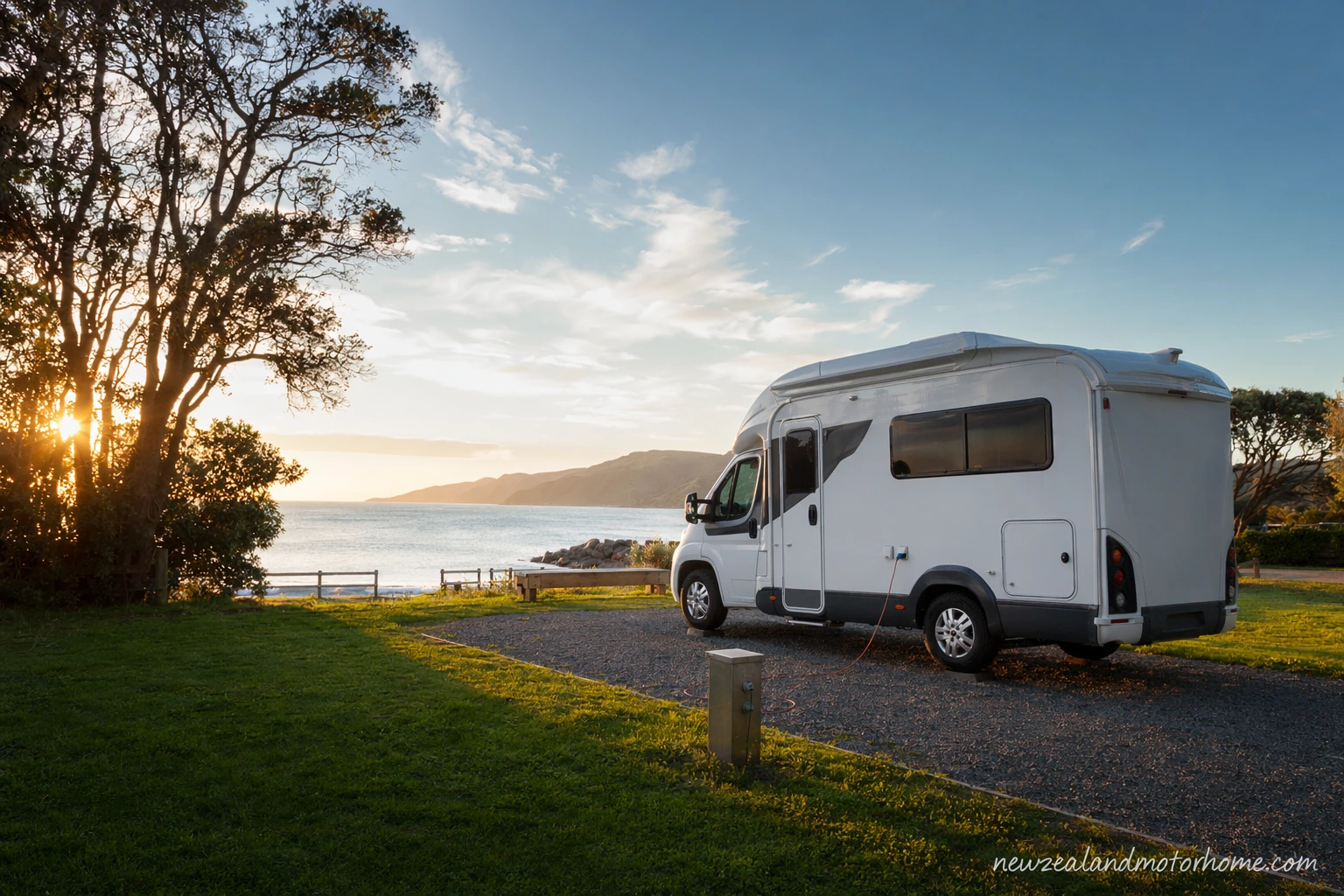
- Best base: Waikanae Beach area
- Site types: powered and unpowered
- Stay length: 1–3 nights
- Van note: book ahead for larger motorhomes
- Good reset before SH35
Gisborne is one of those East Coast stops where the van rhythm slows down: beach in the morning, town errands at lunchtime, and a quiet powered site before the sea breeze picks up. For campervan and motorhome travellers, the most useful holiday parks Gisborne offers are close to Waikanae Beach, the city centre, or the coast north towards Wainui and Tatapouri.
This guide looks at where to base yourself, what to expect from powered and unpowered sites, how easy it is to park a larger van, and what you can walk to once you have levelled up for the night. It is written for travellers sleeping in their hired campervan, not just passing through with day bags.
Best areas to stay with a campervan in Gisborne
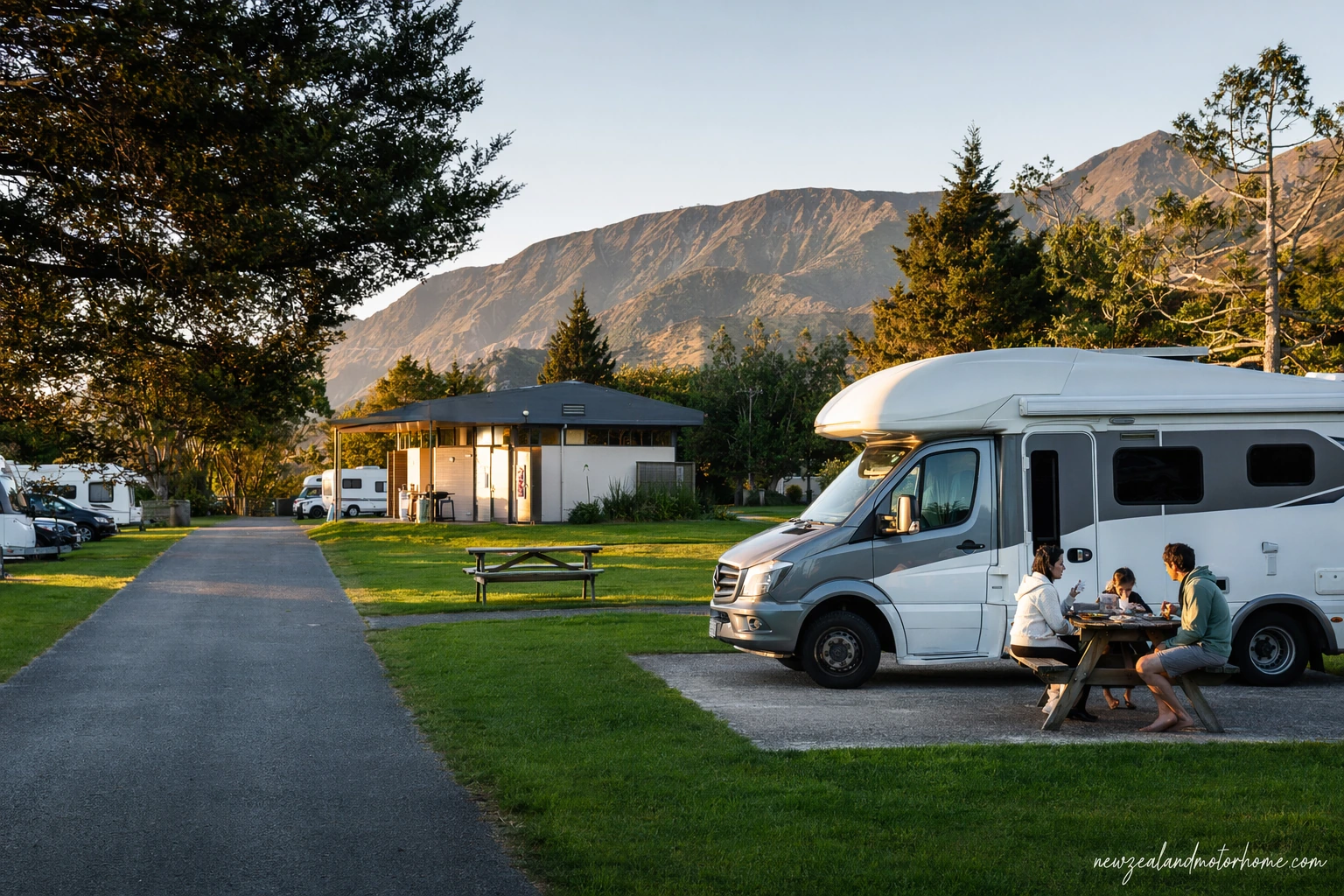
Most campervan-friendly holiday park stays in Gisborne fall into three practical zones: the Waikanae Beach edge of town, the quieter coastal strip north of the city, and inland approaches where you may find simpler campsites Gisborne travellers use as stopovers. Waikanae is the easiest if you want to park the van once and walk to the sand, cafés, riverside paths and parts of the town centre.
If you are comparing the Gisborne TOP 10 holiday park style of stay with smaller coastal camps, think first about how much you want on site. Full-service parks are better for laundry, showers, dump station access and powered sites Gisborne visitors often need after a few days on the road. Smaller coastal spots can feel more spacious, but you may need to be more organised with water, rubbish and battery use.
- Waikanae Beach: handy for a first Gisborne night, beach walks and easy town errands without moving the van.
- Wainui and Tatapouri direction: better for surf, sunrise views and a more coastal feel, with more driving back into town for supplies.
- Inland approaches: useful as a late-arrival stop, but check road access, site length and facilities before committing.
Powered vs unpowered sites: what to book
In Gisborne, a powered site is worth booking if you are staying two nights or more, running a fridge hard in summer, charging devices, or using an electric heater in the cooler months. Ask for a site that suits the length of your van, especially if you are in a 6-berth motorhome or towing a small trailer, because some beachside parks have tighter internal lanes and angled parking bays.
Unpowered sites can be perfectly workable for one night if your campervan battery is healthy and you are not relying on mains power. They are often a good fit for travellers who plan to spend daylight hours at the beach and only need a level place to sleep, but you should still confirm whether fresh water, toilets, showers and rubbish facilities are included.
- Choose powered: for longer stays, hot weather fridge load, e-bike charging, laptops, CPAP machines or wet-weather downtime.
- Choose unpowered: for short stops when your house battery, gas bottle and water tank are in good shape.
- Ask ahead: whether the site is grass, gravel or hardstand; grass can soften after heavy rain.
Dump stations, water, LPG and van chores
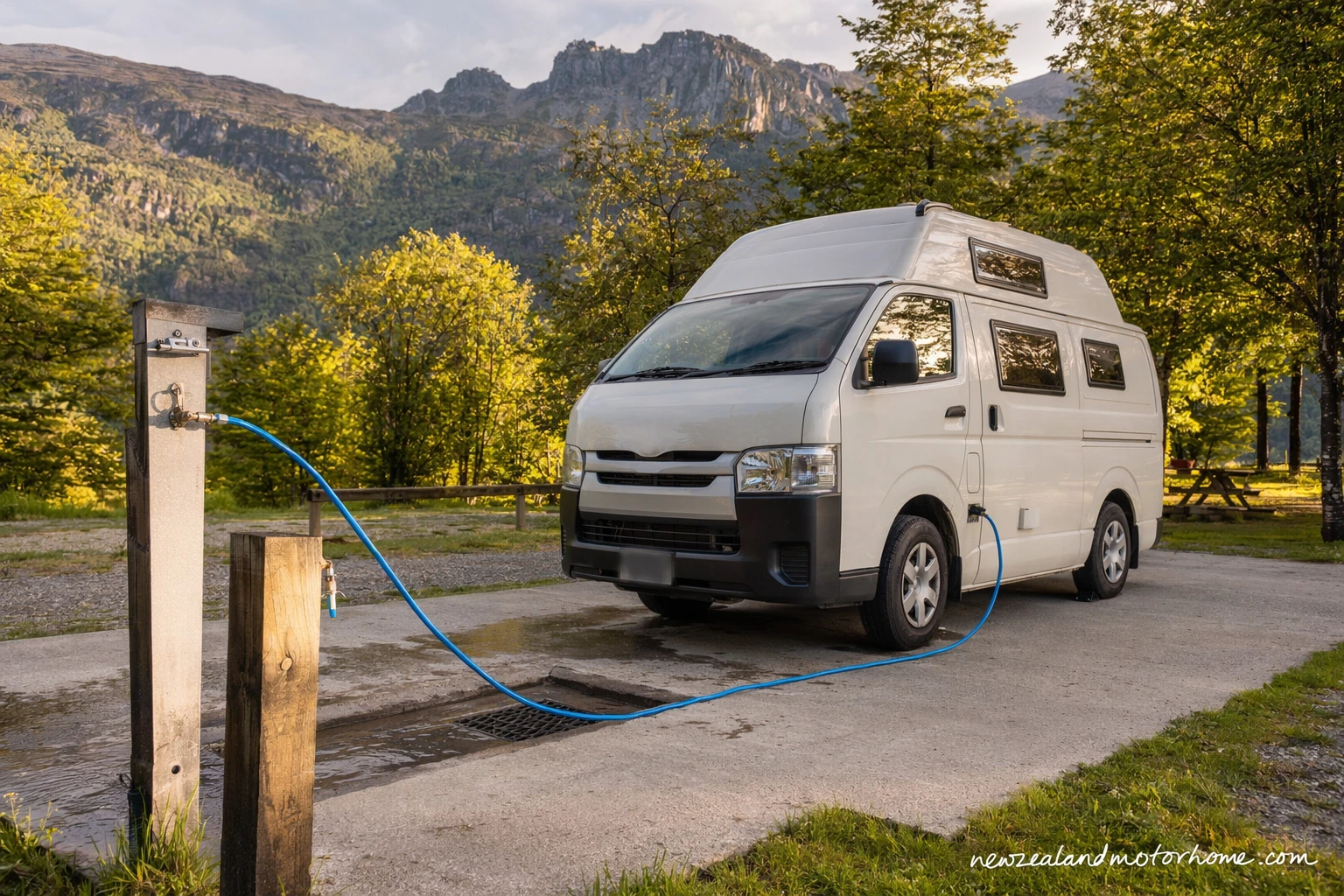
A good Gisborne holiday park base makes the practical jobs easy: empty the toilet cassette, top up fresh water, charge the van and get washing dry before heading north around the East Cape or south towards Napier. Many full-service holiday parks provide dump station access for guests, but do not assume every campground has one available for all van sizes.
Before you leave town, use Gisborne for the chores that become harder on quieter coastal roads. Fill fresh water only from marked potable taps, secure cupboard latches before the winding highways, and check your LPG level if your van uses gas for cooking, hot water or heating. If you are unsure how to sequence your stays around dumping, water and power, mention it in the talk to us step and we can shape the route around your van habits.
- Dump station: check whether it is guest-only, where it sits inside the park, and if a long motorhome can turn around easily.
- Fresh water: top up before leaving Gisborne, especially before SH35 or remote beach stops.
- LPG: plan a refill or swap in town rather than assuming small settlements will have what your hire van needs.
- Rubbish and recycling: dispose of it at the park or signed public facilities; do not leave bags at beach bins.
Getting there by van and parking once you arrive
Gisborne is reachable by SH2 from Napier or Ōpōtiki, and by SH35 if you are looping around the East Cape. These are beautiful campervan roads, but they are not fast: expect bends, hills, stock trucks, roadworks from time to time, and limited passing opportunities. Give yourself daylight, keep left through narrow sections, and pull over only where the shoulder is firm and safe for the weight of your motorhome.
Once in Gisborne, the beachfront and river areas are generally manageable in a campervan, though summer brings more parked vehicles, pedestrians and beach traffic. For larger vans, avoid hunting for tiny kerbside parks near busy cafés; it is easier to park at your holiday park, walk or cycle the flat areas, and use the van only for longer day trips to Wainui, Makorori, vineyards or lookouts.
- From Napier: allow time for hill country driving and arrive before dark if it is your first night in a hired van.
- From Ōpōtiki: the Waioeka Gorge is scenic but winding; secure loose items and take breaks.
- From the East Cape: fuel, food and dump facilities become less frequent, so use Gisborne as a reset point.
- In town: watch for low branches near beach reserves and tight turns in older streets.
What is walkable from Gisborne holiday parks
One of the best reasons to choose camping Gisborne close to Waikanae is that you can leave the van levelled, plugged in and settled. From the beachside area, many travellers walk to the sand, the river mouth, casual food options and parts of the city centre without needing to pack up awnings, chairs and levelling ramps.
For sightseeing, think in terms of low-effort van days. Titirangi/Kaiti Hill has big views over the harbour and coast, but the upper road and parking can be tight when busy, so larger motorhomes may prefer parking lower and walking if conditions suit. Wainui and Makorori are better as short drives, with beach parking chosen carefully so you are not boxed in by smaller vehicles.
- Easy on foot: Waikanae Beach, riverside paths, town cafés, supermarkets and casual evening strolls.
- Short van drive: Wainui Beach, Makorori, local vineyards, surf checks and sunrise viewpoints.
- Park with care: avoid soft sand edges, informal grass shoulders after rain, and small car parks where turning space is limited.
Keep planning
Whangarei to gisborne campervan
Read onRotorua to gisborne campervan
Read onPicton to gisborne campervan
Read onPalmerston north to gisborne campervan
Read onNew plymouth to gisborne campervan
Read onNelson to gisborne campervan
Read onCommon questions
Do Gisborne holiday parks have powered sites for campervans?
Yes, the main holiday parks Gisborne travellers use generally offer powered sites, but availability varies by season and van size. Book ahead in summer and ask for a site that suits your campervan length, especially if you need space for a side door, awning or rear bike rack.
Can I freedom camp in Gisborne instead of using a holiday park?
Only use designated areas and follow the current Gisborne District rules. You will usually need a certified self-contained campervan, and local signs override anything you read in an app, so check before settling in for the night.
Is Waikanae Beach a good base for a motorhome?
Waikanae Beach is one of the easiest bases if you want to walk rather than move the van for every meal or beach visit. It is close to town facilities and suits travellers who want powered sites, showers, laundry and a straightforward first or last Gisborne night.
Are dump stations easy to find in Gisborne?
Full-service holiday parks often have dump facilities for guests, and Gisborne has public options that should be checked against current signage or a trusted campervan app. Empty before heading onto the more remote East Cape roads, where facilities are further apart.
What size campervan is comfortable around Gisborne?
Most standard 2-berth to 6-berth hire vans are workable in Gisborne, but longer motorhomes need more care on beach roads, tight holiday park lanes and lookout parking. When booking, give your vehicle length and ask whether the site is drive-on, back-in, grass or hardstand.
Have a planner shape this for your dates
Send a short outline — your dates, party size, and the kind of trip you want. A planner replies with a vehicle recommendation, a paced route, and the realistic budget.