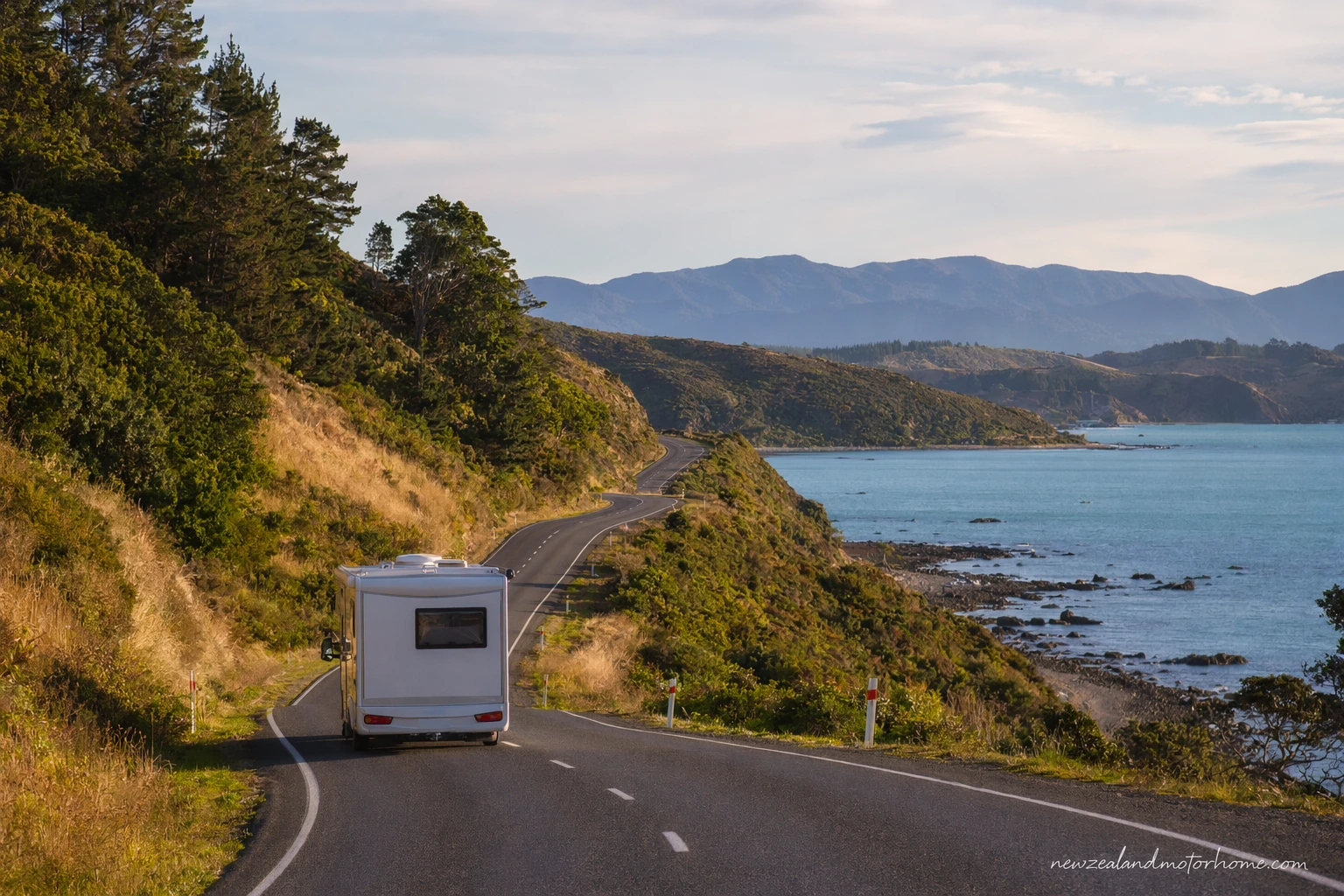
- Allow 3–5 days
- Cook Strait ferry required
- Best with at least two powered nights
- Hill roads: Remutaka and Wharerata
- Freedom camping only where signed
A Picton to Gisborne campervan trip starts with a Cook Strait crossing, then rolls through Wellington, the Wairarapa, Hawke’s Bay and the quieter sweep of SH2 towards Tairāwhiti. It is not the fastest way to reposition a van, but it is a rewarding one: vineyard towns, wild coast detours, big river mouths and long Gisborne beaches at the end.
This guide is written for travellers driving and sleeping in their hired campervan or motorhome. You will find sensible day lengths, where to think about powered sites, how to manage water and dump stations, and the road notes that matter when you are carrying your bed, kitchen and bathroom with you.
How many days to allow for the Picton to Gisborne drive
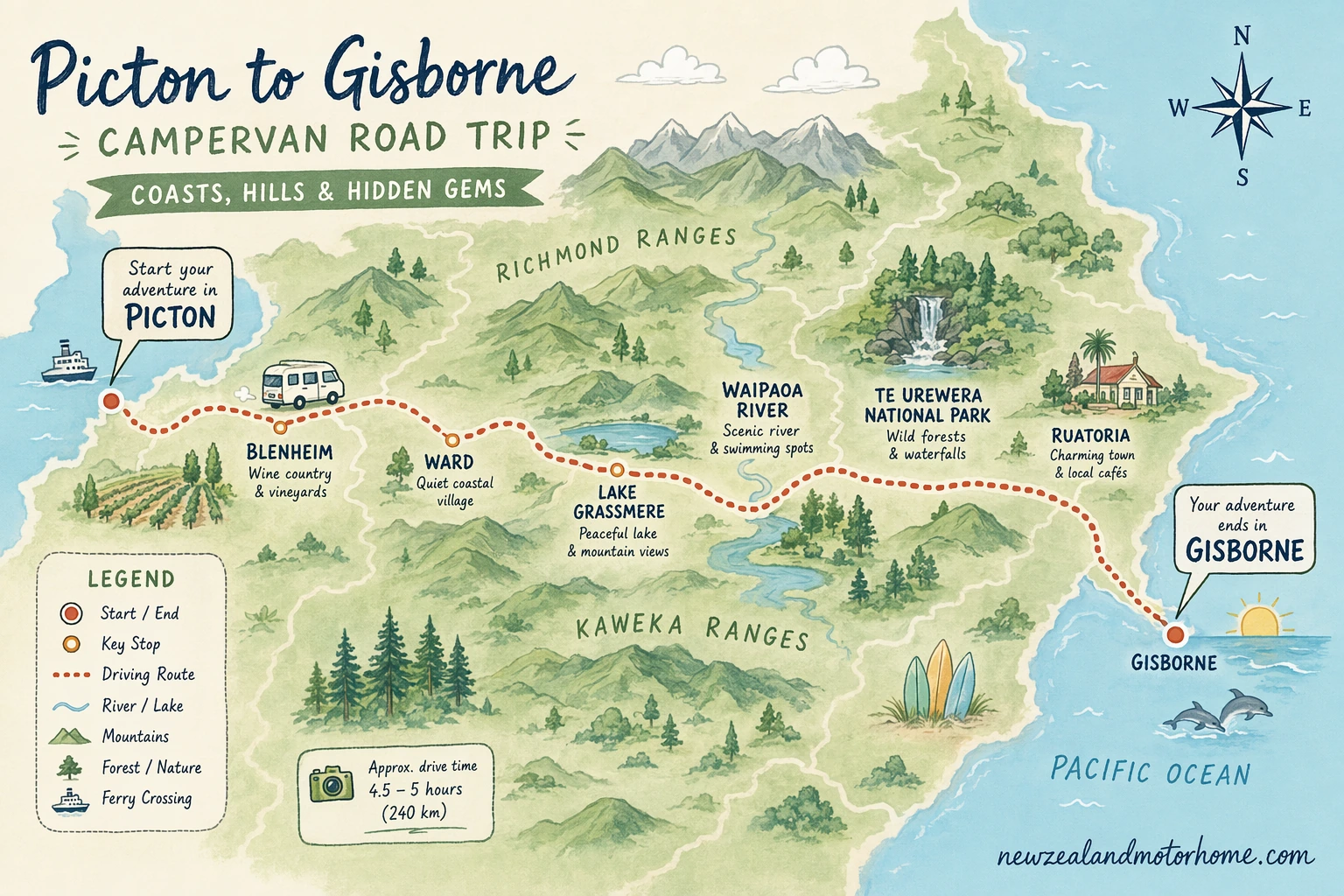
You can technically connect Picton and Gisborne in two long days if ferry times line up, but it is not a pleasant campervan rhythm. For most self-drive travellers, three to five days is the sweet spot, giving you time to board the ferry without rushing, avoid arriving at campsites in the dark, and break up the hillier North Island sections.
The Picton to Gisborne drive is shaped by the Cook Strait ferry schedule. Book the crossing for your exact vehicle length and height, allow extra time at the Picton terminal, and turn off LPG bottles before sailing as instructed. If you are travelling in peak summer or over long weekends, lock in your first North Island overnight before you roll off in Wellington.
- Fast but firm: 3 days, with overnights around Wellington/Hutt Valley and Napier or Wairoa.
- Balanced: 4 days, adding a Wairarapa stop such as Martinborough, Greytown or Masterton.
- Unhurried: 5 days or more, with time for Cape Palliser, Castlepoint, Mahia Peninsula or a Hawke’s Bay beach night.
Leg 1: Picton to Wellington by ferry, then settle the van
Start in Picton with a full fresh-water tank, empty waste, and enough fuel to avoid hunting for services straight after the crossing. Picton and nearby Waikawa have holiday parks with powered sites, useful if you want a calm pre-ferry night and a proper van reset. Do not assume you can sleep at the ferry terminal; use a designated campsite or council-approved overnight area.
At check-in, keep your booking details handy and know your motorhome’s length, height and registration. Larger vans are straightforward on the ferry, but give yourself room in the lanes and follow crew instructions on deck. Once in Wellington, traffic can feel abrupt after Picton’s quiet streets, so take the wider routes out of the city rather than squeezing through steep residential roads.
- Good first-night options: Wellington, Lower Hutt or Porirua holiday parks/campgrounds with powered and unpowered sites.
- Services: fuel, LPG bottle swaps or fills, supermarkets and dump stations are easier in the Wellington/Hutt/Porirua area than on the next rural legs.
- Freedom camping: Wellington region rules are tightly signed and change by council area; use only designated places and carry current self-containment proof.
Leg 2: Wellington to the Wairarapa over the Remutaka Hill
From Wellington, SH2 climbs the Remutaka Hill Road into the Wairarapa. It is a sealed state highway and regularly used by motorhomes, but it is winding, exposed in bad weather, and not a place to hurry. Use lower gears on the descent, pull over only where there is proper space, and let faster traffic pass when safe.
Once down in Featherston, the driving opens out. Martinborough works well for a vineyard-town overnight if you want powered sites and easy walking from the van, while Greytown and Masterton are practical for groceries, laundry and a quieter reset. This is a useful point in the Picton to Gisborne motorhome road trip to top up fresh water and empty grey/black waste before the longer eastern distances.
- Van-friendly stops: Featherston for a short break, Martinborough for a relaxed overnight, Masterton for services.
- Worth a detour: Cape Palliser for big coastal scenery, only if wind is sensible and you are comfortable with narrower rural roads.
- Driving note: avoid arriving over the Remutaka Hill tired after a late ferry; stay near Wellington if the crossing lands in the evening.
Leg 3: Wairarapa to Hawke’s Bay with room to breathe
The Wairarapa to Hawke’s Bay section is a good campervan day: rural SH2, small towns, and a gradual change into warmer, drier country. It is not difficult driving, but fuel stops thin out compared with Wellington, so keep the tank comfortably above empty and do not leave LPG or groceries until the last minute.
Napier and Hastings are the practical centre of the route. Choose a holiday park or campground if you need a powered site, showers, laundry, a dump station and a full water fill. Day parking along Napier’s waterfront is handy for a walk, but overnight parking is controlled, so check signs carefully and do not treat beachside car parks as default freedom camping spots.
- Good overnight base: Napier, Hastings, Clive, Te Awanga or nearby coastal campgrounds depending on your route.
- Van chores: dump, refill fresh water, recharge devices on power, restock food and check tyre pressures.
- Side trips: Cape Kidnappers/Te Kauwae-a-Māui viewpoints, coastal cycle paths, or a slow afternoon around Napier’s Art Deco streets.
Leg 4: Hawke’s Bay to Gisborne via Wairoa and the Wharerata hills
The final run to Gisborne follows SH2 through Wairoa, with beaches and river mouths never far from the route. It is a beautiful stretch, but for a motorhome it deserves daylight and patience. Expect rolling rural highway, slower bends, occasional road works after heavy weather, and the Wharerata hills before Gisborne.
Wairoa is a sensible break point and Mahia Peninsula is a memorable overnight detour if you have time, but check the road and weather before committing in a larger van. In Gisborne, many travellers aim for a beachfront holiday park or established campground so they can plug into power, rinse off sand, dump waste properly and walk to the beach without moving the van again.
- Best driving approach: leave Napier or Wairoa with plenty of daylight, especially in winter.
- Services: fuel in the main towns; dump stations and water are easiest at holiday parks or council-listed facilities.
- Freedom camping: Gisborne/Tairāwhiti rules are specific and enforced; use designated sites only, and make sure your van’s self-containment certification is valid.
If you would like this route matched to your ferry time, van size and preferred mix of powered sites and freedom camping, you can talk to us before you book your nights.
Campervan road notes, supplies and overnight strategy
This route is suitable for most hired campervans and motorhomes, but it is not a motorway-style run. The key is to drive it as a sequence of manageable legs, not as one big transfer. Wind on the ferry approaches, the Remutaka Hill, rural SH2, and the hills north of Wairoa are the main sections where height, weight and patience matter.
Plan your overnight stops around van chores rather than just kilometres. A powered night after the ferry is useful if your house battery has been working hard, and another powered night in Hawke’s Bay or Gisborne makes the last leg more relaxed. If you choose unpowered or freedom camping, arrive with water topped up, waste tanks empty, and a clear legal place to stay.
- Carry: levelling ramps, a torch, rubbish bags, drinking water, and your self-containment documentation.
- Check: council freedom camping maps, weather warnings, road status after storms, and ferry conditions.
- Avoid: gravel side roads in a large motorhome unless you have confirmed they are suitable and permitted by your hire agreement.
- Book ahead: ferry space, peak-season powered sites, and Gisborne beach campgrounds during summer events and holidays.
Common questions
Can I drive a campervan from Picton to Gisborne in one day?
No, not realistically or safely for a campervan traveller. The Cook Strait ferry plus the Wellington to Gisborne road distance makes it far too long, especially with check-in time, hill roads and the need to arrive at an overnight site before dark.
Is the Remutaka Hill Road suitable for a motorhome?
Yes, SH2 over the Remutaka Hill is used by motorhomes, but it is winding and can be exposed in strong wind. Drive in daylight where possible, use lower gears on descents, and pull over only in proper bays.
Where should I spend the first night after the ferry?
If your ferry arrives late, stay in Wellington, Lower Hutt or Porirua rather than pushing over the Remutaka Hill tired. If you arrive early, Martinborough, Greytown or Masterton make good Wairarapa campervan stops.
Are there enough dump stations on the Picton to Gisborne route?
Yes, but they are clustered around larger towns and established campgrounds. Treat Picton, Wellington/Hutt Valley, Masterton, Napier/Hastings, Wairoa and Gisborne as your main opportunities to empty waste and refill fresh water.
Can I freedom camp on the way to Gisborne?
Sometimes, but only in designated places and usually only with a certified self-contained vehicle. Rules differ between councils, so check the current local map or signage before you park up for the night.
What is the best season for a Picton to Gisborne motorhome road trip?
Late spring, summer and early autumn give the best mix of daylight, beach weather and open campgrounds. Winter can still work, but allow more time for ferry delays, wet roads and shorter driving days.
Have a planner shape this for your dates
Send a short outline — your dates, party size, and the kind of trip you want. A planner replies with a vehicle recommendation, a paced route, and the realistic budget.