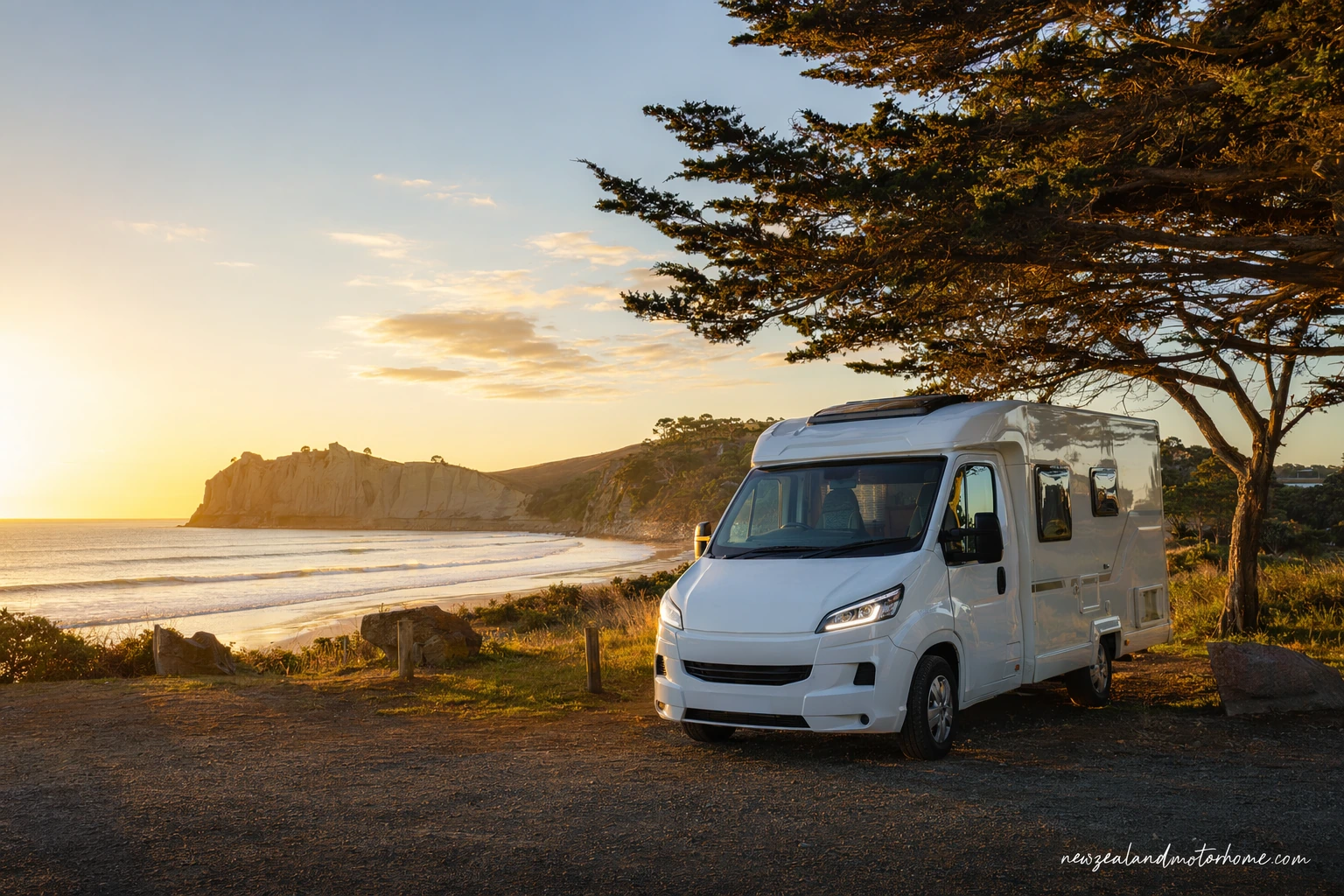
- Best for East Cape starts
- Book powered first night
- SH35 is slow and winding
- Self-containment rules apply
- Fill fuel, LPG and water in town
Gisborne is a gentle place to collect a campervan: surf beaches close to town, morning sun over Tūranganui-a-Kiwa, and open coastal roads leading north to the East Cape or south towards Hawke’s Bay. For self-drive travellers, it is a practical starting point if you want fewer big-city kilometres before your first night in the van.
This guide is written for people hiring and sleeping in their own campervan or motorhome. We cover Gisborne campervan hire pick-up logistics, how to ease the van onto local roads, where to spend your first night, what to know about freedom camping, and the best routes out when you are ready to roll.
Where campervan and motorhome pick-ups work in Gisborne
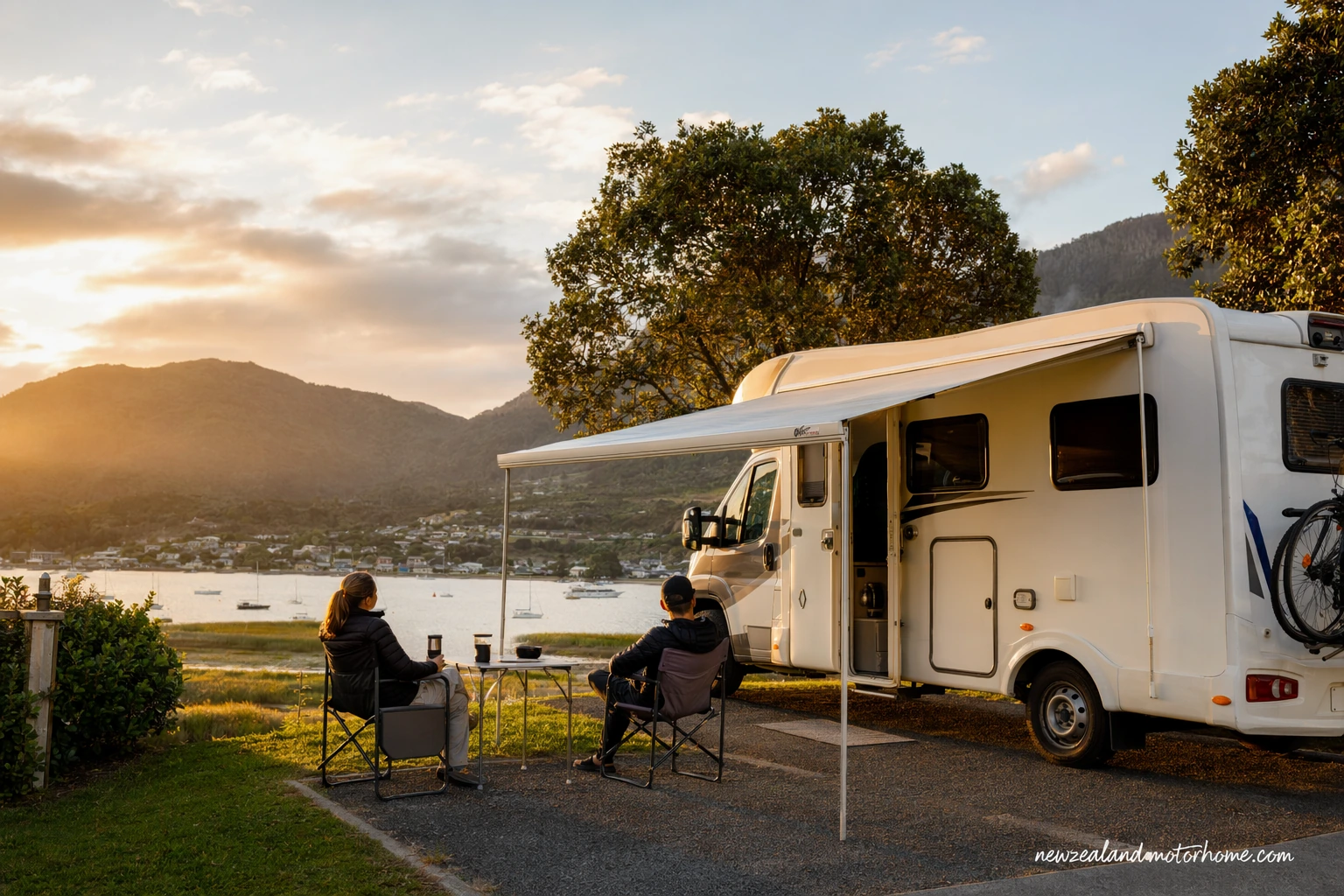
Gisborne is not a sprawling depot city like Auckland or Christchurch, so campervan rental Gisborne arrangements are often more compact and personal. Pick-ups may be near the airport, in light-industrial streets on the edge of town, or by pre-arranged handover close to the CBD. Always confirm the exact address, collection window, vehicle height, and whether airport meet-and-greet is included before you book flights.
Allow unhurried time at handover. You want to test the gas hob, fridge, water pump, 240V lead, house battery display, toilet cassette, grey-water outlet, awning rules, and any self-containment paperwork before you leave the yard. If you are new to motorhome hire Gisborne roads, ask the depot team to point out the fuel cap, AdBlue if relevant, tyre pressure label, and the safest way to reverse with the camera or mirrors.
- Before driving off: photograph existing scratches, check the spare tyre or repair kit, and make sure the electrical lead and fresh-water hose are on board.
- For larger vans: note the overall length and height, especially if you plan to use beach access roads or park under trees at coastal campsites.
- If searching caravan hire Gisborne: check whether the operator means a towable caravan or a self-drive motorhome, as campsite access and licence requirements can differ.
Getting the van out of Gisborne without a stressful first hour
Gisborne is easier than most New Zealand cities for a first campervan drive, but it still pays to avoid rushing. The main through-roads can be busy around school and work times, and supermarket car parks fill quickly in summer. If you have just collected a long or high-roof van, take a few quiet suburban blocks to get used to the mirrors, turning circle, and brake feel before joining State Highway 35 or State Highway 2.
Stock up in town before you head up the coast. Gisborne has the best concentration of supermarkets, fuel, LPG swap or refill options, fresh-water taps at many holiday parks, and dump station access in the district. Once you drive towards Tolaga Bay, Tokomaru Bay, Ruatoria, or the East Cape, services become more spread out and opening hours can be shorter.
- Parking for supplies: choose the outer edges of large supermarket car parks and avoid tight angled parks near shop entrances.
- Fuel and LPG: fill in Gisborne if your first leg is up SH35, as coastal settlements may not have the fuel type or LPG option you need.
- Road feel: SH35 has narrow sections, one-lane bridges, logging traffic, wandering stock, and slow corners where a heavy motorhome needs patience.
Good first-night stops near Gisborne
Your first night is best kept simple. A powered site close to town lets you learn the van while plugged into 240V, top up the fresh-water tank, use a proper dump station if needed, and sort bedding without arriving in the dark. Waikanae Beach and other beachside holiday park areas near town are popular because you can park the campervan, walk to the sand, and still be close to groceries and cafés.
If you want to be out of town but not committed to a long coastal drive, look north towards Tatapouri, Pouawa, or Tolaga Bay depending on the season and current campsite availability. These areas feel properly East Coast, yet they are close enough that a late pick-up in Gisborne does not become a night drive on unfamiliar roads.
- Powered site: useful for your first night, especially if you need heating, battery charging, or a fridge confidence check.
- Unpowered site: fine in a certified self-contained van if your house battery is charged and you know how your water and toilet systems work.
- Arrival tip: try to be parked before dusk; coastal access roads can be narrow and livestock or pedestrians are harder to see at night.
Freedom camping, self-containment and van services
Freedom camping around Gisborne is controlled by local rules, and signs on the ground matter. Do not assume that a beachfront car park is legal for overnighting just because another van is there. You will generally need a certified self-contained vehicle, and some sites may have time limits, seasonal restrictions, or be closed after weather events.
Use Gisborne as your reset point before heading into quieter country. Empty the toilet cassette and grey-water at an approved dump station, refill fresh water, charge devices, secure cupboards, and check gas levels. Holiday parks are often the simplest place to do all of this on your first night; public dump station locations should be confirmed against the council’s current map or a trusted camping app before you rely on them.
- Carry proof: keep your self-containment certification visible or easy to show if requested.
- Leave no trace: never drain grey water onto the ground, even at remote beach stops.
- Water planning: refill in Gisborne before SH35, as not every coastal stop has a potable tap suitable for campervan tanks.
Routes out of Gisborne in a hired campervan
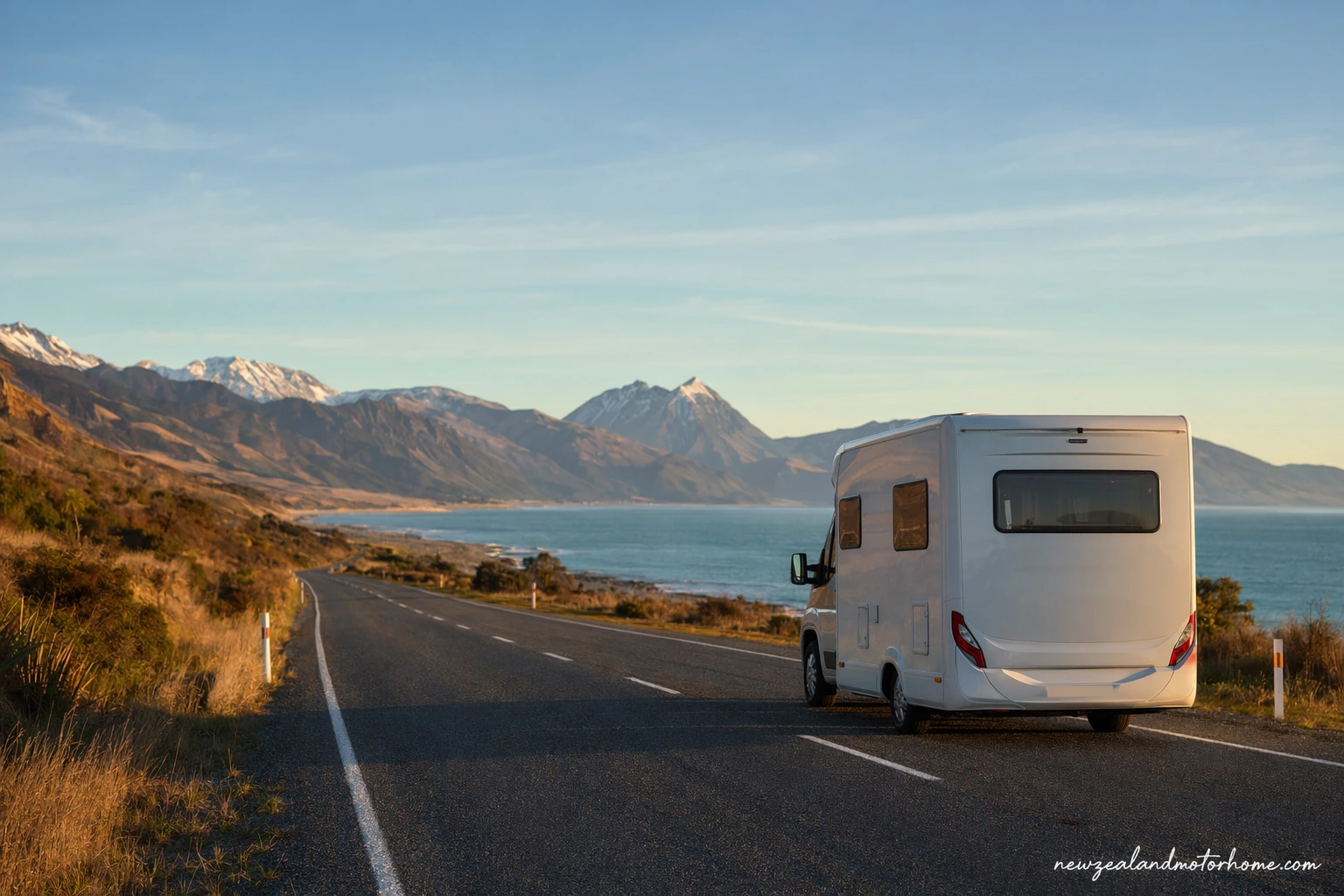
The classic choice from Gisborne is the East Cape route on SH35. It is not a road to hurry. Distances look short on the map, but the drive is slow, scenic, and exposed to weather. Build in time for Tolaga Bay Wharf, beach walks, fuel checks, and early campsite arrivals rather than trying to cover the whole cape in one push.
South on SH2 takes you towards Wairoa and Napier, with bigger-town services waiting in Hawke’s Bay. Inland via SH2 towards Ōpōtiki takes you through the Waioeka Gorge, a beautiful but winding drive where you should let faster traffic pass when safe. For a longer itinerary, you can link Gisborne with the Bay of Plenty, Rotorua, Taupō, or a North Island coast-to-coast loop.
- SH35 East Cape: best for slow coastal travel, small settlements, and simple overnight stops booked ahead in peak season.
- SH2 to Napier: practical if you want wineries, larger supermarkets, and more holiday park choice after the coast.
- SH2 to Ōpōtiki: good for connecting to the Bay of Plenty, but take care in the gorge with a long motorhome.
If you want help matching van size, first-night stops, and a realistic daily distance, you can send us your dates through our plan-your-trip page and we’ll help shape the route around how you actually like to drive.
Choosing the right van for Gisborne roads
Campervan hire Gisborne works well in a compact two-berth if you are planning surf stops, quick beach walks, and smaller coastal campsites. A larger motorhome gives more comfort, a fixed bed, and better wet-weather space, but it needs more care on narrow SH35 corners, small settlement streets, and unsealed access roads.
Think about how you camp. If you plan mostly powered holiday parks, you can rely less on big battery capacity and more on plug-in comfort. If you want unpowered DOC-style stays or permitted freedom camping, prioritise certified self-containment, decent fresh and grey-water capacity, a reliable fridge, and enough solar or battery reserve for two nights without driving far.
- Two-berth campervan: easier to park in town and less tiring on winding coastal roads.
- Four-berth motorhome: more space for families, but check campsite site length and turning access before booking.
- High-roof vans: watch tree branches, low awnings, and beachside car parks with uneven ground.
Keep planning
Whangarei to gisborne campervan
Read onRotorua to gisborne campervan
Read onPicton to gisborne campervan
Read onPalmerston north to gisborne campervan
Read onNew plymouth to gisborne campervan
Read onNelson to gisborne campervan
Read onCommon questions
Is Gisborne a good place to start a campervan trip?
Yes, especially if you want to explore the East Coast without first driving several hours from a major city. The town is manageable for a first day in the van, and you can stock up on fuel, food, water, and gas before services become more spaced out.
Can I freedom camp near Gisborne after picking up my van?
Only where local rules allow it, and usually only in a certified self-contained vehicle. Check current Gisborne District Council signage and camping maps before you settle in, because coastal car parks can have seasonal limits or no-overnight rules.
Should I book a powered site for my first night?
For most travellers, yes. A powered holiday park site makes the first evening easier: you can charge the house battery, test appliances, refill water, use showers, and ask staff where the dump station is before heading further up the coast.
Is SH35 suitable for a motorhome?
SH35 is suitable for campervans and motorhomes, but it is winding, narrow in places, and slower than the map suggests. Drive in daylight, let faster vehicles pass when safe, and plan shorter travel days so you are not arriving at campsites after dark.
Do I need to fill LPG and water before leaving Gisborne?
It is a good idea. Gisborne has more reliable access to fuel, LPG, groceries, potable water, and dump stations than many smaller East Coast settlements, so treat it as your main reset point before driving north or inland.
Have a planner shape this for your dates
Send a short outline — your dates, party size, and the kind of trip you want. A planner replies with a vehicle recommendation, a paced route, and the realistic budget.