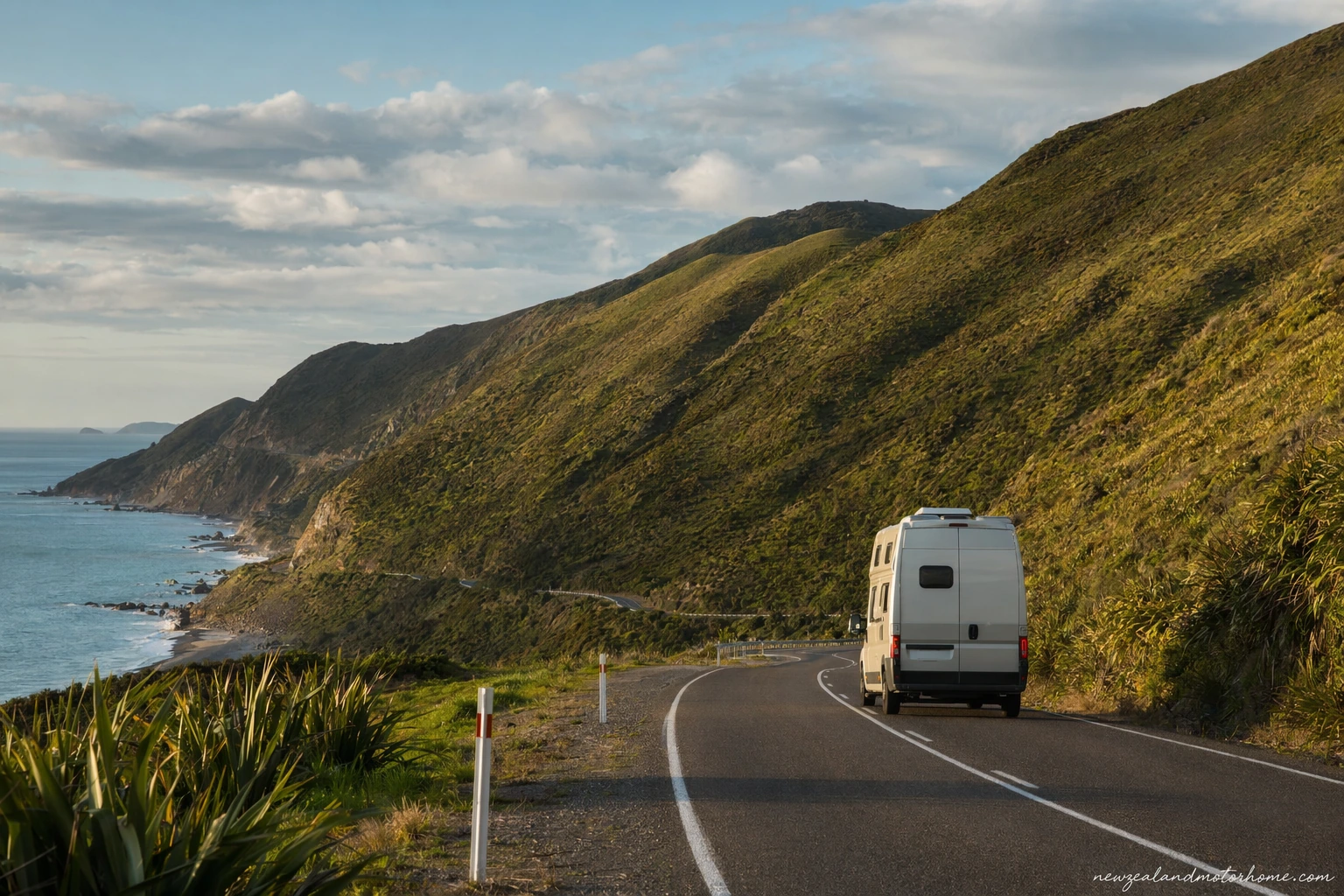
New Plymouth to Gisborne campervan route: Taranaki to the East Coast
- Allow 4–6 days
- Best in spring or autumn
- SH43 suits confident van drivers
- Use powered sites in main towns
- Check SH2 road conditions
The New Plymouth to Gisborne campervan route is not a quick hop across the island. It is a proper cross-country drive from Taranaki surf and volcanic views, through the King Country and Taupō, then over to Hawke’s Bay and up the wilder section of State Highway 2 to Gisborne.
For a self-drive van, the best version of this trip is unhurried: enough time to choose powered sites when the batteries need a reset, top up fresh water before the quieter stretches, and avoid pushing a tired driver through narrow hill roads late in the day. This guide lays out the drive in sensible legs, with road notes, overnight stop ideas, dump station planning and the little motorhome details that make the difference.
How long to allow for the drive
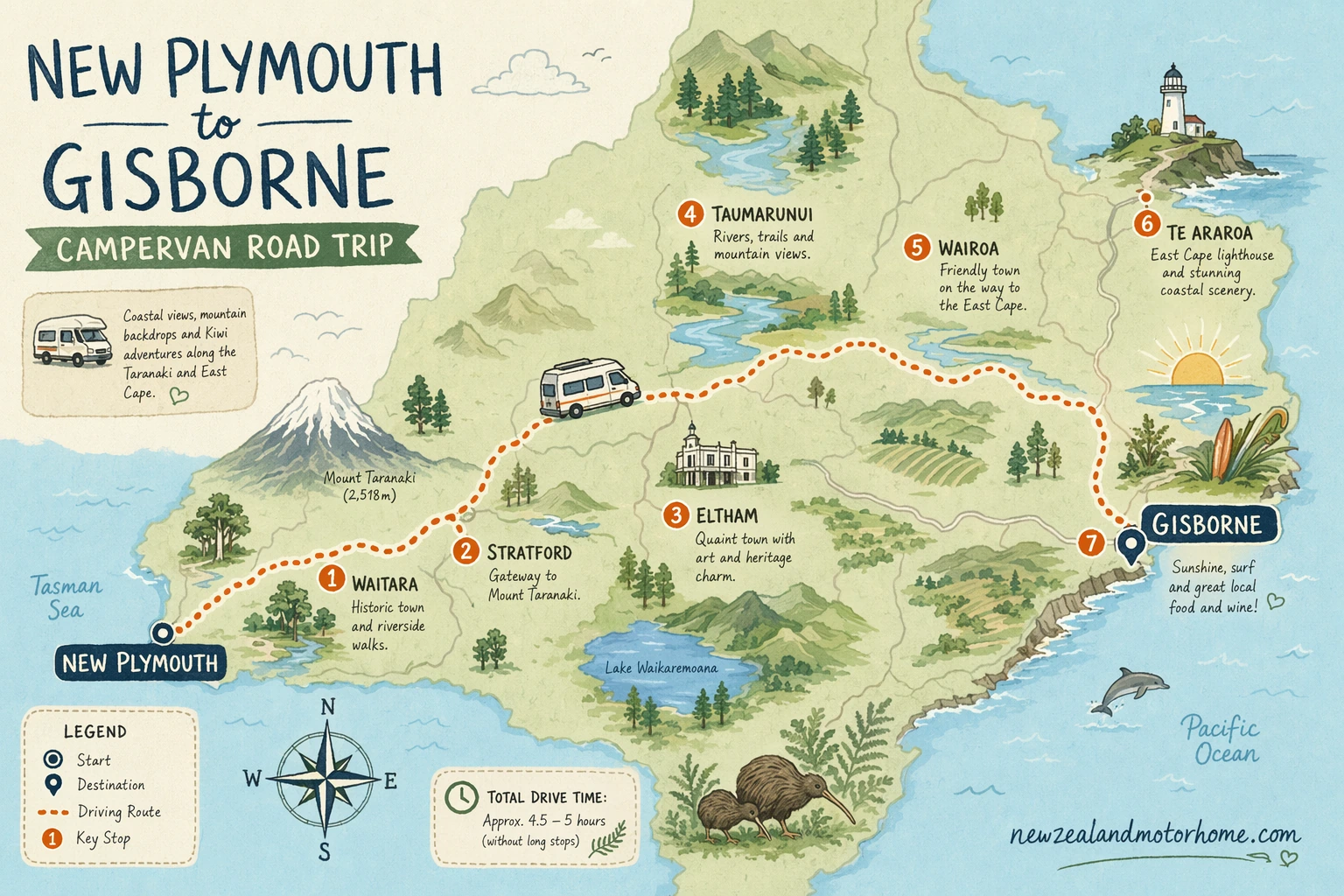
The most useful way to think about the New Plymouth to Gisborne drive is as a 4 to 6 day campervan crossing, not a single long haul. The full route is roughly 680 to 720 kilometres depending on detours and overnight choices, with enough winding sections that average speed is lower than it looks on a map.
A practical line is New Plymouth to Taumarunui via Stratford and the Forgotten World Highway, then Taupō, Napier or Hastings, Wairoa, and finally Gisborne. Larger motorhomes can do it, but this is a route where driver confidence, weather and daylight matter more than raw distance.
- Fast but tiring: 3 days, only if you are comfortable with long van days and minimal sightseeing.
- Comfortable: 4 to 5 days, with time for Taupō and Hawke’s Bay stops.
- Best paced: 6 days or more, especially if you want Māhia, Te Mata Peak, Lake Waikaremoana side trips, or Gisborne beach time.
- Van rhythm: plan a powered night every second or third night if you are running a fridge, heater, laptops or e-bike charging.
Leg 1: New Plymouth to Taumarunui via Stratford and SH43
Leave New Plymouth with a full fuel tank, fresh water topped up and the cassette emptied if you can. Stratford is the sensible last larger service stop before State Highway 43, the Forgotten World Highway, which is scenic, narrow in places and slower in a motorhome than the kilometre count suggests.
This leg suits confident van drivers because there are tight bends, steep saddles and limited passing opportunities. Keep your speed modest, pull over where safe if traffic builds behind you, and avoid starting the route late in the afternoon. In wet or foggy weather, give yourself extra margin.
- Parking the van: Stratford is easier for supermarket and fuel stops than trying to manoeuvre in tiny roadside settlements.
- Overnight options: New Plymouth and Stratford have holiday park-style options; Taumarunui gives you a more useful stop before heading on to Taupō.
- Services: check dump station and potable water points before leaving Taranaki; do not assume every rural tap is drinkable.
- Vehicle note: if your hired motorhome is long, take extra care on SH43’s one-lane bridges and blind bends.
Leg 2: Taumarunui to Taupō, then on to Hawke’s Bay
From Taumarunui, the road to Taupō is a good reset after the tighter SH43 driving, with river country, forest edges and broad central North Island views. Taupō is a useful campervan hub: it is one of the better places on this route to sort groceries, LPG, laundry, fresh water, dump station needs and a powered site if your batteries are low.
From Taupō to Napier, State Highway 5 crosses high country before dropping towards Hawke’s Bay. It can be exposed, misty or icy in colder months, and it is not a road to rush in a high-sided van. Use lower gears on descents and take rest stops before you feel tired, not after.
- Good break points: Huka Falls, Lake Taupō picnic areas where motorhome parking is allowed, and the main Taupō township for supplies.
- Powered nights: Taupō is a smart place to book power if you have been freedom camping or using unpowered sites.
- Before SH5: check fuel, weather, and road conditions; services are spread out once you leave Taupō.
- Arriving in Hawke’s Bay: Napier and Hastings offer more choice for holiday parks and practical van servicing than the smaller coast towns north of there.
Leg 3: Napier to Wairoa and Gisborne on SH2
The Napier to Gisborne section is the part of the new plymouth to gisborne motorhome road trip where you need the most current road information. State Highway 2 between Hawke’s Bay, Wairoa and Gisborne is beautiful but can be affected by slips, roadworks and weather-related closures, especially after heavy rain.
It is worth leaving Napier with a serviced van: fuel topped up, grey water emptied, fresh water filled and food sorted. Wairoa is the logical halfway stop before Gisborne, and it keeps the day manageable if roadworks or stop-go controls slow progress.
- Road style: expect winding hill sections, river valleys, narrow shoulders and occasional slow traffic.
- Overnight plan: Wairoa works well as a practical stop rather than driving tired into Gisborne.
- Weather call: if heavy rain is forecast, delay rather than committing a high-sided van to a marginal road.
- On arrival: Gisborne has beachside and town-area camping options, plus the services you will want after several rural legs.
Where to stay: powered, unpowered and freedom camping
This route mixes well-serviced towns with quieter rural stretches, so it pays to alternate comfort nights with simple stops. New Plymouth, Taupō, Napier and Gisborne are the easiest places to find holiday park facilities such as powered sites, showers, laundry, potable water and dump station access. Taumarunui and Wairoa are useful practical overnights that break up the driving.
Freedom camping rules change by district, and enforcement is real. Only use designated or permitted areas, follow local signage, and make sure your vehicle meets New Zealand self-containment certification requirements if a site requires a certified self-contained van. A peaceful riverside lay-by is not automatically a legal overnight stop.
- Powered sites: best in New Plymouth, Taupō, Napier/Hastings and Gisborne when you want full facilities.
- Unpowered sites: useful in smaller holiday parks or basic campgrounds if your house battery and water are in good shape.
- Freedom camping: check the current council bylaw for each district before you park for the night.
- Dump stations: plan around main towns rather than waiting until the cassette is urgent.
- LPG and water: refill in larger centres; availability is more limited across rural legs and after hours.
Campervan planning notes before you go
The route is most enjoyable when you keep the van light, the driving days short and the service stops deliberate. Secure loose gear before SH43 and SH5, because both roads can make cupboards rattle, and check your height before using supermarket car parks, service station canopies or beach access roads in Gisborne.
Spring and autumn are often comfortable for driving, with less heat inside the van and fewer peak-season pressures on powered sites. Winter can still work, but watch for cold starts, condensation and icy or foggy higher sections. Summer brings longer daylight, but book key holiday park nights ahead, especially around Taupō, Hawke’s Bay and Gisborne beach areas.
If you would like help turning this into a day-by-day route with realistic van stops, you can use the plan-your-trip step and we will shape the timing around how you actually like to travel.
Keep planning
Common questions
Can I drive from New Plymouth to Gisborne in one day in a campervan?
It is technically possible for a determined driver, but it is not a good campervan day. The route has winding and exposed sections, and you still need time for fuel, food, dump stations and rest stops. Plan at least three days, with four to six days far more comfortable.
Is the Forgotten World Highway suitable for motorhomes?
Yes, many campervans and motorhomes use SH43, but it is narrow, winding and slower than a main highway. Longer vehicles need careful positioning on bends and bridges, and it is best driven in daylight and settled weather. Fill fuel and water before you go.
Where should I stop overnight between New Plymouth and Gisborne?
Good practical stops are Taumarunui, Taupō, Napier or Hastings, Wairoa and then Gisborne. For more facilities, choose powered holiday park nights in Taupō, Hawke’s Bay or Gisborne. Wairoa is useful if you want to avoid a long final push on SH2.
Do I need a certified self-contained campervan for this route?
You do not need one if you only stay in holiday parks or campgrounds, but you will need certified self-containment for many freedom camping areas. Always check the local council rules and signage before staying overnight outside a campground.
Are dump stations and fresh water easy to find?
They are straightforward in the main centres, especially New Plymouth, Taupō, Napier/Hastings and Gisborne. Rural stretches have fewer options, so empty grey and toilet waste before the quieter legs. Only fill from taps marked as potable drinking water.
What is the biggest road risk on the Napier to Gisborne section?
Road condition and weather are the big ones. SH2 can be affected by slips, repairs, stop-go works and closures after heavy rain. Check current highway updates before leaving Napier or Wairoa, and do not push on if the forecast looks poor.
Have a planner shape this for your dates
Send a short outline — your dates, party size, and the kind of trip you want. A planner replies with a vehicle recommendation, a paced route, and the realistic budget.