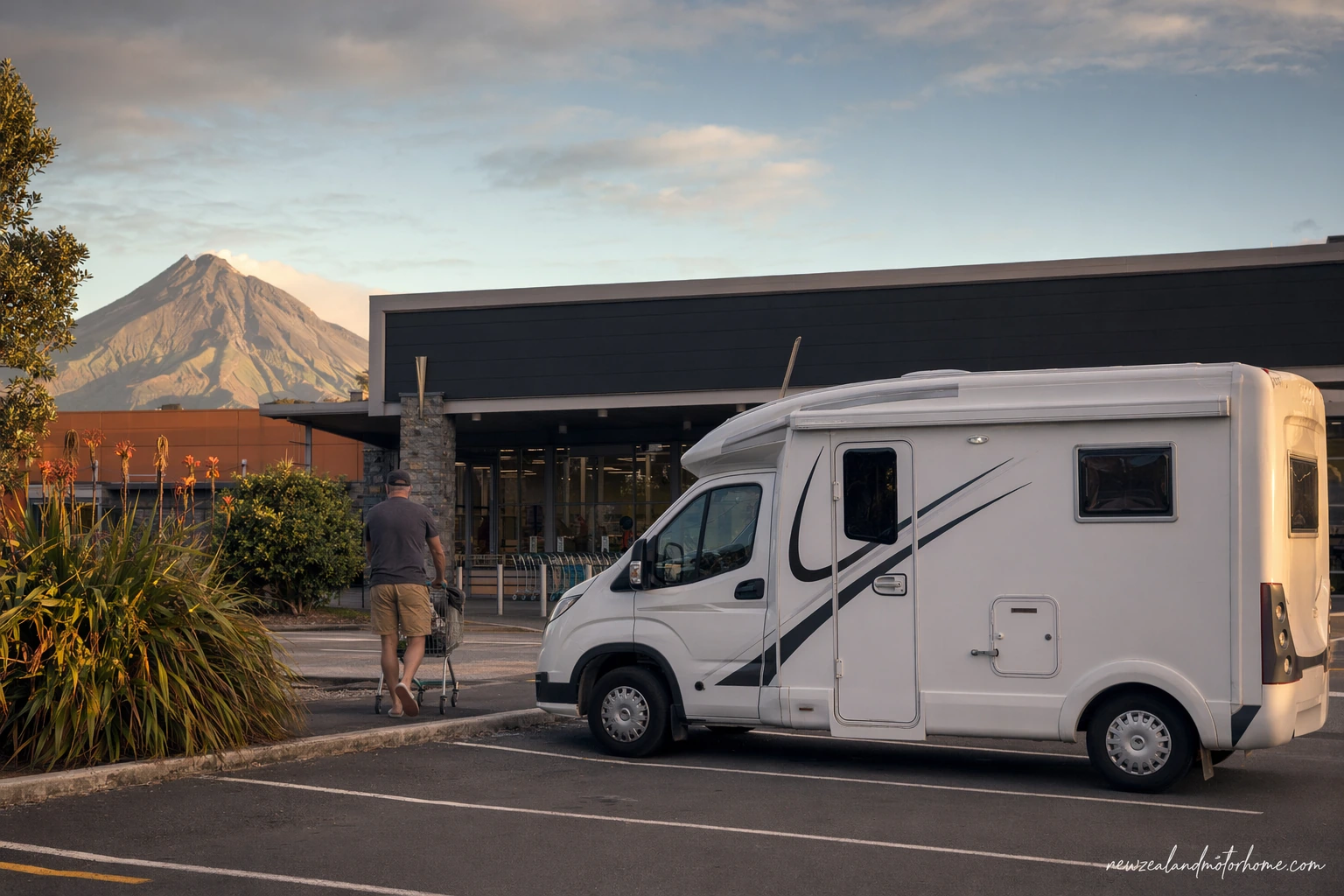
- Best as a full restock town
- Use open-air parking for larger vans
- Top up LPG before remote roads
- Check current dump station access
- Powered sites useful in wet weather
New Plymouth is one of those useful campervan towns where you can sort the practical jobs without losing half a day: food, fuel, LPG, laundry, fresh water and a sensible dump station stop before you head around Taranaki Maunga or north on State Highway 3.
This guide is written for self-drive campervan and motorhome travellers, so the focus is on where the van actually fits, what to do before an overnight stop, and how to leave town with full cupboards, empty waste tanks and enough gas for a few cooler west coast evenings.
Van-friendly supermarket stops without the CBD squeeze
For supermarkets, New Plymouth campervan travellers usually have an easier time using the larger suburban shopping areas rather than nosing a long wheelbase van into the tightest central streets. The city centre is fine for a walk and a coffee, but a high-roof motorhome is happier in open-air car parks with clear entries, room to swing, and no low covered-parking signs to worry about.
Waiwhakaiho and the larger retail strips on the town edges are often the simplest stock-up points if you are coming in from the north or planning to continue around the coast. If you are in a 7-metre-plus motorhome, arrive outside the lunch rush, park along the back row, and avoid blocking trolley bays or delivery access.
- Choose open-air supermarket parking; avoid any height-restricted or basement-style entries.
- Park on the outer edge of the car park where you can drive forward out if possible.
- Do the heavy stock-up before parking overnight, so you are not moving the van again after dark.
- Keep chilled food in mind if you are visiting the waterfront or Pukekura Park after shopping.
Fuel, LPG and pre-road checks before leaving town
Petrol stations New Plymouth-wide are handy, but not every forecourt is equally pleasant in a motorhome. Look for service stations with wide entries, straight-through pump lanes and space to wait without hanging the rear of the van out into traffic. If you are towing, or driving a larger motorhome, it is worth skipping a cramped corner site for the next easier one.
Plan an LPG refill New Plymouth stop before you head for smaller coastal settlements or the Forgotten World Highway, where services thin out quickly. Swap bottles and refill options vary by outlet, so check signage at the forecourt or ask before you disconnect anything. In colder months around Taranaki, a partly full gas bottle can disappear faster than expected with heating, cooking and hot water.
- Top up diesel or petrol before SH43, remote surf beaches, or a loop around the mountain.
- Check tyre pressure when the van is loaded with groceries and water.
- Refill or swap LPG while you are already doing fuel, not when the bottle runs dry at dinner.
- Confirm your diesel road user charges are current if your hire agreement requires you to monitor them.
Fresh water, dump stations and rubbish before your overnight stop
A dump station New Plymouth stop is best treated as part of your arrival or departure routine, not something to find at the last minute with a full cassette. Public dump points and holiday park facilities can change with maintenance or access rules, so use the current council information, official camping apps, or your campground’s instructions before driving across town.
If you are staying at a powered site in a holiday park, ask whether fresh water and dump facilities are available on site for guests. If you are using an unpowered site or a legal freedom camping spot, arrive self-contained: fresh tank topped up, grey water empty, toilet cassette empty, and rubbish bagged for a proper bin.
- Use potable water taps only; do not fill from wash-down hoses at dump points unless clearly marked safe for drinking.
- Carry a short hose and fittings, as tap setups vary between sites.
- Empty grey water and toilet waste before remote beach stays.
- Never leave rubbish beside full bins; take it with you to the next proper disposal point.
Laundry, showers and where to pause for the night
If the west coast weather has turned your towels, socks and surf gear damp, a laundromat New Plymouth stop can make the van feel liveable again. The easiest ones for campervan travellers are usually those near suburban shops or strip retail areas where you can park in an open car park and keep an eye on the van while machines run.
For overnighting, New Plymouth has a mix of holiday park options and tightly managed freedom camping areas under local bylaws. A powered site is useful if you need to recharge house batteries, run a heater safely, dry gear or reset after several unpowered nights. Freedom camping is only for vehicles that meet the current self-containment requirements, and even then only where overnight parking is permitted.
- Do laundry before parking at a beach site, so wet clothes are not hanging through the van overnight.
- Book a powered site during school holidays, summer weekends and major local events.
- Check the current freedom camping map before settling in; rules can differ between reserves and coastal areas.
- Keep levelling blocks handy, as some coastal parking areas are not perfectly flat.
What to stock for the road ahead
New Plymouth is the sensible place to stock properly before you turn towards surf breaks, mountain villages or the quieter northern roads. Once you leave the city, you will still find dairies, cafés and fuel in some townships, but range, opening hours and van-friendly parking are less predictable.
Think in meals, weather and distance rather than just snacks. Taranaki can give you sun on the coast and cold rain near the mountain on the same day, so stock the van for a warm breakfast, an easy wet-night dinner and a no-fuss lunch you can make without unpacking everything. If you want help shaping your route around supply stops and legal overnights, you can talk to us before you lock in the plan.
- Two easy dinners for nights when the weather closes in or you arrive late.
- Drinking water beyond the tank, especially if you are using beach day parks.
- Toilet chemical, rubbish bags, paper towels and a small brush for sandy floors.
- Layers, rain gear and a dry bag for wet walking shoes or wetsuits.
- Cashless payment ready, but do not rely on every small stop having the same services as town.
Keep planning
Wellington to new plymouth campervan
Read onRotorua to new plymouth campervan
Read onQueenstown to new plymouth campervan
Read onPicton to new plymouth campervan
Read onNew plymouth to whangarei campervan
Read onNew plymouth to timaru campervan
Read onCommon questions
Where is easiest to park a campervan for supermarket shopping in New Plymouth?
Can I get an LPG refill in New Plymouth before heading around Taranaki?
Is there a dump station in New Plymouth for motorhomes?
Should I stay on a powered site in New Plymouth?
Can I freedom camp in New Plymouth in a hired campervan?
Have a planner shape this for your dates
Send a short outline — your dates, party size, and the kind of trip you want. A planner replies with a vehicle recommendation, a paced route, and the realistic budget.