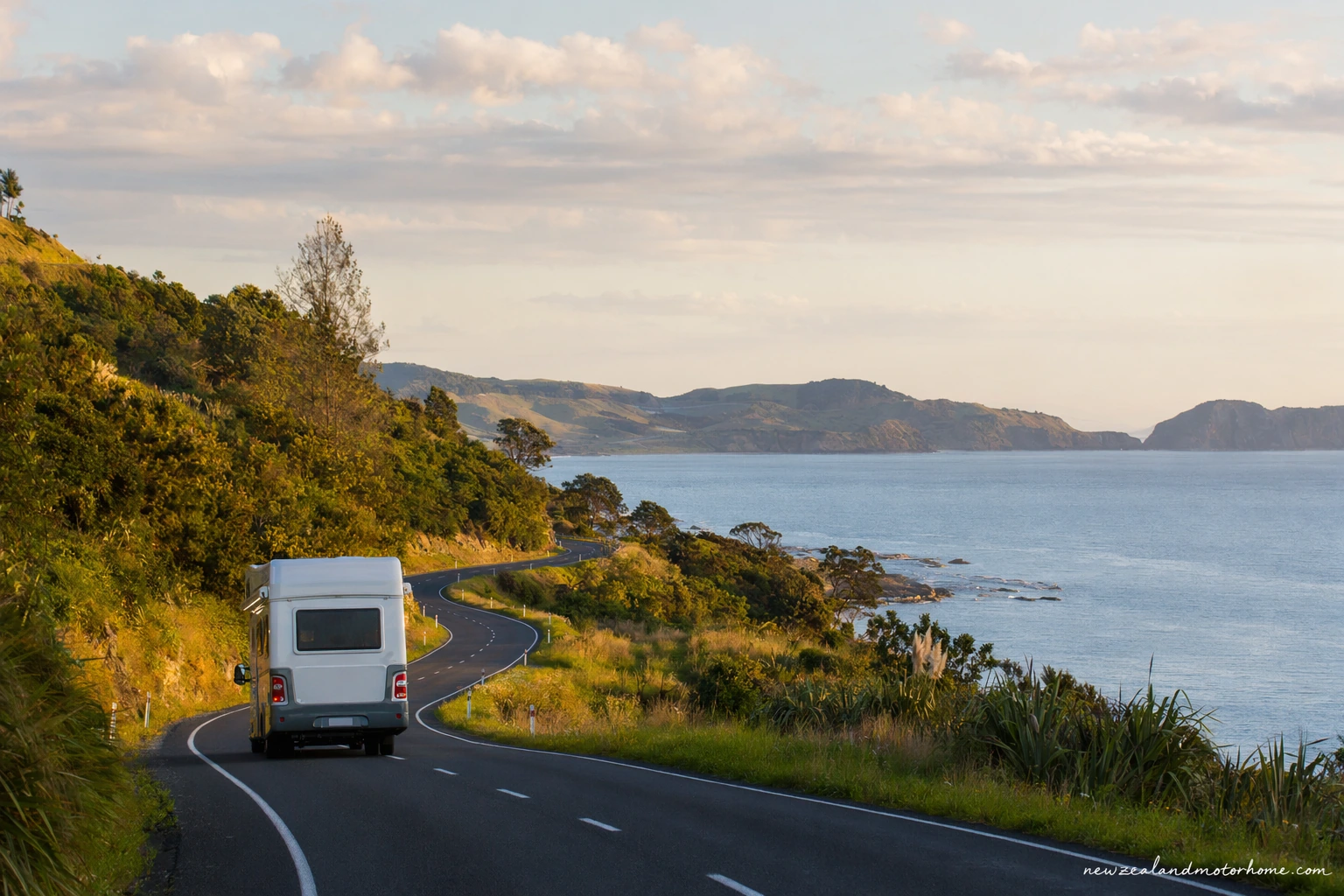
- Allow 3–5 days
- Approx. 530–570 km
- Powered sites recommended every second night
- Check self-containment rules
- Best in settled weather
The New Plymouth to Whangarei campervan route is a proper west-coast-to-northland crossing: Taranaki surf and mountain views, King Country limestone, a careful run through Auckland, then the warmer, hillier roads into Northland. You can technically drive it in a long day, but in a motorhome that usually means missing the places that make the journey worth doing.
This guide is written for self-drive van travellers who need to think about more than kilometres. You’ll find realistic driving legs, where to break the trip, what roads feel comfortable in a larger vehicle, and how to plan powered sites, dump stations, LPG, fresh water and freedom camping without winging it at dusk.
How many days to allow in a campervan
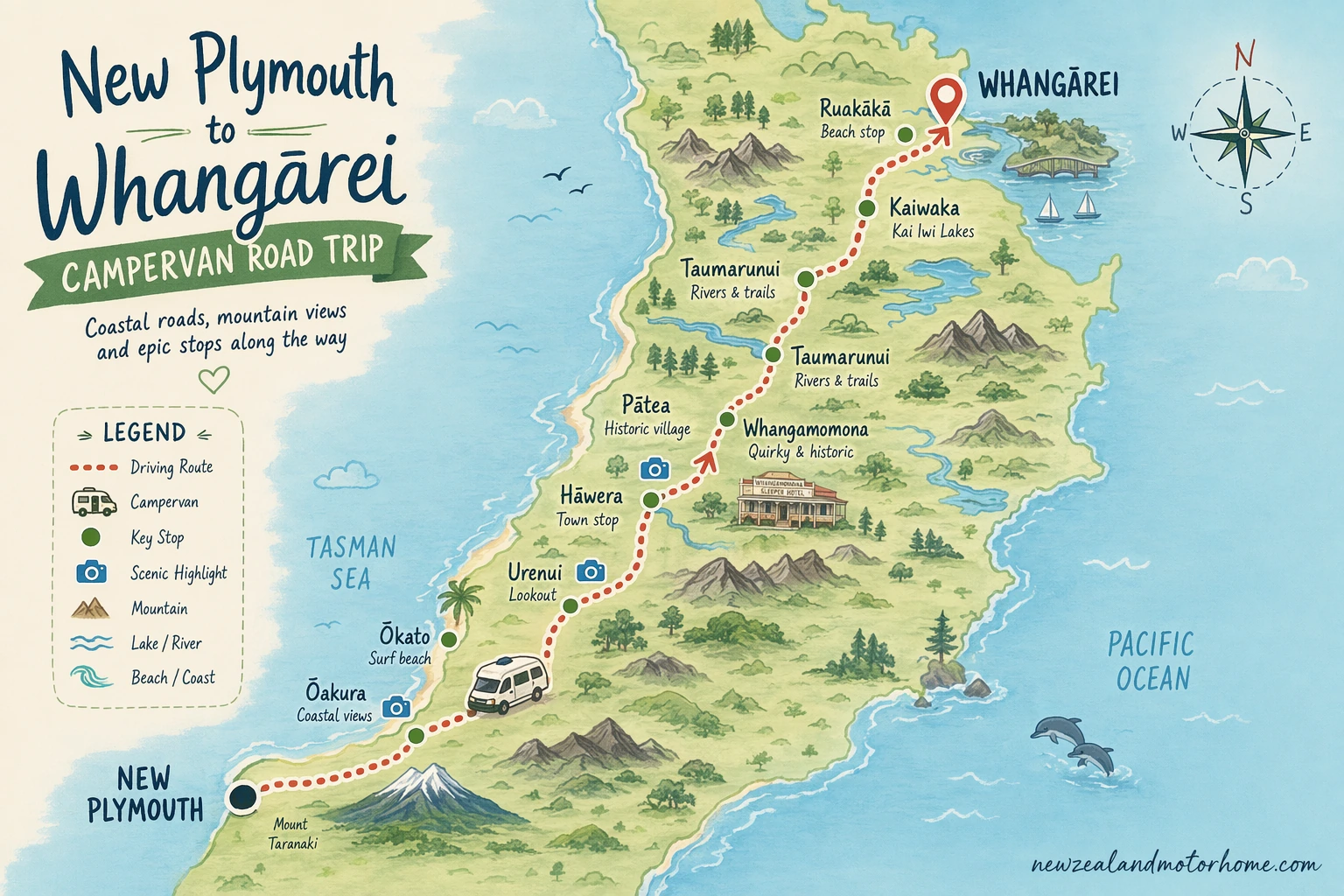
The direct New Plymouth to Whangarei drive is roughly 530–570 kilometres, depending on the Auckland crossing you choose. In a car it can look like a single-day mission; in a campervan, with slower hill sections, fuel stops, supermarket runs and rest breaks, it is better treated as a 3 to 5 day route.
Three days gives you one overnight around Waitomo or the Waikato and one north of Auckland. Four or five days lets you add the Taranaki coast, glowworm country, Matakana or a Northland beach stop before rolling into Whangarei with water in the tank and the grey-water sorted.
- Fast but sensible: 3 days, with longer driving legs and pre-booked overnight stops.
- Comfortable pace: 4 days, ideal for most hired campervans and first-time NZ drivers.
- Unhurried: 5 days or more, with time for Waitomo, west-coast beaches and a night near Warkworth or Waipu.
If you want help matching the route to your van size, pick-up time and campsite style, you can send your dates through the plan-your-trip step and shape the legs before you book sites.
Leg 1: New Plymouth to Mokau, Waitomo or Te Kuiti
Leave New Plymouth with a full fresh-water tank, groceries on board and enough fuel for the rural stretch up State Highway 3. The coast north of Taranaki is beautiful in a van, but it is not a road for rushing: expect winding sections, short passing lanes, logging trucks and places where you will want both hands on the wheel.
Good van stops along this leg include the coastal pull-offs near Tongaporutu, where you can visit the Three Sisters and Elephant Rock area only when the tide is right, and Mokau for a leg stretch by the river mouth. Park only where signs allow, keep clear of boat ramps, and avoid soft grass shoulders after rain.
- Overnight option: a powered site around Waitomo or Te Kuiti works well if you want showers, laundry and an easy start next morning.
- Freedom camping: rules vary by district and site; use only signed areas that allow your current self-contained campervan.
- Dump and water: plan to use council-listed dump stations in New Plymouth or the King Country towns rather than assuming a beach stop will have facilities.
Waitomo is a natural first-night break on a new plymouth to whangarei motorhome road trip. If your van is long or you are new to left-side driving, book a proper campsite rather than trying to find a rural freedom spot after dark.
Leg 2: King Country through the Waikato to Auckland
From Te Kuiti or Waitomo, continue north through Otorohanga and the Waikato. You can stay on State Highway 3 towards Hamilton, or use rural connectors such as SH39 where appropriate to keep out of the busiest city traffic. Both are manageable in a campervan, but allow extra time for farm vehicles, roundabouts and small-town speed changes.
Hamilton and the wider Waikato are useful logistics territory. This is where it makes sense to top up diesel, check tyre pressure, refill LPG if your hired van uses it for cooking or hot water, and empty the cassette or grey-water tank before the Auckland section. Larger supermarkets are easier here than in small Northland settlements.
- Parking the van: choose supermarket and visitor parking bays on the outer edge where you can drive through or reverse without blocking cars.
- Overnight stop: stay south of Auckland if you want to tackle the motorway early, or push to a North Shore holiday park if traffic timing is on your side.
- Traffic note: avoid weekday peak times through Auckland, especially in a wide or unfamiliar motorhome.
For many vans, the Western Ring Route via SH20, SH16 and SH18 is a calm alternative to threading the central motorway and harbour bridge approaches. It can be a little longer, but the merging often feels less intense than the most central path.
Leg 3: Auckland to Whangarei via Warkworth and Northland hills
North of Auckland, the route starts to feel like Northland quickly: rolling pasture, bushy gullies, tighter bends and warm, humid air in summer. Warkworth is a useful pause for food, fuel and a driver swap before the Dome Valley and the hillier run towards Whangarei.
The road north is suitable for campervans and motorhomes, but it asks for patience. Keep left, use slow-vehicle bays when traffic gathers behind you, and descend hills in a lower gear rather than riding the brakes. If roadworks are active around the Brynderwyn Hills or nearby detours, check the latest transport updates before you commit to the day.
- Good break points: Warkworth, Wellsford, Waipu and Ruakaka all work better for vans than trying to stop on narrow rural shoulders.
- Beach detour: Waipu Cove or Ruakaka can make a relaxed final overnight before Whangarei, with holiday-park style facilities nearby.
- Arriving in Whangarei: park near the Town Basin only in spaces suitable for your length, then walk the Hatea Loop rather than squeezing the van through tight central streets.
If this is your first long new plymouth to whangarei drive, do not underestimate the final Northland leg. It looks shorter on the map than it feels when you are driving a tall vehicle in crosswinds or summer traffic.
Overnight stops, powered sites and freedom camping
This route is easiest when you mix serviced nights with simple stopovers. A powered site every second night is practical if you are charging camera gear, running a fridge in warm weather, using onboard heating, or travelling with family who need proper showers and laundry.
Freedom camping is possible in parts of Taranaki, Waikato and Northland, but it is not a blanket right. Councils set their own bylaws, many popular coastal reserves have restrictions, and you generally need a current self-containment certification displayed correctly. Arrive early, read signs on site, and never assume a quiet car park allows overnight stays.
- Start night: New Plymouth holiday park or council-permitted self-contained site if you are already in town.
- Middle night: Waitomo, Te Kuiti, Hamilton fringe or the North Shore, depending on pace.
- Final approach: Warkworth, Waipu, Ruakaka or Whangarei for powered and unpowered campsite options.
- Best practice: empty waste before it is urgent; Northland beach areas are not the place to be hunting for a dump station late in the day.
When booking, tell the campsite your vehicle length, whether you need power, and if you have a roof box, bikes or a high-top van. Some older holiday-park corners and tree-lined sites are tight for larger motorhomes.
Van logistics: fuel, LPG, dump stations and road comfort
Do your main servicing in larger towns: New Plymouth, Te Kuiti or Otorohanga, Hamilton, Auckland’s outer suburbs, Warkworth or Wellsford, and Whangarei. Fuel is widely available, but LPG bottle refills or swaps, potable water and dump stations are easier to plan around than to find spontaneously.
Carry a short hose, a grey-water plan, toilet chemicals if your hire company requires them, and a torch for after-dark campsite hookups. Before leaving each overnight stop, check that roof vents are closed, the power lead is unplugged, cupboards are latched, and the step is in; SH3 and the Northland hills will find anything loose.
- Height: watch service-station canopies, motel-style carports, low trees and inner-city parking buildings.
- Length: choose pull-through fuel lanes where possible and avoid tiny café car parks with no turning room.
- Tyres and brakes: give the van a quick visual check before the Awakino, Dome Valley and Brynderwyn-style hill sections.
- Weather: Taranaki wind and Northland downpours can both slow a tall motorhome; build slack into the day.
A little planning turns this from a long transfer into a satisfying cross-island route. The best version has early starts, unhurried stops, and overnights chosen before you are tired.
Keep planning
Common questions
Can I drive New Plymouth to Whangarei in one day in a campervan?
You can, but it is a long and tiring day in a motorhome. Allow 8 to 10 hours with breaks, traffic and slower hill sections, and consider splitting it at Waitomo, Hamilton or north of Auckland.
What is the best overnight stop between New Plymouth and Whangarei?
Waitomo or Te Kuiti is a good first break if you want a balanced route. If you are making stronger progress, staying on the North Shore or around Warkworth sets up an easier final run into Whangarei.
Is the route suitable for a large motorhome?
Yes, the main highways are suitable for larger vans, but SH3, Dome Valley and the Northland hills have bends, gradients and slower traffic. Use pull-over bays, avoid night driving where possible, and check your height before using parking buildings or tight fuel stations.
Where should I empty waste and refill water?
Use council-listed dump stations and campsite facilities in main towns such as New Plymouth, King Country towns, Hamilton, Auckland’s outer suburbs, Warkworth or Whangarei. Do not leave it until a remote beach stop, as many scenic areas have no legal waste facilities.
Can I freedom camp on this route?
Only where local signs and council rules allow it, and only if your campervan meets the current self-containment requirements for that site. Restrictions change between districts, so check before arrival and have a paid campsite backup.
Which Auckland route is easiest in a campervan?
Many campervan drivers prefer the Western Ring Route because it avoids the tightest central motorway approaches. Travel outside peak times, keep your lane changes early, and allow extra time for congestion.
Have a planner shape this for your dates
Send a short outline — your dates, party size, and the kind of trip you want. A planner replies with a vehicle recommendation, a paced route, and the realistic budget.