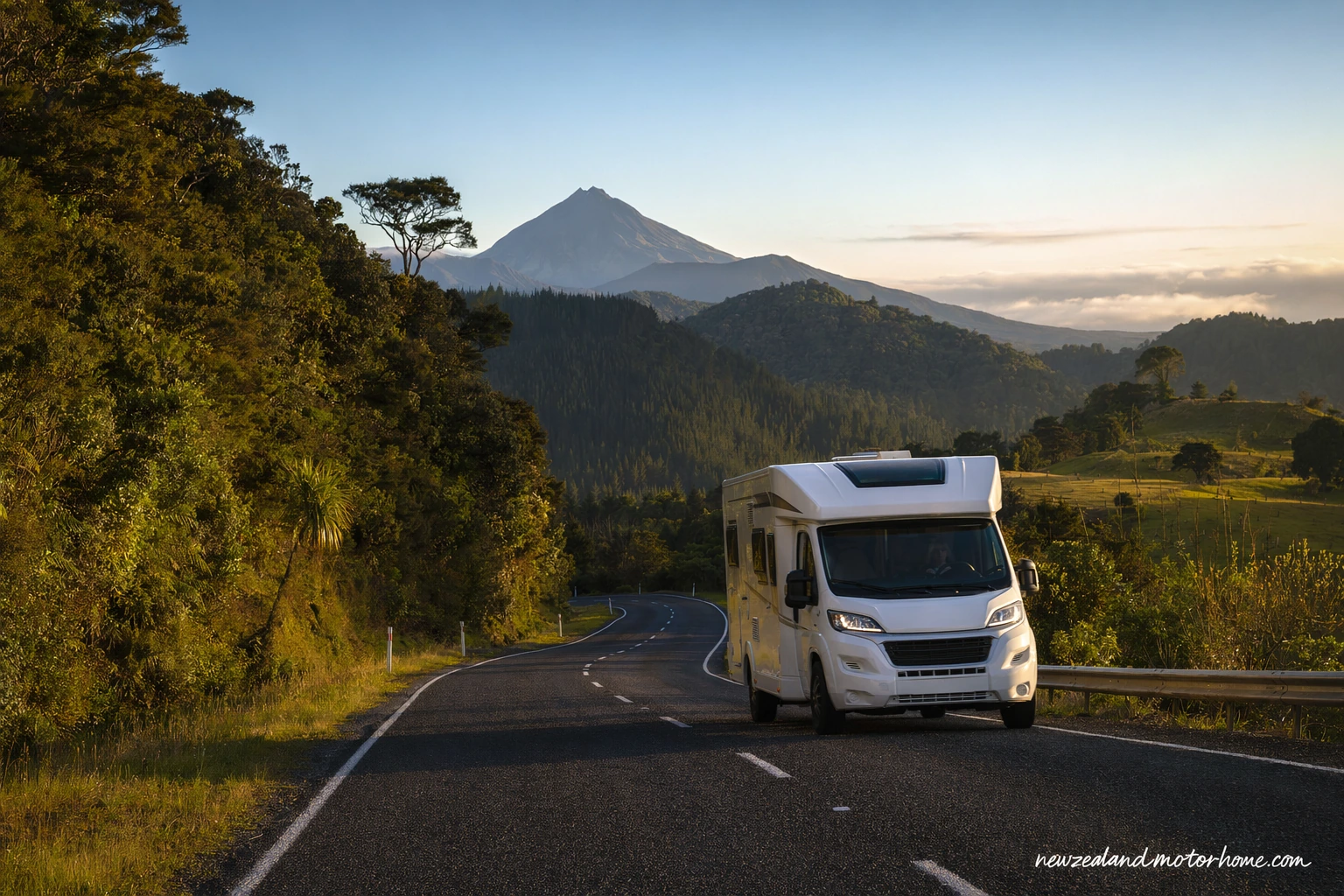
Rotorua to New Plymouth campervan route for a relaxed self-drive trip
- Best in 2–3 days
- Main highways, sealed roads
- Powered sites useful in winter
- Self-contained freedom camping only
- Allow time for SH3 bends
The Rotorua to New Plymouth campervan route is one of those North Island crossings where the drive is as much about the in-between as the start and finish. You leave Rotorua’s steaming lake edge and geothermal country, roll through Waikato farmland and karst hills, then drop towards the Taranaki coast with the mountain sitting out to the west if the weather is kind.
This guide is written for travellers driving and sleeping in their own hired campervan or motorhome. It covers sensible daily legs, where to pause in a larger vehicle, overnight stop styles, dump station and water planning, and the road notes that matter when you are carrying your bed, kitchen and grey water tank with you.
How many days to allow for the Rotorua to New Plymouth drive
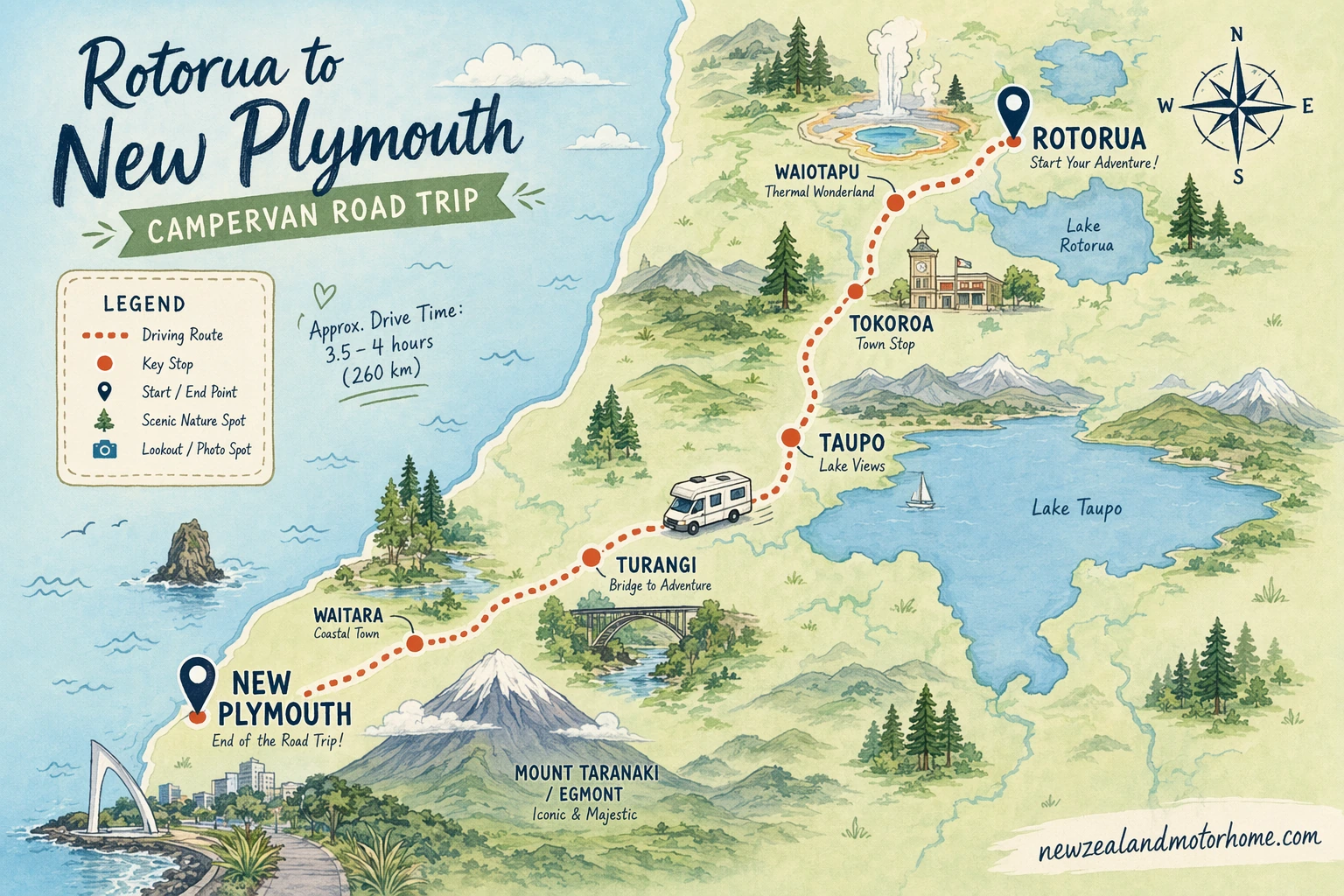
The direct Rotorua to New Plymouth drive can be done in a long day, but it is not the best way to treat it in a campervan. The roads are sealed and commonly driven, yet there are enough winding sections, small-town stops and weather shifts to make two or three days far more comfortable.
A two-day plan suits travellers who want one overnight break around Waitomo, Te Kūiti or Awakino. A three-day rotorua to new plymouth motorhome road trip gives you time to soak near Rotorua, walk in Waitomo country, and arrive in New Plymouth with daylight to park, plug in if needed, and sort tanks before exploring the coast.
- Fast but tiring: one long travel day, best only if you are experienced with NZ roads and not arriving late.
- Recommended: two days with one overnight stop in the King Country or near the coast.
- More relaxed: three days, adding Waitomo caves country or a slower coastal approach through northern Taranaki.
- Best arrival habit: reach New Plymouth before dusk, especially in a longer motorhome, as urban parking and holiday park check-in are simpler in daylight.
Suggested campervan legs from Rotorua to New Plymouth
From Rotorua, most vans head west via State Highway 5 and State Highway 1 towards the Waikato, then connect through Te Awamutu, Ōtorohanga and Te Kūiti before following State Highway 3 south-west towards Taranaki. This keeps you on main sealed roads with regular fuel, groceries and services rather than threading the van through minor back routes.
For the first leg, Rotorua to Ōtorohanga or Waitomo is a practical half-day with room for a supermarket top-up before you leave Rotorua. Ōtorohanga has easier town parking than many smaller settlements, while Waitomo is the natural overnight if you want caves, short walks and a quiet evening rather than pushing on.
The second leg from Waitomo or Te Kūiti to New Plymouth is more scenic and more demanding. South of Te Kūiti, State Highway 3 rolls through tighter bends, bushy gullies and open hill country, then drops towards the coast around Mokau and Awakino before carrying on to New Plymouth. Keep the van in a lower gear on descents, let faster traffic pass when safe, and avoid planning this section as a night drive.
Overnight stops: powered, unpowered and freedom camping options
Rotorua has the easiest choice of holiday parks if you want a powered site before departure. This is the right place to charge house batteries, fill fresh water, empty toilet and grey water, and check LPG before you turn the key west. If you have been freedom camping around the lakes, use a proper dump station before leaving town rather than carrying full tanks across the island.
Around Waitomo, Ōtorohanga and Te Kūiti, look for holiday parks or designated camping areas that clearly accept campervans. Powered sites are useful in winter or if you are running a fridge, heating and device charging, while unpowered sites suit fully self-contained vans with healthy batteries and conservative water use.
Freedom camping rules vary by district and can change, so do not assume a riverside lay-by or beach car park is an overnight spot. Use only signed, legal areas for certified self-contained vehicles, and check local council maps or current signage before you settle in for the night.
- Best first night: Waitomo or Te Kūiti if you want a balanced two-day route.
- Coastal pause: Mokau or Awakino area for sea air and a shorter final run, using only permitted sites.
- New Plymouth arrival: choose a holiday park or designated campervan area if you want to explore without worrying about overnight restrictions.
- Self-containment: carry proof of certification and keep all waste on board until a legal dump point.
Dump stations, fresh water, LPG and food planning
Do your first service stop in Rotorua before leaving: empty the cassette, drain grey water at an approved dump station, refill fresh water and top up groceries. The middle of the route has services, but they are more spaced out than they look on a map, and it is easier to manage a motorhome when you are not searching for water late in the day.
Te Awamutu, Ōtorohanga, Te Kūiti and New Plymouth are the main towns to think about for fuel, food and campervan basics. LPG bottle swaps or fills are generally easier in larger towns than at small rural stops, so check your gas before cooking plans become weather-dependent. If you are hiring a van, also confirm whether your LPG bottle is a swap, refill or fixed-tank system before you leave Rotorua.
In New Plymouth, use a proper dump station before settling in for a few days on the coast or heading onward around Taranaki. Coastal camping is lovely, but wind, salt spray and full tanks make poor companions; a serviced holiday park night can be worth it after a couple of unpowered stops.
Road notes for motorhomes and larger campervans
The Rotorua to New Plymouth campervan route is suitable for standard hire campervans and motorhomes, but it is not a straight motorway cruise. Expect rural highways, passing lanes, bends and some narrow-feeling sections, especially on State Highway 3 through the King Country and towards the coast.
If your vehicle is long, high or heavy, build in extra time for slower hill work and careful pull-outs. Watch for low branches at informal scenic stops, avoid soft grass verges after rain, and take a proper parking bay rather than squeezing half the van over a white line. In small towns, park a block back from the main shops if the angle parks are tight.
- Wind: exposed coastal stretches near northern Taranaki can feel blustery in a high-sided van.
- Rain: allow more braking distance and avoid gravel shoulders that can soften quickly.
- Passing: let locals past when a safe bay appears; it makes the drive calmer for everyone.
- Navigation: keep to main highways unless you have checked that a side road suits your vehicle length and surface clearance.
What to see without making parking the van a headache
Rotorua itself is worth a slow start if your schedule allows: lakefront walks, geothermal areas, redwood forest trails and hot pools all work well before a road day, provided you use marked parking areas and avoid blocking narrow access roads. Leave town with water filled and the fridge stocked, then treat the Waikato and King Country as more than a transit corridor.
Waitomo is the obvious pause, but remember that some attraction car parks have limited room for large motorhomes at busy times. Arrive earlier in the day, ask staff where larger vehicles should park, and avoid committing to tight turnarounds if the main car park is full. Short walks around the village and surrounding limestone country can break the drive without needing complicated access.
Closer to New Plymouth, the coastline around Mokau, Awakino and the approach into Taranaki gives you black-sand beaches, river mouths and big western skies. Once in New Plymouth, park the van for a while and use the Coastal Walkway, city parks and harbour-side areas on foot or by bike where possible. If you would like help shaping the number of nights, site types and driving pace, you can use the talk-to-us step and we will help line the route up with how you actually travel in a van.
Keep planning
Visiting polynesian spa rotorua by campervan
Read onVisiting agrodome rotorua by campervan
Read onHoliday parks rotorua
Read onHoliday parks new plymouth
Read onFarmers markets rotorua
Read onCampervan supplies rotorua
Read onCommon questions
Can I drive from Rotorua to New Plymouth in one day in a campervan?
Yes, it is possible, but it makes for a long and fairly busy driving day in a campervan. Two days is more comfortable, especially if you want to stop around Waitomo or avoid arriving in New Plymouth after dark.
Is the Rotorua to New Plymouth road suitable for a larger motorhome?
Yes, if you stay on the main highways and drive to the conditions. The route has bends, hills and rural sections, so allow extra time, use pull-outs for faster traffic, and be careful with soft verges and tight town parking.
Where should we overnight between Rotorua and New Plymouth?
Waitomo, Ōtorohanga and Te Kūiti are practical midway choices, with the Waitomo area best if you want caves or short walks. Mokau or Awakino can work for a coastal pause, but only use legal, clearly permitted campervan sites.
Do we need a certified self-contained campervan for this route?
You will need certified self-containment if you plan to use freedom camping areas that require it. Even with certification, you must follow local council rules, use approved dump stations, and never empty grey water or toilet waste anywhere informal.
Where is the best place to handle water, waste and LPG?
Rotorua is the easiest place to leave fully serviced, with New Plymouth the next major reset point. Larger towns such as Te Awamutu, Ōtorohanga and Te Kūiti are useful for fuel and groceries, but do not leave LPG or fresh-water planning until late evening.
Is this route better in summer or winter?
Summer gives longer daylight and easier outdoor stops, but it also means busier holiday parks and beach areas. Winter is quieter, though you should plan powered nights more often, watch for rain on rural roads, and avoid late-day driving through the hill sections.
Have a planner shape this for your dates
Send a short outline — your dates, party size, and the kind of trip you want. A planner replies with a vehicle recommendation, a paced route, and the realistic budget.