New Plymouth to Timaru campervan route: ferry and coastal stops
- Allow 4–6 days comfortably
- Cook Strait ferry required
- Best with at least two powered nights
- SH1 coastal wind near Kaikōura
- Self-contained freedom camping only
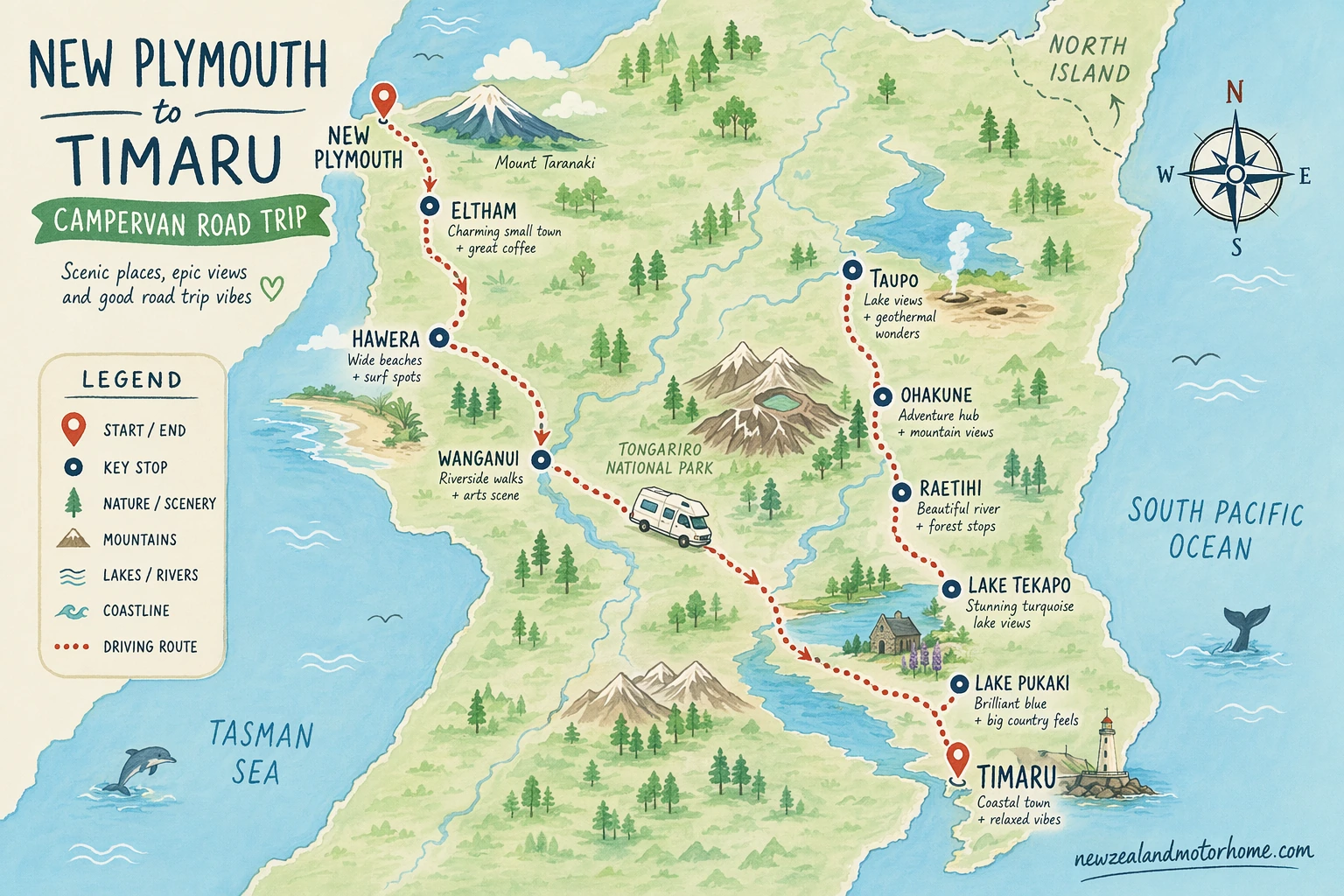
The New Plymouth to Timaru campervan route is a proper two-island drive: Taranaki surf and farmland, the long run down to Wellington, a Cook Strait ferry crossing, then the Marlborough and Canterbury coast all the way to South Canterbury. It suits travellers who like a steady rhythm rather than a rushed point-to-point dash.
This guide is written for self-drive campervan and motorhome travellers: where to break the new plymouth to timaru drive, how to think about powered versus unpowered nights, ferry practicalities, dump stations, fresh-water top-ups, and the road sections that feel different in a longer or taller van.
How many days to allow for the route
You can physically drive from New Plymouth to Wellington in a long day, cross the strait, then push from Picton to Timaru the next day, but that makes for a tiring motorhome trip with little margin for weather, ferry delays or simply needing to empty the cassette. A more comfortable plan is four to six days, with an extra night if you want Kaikōura, Christchurch or the Taranaki coast to feel like part of the trip rather than a blur through the windscreen.
For most hired campervans, the sweet spot is one North Island overnight before the ferry, one night around Picton or Blenheim after the crossing, then one or two nights down the east coast before Timaru. If you are new to driving a larger vehicle in New Zealand, keep your first day modest and avoid arriving at a campsite after dark.
- Fast but tight: 3 days, only if ferry timing lines up and drivers are confident.
- Comfortable: 4–5 days, with sensible driving legs and time for services.
- Easy-going: 6–7 days, adding Taranaki, Whanganui, Kaikōura or Christchurch stops.
- Best ferry tactic: stay near Wellington the night before an early sailing, rather than driving from Taranaki to the terminal the same morning.
Leg 1: New Plymouth to Whanganui or the lower North Island
The first leg follows SH3 south through Taranaki towns and open dairy country before reaching the Whanganui area. It is not a difficult road, but it is a working regional highway with trucks, changing speed limits through small settlements, and stretches where a campervan takes longer to pass or be passed. Give yourself time and use pull-offs when traffic builds behind you.
Whanganui makes a practical first overnight because it gives you a proper break before the Wellington approach. Look for a holiday park or council-approved campground if you want showers, a powered site, laundry and an easy fresh-water top-up. If you are considering freedom camping, check the current district rules and only use places permitted for certified self-contained vehicles.
- Good van habits: fuel before leaving New Plymouth or in the larger Taranaki towns, especially if you prefer not to manoeuvre a long van into small rural forecourts late in the day.
- Overnight style: powered sites are useful here if you have been free camping in Taranaki and need batteries, devices and fridge time reset.
- Services: plan for public dump stations and potable water in New Plymouth or Whanganui rather than assuming every small settlement has easy motorhome access.
- Road note: coastal winds and crosswinds across open farmland can be noticeable in high-roof vans; reduce speed before it feels dramatic.
Leg 2: Whanganui to Wellington and the Cook Strait ferry
From Whanganui the route continues towards Bulls, then joins the main corridor down the Kāpiti Coast into Wellington. The closer you get to the city, the more you need to think like a van driver: lane choice, merging room, height clearances, and avoiding tight central-city parking unless you have checked the space first.
If your ferry leaves early, stay the night before within an easy run of the terminal, such as the Kāpiti Coast, Porirua, Hutt Valley or another approved campground on the Wellington fringe. A powered site is handy before the ferry because you can start the South Island leg with charged batteries and a cold fridge. City freedom camping rules are strict and change by area, so do not rely on a random waterfront car park for the night.
- Ferry booking: enter your campervan or motorhome length and height accurately, including bike racks or rear boxes.
- LPG: expect to turn gas bottles off for the sailing and follow ferry crew instructions.
- Terminal timing: allow more buffer than you would in a car; traffic, rain and missed turns are all more annoying in a large vehicle.
- Before boarding: secure loose items, shut roof vents, and make sure the fridge is set appropriately for the crossing.
Leg 3: Picton to Kaikōura, with Marlborough breathing room
Rolling off the ferry in Picton is a good moment to slow the trip down. If the crossing has been late or rough, take an overnight in Picton or Blenheim rather than pushing on tired. Both areas work well for campervans because you can find powered and unpowered campground options, supermarkets, fuel, LPG bottle swaps and fresh-water fills without hunting through narrow streets.
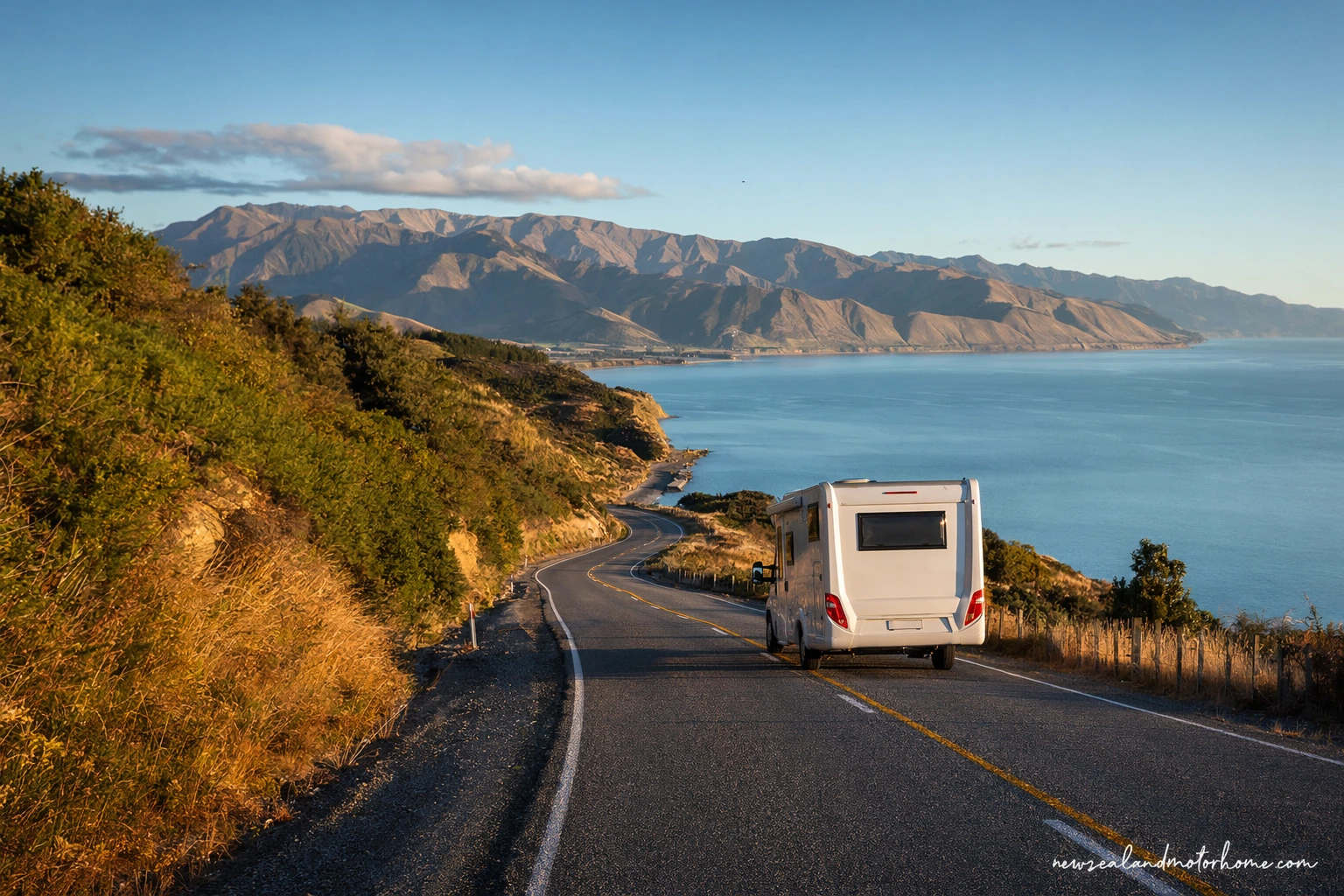
The drive south towards Kaikōura is one of the scenic highlights of the new plymouth to timaru motorhome road trip, with vineyards, dry hills and then the Pacific coast. SH1 is generally motorhome-suitable, but it can feel narrow in places, especially where rail, sea and road sit close together. Stop only in formed pull-offs, keep clear of seal-viewing traffic, and watch for gusty coastal conditions.
- Picton/Blenheim stop: ideal for a post-ferry powered night, laundry and restocking.
- Kaikōura stop: choose an approved campground or holiday park if you want to walk into town without moving the van again.
- Dump stations: use the larger centres on this leg rather than leaving cassette and grey-water jobs until a small beach settlement.
- Driving note: after heavy rain or seismic repair work, check NZTA road updates before committing to the coastal section.
Leg 4: Kaikōura to Timaru via Christchurch and the Canterbury plains
South of Kaikōura, SH1 runs through North Canterbury towards Christchurch and then across the broad Canterbury plains to Ashburton and Timaru. This part of the New Plymouth to Timaru drive can look simple on the map, but fatigue sneaks in because the roads are straighter and the distances feel longer than expected. Break the day with proper van-friendly stops rather than quick shoulder pullovers.
Christchurch is the best place on the route for a full service reset if you need one: supermarket stock-up, LPG, fuel, potable water, dump station, repairs, or a powered night before the last push. If you do not want city driving in a larger motorhome, stay on the outskirts or choose a campground with straightforward access from the main route.
- Christchurch to Timaru: mostly open highway and plains driving, with wind possible for high-sided vans.
- Good final stop: Timaru has coastal walks and Caroline Bay nearby, but check where motorhomes may park before leaving the van for a wander.
- Overnight in Timaru: use a holiday park, campground or approved self-contained site depending on your power and water needs.
- Arrival routine: empty grey water and cassette at an official dump station, refill fresh water if you are continuing south, and avoid overnighting in unsigned beach or reserve car parks.
Practical planning notes for a smoother campervan trip
This is a route where small planning choices make a big difference: booking a realistic ferry, choosing overnight stops before you are tired, and servicing the van in larger towns. If you are travelling in a longer motorhome, be conservative with inner-city parking in Wellington and Christchurch, and check campsite vehicle length limits before you arrive.
Freedom camping is possible in parts of this journey only where local bylaws allow it and your vehicle meets the current self-containment requirements. Treat powered sites as part of the plan, not a fallback: they are especially useful before and after the ferry, during cold weather, or if you are running laptops, heaters or medical devices.
If you want help shaping the route around your actual van size, ferry date and preferred overnight style, you can use our talk-to-us step and we will help turn the drive into a practical day-by-day plan.
- Carry: drinking-water hose, levelling ramps, toilet chemicals, head torch and a rubbish bag system that works inside the van.
- Check: ferry conditions, SH1 updates, campsite arrival times and current freedom camping rules.
- Service rhythm: top up fresh water before remote-feeling coast sections and empty waste whenever a convenient official dump station appears.
- Driving comfort: swap drivers before you are tired; wind, ferry logistics and city approaches all take more concentration in a campervan.
Common questions
Can I drive a campervan from New Plymouth to Timaru in two days?
It is possible only with very long driving days and a ferry that lines up perfectly, but it is not a relaxed campervan plan. Four or more days gives you time for the Cook Strait crossing, dump stations, food stops and weather delays without arriving exhausted.
Where should I stay before the Wellington ferry?
Choose an approved campground or holiday park within an easy drive of the ferry terminal, such as the Wellington fringe, Hutt Valley, Porirua or Kāpiti Coast. A powered site the night before is useful so your batteries and fridge are ready for the South Island leg.
Is the Picton to Timaru section suitable for a large motorhome?
Yes, the main route via SH1 is used by campervans and motorhomes, but you should drive to the conditions. Take care on the coastal section near Kaikōura, use formed pull-offs only, and allow extra space in wind or roadworks.
Can I freedom camp on this route?
Only in places where the local council allows it and only if your vehicle meets the current self-containment rules. Because bylaws vary between Taranaki, Wellington, Marlborough, Canterbury and Timaru, check the official local rules before each overnight.
Where can I empty the toilet cassette and grey water?
Plan to use official dump stations in larger centres such as New Plymouth, Whanganui, Wellington or the Hutt area, Picton or Blenheim, Kaikōura, Christchurch and Timaru. Do not leave it until late in the day, as access, lighting and turning space are easier when you are not tired.
Have a planner shape this for your dates
Send a short outline — your dates, party size, and the kind of trip you want. A planner replies with a vehicle recommendation, a paced route, and the realistic budget.