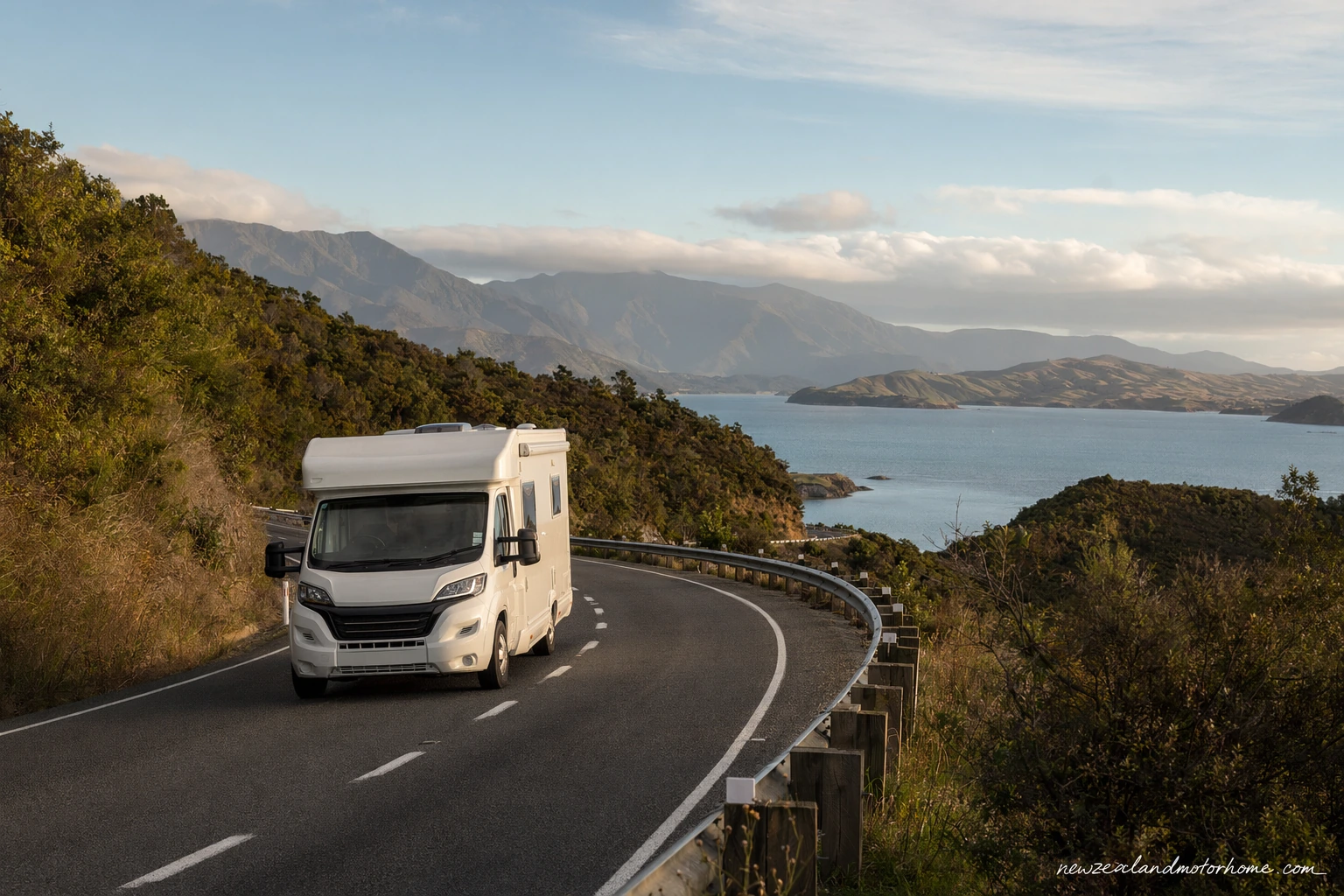
- Best as a 3–5 day route
- Cook Strait ferry required
- SH3 easiest for larger vans
- Powered sites recommended in winter
- Freedom camping only where signed
The Picton to New Plymouth campervan route is a proper Cook Strait-to-mountain journey: ferry ramps in the Marlborough Sounds, Wellington traffic, Kāpiti coast stops, Whanganui river country, then the wide shoulder of Taranaki Maunga coming into view.
This guide is written for travellers driving and sleeping in their hired campervan or motorhome. You’ll find realistic drive legs, where to overnight with powered or unpowered options, how to handle dump stations and fresh water, and which roads feel easiest in a longer van.
How many days to allow for the Picton to New Plymouth drive
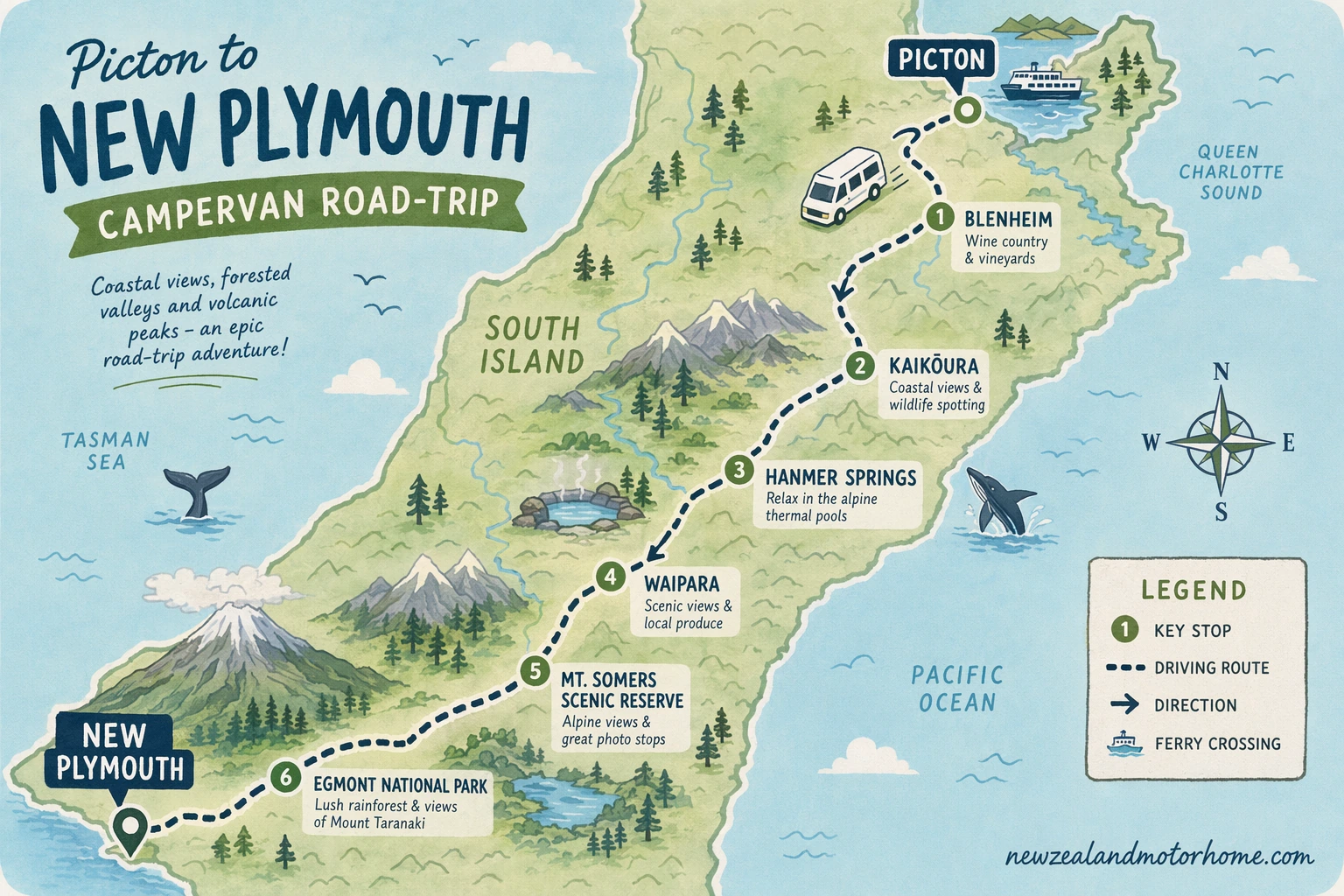
You can technically get from Picton to New Plymouth in a long day once the ferry is included, but it is not a relaxed motorhome day. The ferry crossing, loading time, Wellington exit traffic and the SH3 run through Whanganui and South Taranaki all add up quickly when you are driving a taller, heavier vehicle.
For most self-drive van travellers, three days is the comfortable minimum. Four or five days gives you time for a proper overnight in Whanganui, a beach stop around Ōpunake or Pātea, and a calmer arrival into New Plymouth with daylight left for parking and setting up.
- Fast but tiring: 2 days, with one overnight around Kāpiti, Levin, Foxton or Whanganui.
- Best balance: 3 days, splitting Picton/Wellington, Whanganui, then New Plymouth.
- Slower scenic option: 4–5 days, adding the Surf Highway 45 coast and extra campground time.
- Ferry note: Book by vehicle length and height, and allow time to turn off LPG before boarding.
Leg 1: Picton, the ferry and leaving Wellington in a van
Picton is a sensible place to get the van sorted before crossing Cook Strait. If your ferry is early, stay the night before at a Picton or Waikawa holiday park so you can plug into power, top up fresh water, empty grey and black water if facilities are available, and reach the terminal without a rushed hill start in morning traffic.
Certified self-contained freedom camping around Marlborough is tightly managed and usually limited to designated spots, so do not assume you can simply park beside the harbour. Check the current council rules and signs on the day, especially if you are in a larger motorhome that needs more turning room.
On the ferry, keep a small day bag with you because you will not normally have access to the vehicle deck during the sailing. Once you land in Wellington, follow the motorway north rather than threading through the city unless you have a booked urban site. The first hour out of Wellington can feel busy in a campervan, with merging lanes, wind gusts and impatient commuters.
- Good first-night choices: Picton/Waikawa before the ferry, or Lower Hutt/Kāpiti after landing.
- Van jobs: LPG off for the ferry, water secured, cupboards latched, fridge set for travel.
- Road feel: Wellington to Kāpiti is motorway/expressway, but stay alert for crosswinds.
Leg 2: Wellington to Whanganui via Kāpiti and the Rangitīkei
From Wellington, the Picton to New Plymouth motorhome road trip follows SH1 north through the Kāpiti corridor, then on towards Levin, Foxton, Sanson and Bulls before turning for Whanganui. This is the easiest and most direct line for most campervans, with regular fuel, supermarket and café stops that have more space than central-city parking.
For a lunch stop, look for marked long-vehicle parks or quieter side streets near reserves rather than squeezing into small angled parks in town centres. Foxton, Bulls and Whanganui are all useful places to pause, but check for time limits and avoid blocking access for locals, especially near boat ramps and riverfront areas.
Whanganui is a strong overnight stop because it breaks the route neatly and gives you services before the Taranaki section. Choose a riverside or seaside holiday park if you want power, showers, laundry and a dump station; if you are relying on freedom camping, confirm your self-containment certification is accepted and use only signed responsible-camping areas.
- Distance feel: Wellington to Whanganui is a comfortable half-day to full-day van leg depending on stops.
- Services: Fuel, groceries, LPG swaps/refills and public dump-station options are generally easier before you leave Whanganui.
- Parking tip: In Whanganui, park the van before exploring the riverfront on foot.
Leg 3: Whanganui to New Plymouth on SH3 or Surf Highway 45
North of Whanganui, SH3 runs through Waverley, Pātea, Hāwera and Stratford before reaching New Plymouth. It is the more straightforward route for longer motorhomes, with fewer slow coastal bends and more predictable places to pull over. Expect a mix of open rural driving, small towns, passing lanes and occasional wind exposure.
If the weather is settled and you are not in a very long or wide vehicle, you can leave SH3 at Hāwera and follow Surf Highway 45 through Ōpunake and coastal Taranaki. It is slower, more scenic and better suited to travellers who are happy to take their time, watch for cyclists, and avoid tight beach car parks when they are full.
Do not underestimate the final approach into New Plymouth. After several hours of rural driving, the city can feel busy, and some seaside parking areas fill quickly in summer. If you have booked a holiday park, arrive before dark so you can line up the van, connect to power safely and walk to the beach or coastal walkway without moving again.
- Best for big vans: Stay on SH3 via Hāwera and Stratford.
- Best for coastal stops: Take Surf Highway 45 in daylight and calm weather.
- Useful service towns: Hāwera, Stratford and New Plymouth for fuel, groceries, water and dump-station planning.
Overnight stops, dump stations and arriving in New Plymouth
For this route, plan your nights around services rather than just scenery. Powered sites are useful in Picton, Whanganui and New Plymouth if you are running heaters, charging devices or travelling outside summer. Unpowered sites work well for self-contained vans with good battery capacity, but you still need a plan for fresh water, grey water and toilet cassette disposal.
In New Plymouth, the most convenient campervan bases are the coastal holiday park areas near the waterfront, Fitzroy and Belt Road, or a booked site further out if you prefer quieter nights. Freedom camping is controlled by local bylaw and is not a park-anywhere arrangement; use only designated areas, follow maximum-stay rules, and make sure your vehicle displays the correct self-containment certification.
Before you settle in for Taranaki, empty your waste tanks at an approved dump station and refill fresh water where permitted. If you want help turning the Picton to New Plymouth drive into a timed itinerary with ferry buffers and overnight bookings, you can send your dates through the talk-to-us page and we’ll shape it around how you like to travel in the van.
- Powered-site priorities: Picton before ferry, Whanganui mid-route, New Plymouth on arrival.
- Freedom camping: Only in signed areas and only if your campervan meets the local requirements.
- Dump stations: Check current locations in council or campervan apps before leaving each town.
- Fresh water: Refill at holiday parks or signed potable taps; never use dump-station rinse hoses for drinking water.
Common questions
How long is the Picton to New Plymouth campervan route?
Allow a full ferry crossing plus roughly a long day of driving from Wellington to New Plymouth if you did it without much stopping. In a campervan, 3 days is far more comfortable because you can overnight around Picton or Kāpiti, then Whanganui, before reaching Taranaki.
Is the route suitable for a large motorhome?
Yes, if you use the main ferry, motorway and SH1/SH3 route. Larger motorhomes are better staying on SH3 via Hāwera and Stratford rather than taking every narrow coastal detour on Surf Highway 45, especially in wind or poor weather.
Can I freedom camp between Picton and New Plymouth?
Sometimes, but only in designated areas and only if your van meets the self-containment requirements for that council area. Marlborough, Wellington, Whanganui and New Plymouth all have their own rules, so check current signs and bylaws before you park for the night.
Where should I empty the toilet cassette and grey water?
Use approved dump stations at holiday parks, selected service areas or council-provided facilities. Do a dump-station check before leaving Picton, Whanganui and New Plymouth, as those are the easiest service points on this route.
Should I take Surf Highway 45 in a campervan?
Surf Highway 45 is rewarding in a small to mid-sized campervan when the weather is settled and you are happy driving slowly. If you are in a long motorhome, short on time, or arriving late in the day, SH3 is the simpler and safer choice.
Have a planner shape this for your dates
Send a short outline — your dates, party size, and the kind of trip you want. A planner replies with a vehicle recommendation, a paced route, and the realistic budget.