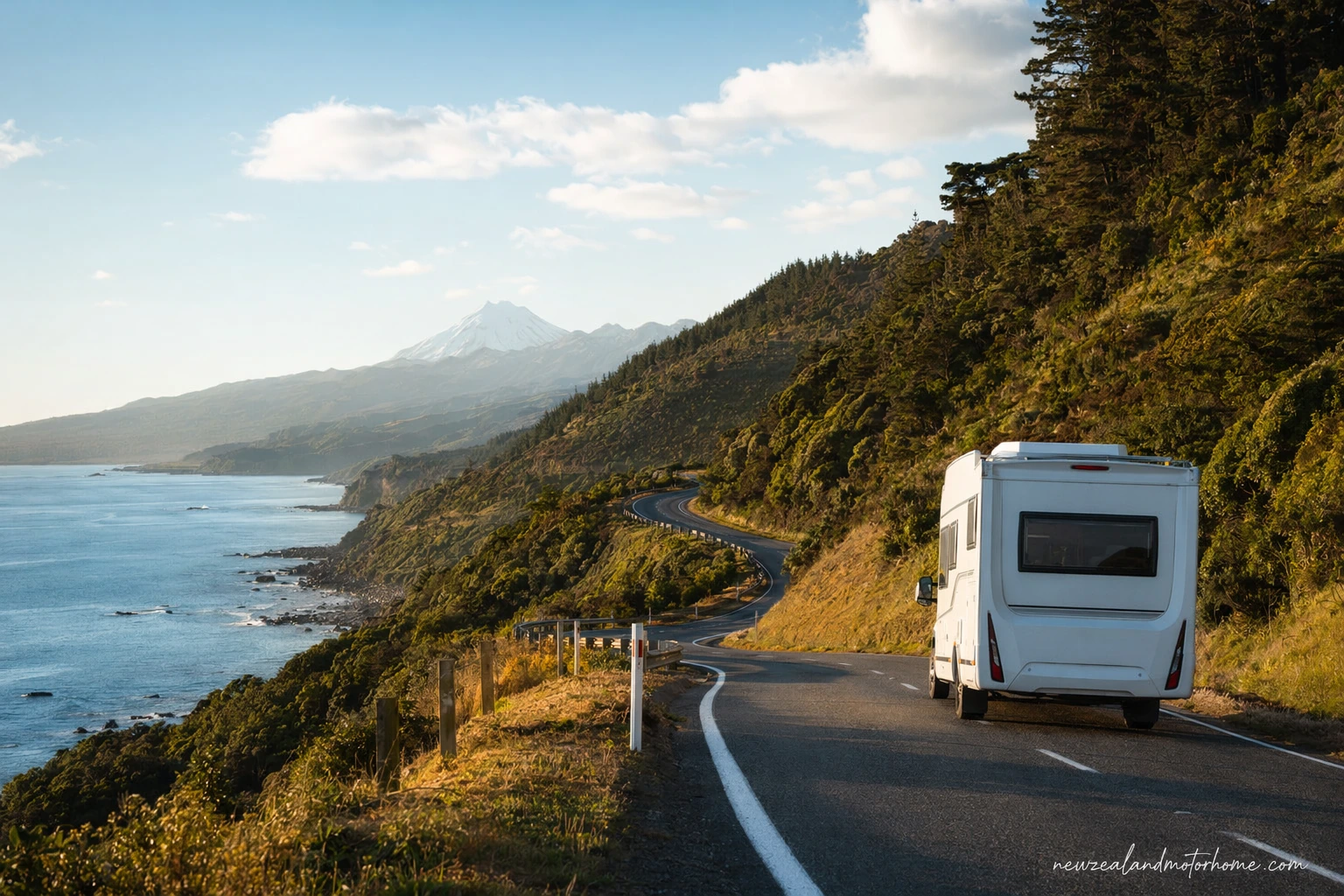
Wellington to New Plymouth campervan route: coast, river and maunga
- Best over 2–4 days
- Main route SH1 and SH3
- Powered sites in Kāpiti, Whanganui and New Plymouth
- Freedom camping by local rules only
- Avoid narrow hill shortcuts in larger vans
The Wellington to New Plymouth campervan route is a satisfying west-coast run: out of the capital, up the Kāpiti Coast, across the Rangitīkei and Whanganui plains, then into Taranaki with the maunga slowly taking over the windscreen. It is not a hard drive, but it rewards a slower pace, especially if you want beach overnights, river walks, and time to deal with water, LPG and dump-station stops without rushing.
This guide is written for self-drive van travellers sleeping in their own hired campervan or motorhome. You will find practical notes on the Wellington to New Plymouth drive, where to break the journey, which roads suit larger vans, and how to think about powered sites, unpowered camping and freedom camping rules along the way.
How many days to allow for the route
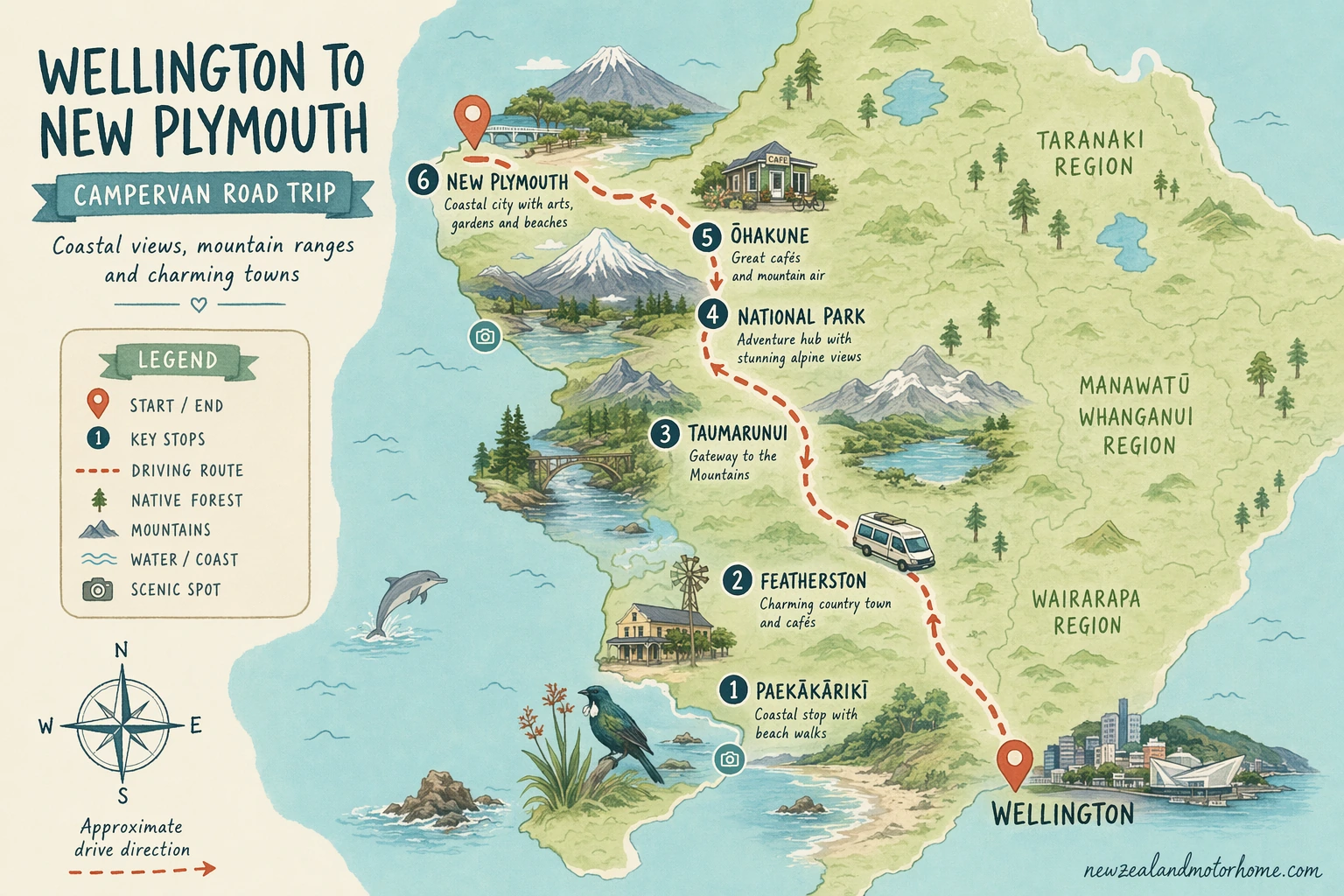
You can drive Wellington to New Plymouth in a long day, but that makes it feel like a transfer rather than a campervan trip. For most motorhome travellers, two nights is the comfortable minimum: one somewhere around Kāpiti, Foxton or Whanganui, then another in South Taranaki or New Plymouth depending on your pace.
A three to four day Wellington to New Plymouth motorhome road trip gives you time for short coastal detours, a proper stop in Whanganui, and a choice between the direct SH3 run through Stratford or the slower Surf Highway 45 approach around the coast.
- 1 day: possible, but best only if you are moving between bookings and have an early start.
- 2 days: a sensible point-to-point plan with one relaxed overnight stop.
- 3 days: better for Whanganui, Pātea and South Taranaki beaches.
- 4 days: ideal if you want the Surf Highway 45 loop and a settled first night in New Plymouth.
Leg 1: Wellington to Kāpiti, Ōtaki or Foxton
Leaving Wellington in a campervan is easiest outside peak commuter times. Transmission Gully and SH1 make the run north smoother than the old coastal highway, but keep your speed modest in a high-sided van if the wind is up. If your motorhome is tall or longer than around 7 metres, avoid treating Paekākāriki Hill Road as a scenic shortcut; it is narrow, winding and not a relaxed choice in a larger vehicle.
Kāpiti is a good first pause if you have just collected a van in Wellington and want to test the cupboards, fridge, gas and bedding before pushing on. Holiday parks around Paekākāriki, Paraparaumu and Ōtaki usually offer powered and unpowered sites, and they are useful for a first fresh-water fill or dump-station stop. Freedom camping rules vary between districts, so rely on current council signage and only use permitted areas if your van has valid self-containment certification.
- Good van stops: beach car parks for daytime breaks, Ōtaki for groceries, Foxton for an easy coffee-and-stretch stop.
- Services to look for: public dump stations in larger towns, supermarket parking with care, LPG bottle swaps or refills at fuel stops.
- Driving note: watch crosswinds on exposed sections and give yourself more braking room than you would in a car.
Leg 2: Foxton to Whanganui via Bulls
From Foxton, the route continues through flat farming country to Bulls, then across to Whanganui. This is straightforward driving for most campervans, with enough passing lanes and town stops to avoid feeling boxed in. Bulls is a handy place to top up fuel before the road bends west and the traffic thins.
Whanganui is one of the best overnight breaks on this route because it gives you more than just a place to park the van. Choose a powered site if you want to recharge devices, run the heater legally and reset the house battery, or pick an unpowered site if your solar and battery setup is coping well. The riverfront and heritage streets are worth exploring on foot once the van is parked, and larger motorhomes will generally be happier using established parking areas rather than tight central streets.
If you are building the trip around tides, surf or bike rides, this is a good point to check your next day and adjust. For a tailored version with your van size, travel month and preferred overnight style, you can use the soft planning step at /talk-to-us/.
Leg 3: Whanganui to South Taranaki
The Whanganui to Hāwera section is where the trip starts to feel properly west coast. SH3 rolls through Waverley and Pātea, with rural pull-offs and small-town stops rather than big motorway-style service areas. Keep an eye on fuel and fresh water; it is not remote, but it is easier to sort practical jobs in Whanganui or Hāwera than assume the next small settlement will suit a large motorhome.
Pātea is worth a break if you like a quieter coastal stop, and Hāwera is the practical hub before choosing your final approach to New Plymouth. In South Taranaki, some beach areas allow limited freedom camping for certified self-contained vehicles, while others are day-use only or restricted by season. Read the local signs, avoid blocking boat ramps and farm access, and never empty grey water anywhere except an approved dump station.
- Overnight style: Hāwera and nearby coastal settlements can work for unpowered camping if permitted; holiday parks give easier dump, shower and laundry options.
- Supplies: restock food in Hāwera, and check gas before heading around the coast.
- Van etiquette: park within marked bays, keep awnings tucked in where space is tight, and leave early-morning locals room to use beach access points.
Final approach: direct SH3 or Surf Highway 45
From Hāwera you have two good campervan choices. The direct SH3 route runs through Stratford and Inglewood, giving you clear views of Taranaki Maunga on a fine day and a straightforward road into New Plymouth. It is the more efficient option and generally the better pick in poor weather or if you are driving a longer motorhome.
The alternative is Surf Highway 45, looping via Ōpunake and the coastal settlements before reaching New Plymouth. It is slower and more scenic, with beaches, surf breaks and glimpses of the maunga over farmland. The road is sealed and commonly driven by campervans, but expect narrower sections, more turning in and out of small beach roads, and fewer large-vehicle parking spaces right at the sand.
- Choose SH3 if: you want the easiest driving day, need services, or are arriving late.
- Choose Surf Highway 45 if: you have daylight, a smaller or mid-sized van, and want beach stops rather than a direct run.
- Weather note: Taranaki rain can arrive hard and sideways; slow down, secure roof vents, and avoid soft grass parking after heavy rain.
Arriving in New Plymouth with a campervan
New Plymouth is a pleasant place to finish because you can park the van and explore much of the city on foot or by bike, especially around the Coastal Walkway. For overnighting, use a holiday park or clearly permitted camping area rather than assuming any seafront car park is available. Powered sites are useful here if you have been off-grid for a couple of nights, and they also make it easier to do laundry before heading onward.
Before you settle in, take care of the practical reset: dump grey and black water at an approved dump station, refill fresh water, check LPG, and give the fridge time on mains power if needed. If your next leg heads north towards Waitomo or south back through Taranaki, plan fuel and overnight stops early; once you leave the city, van-sized parking and services become more spread out again.
Keep planning
Visiting zealandia wellington by campervan
Read onVisiting weta workshop wellington by campervan
Read onVisiting te papa wellington by campervan
Read onHoliday parks wellington
Read onHoliday parks new plymouth
Read onFarmers markets wellington
Read onCommon questions
Can I drive Wellington to New Plymouth in one day in a campervan?
Yes, but it is a long, fairly tiring day once you include fuel, food and rest stops. A campervan is slower to park and manoeuvre than a car, so one overnight break around Whanganui or South Taranaki makes the trip much more relaxed.
Is the road suitable for a large motorhome?
The main SH1 and SH3 route is suitable for most hired campervans and motorhomes when driven sensibly. Avoid narrow scenic shortcuts such as Paekākāriki Hill Road in larger vehicles, and take extra care with wind on exposed coastal and plains sections.
Where should I overnight between Wellington and New Plymouth?
Whanganui is the strongest all-round overnight stop, with good access to services and a proper place to explore after parking the van. Kāpiti, Foxton, Hāwera and permitted South Taranaki coastal spots can also work depending on your timing and whether you need power, water or a dump station.
Can I freedom camp on this route?
Only in places where local rules allow it, and usually only if your campervan is currently certified self-contained. Check council signage on arrival, do not assume a beach car park is legal overnight, and use approved dump stations for all grey and toilet waste.
Should I take Surf Highway 45 in a campervan?
Surf Highway 45 is a rewarding slower option if you have daylight and are comfortable with narrower rural roads and small beach access points. If you are in a long motorhome, arriving late, or driving in rough weather, the direct SH3 route through Stratford is usually easier.
Have a planner shape this for your dates
Send a short outline — your dates, party size, and the kind of trip you want. A planner replies with a vehicle recommendation, a paced route, and the realistic budget.