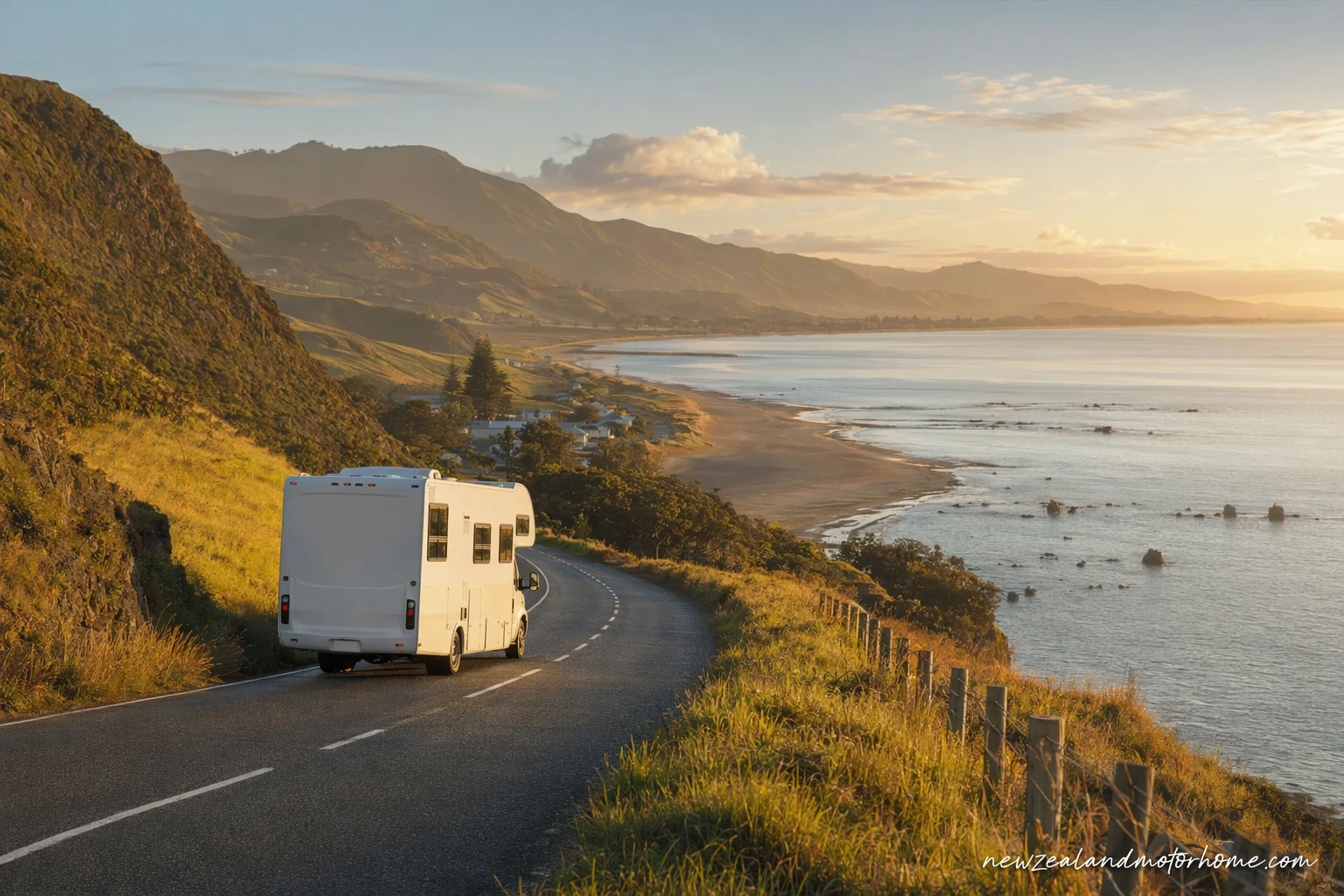
- Best in settled weather
- Allow 2 days minimum
- Waioeka Gorge is sealed but winding
- Powered sites useful before remote legs
- Self-containment needed for freedom camping
The Rotorua to Gisborne campervan trip is a proper eastbound crossing: geothermal lakes behind you, forested ranges ahead, then the first wide sweep of Poverty Bay as you roll into Gisborne. It is not a long route on the map, but it deserves more than a rushed dash if you are driving and sleeping in your hired van.
This guide focuses on the practical bits that matter in a motorhome: where to break the drive, which roads suit larger vans, how to think about powered versus unpowered nights, and when to empty the cassette or top up fresh water. You can drive the direct Waioeka Gorge route in a day, or stretch the Rotorua to Gisborne drive into a slower Bay of Plenty and East Coast road trip.
Best route and how many days to allow
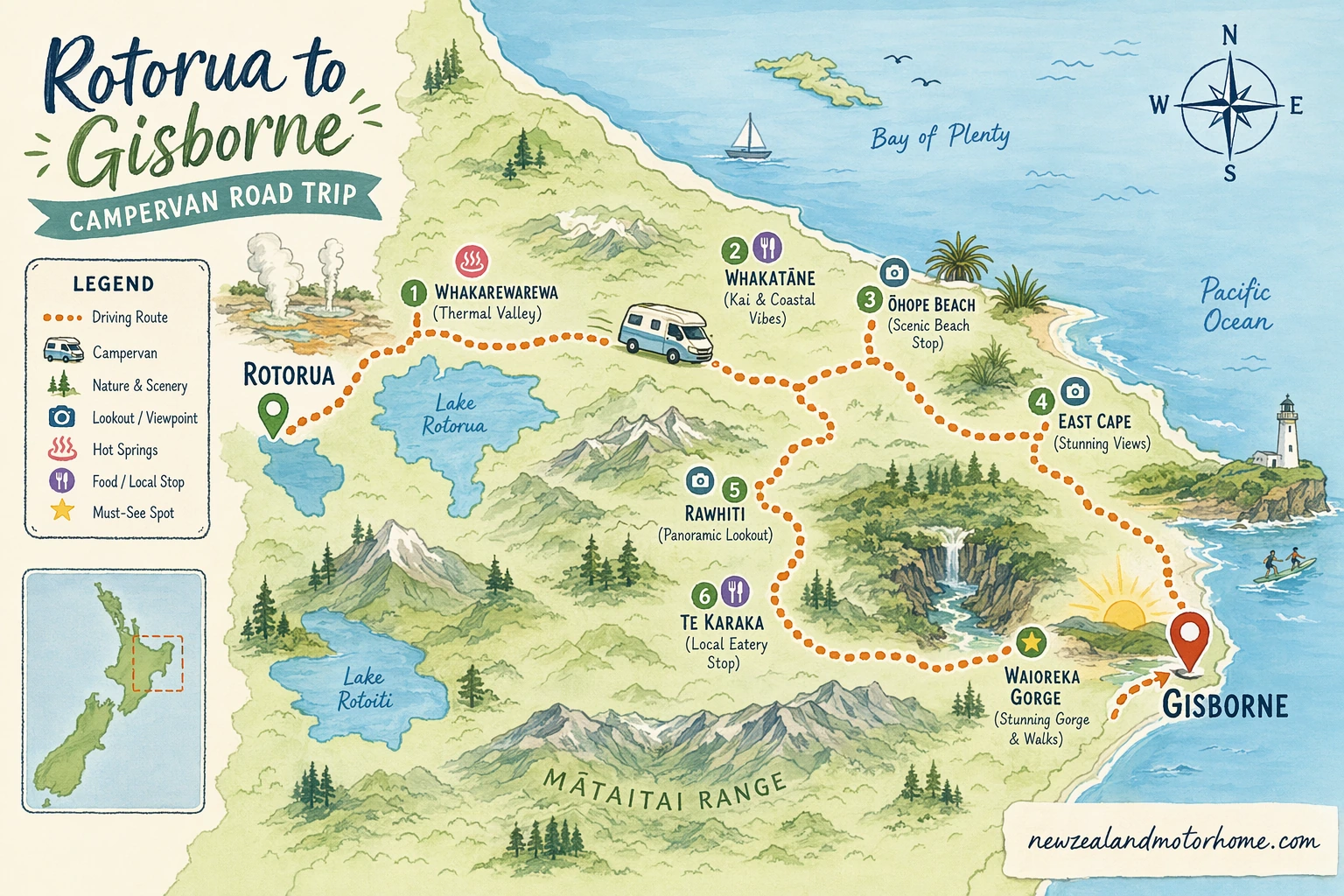
The usual Rotorua to Gisborne motorhome road trip runs east from Rotorua towards the Bay of Plenty, then through Ōpōtiki and the Waioeka Gorge on SH2 before dropping into Gisborne. For most campervans this is the most practical route: sealed, scenic, and straightforward enough if you are comfortable with winding state highways.
In a small-to-medium campervan you can do it in one long travel day, but two days feels much better. Three or four days lets you add beach time around Ōhope or Ōpōtiki, and avoids arriving in Gisborne tired, with tanks full and the fridge nearly empty.
- Fast but tiring: Rotorua to Gisborne in one day, allowing generous stops and daylight driving.
- Comfortable: Rotorua to Whakatāne or Ōhope, then on to Gisborne the next day.
- Slower coastal feel: add Ōpōtiki or a legal East Coast overnight before finishing in Gisborne.
If you want help matching the route to your van size, travel dates and camping style, you can talk to us before you lock in the plan.
Leg 1: Rotorua to Whakatāne or Ōhope
Leave Rotorua with a full fresh-water tank, emptied toilet cassette, and enough LPG for cooking and hot water. Rotorua is the easiest place on this route to reset the van properly, with multiple holiday parks and service points around town; do it before you head east rather than trying to sort everything at a beach car park later.
The drive towards the coast is a mix of open highway, forestry edges and rural towns. It is suitable for standard rental campervans and motorhomes, but watch your speed on bends and leave extra braking room if your van is fully loaded. Larger motorhomes should keep an eye on following traffic and use slow-vehicle bays where available.
Whakatāne and Ōhope make good first-night stops because you get supermarket access, fuel, dump-station options and a softer start to the route. A powered site is useful here if you have been freedom camping around Rotorua and need to recharge house batteries before the more remote stretch.
- Overnight style: holiday park powered sites, unpowered sites near the coast, and strictly signed freedom camping in permitted areas only.
- Van jobs: fuel up, buy groceries, check LPG level, and empty grey water where facilities are provided.
- Parking tip: use marked beach and town parking, and avoid squeezing a long van into angle parks near busy cafés.
Leg 2: Whakatāne or Ōpōtiki to Gisborne via Waioeka Gorge
The Waioeka Gorge is the memorable part of the Rotorua to Gisborne campervan route. It is green, steep-sided and beautiful, but it is still a working state highway with trucks, tight bends and limited places to stop a motorhome safely. Do not treat it like a scenic lay-by road; pull over only where there is a proper sealed shoulder or signposted rest area.
Ōpōtiki is your last practical service town before the gorge, so treat it as a checkpoint. Top up fuel, refill water if you have access to a legal fill point, empty waste if needed, and make sure cupboards are latched before the winding section. There are long stretches without shops or dump stations.
The road is sealed and commonly used by campervans, but after heavy rain or weather events it can have slips, roadworks or temporary controls. Check current road conditions before leaving, especially in winter or after storms. Drive in daylight where you can; the gorge is not where you want to be learning your van’s width in the dark.
- Van size note: 6–7.5 metre rental motorhomes can generally use SH2, but take bends wide only when safe and stay well within your lane.
- Rest stops: use formed pull-offs, not gravel edges that may be soft after rain.
- Arrival: Gisborne has the next full range of supermarkets, fuel, campgrounds and waste services.
Optional longer version: East Cape coastal road
If you have several extra days, you can turn the Rotorua to Gisborne drive into a slower coastal loop by continuing from Ōpōtiki around SH35 before reaching Gisborne. This is not the quick route. It is narrower, slower and more exposed to coastal weather, but it gives you beaches, headlands, small settlements and a very different feel from the inland gorge.
For campervan travellers, the key is preparation. Services are spaced further apart, mobile coverage can be patchy, and some side roads to beaches are not suitable for larger motorhomes. Keep your fresh-water tank topped up, carry groceries from the bigger towns, and do not assume every scenic spot allows overnight parking.
Only use designated campgrounds, legal freedom camping areas, or places clearly permitted under the local bylaw. A certified self-contained van gives you more options, but it does not mean you can sleep anywhere. If a sign says no camping, keep moving.
- Best for: travellers with three to five days, flexible timing and a smaller or mid-sized van.
- Be cautious with: unsealed beach access roads, low trees, tight turning areas and wet grass.
- Plan ahead: fill fuel and water before remote stretches, and arrive at overnight stops before dark.
Where to stay overnight in the van
For a simple two-day itinerary, sleep the first night around Whakatāne, Ōhope or Ōpōtiki, then continue to Gisborne. Holiday parks are the easiest choice if you want a powered site, showers, laundry and a reliable place to dump waste. They also take the pressure off if you arrive later than planned after a slow roadworks section.
Unpowered sites can work well if your van has a healthy house battery, solar input, and enough water for cooking and washing. Be honest about your tank capacity: the gorge and East Cape options are not places to discover that your grey-water tank is already full.
Freedom camping rules vary between Rotorua Lakes, Whakatāne, Ōpōtiki and Gisborne districts. Look for current council signs and use only areas that allow overnight campervan stays. Your van must meet the applicable self-containment requirements, and you still need to manage noise, rubbish, toilet use and wastewater properly.
- Powered night: best after several days off-grid or before a remote coastal detour.
- Unpowered campground: good for beach stops when you still want toilets and a legal site.
- Freedom camping: only where permitted, and never by draining grey water or leaving rubbish.
Gisborne arrival: parking, supplies and a sensible reset
Gisborne is a good place to pause rather than immediately pushing further north or south. After the Waioeka Gorge, give yourself time to park the van properly, restock food, empty tanks and decide whether you are heading towards the East Cape, Napier, or inland again.
Day parking is easiest when you choose larger marked spaces away from the busiest beachfront and town-centre corners. If your motorhome is long or has a rear overhang, avoid nosing into kerbs where the tail may sit over a footpath. Check height clearance before entering any covered or tree-lined parking area.
For the first night in Gisborne, many campervan travellers prefer a campground so they can plug into power, run laundry, refill fresh water and use a dump station. That reset makes the next leg feel much easier, especially if you have been on unpowered sites since Rotorua.
- Do on arrival: fuel up, shop for groceries, empty cassette and grey water, and refill fresh water legally.
- Good timing: arrive in daylight so you are not hunting for an overnight site after dark.
- Beach parking: respect no-camping signs and keep access clear for locals, surf clubs and emergency vehicles.
Keep planning
Visiting polynesian spa rotorua by campervan
Read onVisiting agrodome rotorua by campervan
Read onHoliday parks rotorua
Read onHoliday parks gisborne
Read onFarmers markets rotorua
Read onCampervan supplies rotorua
Read onCommon questions
Can I drive a campervan from Rotorua to Gisborne in one day?
Yes, the direct route via Ōpōtiki and the Waioeka Gorge can be driven in a day, but it is a long and winding day in a motorhome. Two days is more comfortable and gives you time to stop, fuel up and arrive in Gisborne before dark.
Is the Waioeka Gorge suitable for motorhomes?
Yes, it is a sealed state highway used by campervans and motorhomes, but it has bends, hills, trucks and limited stopping room. Check road conditions after heavy rain, drive in daylight if possible, and use proper pull-offs rather than soft shoulders.
Where should I empty my toilet cassette on this route?
Use dump stations in the main service towns such as Rotorua, Whakatāne, Ōpōtiki or Gisborne, or facilities at your campground. Do not rely on finding waste facilities inside the gorge, and never empty cassette or grey water anywhere other than an approved dump point.
Do I need a certified self-contained campervan for this trip?
You do not need one if you only stay in holiday parks or campgrounds with facilities, but certification matters for many freedom camping areas. Even with a certified self-contained van, you must follow local council bylaws and any signs on site.
Is the East Cape coastal option worth it in a campervan?
It is worth it if you have extra days and enjoy slower roads, small settlements and remote coastal scenery. It is less suitable if you are short on time, nervous on narrow roads, or driving a larger motorhome in poor weather.
Have a planner shape this for your dates
Send a short outline — your dates, party size, and the kind of trip you want. A planner replies with a vehicle recommendation, a paced route, and the realistic budget.