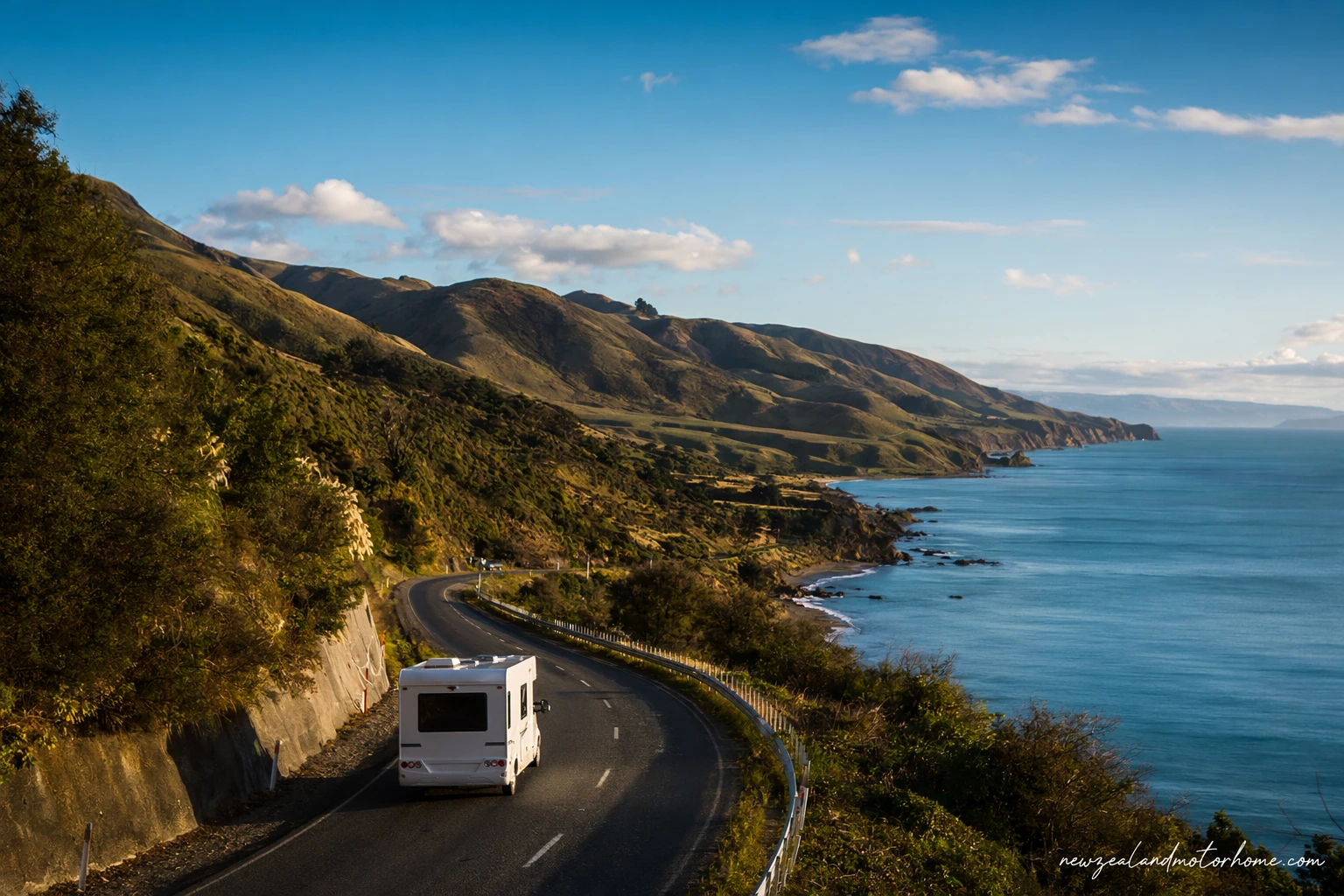
Nelson to Gisborne campervan route with ferry, coast and overnight stops
- Best over 5–7 days
- Includes Picton–Wellington ferry
- Winding hill roads in places
- Powered sites useful after ferry days
- Self-contained rules vary by council
A Nelson to Gisborne campervan trip is a proper cross-country run: Tasman Bay, the Marlborough Sounds, the Cook Strait ferry, Wairarapa farmland, Hawke’s Bay orchards and finally the surf beaches of Tairāwhiti. It is not the shortest point-to-point drive in New Zealand, but it is a satisfying one in a self-contained van because the legs fall naturally around harbours, riverside towns and coastal holiday parks.
This guide is written for travellers driving and sleeping in their hired campervan or motorhome. You will find the practical bits that matter on the Nelson to Gisborne drive: where to break the journey, what roads suit larger vans, where to think about powered sites, and when to fill fresh water, empty waste and top up LPG before the quieter East Coast stretch.
How long to allow for the Nelson to Gisborne drive
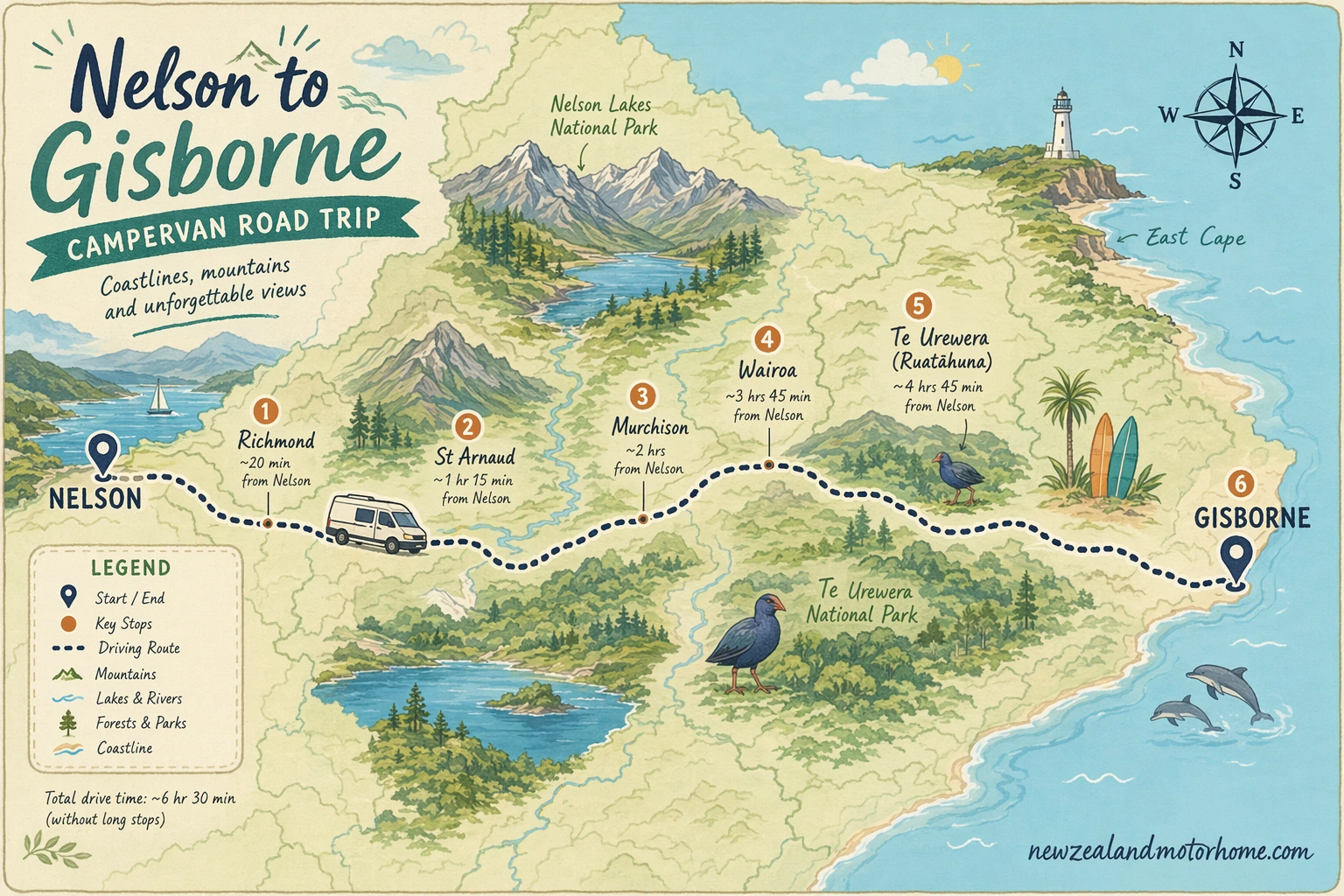
You can push the Nelson to Gisborne motorhome road trip through in three long driving days if the ferry timing lines up, but it is much more comfortable over five to seven days. The route includes a sea crossing, urban driving around Wellington, and a final inland-coastal leg through Wairoa where services are more spread out than they are in the top of the South Island.
A steady campervan pace looks like this:
- Day 1: Nelson to Picton, overnight near the ferry or in the Marlborough Sounds.
- Day 2: Ferry to Wellington, then stay in the Wellington region or roll on to Wairarapa.
- Day 3: Wairarapa to Napier or Hastings, with time for fuel, groceries and a powered site.
- Day 4: Hawke’s Bay to Wairoa, Mahia or Gisborne, depending on how early you leave.
- Extra days: Add them for Kaikōura, Martinborough, Napier’s waterfront, Lake Waikaremoana side trips or Gisborne beaches.
If you are building the trip around a ferry sailing, give yourself a buffer. Weather, roadworks and slow sections behind logging trucks can all affect arrival times, and ferry check-in is stricter with larger vehicles than it feels when you are in a car.
Leg 1: Nelson to Picton and the Cook Strait ferry
From Nelson, the usual campervan line to Picton is via SH6 through Havelock, then across to Picton. It is a scenic drive with enough bends to keep your speed modest, especially in a high-roof van. Take care on the Rai Valley and Havelock sections after rain, and use slow-vehicle bays when locals stack up behind you.
Queen Charlotte Drive between Havelock and Picton is beautiful but narrow, twisting and slower. Confident drivers in shorter campervans often enjoy it; if you have a longer motorhome, are new to left-side driving, or are travelling in wet weather, the more direct state highway option is usually less tiring.
- Before leaving Nelson: top up groceries, fresh water and LPG if needed; it is easier here than squeezing tasks in before a ferry.
- Picton overnight: use a holiday park or approved camping area if you have an early sailing; check site length if you are in a larger motorhome.
- Ferry booking: book by vehicle length and height, not just passenger numbers, and allow time for check-in.
- Dump stations: plan to use public or holiday-park dump points in Nelson or Picton before crossing, especially if you have been freedom camping.
On the ferry, secure loose items in the van before boarding. You normally cannot access your vehicle during the crossing, so take layers, medication, chargers and anything you need upstairs with you.
Leg 2: Wellington to Wairarapa, then on to Hawke’s Bay
Once off the ferry in Wellington, decide whether you want an urban stop or a quick escape. Wellington is rewarding, but city streets, wind gusts and limited tall-vehicle parking can make it less relaxing in a motorhome. Many campervan travellers either book a proper site in the region or continue over the Remutaka Hill to Featherston, Greytown, Martinborough or Masterton.
The Remutaka Hill Road is fully sealed and used daily by trucks and buses, but it is steep and winding. Drop your speed, avoid cooking the brakes on the descent, and pull over only in formed areas. In strong wind, check road conditions before committing, particularly if your van has a high side profile.
- Wairarapa stop: good for quieter powered sites, dump stations, laundry and a reset after the ferry.
- Martinborough and Greytown: pleasant for a slower night, but park only where long vehicles are allowed and avoid blocking small-town kerbs.
- Masterton to Hawke’s Bay: SH2 is the straightforward route north, with rural stretches where fuel and food stops need a little planning.
- Hawke’s Bay base: Napier or Hastings gives you the best choice for powered sites, supermarkets, water fills and LPG before the East Coast leg.
If you want help matching the route to your van size, ferry time and number of nights, you can talk to us before locking in the plan.
Leg 3: Napier or Hastings to Gisborne via Wairoa
The Napier to Gisborne section on SH2 is the leg where campervan planning matters most. The road is sealed and suitable for campervans, but it is not a motorway: expect hills, bends, forestry traffic, changing weather and fewer places to pull a large vehicle fully off the road. Leave Hawke’s Bay with fuel, drinking water and an emptied toilet cassette or grey-water tank.
Wairoa is the natural break between Hawke’s Bay and Gisborne. It works well for lunch, fuel, groceries and a night off the road if you do not want to arrive in Gisborne late. Mahia Peninsula is a worthwhile coastal detour for self-contained travellers, but check local camping rules and road conditions, and do not assume every beach car park allows overnight stays.
- Driving note: use lower gears on descents and expect slower average speeds than the map suggests.
- Service note: top up in Napier, Hastings or Wairoa rather than waiting until the warning light comes on.
- Overnight choice: Wairoa, Mahia or Gisborne all work, but book ahead in summer and during school holidays.
- Arrival in Gisborne: aim to arrive in daylight so you can choose a site, level the van and sort water before dinner.
As you approach Gisborne, the road opens into farmland, river flats and coast. It is a lovely finish to the Nelson to Gisborne campervan route, especially if you have left enough time to stay near the beach rather than simply turning around.
Overnight stops, freedom camping and van services
This route has plenty of places to sleep in a campervan, but the best option changes by region. Around Nelson, Picton, Wellington and Hawke’s Bay, holiday parks are useful for powered sites, showers, laundry and dumping waste. In smaller districts, freedom camping is controlled by local council bylaws and may be limited to certified self-contained vehicles in clearly signed areas.
Do not treat any waterfront reserve, sports ground or roadside pull-off as automatically available for overnighting. Check the current council rules, signage on site and any time limits. If your van is not certified self-contained, plan on holiday parks or campgrounds with toilets every night.
- Powered sites: best after ferry days, bad-weather days or when you need to recharge devices and house batteries.
- Unpowered sites: fine for short stays if your battery, fridge and water use are under control.
- Dump stations: commonly found in larger towns and many holiday parks; plan around Nelson, Picton, Wellington region, Wairarapa, Hawke’s Bay, Wairoa and Gisborne.
- Fresh water: fill only from signed drinking-water taps, not random hoses in parks or service areas.
- LPG: easier to sort in Nelson, Blenheim/Picton, Wellington region, Masterton, Napier/Hastings and Gisborne than in small settlements.
A simple rhythm works well: dump and refill before the ferry, reset again in Hawke’s Bay, then arrive in Gisborne with enough water and battery to enjoy a coastal night without rushing straight into chores.
Road and parking notes for larger campervans
Most of this route is on state highways, but a motorhome still needs more space, patience and planning than a car. Watch your height at covered parking areas, your rear overhang at sloping driveways, and your width on older bridges and narrow town streets. In Picton, Wellington and small Wairarapa towns, choose open car parks or signed long-vehicle areas rather than squeezing into angle parks.
The trickiest driving is not one single dangerous road; it is the accumulation of winding sections. Nelson to Picton, the Remutaka Hill, and the Hawke’s Bay to Gisborne leg can all feel slow in a heavy van. Keep the day’s plan light enough that you are not chasing sunset.
- High wind: take extra care around Wellington, exposed hill roads and open coastal sections.
- Rain: allow for slips, surface water and slower truck traffic, especially between Napier, Wairoa and Gisborne.
- Parking: never block boat ramps, beach access, farm gates or turning heads; these are working spaces, not overflow campsites.
- Night driving: avoid it where you can, as rural roads bring stock, wildlife, glare and fewer safe pull-offs.
Before each leg, check current road conditions and local camping rules. New Zealand roads can change quickly after weather events, and the best campervan route is the one that suits the van you are actually driving that day.
Common questions
Can I drive from Nelson to Gisborne in a campervan without taking a ferry?
No. Nelson is in the South Island and Gisborne is in the North Island, so a Cook Strait ferry crossing between Picton and Wellington is part of the route. Book the ferry for your campervan’s correct length and height.
How many days should I allow for a Nelson to Gisborne campervan trip?
Allow at least four days if you want a practical, not rushed, point-to-point drive. Five to seven days is better for a comfortable pace with overnight stops in Picton, Wairarapa, Hawke’s Bay and Gisborne.
Is the Napier to Gisborne road suitable for motorhomes?
Yes, SH2 via Wairoa is sealed and used by larger vehicles, but it is hilly and winding in places. Fill fuel and water before leaving Hawke’s Bay, drive to the conditions and avoid arriving after dark if you can.
Can I freedom camp on this route?
Only where local bylaws and signs allow it, and usually only in a certified self-contained campervan. Rules differ between councils, so check the current restrictions for Nelson, Marlborough, Wellington, Wairarapa, Hawke’s Bay, Wairoa and Gisborne before you stop overnight.
Where should I deal with dump stations and fresh water?
Plan your main resets in larger centres such as Nelson, Picton, the Wellington region, Masterton, Napier or Hastings, Wairoa and Gisborne. Use signed dump stations and drinking-water taps only, and do not leave grey water or toilet waste anywhere else.
Is Queen Charlotte Drive a good idea in a large motorhome?
It is scenic but narrow and winding, so it suits confident drivers in smaller vans more than long motorhomes. If you are new to driving a high-roof vehicle, or the weather is poor, take the easier state highway route to Picton.
Have a planner shape this for your dates
Send a short outline — your dates, party size, and the kind of trip you want. A planner replies with a vehicle recommendation, a paced route, and the realistic budget.