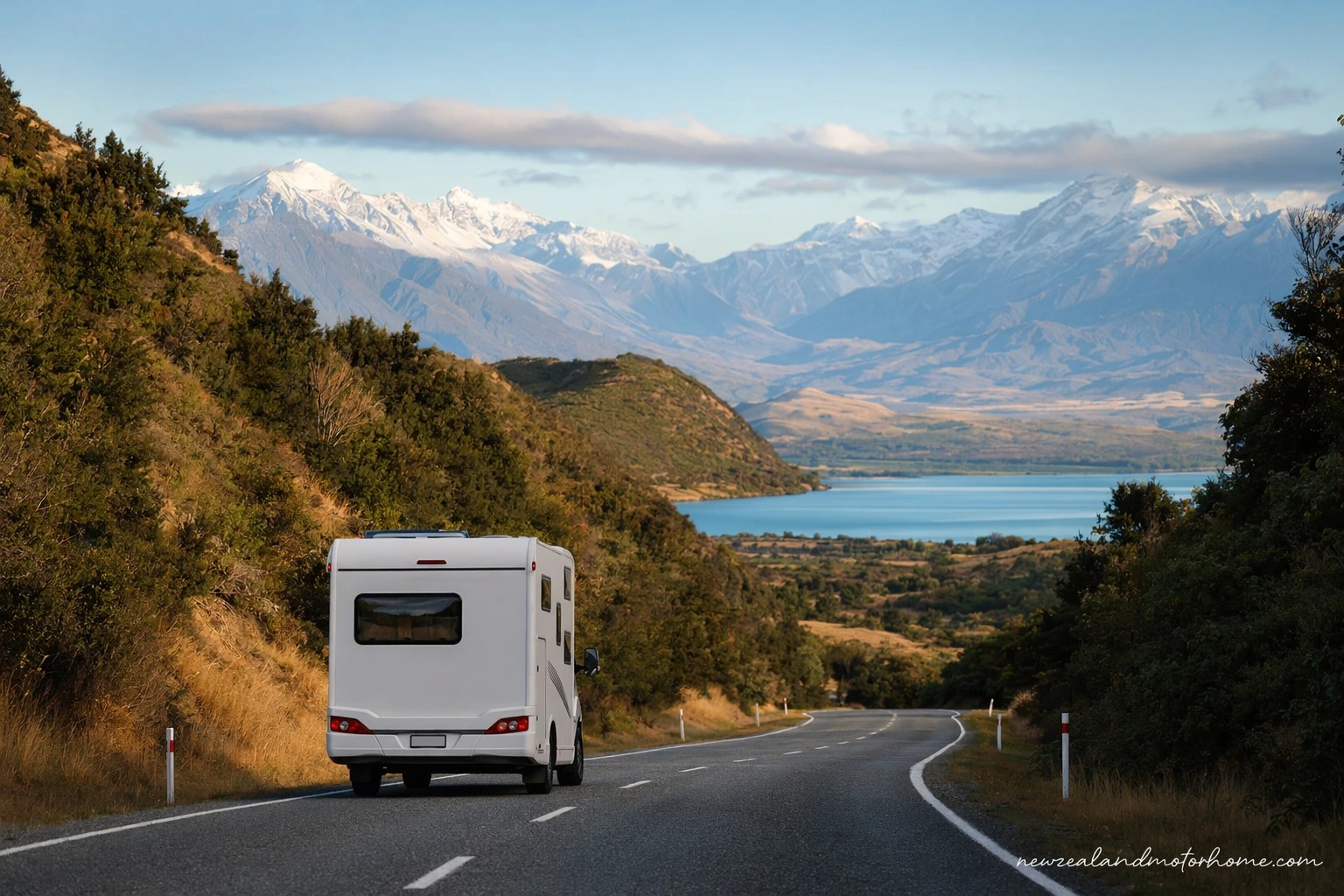
- Best allowed over 5–7 days
- Includes Cook Strait ferry
- Powered night useful before or after ferry
- Check self-containment rules by district
- Van-friendly SH1 route with weather checks
A whangarei to timaru campervan trip is a proper top-to-bottom New Zealand crossing: Northland harbours, Auckland traffic, the volcanic plateau, a Cook Strait ferry, then the South Island’s east-coast run through Kaikōura and Canterbury. It is not a route to rush in one heroic push, especially when you are travelling with your bed, water tank, waste tank and ferry booking all on board.
This guide breaks the whangarei to timaru drive into sensible campervan legs, with notes on where to overnight, when to plug into power, how to think about dump stations and fresh-water fills, and which road sections deserve extra patience in a larger motorhome. Treat it as a practical planning base, then adjust the pace to suit your van, your ferry time and how often you like to stop for a proper brew.
How many days to allow for the route
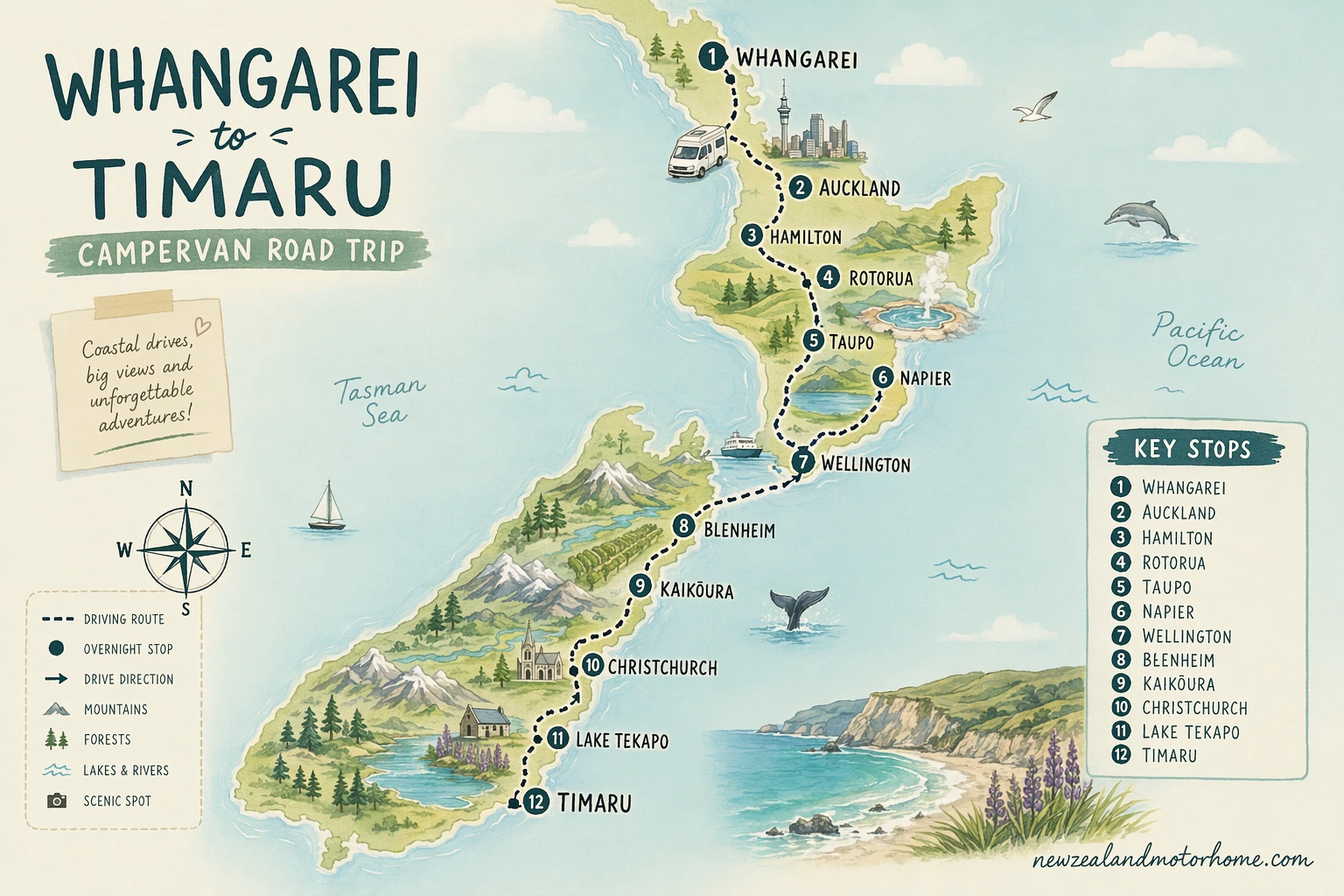
The direct road distance is long, but the real planning hinge is the Cook Strait ferry. In a campervan or motorhome, allow time for vehicle check-in, gas bottle requirements, loading lanes, weather delays and the simple fact that you do not want to reach Wellington tired and flustered.
A comfortable whangarei to timaru motorhome road trip usually works best over five to seven days. Four days is possible if you already know New Zealand roads and have firm ferry timing, but it leaves little margin for weather, roadworks or a slow start from a holiday park dump station.
- Fast but workable: 4 days, with long driving days and pre-booked sites.
- Balanced: 5–6 days, with powered nights before or after the ferry.
- Relaxed: 7+ days, adding Taupō, Wellington, Kaikōura or Christchurch time.
- Best reset points: Taupō or Tongariro region, Wellington, Picton or Kaikōura, then Timaru.
Whangarei to the central North Island: getting clear of Auckland
From Whangārei, SH1 takes you south past Northland farmland and coastal turn-offs before the motorway run into Auckland. In a campervan, the main trick is timing: avoid peak commuter periods if you can, keep left unless overtaking, and give yourself more stopping distance on the motorway descents and merges.
For a first night, many drivers either stop before Auckland if they started late, or push through to the Waikato or Taupō area for a cleaner Day 2. Holiday parks around major towns are the easiest option if you need power, showers, laundry and a proper fresh-water top-up. If you are using freedom camping spots, check the local bylaw and make sure your van’s self-containment certification is current and visible.
- Van services: top up fresh water before leaving Northland if you are unsure of your first night; public dump stations are more reliable in larger towns than tiny settlements.
- Fuel and LPG: fill before remote-feeling stretches rather than assuming the next stop will suit your bottle or tank setup.
- Parking: choose supermarket or town parking with room to swing out; avoid tight inner-city parking buildings with height limits.
Taupō or Tongariro to Wellington: long SH1 driving with a ferry in mind
The middle of the North Island is where the route starts to feel properly open. SH1 through the central plateau can be beautiful, but it can also be exposed, windy and icy in colder months. Larger motorhomes should take it steadily around passing lanes and leave space for faster traffic to get by safely.
If your ferry leaves the next morning, overnighting in or near Wellington is the least stressful choice. Book a legal campervan site rather than gambling on city parking; Wellington’s hills, narrow suburban streets and waterfront restrictions can make spontaneous overnighting awkward in a long vehicle.
- Driving note: check winter road and weather conditions for the Desert Road section before committing to the day.
- Dump and water: empty grey and black tanks before boarding the ferry if your tanks are getting close; it makes the South Island arrival easier.
- Ferry planning: know your vehicle length, height and any bike rack overhang when booking.
- Rest stop rhythm: use bigger town stops such as Taupō, Taihape, Bulls or Levin for easier van parking and driver swaps.
Cook Strait ferry and Picton to Kaikōura or Christchurch
The ferry is part of the route, not just a gap between roads. Arrive early, follow crew instructions for gas and vehicle securing, and keep essentials with you because you normally cannot access the van during the crossing. If the forecast is rough, build slack into your plan rather than booking a tight onward drive to Canterbury.
From Picton, the east-coast route via Blenheim and Kaikōura is scenic but not a place to drive half-asleep. SH1 has coastal sections, rail crossings, tunnels, roadworks after weather events, and places where a high-sided motorhome feels crosswinds more than a car. Kaikōura is a natural overnight stop if your ferry arrives after lunch.
- Picton: good place to refill supplies before heading down the coast.
- Kaikōura: use designated campervan parking and booked holiday park sites; do not assume beach pull-offs allow overnight stays.
- Road note: watch for seal-viewing traffic and slow vehicles along the coast.
- Powered night: useful here if you have had several unpowered nights and need to recharge house batteries.
Christchurch to Timaru: the Canterbury run
South of Christchurch, SH1 becomes a more straightforward Canterbury drive through towns such as Ashburton and across the Rangitata River before reaching Timaru. It is generally van-friendly, but the straight sections can encourage fatigue. Pull over properly for breaks rather than drifting into narrow shoulders or farm entrances.
Timaru is a good place to finish the route with a tidy van reset: dump, refill, plug into power if needed, and give yourself time around Caroline Bay and the harbour area without trying to park a large motorhome in the tightest spaces. Look for signed long-vehicle parking or walk in from a wider street rather than squeezing into small central parks.
- Overnight style: holiday parks and designated campervan areas are the simplest finish after several travel days.
- Services: plan a dump station stop on arrival or the next morning before moving on.
- Parking: avoid low trees and tight kerbs near the waterfront if your van is long or has a rear bike rack.
- Supplies: Timaru has the practical refill stops you need before continuing further south or inland.
Booking stops, freedom camping and route tweaks
Because this route crosses both islands, it pays to book the pieces that can derail the rest of the trip: ferry sailing, Wellington overnight, and popular summer stops such as Kaikōura. Outside the busiest weeks you can keep more flexibility, but a campervan still needs legal overnight space, not just somewhere that looks quiet at dusk.
Freedom camping rules change by district, and not every scenic layby is an overnight spot. Use current council information and the signage on the ground, keep your self-containment documentation handy, and leave no trace around drains, beaches or reserves. If you would like help turning this into a day-by-day plan around your ferry time and van size, use the soft planning step at /talk-to-us/.
- Self-contained vans: still must follow local bylaws and posted restrictions.
- Non-self-contained vans: use campgrounds or sites with toilets and permission to stay.
- Large motorhomes: check site length limits before booking, especially in older holiday parks.
- Unpowered nights: balance them with powered stays so the fridge, heater fan and devices stay healthy.
Common questions
Can I drive from Whangarei to Timaru in a campervan in three days?
It is technically possible, but it is not a pleasant campervan itinerary. You would be stacking long driving days around a ferry crossing, with little room for weather, roadworks, dump station stops or a late sailing. Five or more days is much kinder.
Do I need to book the Cook Strait ferry for a motorhome?
Yes, book ahead and enter the correct vehicle length and height, including rear racks or roof gear. Ferry space for taller and longer vehicles can be limited, especially in summer and school holidays.
Where should I stay the night before the ferry?
A legal campervan site in the Wellington region is the safest choice. It lets you dump, refill, charge if needed and reach the terminal without hunting for city parking in the morning.
Is freedom camping easy on the Whangarei to Timaru drive?
It varies by district, and the rules are often stricter near beaches, town centres and popular reserves. Even with a certified self-contained van, check current local signage and do not rely on old app comments alone.
What is the hardest section for a larger motorhome?
The Auckland motorway section can be busy, the central plateau can be windy or icy, and the Kaikōura coast needs attention because of roadworks, bends and tourist traffic. None of it is unmanageable, but a steady pace beats pushing the van.
Have a planner shape this for your dates
Send a short outline — your dates, party size, and the kind of trip you want. A planner replies with a vehicle recommendation, a paced route, and the realistic budget.