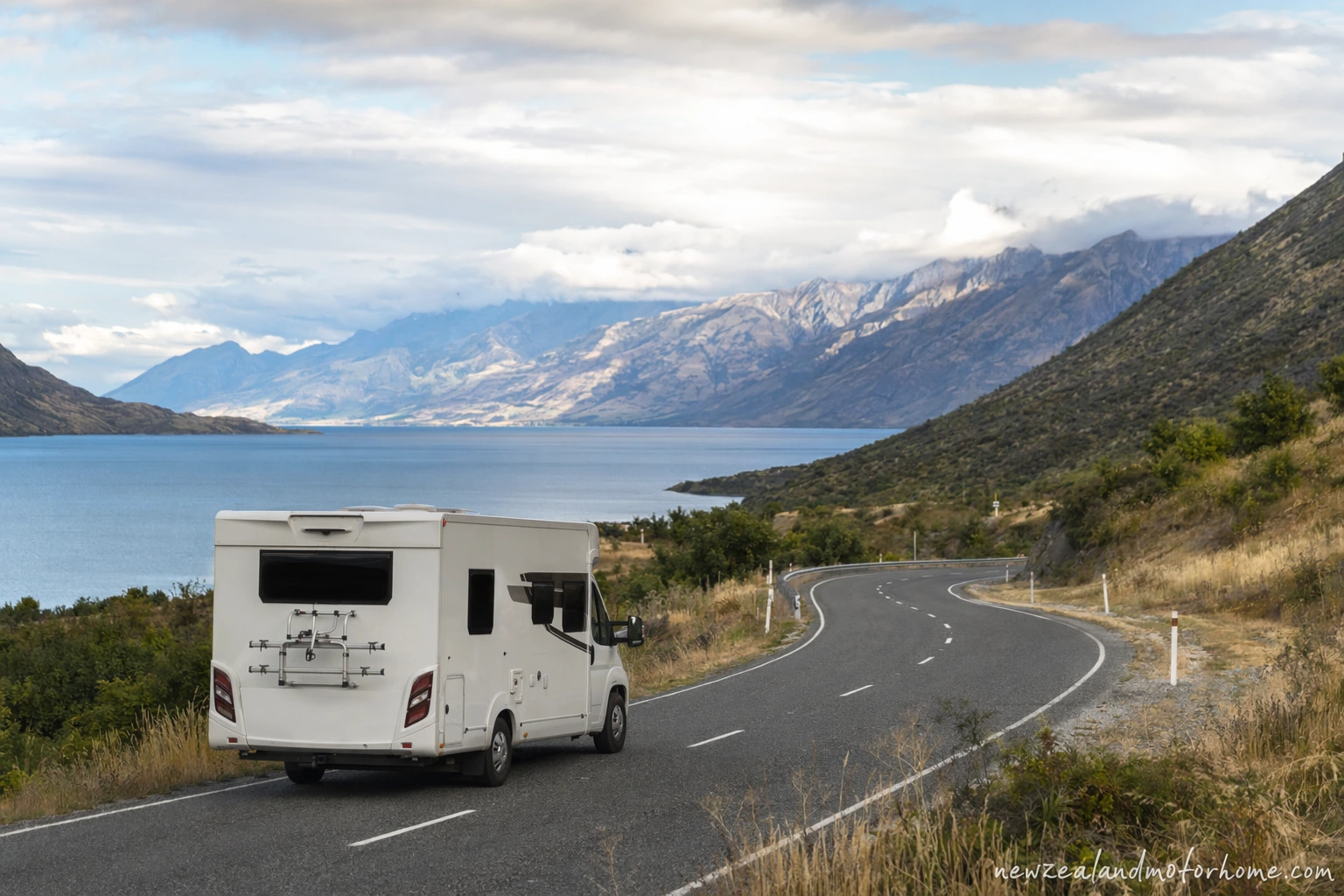
Queenstown to Tauranga campervan route for a two-island drive
- Allow 6–10 days
- Approx. 1,300 km plus ferry
- Best via Picton and Wellington
- Watch Lindis Pass and Desert Road weather
- Powered sites useful every 2–3 nights
A queenstown to tauranga campervan trip is a proper end-to-end New Zealand drive: alpine passes, the Mackenzie Basin, the Kaikōura coast, Cook Strait, the volcanic plateau and finally the Bay of Plenty. It is not a route to rush in a tall van, especially if you are collecting the camper in Queenstown and still getting used to its length, mirrors and braking distance.
This guide breaks the queenstown to tauranga drive into sensible campervan legs, with notes on overnight stops, powered and unpowered site choices, dump stations, fresh-water fills and roads that deserve your full attention. Use it as a practical base plan, then adjust for ferry times, weather and how long you like to stay parked up once the kettle is on.
How many days to allow and the best overall route
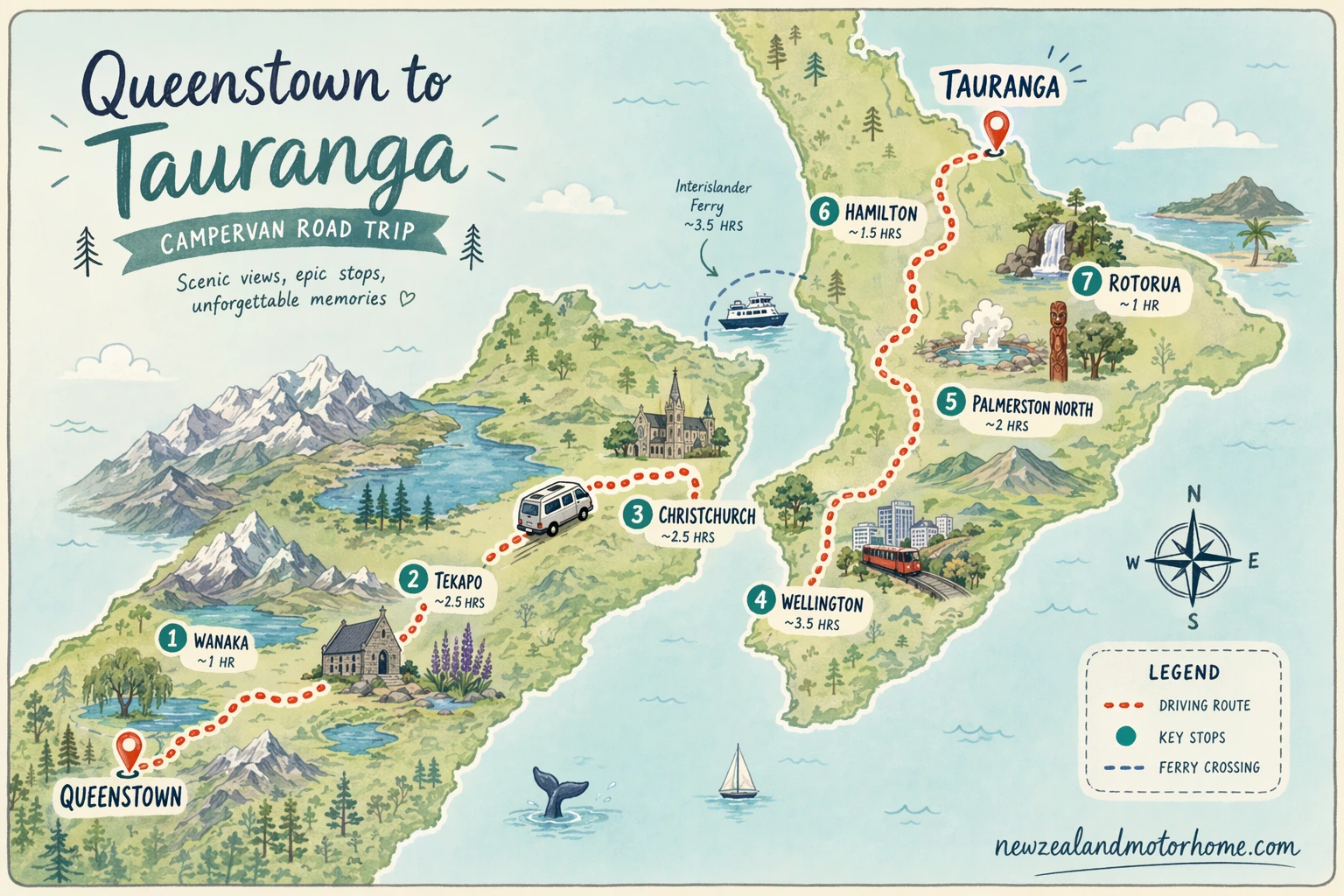
Allow at least 6 days for the Queenstown to Tauranga motorhome road trip, and 8 to 10 days if you want a calmer rhythm with lake stops, laundry time and a weather buffer for the ferry. The driving distance is roughly 1,300 kilometres plus the Cook Strait sailing, so short winter daylight and strong winds can change what feels manageable.
The most van-friendly line is usually Queenstown to Cromwell, over the Lindis Pass to Omarama or Tekapo, then north via the east coast to Kaikōura and Picton. After the ferry to Wellington, continue through Taihape and the central plateau to Taupō, then across to Rotorua and Tauranga.
- Fast but still sensible: 6 days, with longer driving blocks and booked holiday park nights.
- Comfortable: 8 days, with one spare day for the ferry, weather or a rest stop.
- Best for first-timers: 9–10 days, especially in a 6-berth or larger motorhome.
- Key planning point: book the Cook Strait ferry with your exact vehicle length, height and any rear bike rack included.
If you want help matching this route to your van size, ferry timing and preferred overnight style, you can talk to us before locking in the plan.
Leg 1: Queenstown to the Mackenzie Basin
Leave Queenstown on SH6 through the Kawarau Gorge rather than taking the Crown Range unless you are deliberately visiting Wānaka and are confident with steep, twisting roads in a motorhome. The Kawarau route is still winding, but it is the more straightforward option for most hired vans.
Cromwell is a useful early service stop for groceries, fuel, LPG checks and a proper look over the van before the more open country ahead. From there, SH8 climbs through the Lindis Pass, which is sealed and suitable for campervans but exposed to snow, ice and strong wind in winter and spring.
- Good overnight choices: Omarama, Twizel or Tekapo, depending on how far you want to drive on day one.
- Site style: choose a powered holiday park night if you have just picked up the van and want showers, laundry and an easy first dump-station routine.
- Freedom camping: only use signed or bylaw-permitted areas, and only if your van has current self-containment certification.
- Road note: fill fresh water before heading to more remote lake areas, and do not rely on every scenic car park having bins or toilets.
Lake Pukaki and Tekapo are beautiful places to stop, but they are also windy and busy. Park nose-in to the wind where possible, secure roof vents, and avoid soft lake-edge shoulders that can trap a heavy van.
Leg 2: Mackenzie country to Kaikōura, then Picton
From Tekapo or Twizel, the route drops toward the Canterbury plains before joining SH1 north. This is a longer driving day if you aim for Kaikōura, so start with full drinking water, an empty grey tank and realistic expectations about coffee stops and roadworks.
The Kaikōura coast is one of the memorable parts of this journey, with sea on one side and steep hills on the other. It is also a place to drive patiently: use slow-vehicle bays, watch for cyclists and seals near coastal stopping areas, and be careful opening wide camper doors in gusty wind.
- Overnight rhythm: stay around Timaru or north Canterbury for a shorter day, or continue to Kaikōura if you are comfortable with the kilometres.
- Campervan parking: use larger signed parking areas in Kaikōura rather than squeezing into small town kerb parks.
- Dump and water: plan to service the van at a holiday park or public dump station before reaching Picton, especially if ferry timing is tight.
- Picton tip: arrive the night before an early ferry and stay somewhere you can leave without disturbing others.
Do not treat the Picton ferry terminal like a last-minute supermarket car park. Big vans need time to queue, staff will check your booking details, and LPG bottles need to be turned off as instructed before sailing.
Crossing Cook Strait in a campervan
The ferry is the hinge point of this route. It is straightforward in a campervan, but only if your booking matches the vehicle: include the full length, height, tow bar, rear storage box or bike rack. Under-declaring size can create problems at check-in.
Pack a small day bag before you board, because you usually cannot access the vehicle deck during the crossing. Switch off the fridge if required by the operator, turn off LPG bottles, and make sure loose items inside the van are secure for the ramp and sea movement.
- Before boarding: empty rubbish, check gas is off, close roof vents and lock cupboards.
- After landing in Wellington: avoid immediately driving into the tightest central streets if you are tired from the sailing.
- Overnight options: look north of the city, around the Kāpiti Coast or Hutt Valley, for easier van access and powered sites.
- Weather buffer: build in half a day of flexibility; Cook Strait delays happen and can affect your whole route north.
If you have a late sailing, consider a booked powered site after arrival rather than trying to find a legal freedom camping spot in the dark. Wellington-region bylaws are location-specific, and many waterfront car parks are day-use only for campervans.
Leg 3: Wellington to Taupō and the volcanic plateau
The drive from Wellington to Taupō is a full North Island day, with motorway sections, rural highways and the exposed Desert Road. It is manageable in a motorhome, but it is not a day for lingering too long at every viewpoint unless you have booked an intermediate overnight stop.
Levin, Bulls, Taihape and Tūrangi are practical service towns for fuel, food, public toilets and a leg stretch. Use proper parking bays rather than supermarket corners with tight turning angles, and take the extra minute to check overhead clearance before entering older service stations.
- Shorter overnight split: stop around Whanganui, Palmerston North, Taihape or Tūrangi instead of pushing through to Taupō.
- Road caution: the Desert Road can close for snow, ice, crashes or wind; check conditions before leaving and avoid night driving in winter.
- Van services: Taupō is a good place to reset tanks, refill fresh water and choose a powered site if batteries have had several off-grid nights.
- Freedom camping: lakefront rules are tightly managed, so look for signed, permitted areas and observe time limits.
Taupō makes a natural pause before the final run to Tauranga. A rest day here also helps if the South Island weather or ferry timing has already eaten into your schedule.
Leg 4: Taupō or Rotorua to Tauranga
The usual final leg is Taupō to Rotorua on SH5, then Tauranga via SH36. This is a shorter driving day, but the road is not a motorway: expect forest sections, rural bends, occasional stock vehicles and changing speed limits as you approach the Bay of Plenty.
Rotorua is a handy last service stop before Tauranga, with easier options for dump stations, fresh water, groceries and LPG than trying to do everything once you are in beach traffic. If you are heading to Mount Maunganui or Pāpāmoa, arrive outside peak commuter and beach times if possible.
- Arrival parking: use signed long-vehicle or campervan parking where provided; some beach car parks have height barriers or no-overnight signs.
- Overnight choices: Tauranga, Mount Maunganui and Pāpāmoa have holiday park-style stays with powered sites; unpowered sites suit certified vans with good battery and water levels.
- Freedom camping: Bay of Plenty councils enforce local bylaws, so check the exact street or reserve before settling in.
- Final chores: empty grey and toilet tanks at an approved dump station before return day, and refill LPG only where access suits your vehicle length.
Once parked, Tauranga is best enjoyed slowly: leave the van settled, walk the waterfront or beach tracks, and avoid using a large motorhome for short hops through tight suburban streets unless you need to.
Keep planning
Visiting skyline queenstown gondola by campervan
Read onHoliday parks tauranga
Read onHoliday parks queenstown skyline
Read onHoliday parks queenstown lakes
Read onHoliday parks queenstown
Read onFarmers markets queenstown lakes
Read onCommon questions
Can I drive Queenstown to Tauranga in a campervan in three or four days?
It is possible on paper, but it is a hard push once you include the ferry, weather and slower campervan speeds. For a safer and more enjoyable trip, allow at least 6 days, and more if you are new to driving a large van.
Is the route suitable for a large 6-berth motorhome?
Yes, if you stick to the main highways and drive conservatively on passes, coastal bends and the Desert Road. Avoid unnecessary steep shortcuts, check height clearances at fuel stops, and book campsites and ferry space using your full vehicle length.
Where should I book powered sites on this route?
Good powered-site nights are Queenstown before departure, the Mackenzie Basin, Picton before the ferry, Wellington or Kāpiti after the ferry, Taupō, and Tauranga or Mount Maunganui on arrival. Powered stops are especially useful after cold nights when heating, lights and fridge use have drawn down the battery.
Can I freedom camp between Queenstown and Tauranga?
Sometimes, but only in places where local bylaws allow it and only if your campervan has current self-containment certification. Rules change by district, so check the exact location before staying, and never assume a scenic car park permits overnight camping.
Do I need to book the Cook Strait ferry ahead with a campervan?
Yes, especially in summer, school holidays and around long weekends. Book with the correct vehicle height and length, arrive early, and follow the operator’s instructions for LPG bottles and access to the vehicle deck.
Have a planner shape this for your dates
Send a short outline — your dates, party size, and the kind of trip you want. A planner replies with a vehicle recommendation, a paced route, and the realistic budget.