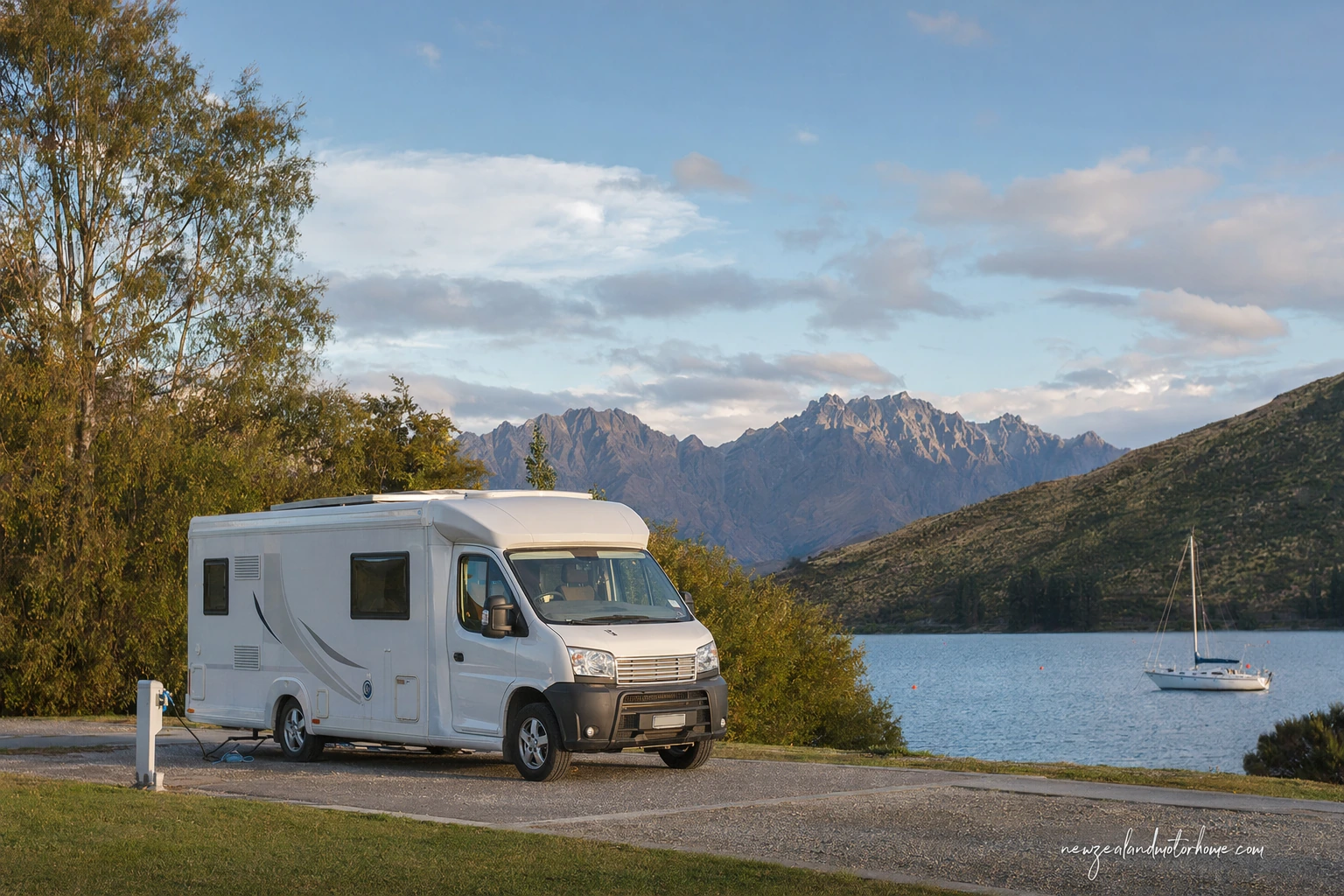
- Book early in summer and ski season
- Powered sites strongly recommended in winter
- Large vans suit Frankton or outer bases
- Freedom camping is tightly controlled
- Check dump and fresh-water access
Queenstown is spectacular from the cab of a campervan, but it is not a place to arrive without an overnight plan. The lakefront roads are busy, central parking is tight, and freedom camping rules are closely managed, so holiday parks Queenstown-wide are often the easiest base for sleeping legally, plugging in, filling water and leaving the van while you walk or bus into town.
This guide is written for self-drive motorhome travellers comparing campsites Queenstown and nearby settlements such as Frankton, Arthurs Point and Arrowtown. You will find practical notes on powered sites Queenstown, dump stations, road access, what is walkable, and when it is smarter to stay just outside the centre.
Choosing the right Queenstown base for your van
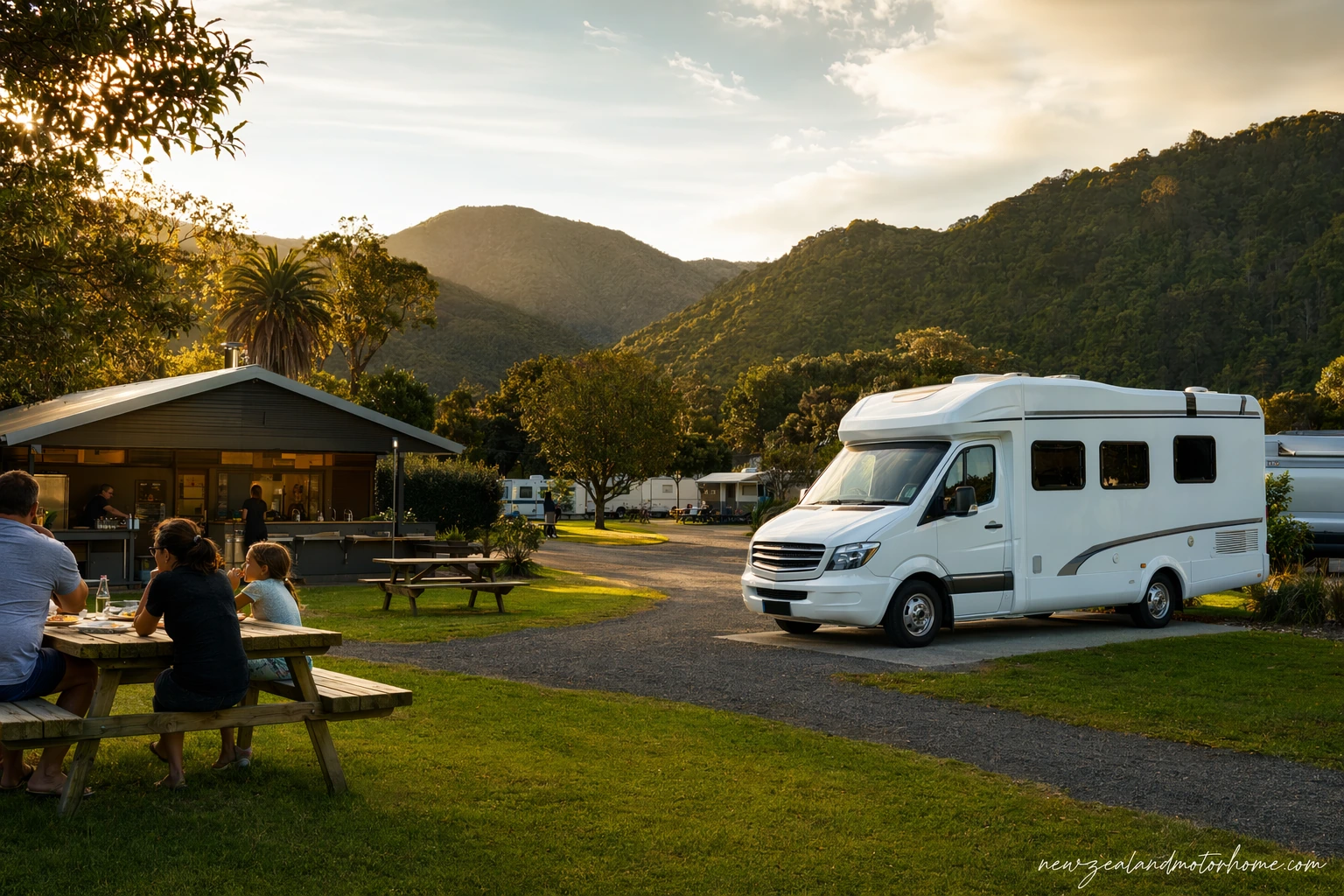
The best Queenstown holiday park for your trip depends less on the view and more on how you want to use the van. If you want to park once and head out for dinner, look for a site close to central Queenstown or with a simple bus connection. If you are driving a longer motorhome, Frankton, Arthurs Point or Arrowtown can feel calmer, with easier turning and less pressure around check-in time.
When comparing camping Queenstown options, check the practical details before you fall for a lake photo:
- Powered sites: useful in winter for heating, battery charging and drying ski gear.
- Unpowered sites: fine for certified self-contained vans with good house batteries, but confirm whether facilities and dump access are included.
- Dump station: many full-service holiday parks provide one for guests; do not assume every basic campsite has black-water disposal.
- Vehicle size: tell the park your length, including bike racks, and ask about overhanging trees or tight internal corners.
- Town access: a walkable site can save you from hunting for a large-vehicle park in the CBD.
Central Queenstown, Frankton, Arthurs Point or Arrowtown?
Central Queenstown suits small and mid-sized campervans if you want restaurants, the lakefront and activity pick-ups within walking distance. The trade-off is tighter access, steeper streets and less room to manoeuvre. If you are in a 7-metre motorhome, plan your arrival in daylight and avoid circling the town centre at peak traffic times.
Frankton is practical for self-drive travellers because it sits near the main SH6 approach, fuel, supermarkets, LPG swap or refill options, and the airport area. It is not as postcard-pretty as the lakefront, but it is handy for restocking the van, filling fresh water if your park offers it, and heading south, east or north the next morning.
Arthurs Point, on the road towards Coronet Peak, can be a good compromise if you want quieter surroundings and access to the Shotover area. Arrowtown is better if you like a historic village feel, autumn colour and easier day trips into the Gibbston Valley, but you will need to drive or bus into Queenstown rather than expect a late-night lakeside stroll.
Powered, unpowered and self-contained: what to book
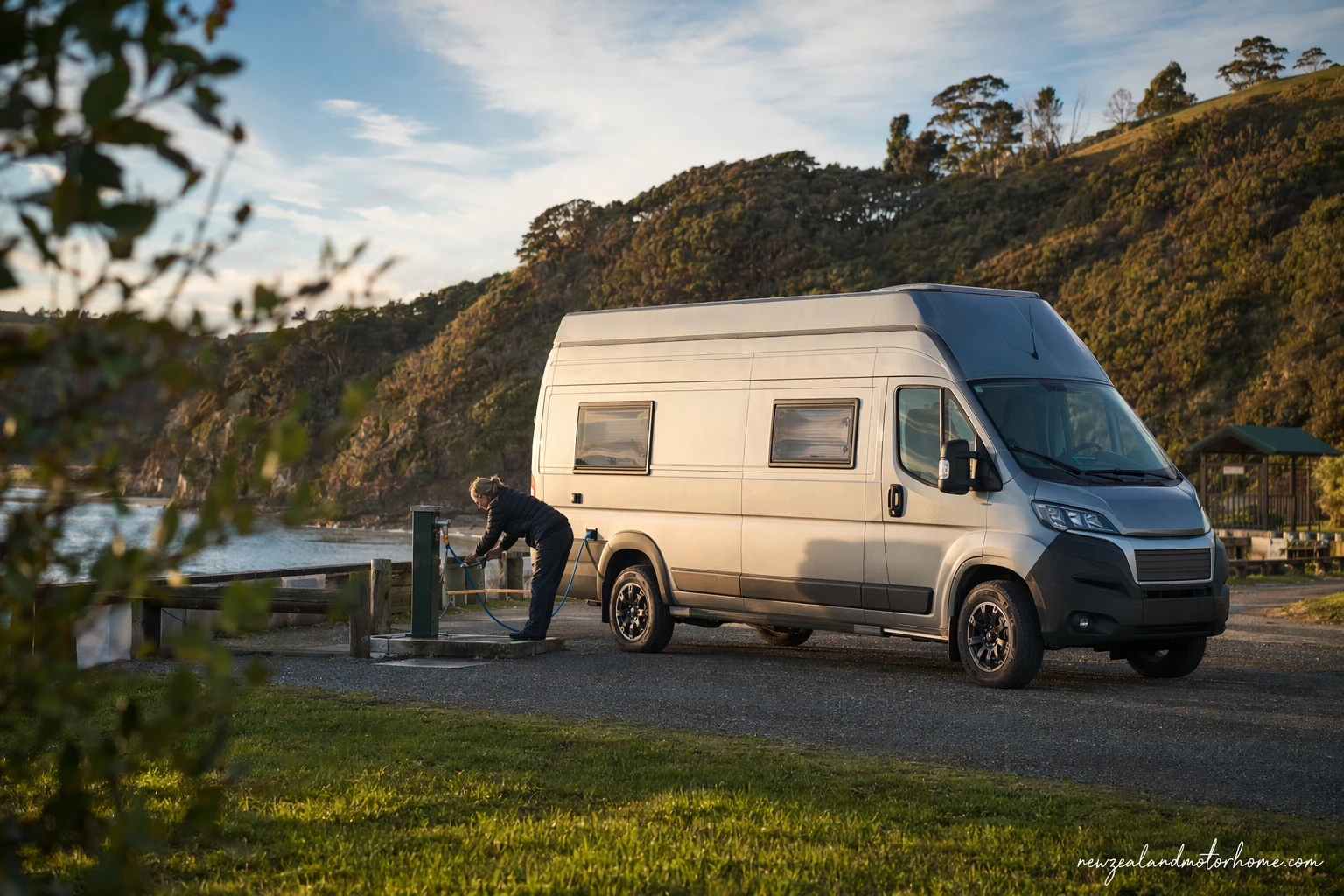
Powered sites Queenstown are worth booking early in school holidays, ski season and long weekends. Cold nights, short winter daylight and wet gear all put extra demand on your campervan batteries, and a powered site gives you a reliable reset before driving the Crown Range, Milford road or Central Otago routes.
Unpowered sites can work well in warmer months if your van is certified self-contained and you are moving every couple of days. Still, Queenstown is not the place to stretch your tanks beyond comfort. Check your grey-water capacity, toilet cassette level and fresh-water gauge before you leave the park for a day of activities.
If you are comparing a Queenstown TOP 10 Holiday Park style of stay with smaller campsites Queenstown-wide, look beyond the label and check the actual facilities you need:
- 15-amp power connection for the campervan.
- Potable fresh-water fill, not just a kitchen tap.
- Dump station suitable for your cassette or fixed tank.
- Level sites for fridges and comfortable sleeping.
- Drying room or laundry if you are skiing, biking or hiking.
Driving into Queenstown and parking the motorhome
Most campervans arrive on SH6 from Cromwell, Wanaka, Te Anau or Invercargill. The Kawarau Gorge is scenic but has bends, traffic and impatient drivers, so use pull-offs only where you can get fully clear of the lane. If you come over the Crown Range from Wanaka, check the weather first; it is high, winding and not ideal in snow, ice or strong winds, especially in a tall motorhome.
Once you reach Queenstown, do not assume you can pop into the CBD and find an easy park. Streets around the waterfront and hill suburbs can be narrow, busy and steep. A better rhythm is to check into your holiday park, leave the van on site, then walk, bus or use local transport for the town centre.
For supermarket stops, fuel and LPG, Frankton is usually more straightforward than central Queenstown. Go early or outside the late-afternoon rush, keep an eye on height bars at private car parks, and avoid squeezing into bays designed for cars if your rear overhang sticks out into traffic.
Freedom camping and overnight rules around Queenstown
Queenstown Lakes District has firm freedom camping controls, and the rules can change by location and season. A certified self-contained vehicle does not give you permission to sleep anywhere; it only means you may use permitted areas where freedom camping is allowed under current local rules.
Holiday parks take away that uncertainty. You get a legal overnight stop, toilets and showers, a place to empty waste, and staff who can tell you what local parking restrictions are active. If you do plan a night outside a park, check official council information on the day, obey all signs, and leave no trace around lake edges, reserves and trailheads.
For a route that balances Queenstown nights with quieter legal stops in Central Otago or Southland, use our talk-to-us step and we can help shape the overnight rhythm around your van size, season and tank range.
What to see nearby without moving the van every day
One of the best reasons to book a Queenstown holiday park is to slow the trip down. After several big driving days, it is a relief to plug in, level the van, and use the same site for two or three nights while you explore on foot, by bus, bike shuttle or local transfer.
Easy days from a Queenstown base can include the lakefront tracks, the gardens, the gondola area, Arrowtown, Gibbston wineries, Coronet Peak in season, and the Kawarau Gorge. If you are heading to Milford Sound, think carefully before doing it as a very long same-day return in a motorhome; many self-drive travellers prefer to overnight towards Te Anau and keep the drive safer and more enjoyable.
Before leaving your site for a full day, do the small van jobs: close roof vents if wind is forecast, secure awnings, empty bins, top up water, and make sure your power lead is either safely connected or packed away. Queenstown weather can swing quickly, especially around the lake and alpine passes.
Keep planning
Visiting skyline queenstown gondola by campervan
Read onQueenstown to wellington campervan
Read onQueenstown to tauranga campervan
Read onQueenstown to rotorua campervan
Read onQueenstown to picton campervan
Read onQueenstown to palmerston north campervan
Read onCommon questions
Do I need to book holiday parks in Queenstown ahead?
Are there powered sites in Queenstown for campervans?
Can I freedom camp in Queenstown in a certified self-contained van?
Where is easiest to stay if I have a large motorhome?
Do Queenstown holiday parks have dump stations?
Is it better to park the van and walk into town?
Have a planner shape this for your dates
Send a short outline — your dates, party size, and the kind of trip you want. A planner replies with a vehicle recommendation, a paced route, and the realistic budget.