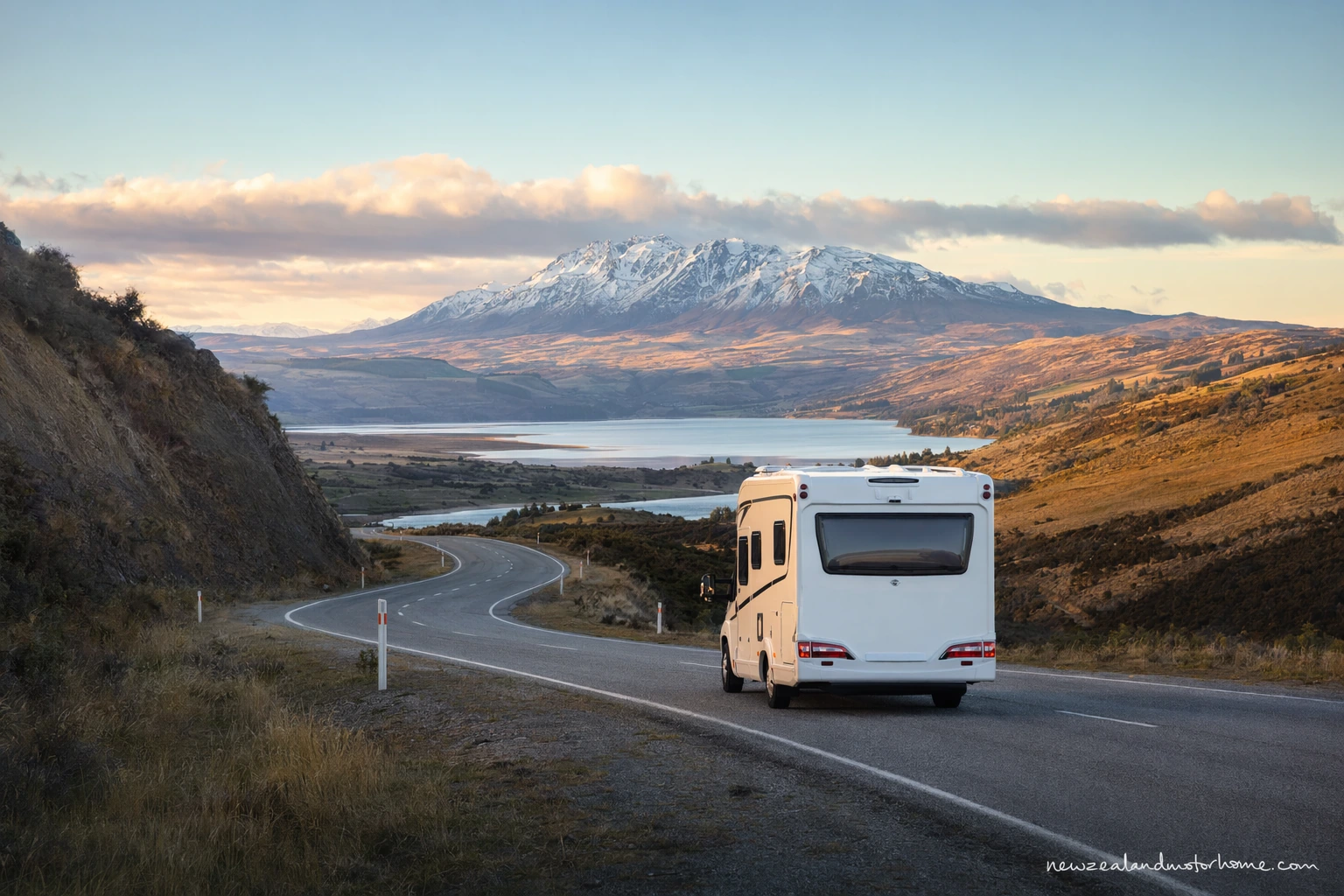
Queenstown to Rotorua campervan route: South Island to geothermal north
- Allow 7–14 days
- Cook Strait ferry required
- Best in daylight driving
- Powered sites every 2–3 nights
- Certified self-contained for freedom camping
A Queenstown to Rotorua campervan trip is a proper cross-country run: alpine passes, big braided rivers, the Kaikōura coast, a Cook Strait ferry, then the central North Island lakes and geothermal country. It is not a route to rush in a hired van, especially if you are new to New Zealand roads or travelling in a longer motorhome.
This guide breaks the Queenstown to Rotorua drive into sensible legs, with overnight ideas, road notes, ferry considerations, dump stations, water and LPG planning, and where it is worth parking the van for a few hours rather than trying to squeeze too much into one day.
How many days to allow for the route
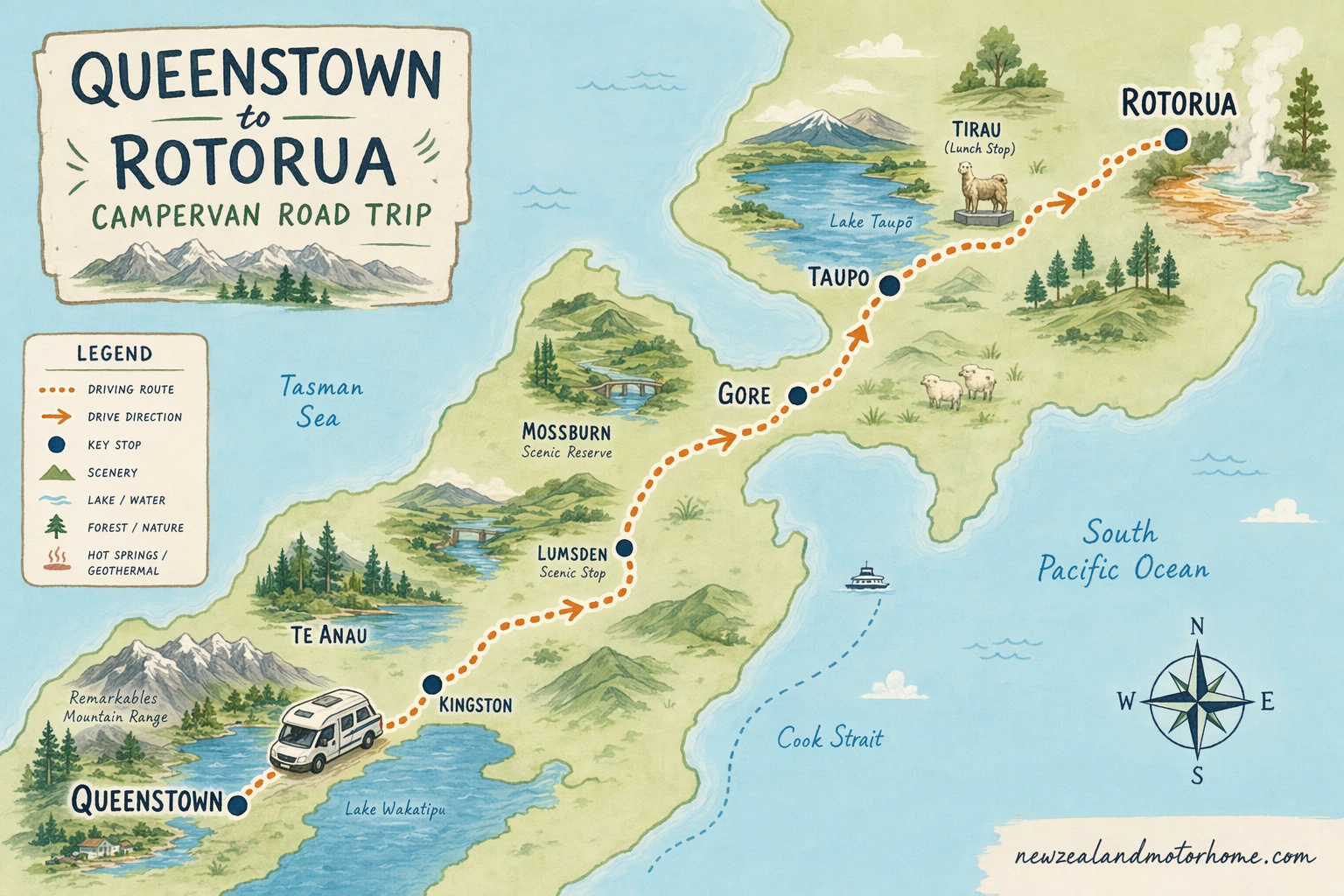
The shortest practical Queenstown to Rotorua campervan route is around 1,250 to 1,350 kilometres, depending on whether you detour into Aoraki/Mount Cook, Lake Tekapo, Kaikōura or Taupō. That distance also includes the Cook Strait crossing between Picton and Wellington, where your van length and height matter when you book.
Allow at least 7 days if you mainly want to relocate the motorhome with a few good stops. For a calmer Queenstown to Rotorua motorhome road trip, 10 to 14 days gives you time to wait out rough weather, book powered sites when you need a reset, and avoid arriving at campsites in the dark.
- 7 days: relocation pace, mostly one-night stops.
- 10 days: comfortable pace with Kaikōura, Wellington and Taupō time.
- 14 days: best for slower driving, walks, laundry days and flexible weather.
- Large vans: add time for slower hill climbs, tight town parking and longer dump/fill stops.
If you are matching ferry dates, school holidays or a one-way hire deadline, it is worth sketching your sequence before you lock campsites. You can also send your timing through the talk-to-us planning step if you want a quick sense-check from someone used to driving these legs in a van.
Suggested campervan legs from Queenstown to Rotorua
A straightforward east-coast version of this route runs Queenstown to the Mackenzie Country, then Canterbury, Kaikōura, Picton, Wellington, Taupō and Rotorua. It keeps you on main state highways for most of the way, which is helpful in a hired campervan where gravel roads, snow chains or steep minor routes can complicate your insurance and your day.
- Queenstown to Twizel or Lake Tekapo: leave via Kawarau Gorge and Cromwell, then the Lindis Pass. Twizel is practical for powered sites, groceries and dump points; Tekapo is scenic but busy in peak season.
- Twizel/Lake Tekapo to Christchurch: a good service leg with supermarkets, LPG swaps/fills, tyre help if needed, and plenty of holiday parks.
- Christchurch to Kaikōura: follow the coast north. Use marked pull-offs only; some roadside shoulders are narrow for wide vans.
- Kaikōura to Picton: keep this day unhurried if you have a ferry the next morning. Picton is the sensible place to empty waste and top fresh water before crossing.
- Picton to Wellington by ferry: book by vehicle length and height, not just passenger count. Turn gas off and follow the ferry crew’s instructions for LPG bottles.
- Wellington to Taupō: a longer North Island leg, best started early to avoid city traffic.
- Taupō to Rotorua: short, easy and worth doing in daylight so you can stop at lakes and geothermal viewpoints without rushing the final campsite check-in.
This sequence suits most certified self-contained campervans and motorhomes. If bad weather is moving through the passes or Cook Strait sailings are disrupted, build in a buffer night rather than trying to claw back time with a 500-kilometre day.
Road notes for a hired van or motorhome
The main Queenstown to Rotorua drive is sealed, but it is not motorway-style driving. Expect single-lane bridges, passing lanes that end quickly, alpine wind, stock trucks, tight town centres and tourist traffic around viewpoints. In a larger motorhome, let faster vehicles pass when safe and avoid pulling onto soft lake edges or unsealed shoulders that may not take the weight of the van.
From Queenstown, many GPS apps will suggest the Crown Range to Wānaka. It is spectacular, but it is steep, exposed and can be icy in winter. For most campervan travellers, especially in a long or unfamiliar vehicle, the Kawarau Gorge and Cromwell route is the easier choice toward the Lindis Pass.
- Lindis Pass: check road conditions in winter and after heavy snow; carry chains only if your hire agreement allows and you know how to use them.
- Mackenzie roads: strong side winds can make high-roof vans feel lively. Slow down and keep both hands on the wheel.
- Kaikōura coast: use signed stopping bays for photos and seal watching; do not half-park on the lane edge.
- Cook Strait: allow extra time at the terminal for a motorhome check-in and LPG instructions.
- Central North Island: weather can change quickly around higher ground; fog and rain make night driving tiring.
Do not rely only on the driving time shown on your phone. Campervans take longer to fuel, park, turn around and climb hills, and the best days on this route usually include one proper stop rather than five rushed ones.
Where to overnight: powered, unpowered and freedom camping
Queenstown and Rotorua both manage freedom camping tightly, and enforcement is active. Treat them as places to use a booked holiday park, campground or clearly designated certified self-contained area rather than assuming you can sleep beside the lake or in a scenic car park. The same caution applies in Tekapo, Kaikōura, Wellington waterfront areas and popular beach reserves.
Powered sites are worth planning every two or three nights if you are using heating, charging devices, cooking inside and running a fridge hard in summer. Unpowered sites can be fine in a modern self-contained van, but check your battery level before you park up, especially if you have been staying put rather than driving long enough to recharge.
- Good powered-site towns: Queenstown, Twizel, Lake Tekapo, Christchurch, Kaikōura, Picton, Wellington, Taupō and Rotorua.
- Good simple overnight stops: council campgrounds and DOC-style camps where access suits your vehicle length and the weather.
- Freedom camping: only use legal, signed areas and only if your van meets current self-containment certification requirements.
- Arrival timing: aim to park by late afternoon; manoeuvring a large van into a tight site is much easier in daylight.
In peak summer, public holidays and winter ski periods around Queenstown, book your first and last nights early. A powered site on arrival in Rotorua is also handy because geothermal attractions often mean wet towels, muddy shoes and a van that needs a proper reset.
Dump stations, fresh water, LPG and food planning
Do not leave van servicing until the warning light comes on. The most reliable rhythm on this route is to dump and refill before heading into quieter stretches, before boarding the ferry, and before your final Rotorua arrival. Public dump stations and potable-water taps are commonly found in larger towns, holiday parks and some council service areas, but access rules can change, so check local signage before you connect hoses.
Practical service points to plan around include Queenstown or Cromwell before the Lindis Pass, Twizel or Lake Tekapo in the Mackenzie Country, Christchurch before heading up the coast, Kaikōura or Picton before the ferry, Wellington after landing, and Taupō before Rotorua. If you are using a toilet cassette, empty it more often than you think you need to in hot weather.
- Fresh water: fill from signed potable taps only; do not use random garden taps or dump-station rinse hoses.
- Grey water: empty only at approved dump stations, never into roadside drains or gravel.
- LPG: top up or swap bottles in larger towns; do not assume small settlements have the fitting your van needs.
- Groceries: stock up before the Mackenzie section and again before Kaikōura if you want easy dinners at camp.
- Rubbish: carry a sealed bag in the rear locker and use campground or council bins where permitted.
A clean, serviced van changes the feel of the trip. It also gives you more freedom to choose quieter unpowered sites without worrying about a full grey tank, low water or an empty gas bottle on a cold night.
Best stops to enjoy without making the days too long
The best parts of this route are often the places where you can park the campervan once and walk. In Queenstown, use proper day parking and avoid narrow residential streets with a long van. Around Lake Pukaki and Tekapo, stop only where there is a formed area big enough for your full vehicle length, not where one wheel drops into soft gravel.
Aoraki/Mount Cook is a worthwhile detour if the forecast is clear and you have an extra night. For a big motorhome, drive in daylight and secure loose gear before the windy lake-edge roads. Kaikōura is another highlight, but coastal parking fills quickly; arrive early, choose signed van-suitable spaces, and keep clear of seal-resting areas.
- Mackenzie Country: Lake Pukaki viewpoints, Tekapo foreshore walks and big-sky evenings at camp.
- Christchurch: a useful restock and laundry stop, with easier large-vehicle services than smaller towns.
- Kaikōura: coastal walks, seafood stops and mountain-to-sea views, with careful parking.
- Wellington: plan one night if you want museums or harbour time; city parking is not relaxed in a motorhome.
- Taupō: lakefront walks, hot-water areas and a good final service stop before Rotorua.
- Rotorua: geothermal parks, redwood walks and lake campsites, but check sulphur steam and tree sap when choosing where to park overnight.
Keep one flexible half-day near the end. After the ferry, weather or a slower mountain leg, that spare time is often what turns the trip from a chase across the map into a proper campervan journey.
Keep planning
Visiting skyline queenstown gondola by campervan
Read onVisiting polynesian spa rotorua by campervan
Read onVisiting agrodome rotorua by campervan
Read onHoliday parks rotorua
Read onHoliday parks queenstown skyline
Read onHoliday parks queenstown lakes
Read onCommon questions
Can I drive from Queenstown to Rotorua in a campervan in a week?
Yes, but it will feel like a relocation trip rather than a relaxed holiday. Seven days is workable if you keep stops short, book the Cook Strait ferry early and avoid long detours. Ten days or more is much better for a self-drive motorhome pace.
Do I need to book the Cook Strait ferry for my campervan?
Yes. Book the ferry using your campervan or motorhome length and height, and allow time for vehicle check-in. LPG bottles must be turned off and declared according to the ferry operator’s instructions on the day.
Is freedom camping easy on the Queenstown to Rotorua route?
It is possible in some signed areas if your van has valid self-containment certification, but it is not something to rely on every night. Queenstown, Rotorua, Tekapo and coastal hotspots have strict local rules, so mix legal freedom spots with campgrounds or holiday parks.
Which South Island road is best from Queenstown in a larger motorhome?
For most larger vans, the Kawarau Gorge and Cromwell route is easier than the Crown Range. The Crown Range is steep and exposed, and winter ice can make it a poor choice for drivers unfamiliar with New Zealand mountain roads.
Where should I empty and refill before reaching Rotorua?
Taupō is the most practical final service stop before Rotorua, with fuel, groceries and dump-station options in the area. It is also sensible to arrive in Rotorua with a mostly empty grey tank and full fresh water, especially if your first night is unpowered.
Is this route suitable in winter?
Yes, with more caution and a flexible schedule. Snow, ice and wind can affect the Lindis Pass, Mackenzie roads and higher North Island sections, and ferry sailings can be delayed by Cook Strait weather. Book powered sites more often so you can manage heating and drying gear.
Have a planner shape this for your dates
Send a short outline — your dates, party size, and the kind of trip you want. A planner replies with a vehicle recommendation, a paced route, and the realistic budget.