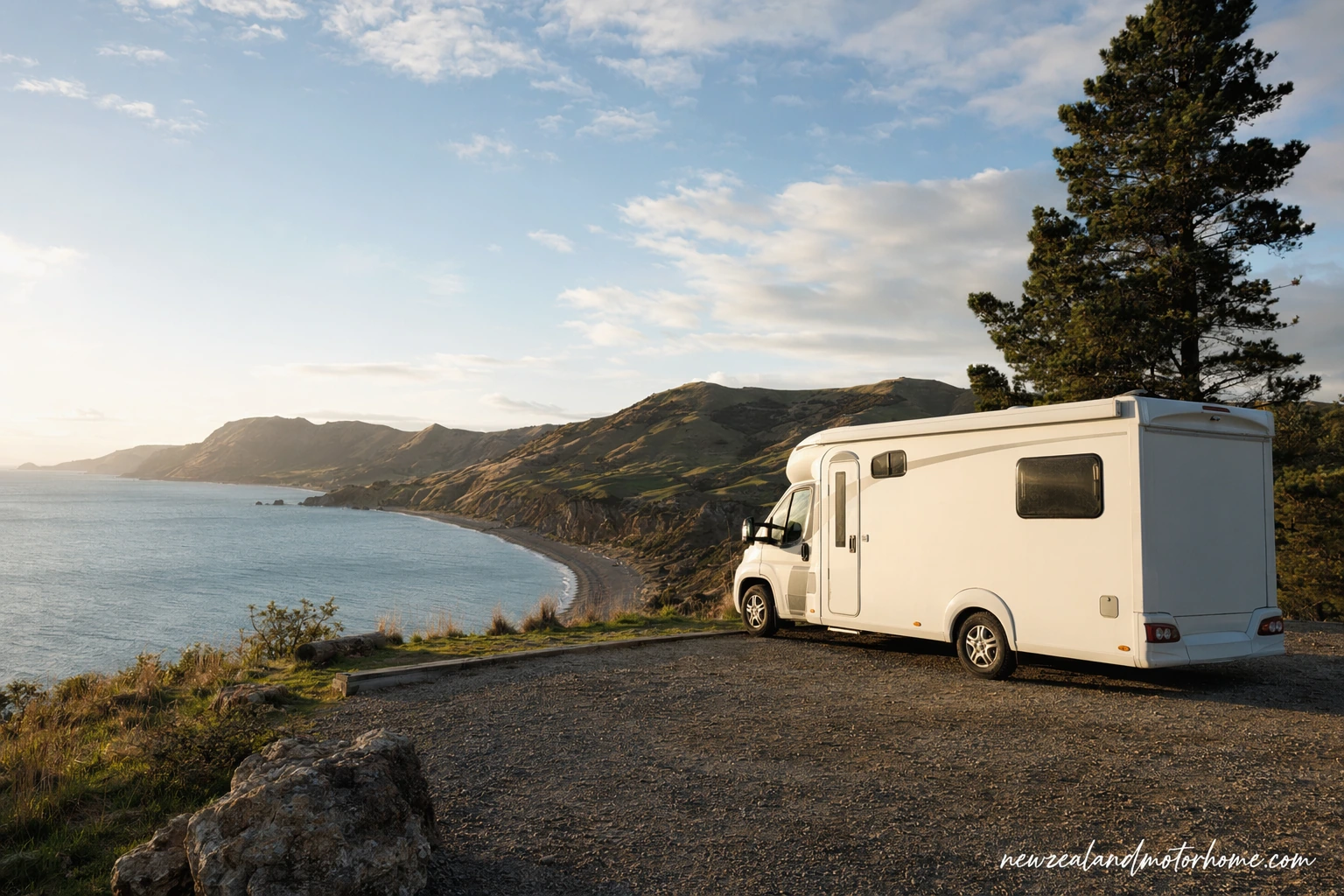
- Allow 2-5 relaxed days
- Best in spring, summer and autumn
- Check freedom camping bylaws
- Long vans take care on hill roads
- Mix powered and self-contained nights
Hawke’s Bay is kind to a campervan: long vineyard flats, Art Deco streets, surf beaches, riverside picnic spots and hilltop views that arrive without needing to unpack much more than the camp chairs. The trick is knowing where the van actually fits, where overnighting is allowed, and which scenic roads are better tackled early before the day-trippers fill the small car parks.
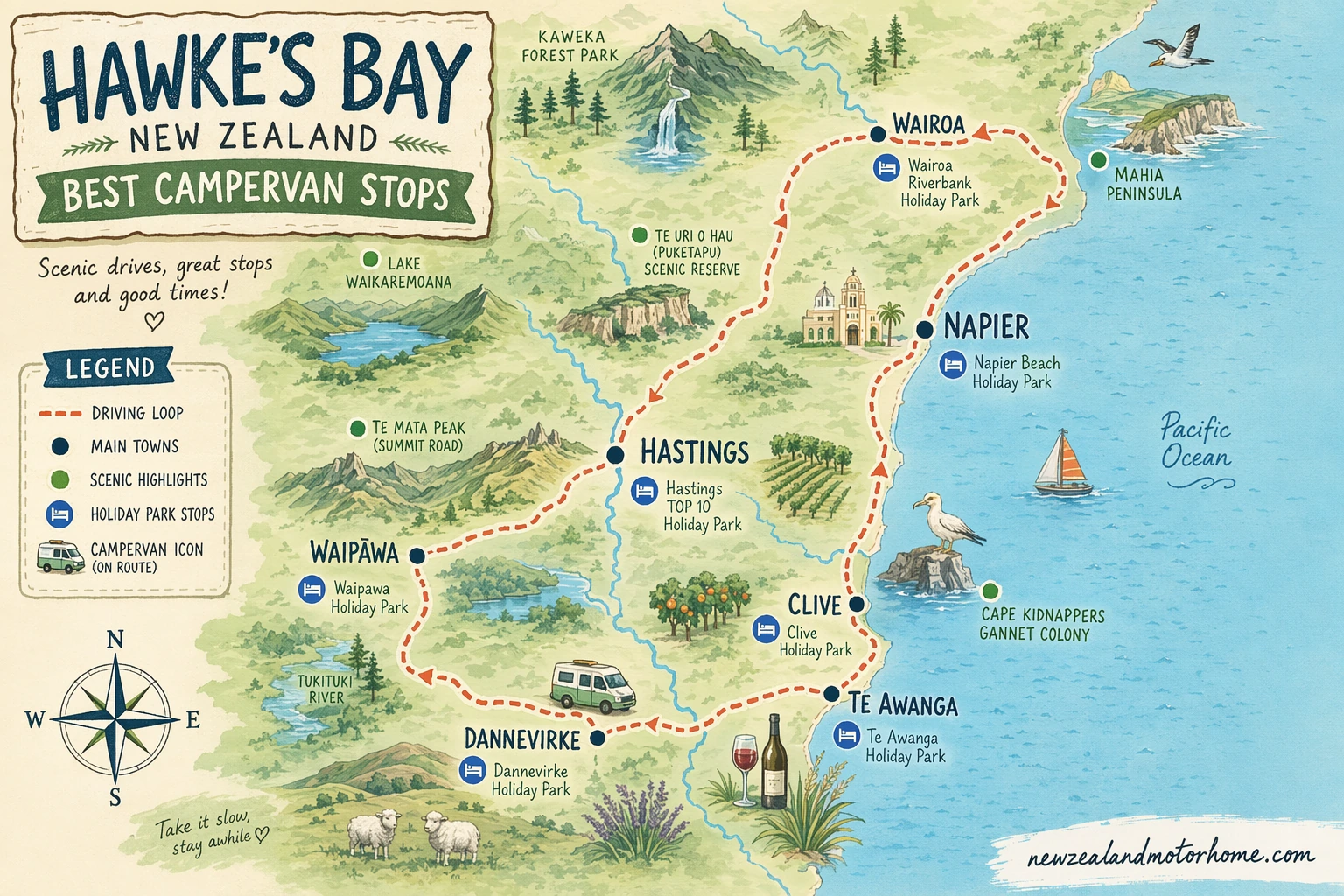
This guide gathers the best campervan stops hawkes bay travellers can weave into a relaxed loop, from Napier and Hastings through Te Mata Peak, Cape Kidnappers country and the quieter Central Hawke’s Bay coast. It is written for self-drive vans and motorhomes, with notes on powered sites, freedom camping Hawke’s Bay rules, dump stations, fresh water, road access and sensible overnight planning.
Start with Napier’s seafront, Ahuriri and Bluff Hill
Napier is the easiest first stop if you are arriving from Taupō, Wairoa or the airport area. Marine Parade gives you a simple seafront orientation, but large motorhomes are usually happier in the longer public parking bays away from the busiest café blocks. Go early for the best chance of finding a level spot, then walk the promenade rather than shifting the van every few hundred metres.
Ahuriri is more relaxed for a lunch stop, with harbour views, flat walking and roomier streets in places, though it still tightens up on sunny weekends. Bluff Hill Lookout is worth the view over the port and Cape Kidnappers, but the road up is residential, narrow in parts and not ideal for long or high vehicles. If your hired motorhome feels wide on suburban streets, park lower down and walk, or skip the climb and enjoy the harbour foreshore instead.
- Best for: first-night settling in, Art Deco walks, sea air and a low-stress food stop.
- Van fit: compact and mid-size campervans manage best in town; longer motorhomes should avoid tight hill streets and busy peak times.
- Overnight plan: use a Napier holiday park or a currently permitted council freedom camping area if your van is certified self-contained.
- Servicing: top up fresh water, LPG and groceries around Napier before heading to the coast or inland vineyards.
Te Mata Peak, Havelock North and the vineyard flats
Te Mata Peak is one of Hawke’s Bay’s great viewpoints, with the Tukituki River, orchards and coast laid out below you. For campervan travellers, the important part is the road: the upper section is narrow, winding and exposed in places, with limited turning room when it is busy. Smaller vans may be comfortable outside peak hours, but larger motorhomes are better left at lower car parks or in Havelock North while you walk part of the track network.
Havelock North and Hastings are useful bases when deciding where to stay campervan Hawkes Bay style: you have access to supermarkets, fuel, dump stations in the wider urban area, and holiday parks with powered sites. The Gimblett Gravels and Bridge Pa wine areas are easy day driving on flatter roads, but treat vineyard car parks as visit-only unless overnight parking is clearly offered and you have permission.
- Best for: sunrise or late-afternoon views, short walks, winery lunches and stocking up.
- Van fit: long motorhomes should avoid committing to the top of Te Mata Peak unless the driver is confident with narrow hill roads.
- Overnight plan: choose a powered site near Hastings or Havelock North if you want an easy reset for batteries, showers and laundry.
- Road note: rural vineyard roads can have soft edges, cyclists and slow tractors; pull over only where the shoulder is firm and visible.
Clifton, Cape Kidnappers and the Tukituki coast
The run from Havelock North down the Tukituki Valley to the coast is one of the loveliest short drives in the region. The river flats, orchards and limestone hills make it feel rural almost immediately, and there are good daylight pauses for photos where the road widens safely. Do not stop on blind bends or soft verges; after rain, those grassy edges can be a trap for heavier motorhomes.
Clifton is the usual gateway for Cape Kidnappers and the gannet coast, but the final coastal area can be busy, tide-dependent and exposed to wind. A campervan is fine for a daytime visit if you arrive with patience and do not expect a big open motorhome paddock beside every attraction. The beach walk to the cape is not a casual van-side stroll; check tide and access warnings locally before setting off, and never leave the vehicle where waves, rockfall zones or access tracks could become a problem.
- Best for: coastal scenery, birdlife, picnic stops and a half-day from Hastings or Napier.
- Van fit: suitable for most hired vans in daylight, but park only in formed areas and leave turning room for others.
- Overnight plan: nearby coastal accommodation and holiday park options suit travellers wanting to avoid driving back after dusk.
- Practical note: fill water and empty grey waste before leaving town; coastal facilities are more limited and not all picnic areas have campervan services.
Waimārama, Ocean Beach and the eastern beach stops
Waimārama and Ocean Beach give Hawke’s Bay its big open coast: long sand, surf, sea wind and hills behind. They are brilliant daytime campervan stops, especially when you want lunch with the side door open and the kettle on. The roads in are sealed but winding, with some narrower sections, so allow more time than the map suggests and take extra care with oncoming traffic if you are in a wide motorhome.
Freedom camping Hawke’s Bay rules are particularly important around beach communities, where local restrictions can change by season and by exact reserve. Do not assume that a quiet coastal car park is an overnight stop. If you are relying on freedom camping, confirm the current council bylaw, look for on-site signs, and make sure your vehicle’s self-containment certification is valid and displayed where required.
- Best for: beach walks, surf watching, picnic lunches and a scenic detour from Havelock North.
- Van fit: compact campervans are easier in beach car parks; larger motorhomes should avoid tight informal pull-offs and soft sand edges.
- Overnight plan: use designated sites only, or return inland to a holiday park with powered and unpowered options.
- Comfort tip: coastal wind can shake awnings hard; peg everything properly or keep the awning away if gusts are up.
Central Hawke’s Bay: Waipawa, Waipukurau and quiet coastal roads
South of Hastings, Central Hawke’s Bay changes the pace. Waipawa and Waipukurau are practical campervan towns for fuel, groceries, public toilets, fresh-water planning and dump-station checks before you head towards smaller beach settlements. The driving is generally straightforward on State Highway 2, but side roads to the coast can be narrower, with stock movement, one-lane bridges and fewer places to turn a long vehicle around.
Porangahau, Pourerere and the wider southern coast reward travellers who are not rushing. This is where you want a full water tank, charged devices, a sensible food shop and a flexible overnight plan rather than arriving late and hoping a beach reserve will work. If you would like help turning these stops into a route that matches your van size and travel dates, you can send your ideas through the plan-your-trip step and we will help you keep the driving realistic.
- Best for: quieter beaches, river towns, relaxed driving days and a less crowded Hawke’s Bay loop.
- Van fit: suitable for most vehicles on main roads; check side-road conditions if you are in a long motorhome or travelling after heavy rain.
- Overnight plan: look for established campgrounds, holiday parks or signed council-permitted freedom camping areas.
- Servicing: empty grey and black water in town rather than carrying full tanks out to small coastal settlements.
How to string the best stops into a campervan route
A simple Hawke’s Bay campervan loop works best when you avoid too many one-night dashes. Spend your first night around Napier or Hastings, use the next day for Te Mata Peak and the vineyard flats, then choose either the Cape Kidnappers coast or the Waimārama and Ocean Beach side for a slower beach day. If you have extra time, continue south into Central Hawke’s Bay instead of doubling back immediately.
For three to four nights, mix one powered-site night with one or two lower-facility nights if your van is certified self-contained. That gives you a chance to recharge, refill fresh water, use laundry facilities and empty waste properly before heading to quieter areas. In summer and school holidays, book powered sites ahead; outside peak periods, you can usually keep a little more flexibility, but still check campground office hours before arriving late.
- 2 nights: Napier or Hastings base, Te Mata Peak, Ahuriri, one coast drive.
- 3 nights: add Clifton or Waimārama, with a powered reset near Hastings or Havelock North.
- 4-5 nights: continue to Waipawa, Waipukurau and a Central Hawke’s Bay coastal stop.
- Best rhythm: drive in the morning, park the van before lunch, then walk, swim or taste without hunting for a space at the busiest time.
Keep planning
Common questions
Can I freedom camp in Hawke’s Bay in a hired campervan?
Yes, but only where the current local rules allow it, and usually only if your campervan is certified self-contained. Freedom camping Hawke’s Bay restrictions vary by council area and by specific reserve, so check signs and council maps on the day rather than relying on an old app listing.
Where should I stay in a campervan around Hawke’s Bay for a first visit?
For a first night, Napier, Hastings or Havelock North are the easiest bases because you are close to powered sites, supermarkets, fuel, water and dump stations. If you are wondering where to stay campervan Hawkes Bay wide, start urban, then move to a coastal or Central Hawke’s Bay stop once the van is stocked and serviced.
Is Te Mata Peak suitable for a motorhome?
The view is excellent, but the upper road is narrow and winding with limited space when busy. Smaller campervans may be fine with a confident driver, while longer motorhomes are usually better parked lower down so you can walk part of the way or enjoy other nearby viewpoints.
Do I need to book holiday parks in Hawke’s Bay?
Book ahead in summer, long weekends and during major events, especially if you need a powered site. At quieter times you may have more flexibility, but it is still wise to confirm late-arrival arrangements and whether the site suits your vehicle length.
Where can I empty waste and refill water?
Use official dump stations in larger towns, holiday parks and designated service points; do not empty grey water at beach reserves or roadside drains. Napier, Hastings, Havelock North, Waipawa and Waipukurau are the practical places to plan your fresh-water and waste stops before heading to smaller coastal areas.
Have a planner shape this for your dates
Send a short outline — your dates, party size, and the kind of trip you want. A planner replies with a vehicle recommendation, a paced route, and the realistic budget.