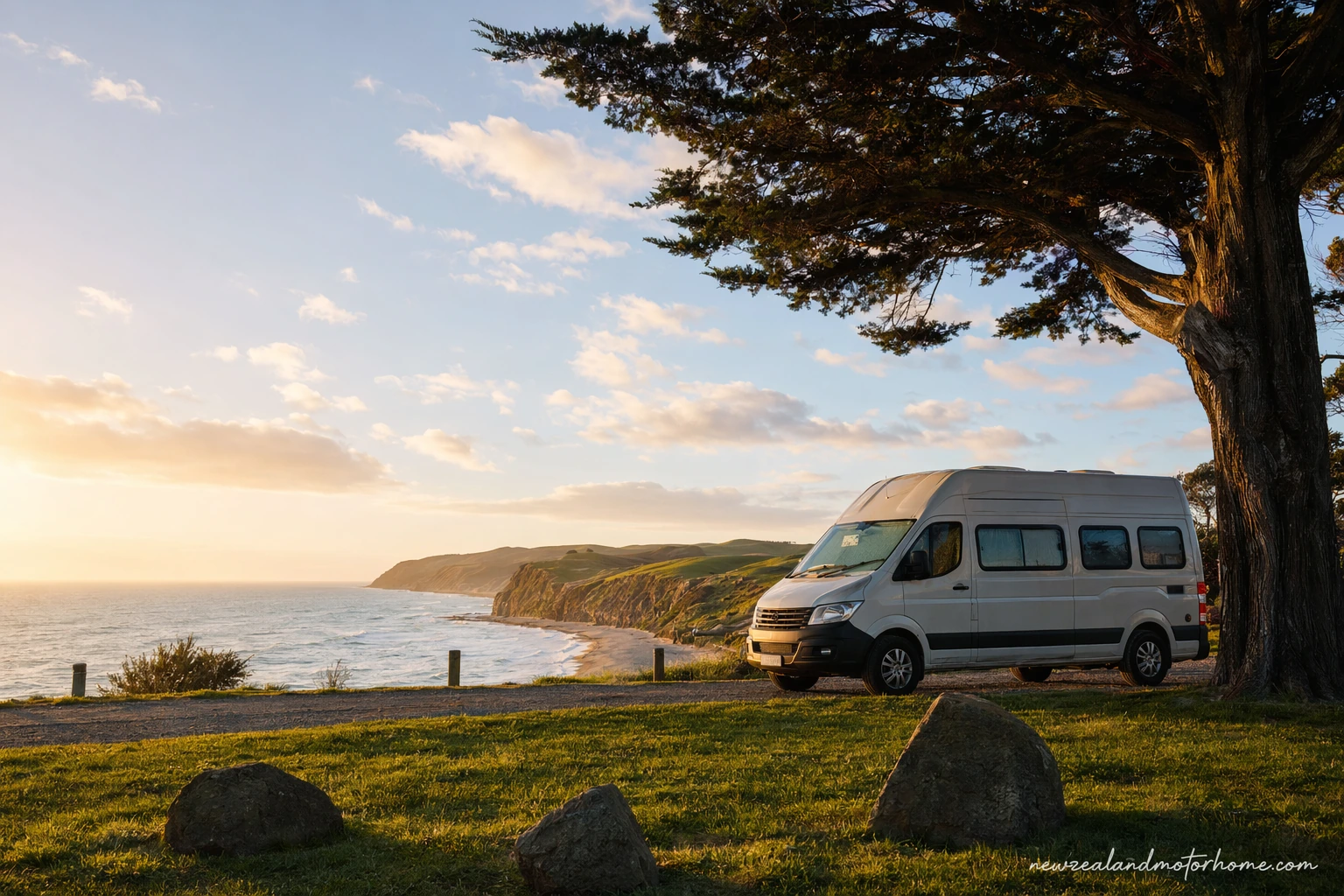
- Best season: March to May
- Allow 3 to 5 nights
- Book powered sites in summer
- Self-contained required for many freedom spots
- Take care on SH5 and Te Mata Peak roads
Hawke's Bay is one of the easier North Island regions to enjoy from a campervan: wide coastal roads, sunny vineyard country, good town services, and plenty of places where you can park the van for a proper look around. The trick is timing it well, because the difference between a hot January beach week and a quiet May vineyard run is huge.
This guide looks at when to visit Hawke's Bay for self-drive motorhome travel, including seasonal weather, holiday-park availability, freedom camping considerations, driving conditions, and the practical bits: dump stations, LPG, fresh water, and where a larger van needs a bit more care.
Quick answer: March to May is the easiest campervan season
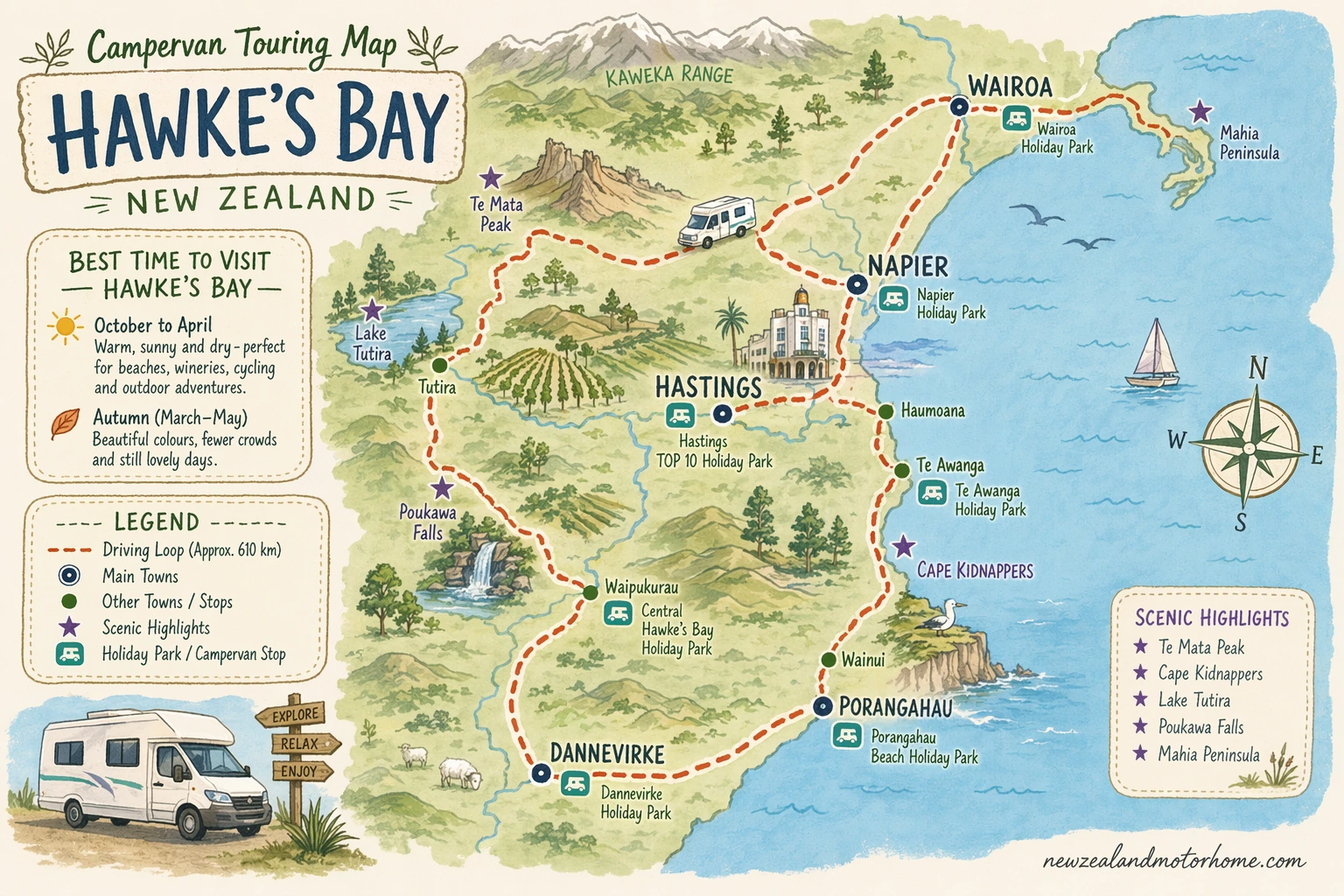
For most campervan travellers, the best time to visit Hawke's Bay is from March to May. The summer heat has eased, the sea is often still warm enough for a quick swim, the roads are calmer after the main holiday rush, and vineyard and orchard country looks full and golden. It is also a comfortable time to sleep in the van without running a fan all night or waking to winter damp.
November is the other sweet spot. You get longer evenings, spring growth around Havelock North and the Tuki Tuki valley, and generally better availability at powered and unpowered sites than over Christmas and New Year. If you are trying to choose when to visit Hawke's Bay with a hired motorhome, these shoulder months give you the most flexibility.
- Best overall: March, April and early May for settled touring and easier overnight planning.
- Best for beaches: January to March, with early starts for van parking near the coast.
- Best for quiet sites: May to August, outside school holidays and major local events.
- Best for long daylight: November to February, useful if you prefer driving between stops slowly.
Hawke's Bay weather by month, from a van-sleeping point of view
Hawke's Bay has a reputation for sunshine, but in a campervan the details matter: hot afternoons in Napier, cool inland nights near Waipukurau, and wind that can make a coastal freedom-camping spot feel less sheltered than it looked on the map. If you are comparing Hawke's Bay weather by month, think about sleeping comfort as much as daytime sightseeing.
December to February is warm to hot, with busy beaches at Napier, Haumoana, Te Awanga, Waimarama and Ocean Beach. Book powered sites early if you want air-flow, showers and a reliable base. March and April are usually more forgiving: warm days, cooler nights, and fewer queues at dump stations and water taps. June to August can still be pleasant in the middle of the day, but expect colder mornings, shorter daylight and the odd run of wet weather.
- September to November: Fresh mornings, blossom and spring winds; pack layers for early starts.
- December to February: Hot, bright and busy; use shade where you can and refill fresh water often.
- March to May: Warm days and more comfortable nights; a strong choice for longer motorhome loops.
- June to August: Quiet and cool; better for travellers happy with powered sites and indoor evening plans.
Crowds, events and campsite availability
Hawke's Bay fills quickly in the main summer holiday period, especially around Napier's waterfront, Hastings, Havelock North and the beach settlements. If you want a powered site in late December or January, treat it as something to lock in before you arrive, not something to sort out at dusk. Larger motorhomes should ask about site length, turning space and whether awnings are practical on compact urban sites.
February can also be busy because of regional events and the tail end of peak travel. Harvest season from late summer into autumn brings a good buzz around the vineyards, but it can tighten accommodation in popular pockets. Shoulder-season travel is much easier: you can often choose between a town holiday park, a quieter rural campground, or a council-permitted self-contained overnight spot where allowed.
Freedom camping rules vary between Napier, Hastings and Central Hawke's Bay. Do not assume that a beach car park is legal for overnighting just because other vans are there; check current council maps and signs, and make sure your vehicle is certified self-contained if the site requires it.
Where to base the van by season
In summer, a coastal base makes sense if beach time is the priority, but it is also where parking pressure is highest. Napier gives you easy day parking along the waterfront and access to supermarkets, fuel, LPG swaps, fresh water points and dump stations, while still letting you drive out to Te Awanga, Clifton or the Tuki Tuki valley. Arrive early for day parks on hot weekends, especially if your van is long or you need room to open side doors safely.
In autumn, many motorhome travellers split their nights between Napier or Hastings services and a quieter inland or village-style stop. That makes it easier to visit Havelock North, Te Mata Peak, Waipawa and Waipukurau without backtracking. In winter, a powered site is worth considering for heaters, battery top-ups and drying towels after damp mornings.
- Napier/Ahuriri: Good for services, waterfront walks and a no-fuss first night after driving in.
- Hastings/Havelock North area: Handy for wineries, Te Mata Peak access and central touring.
- Haumoana/Te Awanga/Clifton: Coastal feel, but check overnight rules carefully and watch wind exposure.
- Central Hawke's Bay: Quieter bases, useful if you are heading south on SH2 or want less city traffic.
Driving conditions and road notes for motorhomes
The main roads through Hawke's Bay are generally comfortable for a campervan, but the region has a few places where size matters. SH2 north and south of Napier carries trucks and can feel busy at peak times, while SH5 between Taupō and Napier is a winding, higher route that deserves an unhurried drive, especially after heavy rain or in winter cold snaps. Check road conditions before committing to a late-afternoon crossing.
Te Mata Peak is spectacular, but the upper road is narrow and not ideal for large motorhomes or nervous drivers. Consider parking lower down or choosing walks and viewpoints that do not require squeezing a big van past parked cars. The roads to Waimarama and Ocean Beach are scenic but rural, with bends, cyclists and occasional stock movements, so allow more time than the kilometres suggest.
For trip planning help that accounts for your van size, travel month and overnight style, you can talk to us before you lock in the route. A small change in timing can make the difference between an easy loop and a rushed day of town parking, water fills and campsite check-ins.
Practical seasonal checks: water, waste, power and supplies
Hawke's Bay is well set up for campervans, but summer use can put pressure on the basics. Refill fresh water before heading to beach settlements, keep your grey-water tank from getting too full if you are moving between restricted freedom-camping areas, and plan dump-station stops around Napier, Hastings or Central Hawke's Bay rather than leaving them to the end of the day.
In hotter months, choose powered sites if you rely on a fridge, device charging or fans, especially after a few nights off-grid. In winter, powered sites help with heating and battery recovery. LPG and groceries are easiest to sort in the main towns, so do those jobs before rolling out to coastal or rural overnight stops.
- Self-containment: Carry proof of certification and follow the exact conditions on each council-listed site.
- Fresh water: Top up in town before remote beach days or inland detours.
- Dump stations: Use official facilities only; do not count on small settlements having one.
- Power: Book powered sites during heatwaves, winter cold spells or after several freedom-camping nights.
Keep planning
Common questions
What is the best month to campervan around Hawke's Bay?
March is hard to beat: warm days, cooler nights in the van, and fewer holiday crowds than January. April is also excellent if you prefer quieter roads and do not mind shorter evenings.
Is Hawke's Bay too hot for a campervan in summer?
It can be very hot in January and February, especially when the van is parked in full sun. Choose shaded or powered sites where possible, open vents safely, refill water often, and avoid leaving coastal parking until late in the day when spaces are tight.
Can I freedom camp in Hawke's Bay?
Only where local council rules allow it, and many spots require a certified self-contained vehicle. Always check current signs and council maps, because beach reserves and urban car parks can have time limits, vehicle limits or seasonal restrictions.
Do I need to book holiday parks ahead?
Yes for Christmas, New Year, long weekends and big event periods, especially if you need a powered site or have a larger motorhome. In shoulder seasons you usually have more flexibility, but it is still wise to ring ahead before arriving late.
Is winter worth it in a motorhome?
Winter can be a good quiet-season trip if you are comfortable with cool mornings and early sunsets. A powered site is useful for heating, drying gear and keeping batteries healthy, and you will find easier parking around Napier and Hastings.
Are the roads suitable for large campervans?
Main routes are generally suitable, but take care on SH5, rural beach roads and the upper sections around Te Mata Peak. If your van is long or high, avoid tight viewpoint roads when they are busy and park lower down where turning is easier.
Have a planner shape this for your dates
Send a short outline — your dates, party size, and the kind of trip you want. A planner replies with a vehicle recommendation, a paced route, and the realistic budget.