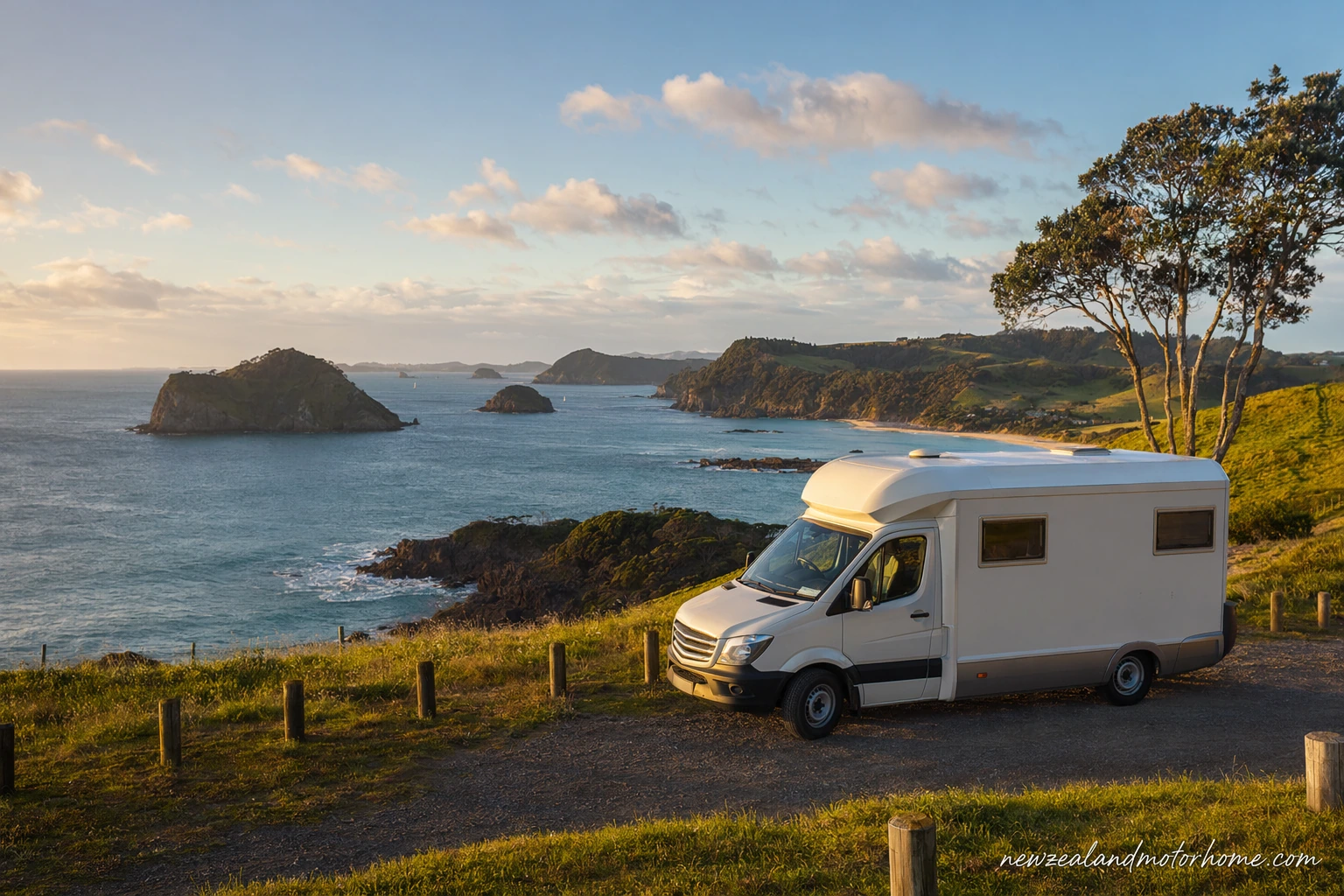
- Best overall: March–May
- Allow 3–5 nights by van
- Book powered sites in January
- Self-contained only where permitted
- Use ferry care for larger motorhomes
The Bay of Islands rewards a slow, self-drive pace: morning coffee beside the van in Paihia, a ferry hop to Russell, sheltered swimming bays, and enough side roads to make you glad you are not rushing back to a fixed hotel booking. The best season depends on whether you want warm water and long evenings, or easier parking, quieter holiday parks and a little more flexibility with overnight stops.
For most campervan travellers, March to May is the sweet spot. You still get Northland warmth, the school-holiday pressure has eased, and powered sites are usually easier to secure than in January. This guide compares weather, crowds, holiday-park availability, freedom camping rules, road conditions and van logistics so you can decide when to visit Bay of Islands with fewer surprises.
Best months overall for a Bay of Islands campervan trip
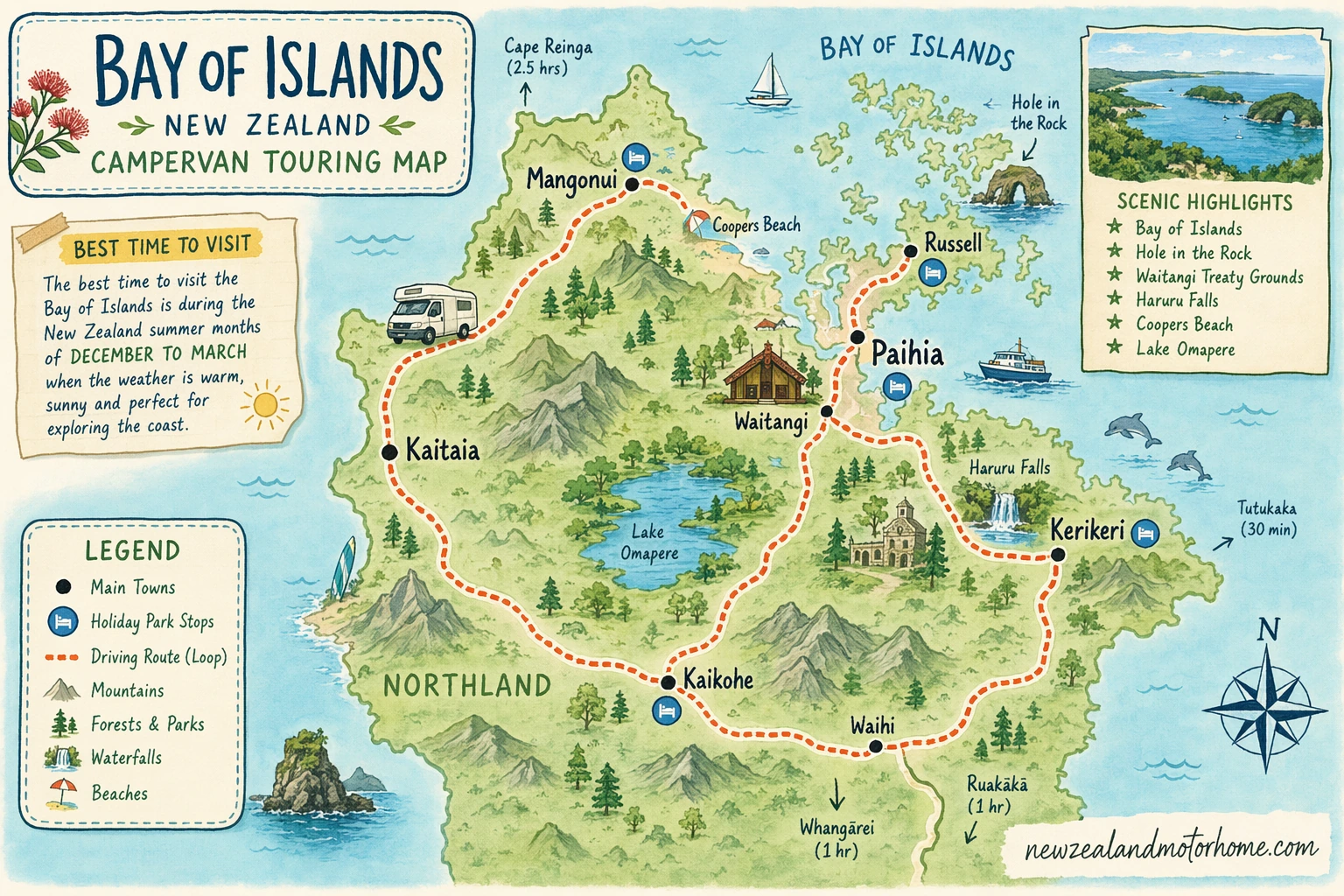
If you want the simplest answer, aim for March, April or early May. The sea is still warm from summer, daytime temperatures are comfortable for walking around Waitangi, Kerikeri and Russell, and you are less likely to be juggling full holiday parks every night.
December to February is the classic beach season, but it is also when Paihia waterfront parking, Russell streets and popular coastal stops feel the squeeze. Winter is much quieter and can be lovely in settled spells, though you need to plan around rain, shorter daylight and grass sites that may be soft under a heavier motorhome.
- Best balance: March to May for warm days, lighter crowds and more campsite choice.
- Warmest water: January to March, especially around sheltered beaches and island trips.
- Quietest touring: June to August, with more space in holiday parks and town car parks.
- Best for flexible bookings: late April, May, September and November, outside school-holiday peaks.
Bay of Islands weather by month, in real van terms
Northland has a mild, humid climate, so the Bay of Islands weather by month is less about freezing cold and more about heat, rain, wind and where you can dry your towels. A fine winter day can be gorgeous, but a wet front can make unpowered grass sites messy and make you grateful for a powered site with a laundry.
Summer days are often warm and bright, with the odd heavy shower. Autumn tends to be more settled, with softer evenings and good swimming through March. Winter brings more rain systems from the north and west, while spring can swing quickly between T-shirt weather and blustery showers.
- December to February: warm, busy and humid; book powered sites early and expect limited shade in some van parks.
- March to May: warm to mild, often settled; ideal for mixing beach time with Kerikeri walks, Russell exploring and ferry days.
- June to August: mild but wetter; choose hardstand or well-drained sites where possible, and keep wet gear out of the sleeping area.
- September to November: fresh, changeable and increasingly bright; a good time for flexible travellers who can wait out a wet morning.
Summer: long evenings, busy waterfronts and tighter campsites
In January, the Bay of Islands feels like a proper holiday coast. Paihia, Russell, Ōpua and Kerikeri are lively, boat trips are in demand, and beachfront parking can fill early. If you are driving a larger motorhome, arrive before the lunch rush for day parking, then use the van as a base rather than trying to move it every hour.
Holiday parks and campgrounds are at their tightest from late December through January, especially for powered sites. Unpowered sites may still be available in some places, but shade, level ground and easy access to facilities can be limited. Book ahead if you need power for a fridge, medical device, e-bike charging or a quieter corner for children.
Freedom camping is not a fallback plan here. Far North District rules are specific, and overnighting is generally limited to signed, permitted areas for vehicles with current self-containment certification. Always check the current council map or on-site signs before settling in, because a lovely-looking reserve or boat-ramp car park may be day-use only.
Autumn, winter and spring: quieter roads and more breathing room
Autumn is when the Bay of Islands relaxes. You can often decide in the morning whether to stay another night near Paihia, move across to Russell, or head inland to Kerikeri without feeling boxed in by bookings. Powered sites are still useful for cooler evenings, but you are less likely to be choosing from the last spot left.
In winter, many core attractions, cafés, fuel stops and supermarkets continue to operate, but some tours and food places may run reduced hours or depend more on weather. This is the season to keep your route loose, carry an extra layer for ferry crossings and use established campgrounds when you want hot showers, a laundry and a firm surface under the tyres.
Spring is a good shoulder-season choice if you like green hills and lighter crowds. The trade-off is wind and changeable rain, so park with awnings and pop-tops in mind. If the forecast turns rough, inland stops around Kerikeri or Kawakawa can feel more settled than exposed coastal parking.
Driving notes, ferries and van services by season
The main approach from Whangārei is via SH1 and SH11, with the last run into Paihia narrower and busier in peak season. Roads to bays, lookouts and historic spots can be winding, with overhanging trees, tight shoulders and limited turning space. Check your hire van height before pulling under trees near beaches or into older car parks, and avoid committing a long motorhome to a no-exit side road unless you know there is room to turn.
Russell is a highlight, but it needs a little van thinking. The vehicle ferry between Ōpua and Okiato is the easier option for many campervans compared with the longer, twistier road route around the coast. Check current ferry conditions, vehicle length rules and payment details on the day, especially if you are travelling in a larger motorhome or during holiday peaks.
For overnight planning, common bases include Paihia for boat trips and Waitangi, Haruru Falls for a quieter edge-of-town feel, Kerikeri for supplies and food stops, and Russell for a slower village stay. Use official sources and your campground host for current dump station, fresh-water and LPG refill options around Paihia, Ōpua, Kawakawa and Kerikeri, as opening access can change. If you want help matching your season, van size and overnight style, you can talk to us before you lock in the northern leg.
Keep planning
Common questions
What is the best month to visit the Bay of Islands by campervan?
March is hard to beat: the sea is still warm, the weather is often settled, and the January campsite pressure has eased. April is also excellent if you want quieter roads and still-mild days.
Do I need to book Bay of Islands holiday parks in advance?
Yes, for late December, January, long weekends and school holidays, especially if you need a powered site. In autumn, winter and parts of spring you can usually be more flexible, but book ahead if you have a large motorhome or want to stay right in Paihia or Russell.
Can I freedom camp around Paihia or Russell?
Only where local rules and signs allow it, and generally only in a vehicle with current self-containment certification. Do not assume a waterfront car park, reserve or boat ramp is legal overnight parking; check the Far North District guidance before you stop for the night.
Is winter too wet for a Bay of Islands motorhome trip?
Winter can be wet, but it is not usually cold by South Island standards. Choose hardstand or well-drained sites, keep a weather gap in your itinerary, and use powered sites when you need heating, laundry and a proper dry-out.
Is the road to Russell suitable for a campervan?
Many campervans can reach Russell, but the vehicle ferry from Ōpua to Okiato is often the easier approach. The alternative road is scenic but more winding, so check your vehicle length, allow extra time and avoid driving it tired or in heavy rain.
Have a planner shape this for your dates
Send a short outline — your dates, party size, and the kind of trip you want. A planner replies with a vehicle recommendation, a paced route, and the realistic budget.