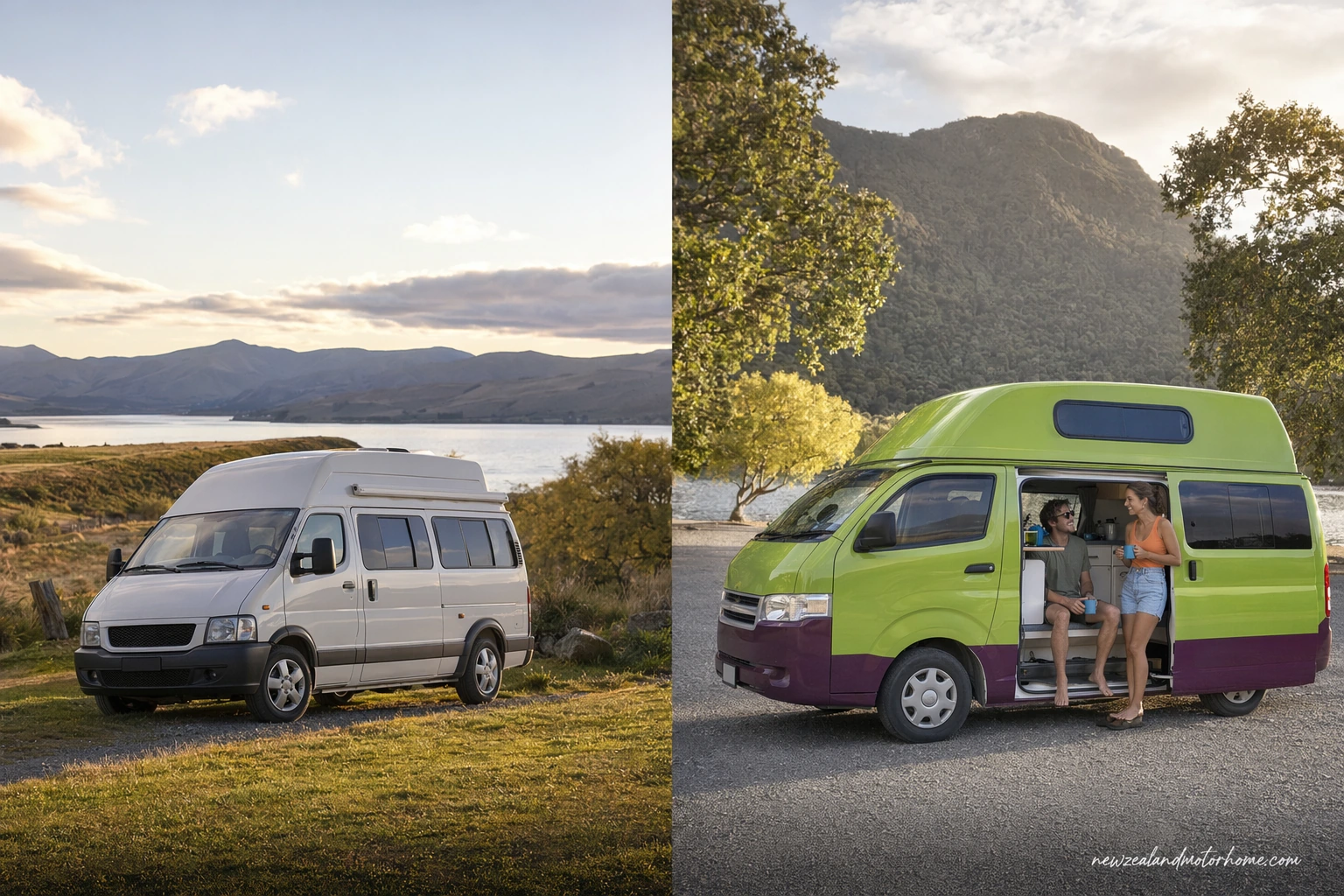
- Best choice depends on exact model
- Check self-containment before booking
- Compact vans park more easily
- Larger motorhomes suit wet weather
- Plan powered-site reset nights
Choosing between Britz and JUCY is less about picking the “best” logo and more about how you want to live with the van each day: where you can park it, whether you need a powered site, how often you want to use campground bathrooms, and whether freedom camping is genuinely on the cards.
This comparison is written for self-drive campervan travellers in New Zealand, not for people hopping between hotels. We’ll look at the practical trade-offs between a larger motorhome-style hire and a compact budget camper: sleeping comfort, self-containment, dump stations, LPG and water routines, road feel, and the overnight stops that make the trip work.
The quick answer: Britz for space, JUCY for simplicity
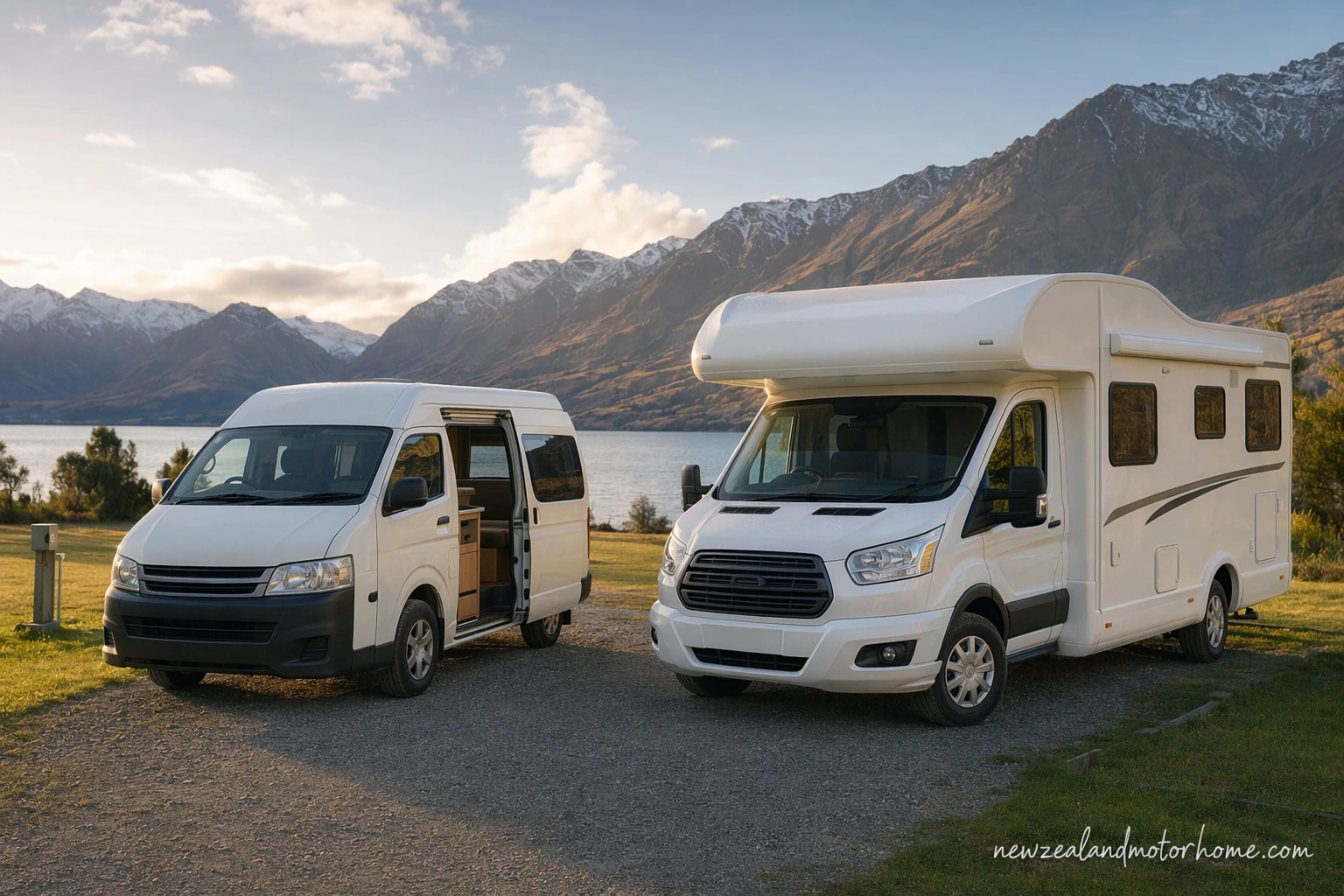
As a broad rule, Britz tends to suit travellers who want more living space, onboard facilities and a motorhome feel. JUCY tends to suit travellers who want a smaller, easier-to-park camper and are happy using campground kitchens, shared bathrooms and simpler storage.
The exact answer depends on the model you hire, because both fleets can change and not every camper has the same self-containment set-up. Before you lock anything in, check the actual vehicle listing for sleeping layout, toilet type, fresh-water capacity, grey-water tank, heater, fridge, power sockets and whether the van is certified self-contained under current NZ rules.
- Choose Britz if you value an inside table, standing room, more storage, and the option of an onboard toilet or shower on many motorhome models.
- Choose JUCY if you prefer a nimble camper for city parking, supermarket stops, narrow access roads and cheaper-style campsite routines.
- Be careful if freedom camping is central to your plan: eligibility follows the exact vehicle certification, not the brand name.
Driving and parking: the size difference matters every day
A compact JUCY-style camper is usually easier in towns, ferry queues, supermarket car parks and beach access roads. It is the sort of van where you are less likely to circle twice looking for a long bay, and you will feel more relaxed pulling into small scenic lookouts on the West Coast, Coromandel or Northland back roads.
A larger Britz motorhome gives you more comfort once parked, but you need to drive it with more patience. Allow extra room for rear overhang, watch height bars at covered car parks and fuel stations, and avoid treating gravel side roads like a small car would. In holiday towns such as Wānaka, Queenstown, Kaikōura and Mount Maunganui, use designated large-vehicle parking where it is signposted rather than squeezing into standard bays.
- In a small camper: easier day parking, simpler U-turns, less stress at busy trailheads.
- In a larger motorhome: more comfortable in rain, but you will want wider bays, flatter ground and more turning space.
- On NZ roads: let faster traffic pass when safe, use pull-over bays, and take extra care on one-lane bridges, alpine passes and windy coastal sections.
Sleeping, cooking and wet-weather comfort
This is where the britz vs jucy campervan decision becomes personal. If you are travelling for more than a few nights, or you are travelling in cooler months, the ability to stand up, sit inside comfortably and keep wet jackets away from bedding can make a big difference. Larger motorhomes often feel calmer on a rainy Fiordland or West Coast evening because you can cook, eat and move around without dismantling the bed every time.
A compact camper can still be excellent for a summer loop where you spend your days outside and use holiday parks or DOC-style campsites with facilities. The trade-off is that your living space is often your bed, kitchen access may be at the rear or side of the van, and bad weather can make simple jobs feel fiddly.
- Powered sites: useful for recharging house batteries, running mains appliances where supplied, and giving yourself a reset night after several unpowered stops.
- Unpowered sites: better suited when you are confident with battery use, fridge load, lights and charging needs.
- Campground facilities: more important in a compact camper, especially for hot showers, dishwashing, laundry and a proper indoor cooking space.
Freedom camping and self-containment: do not assume
Freedom camping in New Zealand is controlled by national rules and local council bylaws, and enforcement is based on the vehicle you are actually driving. A brand alone does not make you eligible. You need to confirm the van’s current self-containment certification, the displayed warrant/card, the number of people it is certified for, and whether the toilet and waste systems meet the rules for the places you want to stay.
If freedom camping is important, a larger motorhome with fixed facilities can be more straightforward, but you still need to read local signs. Some lakefront, beach and town areas ban overnight stays completely, even for certified self-contained vehicles. A compact camper may be perfect for paid campsites but may limit your legal overnight options if it is not certified for freedom camping.
- Always check: fresh-water tank, grey-water tank, toilet, rubbish storage and certification expiry.
- Use dump stations properly: empty grey water and toilet waste only at approved dump points, not roadside drains.
- Plan water top-ups: refill fresh water at holiday parks, some service stations or public taps where potable water is clearly allowed.
- Respect signs: council rules can change from one town boundary to the next.
Daily chores: dump stations, LPG, batteries and site rhythm
A motorhome trip works best when you build small chores into the route instead of leaving them until everything is flashing empty. With a larger Britz-style motorhome, you may have more onboard tanks and appliances, but you will also be managing toilet cassette or black-water systems, grey water, LPG for cooking or heating where fitted, and a bigger house battery set-up. With a compact JUCY-style camper, there may be fewer systems, but you may rely more on campground kitchens, shared bathrooms and regular powered-site nights.
For both choices, aim to arrive at overnight stops before dark. It is much easier to level the van, plug into power, find the dump station, locate drinking-water taps and check the camp kitchen while there is still light. In peak summer, book holiday parks in advance in popular places; in shoulder season, you can often be more flexible, but long weekends and school holidays still tighten availability.
- Every few days: dump waste, refill fresh water, top up groceries and give batteries a proper charge.
- Before remote stretches: check fuel, LPG if your vehicle uses it, drinking water and weather.
- At powered sites: charge devices, run the fridge efficiently, dry towels and reset the van.
Which one suits your route?
If your route includes tight town parking, short stays, warm-weather beach camping and lots of eating outside, a compact JUCY-style camper can feel refreshingly easy. If your route includes longer distances, alpine weather, more cooking inside, or you simply want your own toilet and more room to sit, a Britz-style motorhome is usually the more comfortable home on wheels.
For South Island loops with mountain passes, changeable weather and scenic but exposed campsites, comfort matters more than many first-time visitors expect. For North Island coastal loops, a smaller camper can be a pleasure, especially where parking near surf beaches, cafés and walking tracks is limited. Either way, match the vehicle to the overnight style first: holiday parks, DOC campsites, freedom camping, or a mix.
If you want a second set of eyes on the trade-offs, send us your rough dates, route and sleeping style through our plan-your-trip step. We can help you think through where the van will actually sleep, not just how it looks in the booking photo.
Keep planning
Common questions
Is Britz or JUCY better for freedom camping in New Zealand?
Neither brand is automatically better; the exact vehicle must be certified self-contained and accepted under the rules for the place you are staying. Larger motorhomes often have more complete onboard facilities, but you still need to check the current certification and local council signs.
Will a bigger Britz motorhome be hard to park?
It is manageable if you drive patiently, but it needs more space than a compact camper. Use large-vehicle bays where available, avoid covered car parks with height limits, and give yourself time at busy supermarket, ferry and trailhead car parks.
Can I use unpowered campsites in a JUCY camper?
Yes, if the vehicle set-up and your power use suit it. Compact campers can work well on unpowered sites, but you may want regular powered nights for charging, fridge efficiency, laundry and a proper facilities reset.
Do I need a toilet and shower onboard?
Not always. If you plan to stay mostly in holiday parks or campsites with bathrooms, a compact camper can be fine. If you want more privacy, rainy-day comfort or wider legal overnight options, an onboard toilet is a serious advantage.
Which is cheaper overall: Britz or JUCY?
Compact campers are often chosen for lower trip costs, but the final spend depends on season, model, insurance, fuel use, campsite choices and how often you need powered sites. Do not compare the daily hire rate alone; compare the whole camping rhythm.
Have a planner shape this for your dates
Send a short outline — your dates, party size, and the kind of trip you want. A planner replies with a vehicle recommendation, a paced route, and the realistic budget.