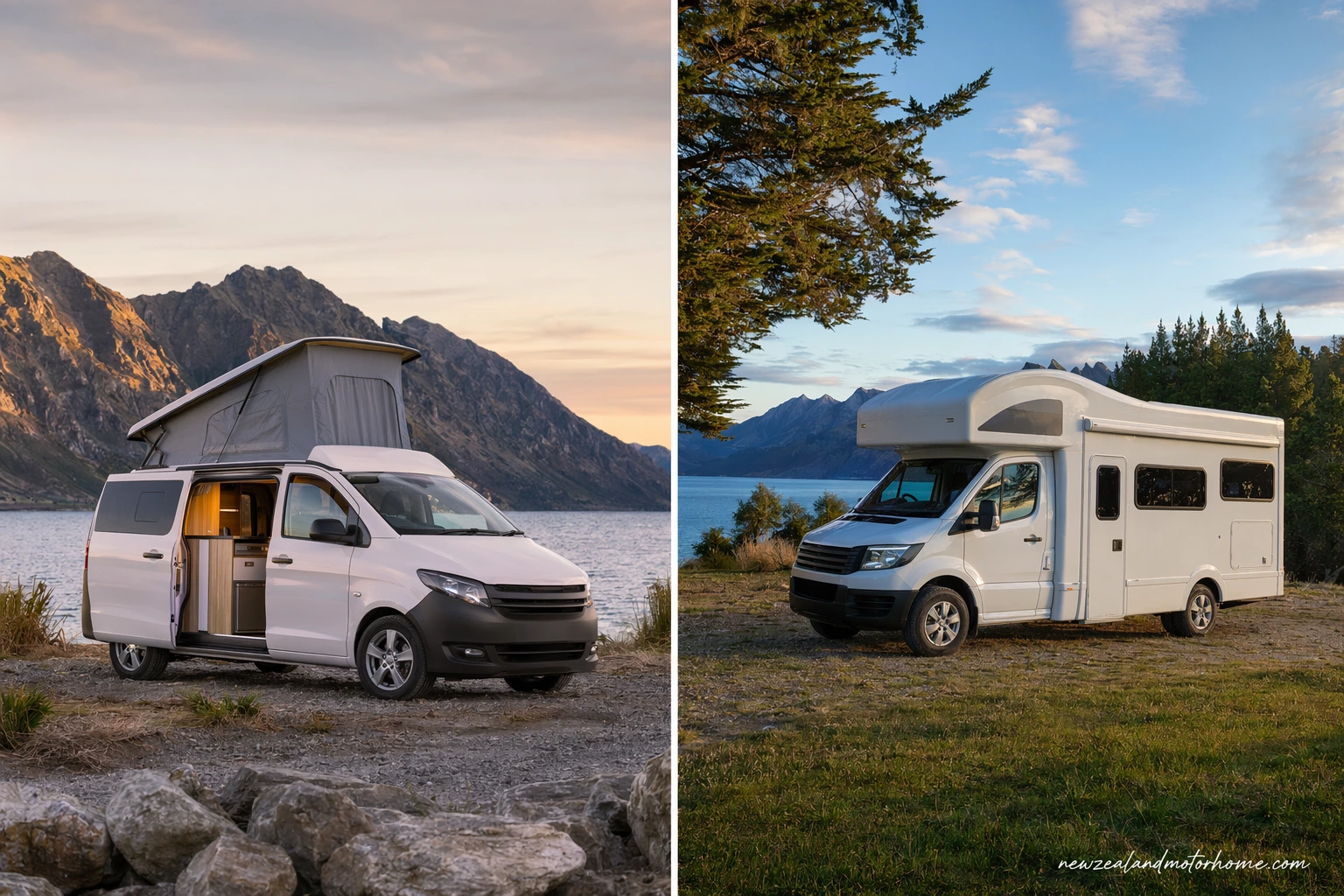
- Maui: newer premium feel
- Britz: wider layout choice
- Freedom camping depends on certification
- Check length and height before booking
- Mix powered and unpowered sites
Choosing between a maui vs britz campervan is less about picking a logo and more about how you want to live in the van each night. In New Zealand, the right hire affects where you can park, whether you can use smaller DOC-style sites, how often you need a dump station, and how relaxed you feel on narrow rural roads.
Maui generally sits at the newer, more premium end of the fleet, while Britz usually gives you a broader spread of layouts and budgets. This guide compares them from a self-drive point of view: campsite fit, freedom camping, onboard comfort, road handling, and the little chores like LPG, fresh water, grey-water emptying and finding a sensible overnight stop.
The main difference: premium polish versus wider choice
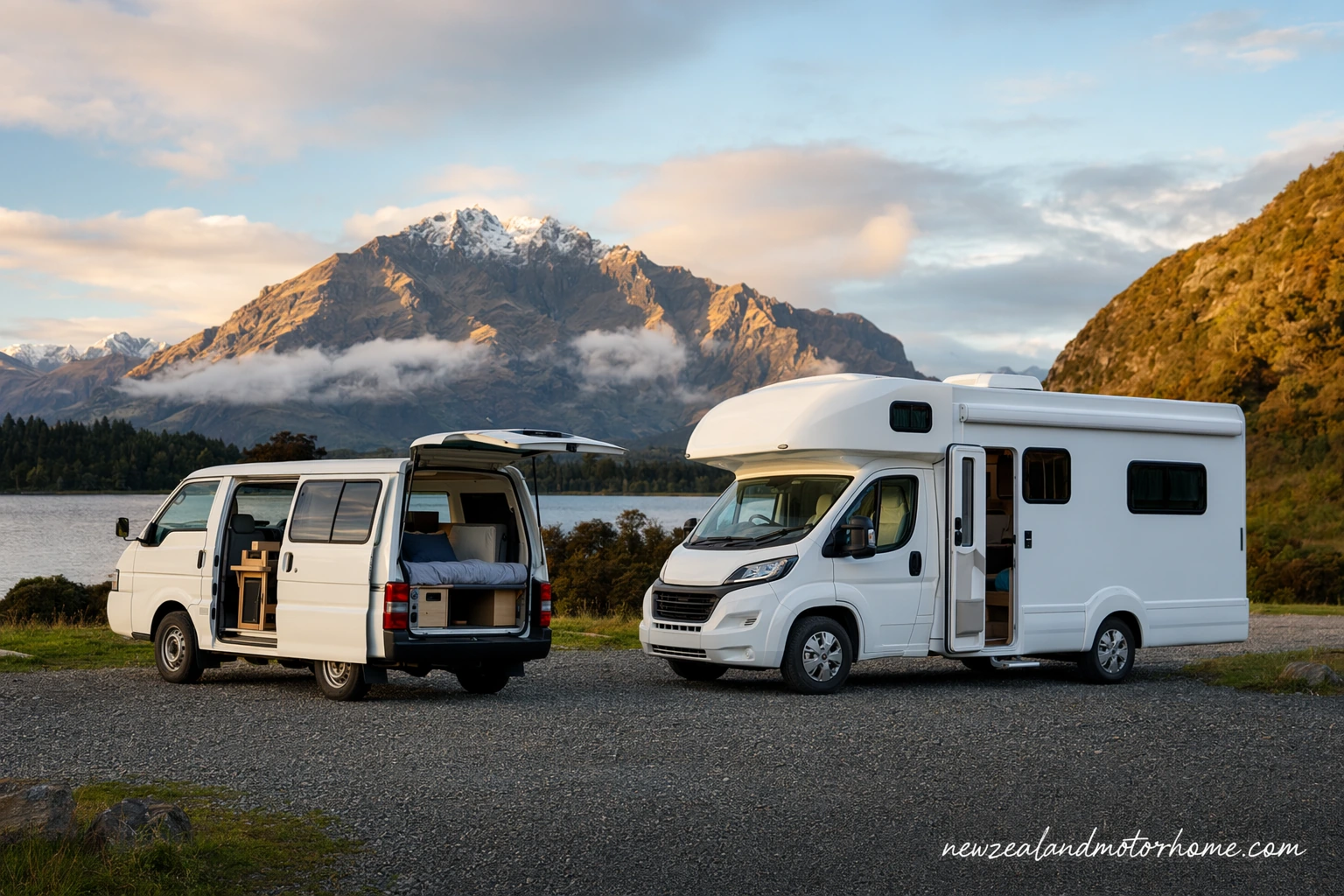
For most campervan travellers, Maui is the smoother, newer-feeling option. You are usually paying for a more polished interior, modern fittings, and a quieter, more comfortable living space. That can matter on a wet West Coast evening when everyone is inside the van, cooking, charging devices and trying not to stand on each other.
Britz is often the more flexible choice. The range is typically broader, from smaller campervans through to larger motorhomes, so it can suit travellers who care more about layout, length or budget than having the newest finish. A well-chosen Britz van can still be completely comfortable for a long South Island loop; it just may feel more practical than plush.
- Choose Maui if you want a newer-feeling van, a more refined interior and you are happy to pay for comfort.
- Choose Britz if you want more layout choice, a lower-key fit-out, or a better chance of matching the van to a specific route.
- Do not choose by brand alone: compare the exact berth, vehicle length, toilet/shower setup, heating, fridge size and storage.
Parking, vehicle size and NZ road comfort
New Zealand looks compact on a map, but van size matters quickly once you are threading through small town centres, beach access roads or older holiday park lanes. Larger Maui motorhomes can be excellent once parked, yet they take more attention in supermarket car parks, lookout pull-offs and tight dump station bays. You will want to think ahead before turning into gravel picnic areas or steep one-way access roads.
Britz can be easier here if you choose one of the smaller or simpler layouts. A shorter campervan is usually less stressful around places like Coromandel beach roads, Otago Peninsula, Banks Peninsula and busy lakefront parking areas. The trade-off is that smaller vans may have less indoor living room, less water capacity and sometimes fewer built-in bathroom facilities.
- For city starts and ends: a smaller van is easier near fuel stations, supermarkets and depots.
- For scenic touring: larger vans are fine on main highways, but allow extra time on winding sealed roads.
- For overnight comfort: a bigger motorhome gives better inside space when the weather turns.
- For parking: always check height bars, rear overhang and whether the car park allows overnight stays before settling in.
Campsites, powered sites and freedom camping eligibility
Both Maui and Britz can work well in holiday parks, where powered sites, fresh-water taps, dump stations, kitchens and showers make van life easy. If you are travelling in winter, with kids, or with laptops and cameras to charge, a powered site every few nights is worth planning. Larger motorhomes usually fit standard powered sites, but in older coastal parks it is still wise to mention your vehicle length when booking.
Freedom camping is not decided by whether the van is Maui or Britz. It depends on the exact vehicle being certified self-contained under the current New Zealand rules, plus the local council bylaw or land manager rules at the place you want to stay. A toilet tucked away in the floor plan is not enough by itself; check the self-containment certificate or warrant, the number of people it covers, and the expiry date before relying on freedom camping stops.
- Powered holiday park sites: easiest for heating, charging, laundry and topping up water.
- Unpowered sites: good for shorter stays if your battery, fridge and water levels are healthy.
- DOC-style campgrounds: often scenic, sometimes basic, and not always suited to very large motorhomes.
- Freedom camping: only use places where overnight campervan stays are clearly permitted and your van is certified for it.
Living comfort: beds, bathrooms, storage and bad-weather days
This is where Maui often justifies its premium position. If you are travelling for two or three weeks, a more comfortable bed, easier table setup, better storage and a fresher bathroom can make the trip feel calmer. Couples who like slow mornings, indoor meals and proper space to move around may find a Maui layout worth the extra spend.
Britz may be the smarter pick if you mostly want a reliable base for sleeping, cooking and moving on. For active travellers who are outside most of the day, or families who would rather put money towards activities and campsite nights, a practical Britz setup can be enough. Just inspect the floor plan carefully: where do wet jackets go, can you access the toilet at night, and is the bed a daily make-up job?
- Bathroom onboard: useful for remote routes, wet nights and certified self-contained stays, but it means more dump station stops.
- Kitchen space: look for bench room, fridge size and whether two people can move around while cooking.
- Heating: important outside peak summer, especially in the Mackenzie Basin, Central Otago and alpine areas.
- Storage: check where suitcases, outdoor chairs, groceries and muddy shoes will actually live.
Running costs: not just the daily hire rate
The cheapest-looking hire is not always the cheapest trip. A larger campervan may use more fuel and cost more on some ferry or parking arrangements, but it can also reduce how often you need paid facilities if it has better battery capacity, water storage and bathroom space. A smaller Britz van may be cheaper to run and easier to park, yet you might choose holiday parks more often for showers, kitchens and charging.
Do your comparison by trip style rather than headline rate. Add up the type of campsites you expect to use, how often you want powered sites, whether you will cross between islands, and how comfortable you are managing fresh water, grey water, toilet cassette and LPG. If you want help matching the van to a realistic route, our talk-to-us step is a simple way to sense-check the plan before you lock it in.
- Fuel: bigger motorhomes usually drink more, especially on hilly or windy routes.
- Powered nights: budget for them if you want regular heating, charging and long showers.
- Dump stations: plan them into the drive, not as a last-minute panic at dusk.
- LPG and fresh water: check levels before remote stretches and before arriving late at a basic campsite.
Who should choose Maui, and who should choose Britz?
Choose Maui if your trip is a special occasion, you value a newer interior, or you are travelling in cooler months when indoor comfort matters more. It suits couples wanting a smoother long-distance loop, families who need better living space, and travellers who prefer holiday parks or well-serviced campgrounds with easy powered-site access.
Choose Britz if you want a more budget-conscious hire, a wider choice of layouts, or a van that feels a bit less precious on everyday touring roads. It can be ideal for active travellers, longer itineraries where value matters, and people who would rather spend more time at simple unpowered stops, provided the exact vehicle suits the route and is certified for the overnight places you have in mind.
- Best for comfort: Maui, especially on longer trips or shoulder-season travel.
- Best for choice: Britz, particularly if van size or budget is the deciding factor.
- Best for freedom camping: whichever exact vehicle has current self-containment certification and matches local rules.
- Best overall: the van that fits your route, campsite style and confidence behind the wheel.
Common questions
Is Maui always better than Britz for a New Zealand campervan trip?
Not always. Maui is usually the more premium option, but Britz can be the better fit if you want a smaller van, a lower budget or a layout that suits your route more closely. The exact vehicle matters more than the badge.
Can both Maui and Britz campervans freedom camp in NZ?
Only if the specific vehicle is currently certified self-contained and the overnight spot allows campervans to stay. Always check the displayed certification, the number of people it covers, and the local signs or council rules before parking for the night.
Which is easier to drive and park, Maui or Britz?
A smaller Britz campervan is usually easier to park in towns, beach car parks and supermarket spaces. Larger Maui motorhomes are comfortable once set up, but need more care with length, height, rear swing and tight holiday park lanes.
Do I need powered sites with either brand?
You do not need powered sites every night, but they make the trip easier for heating, charging, laundry and resetting the house battery. Plan a mix of powered and unpowered stops depending on season, weather and how much you use the fridge, lights and devices.
Are dump stations and water fills different for Maui and Britz?
No, the routine is much the same: empty grey water and the toilet cassette at approved dump stations, then refill fresh water where drinking-water taps are provided. Larger bathroom-equipped motorhomes may need servicing more often if several people are travelling.
Which brand suits a first-time motorhome traveller?
Maui can feel easier if you want extra comfort and a more polished living space. Britz may be easier if you choose a compact layout that reduces parking stress. For first-timers, pick the smallest van that still gives you the bathroom, bed and storage you genuinely need.
Have a planner shape this for your dates
Send a short outline — your dates, party size, and the kind of trip you want. A planner replies with a vehicle recommendation, a paced route, and the realistic budget.