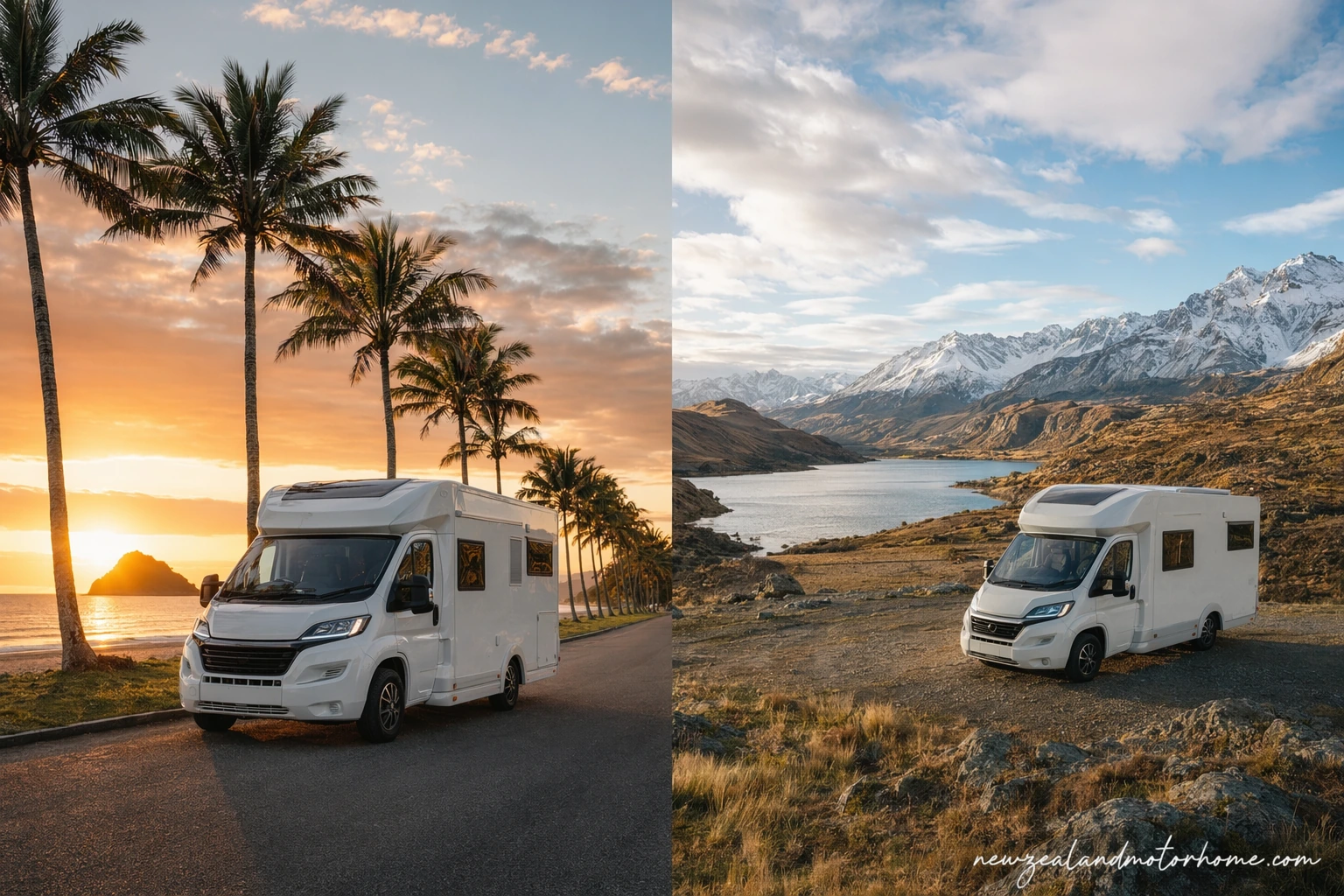
- Best compared by exact vehicle model
- Check NZ self-containment certification
- Powered sites useful every few nights
- Van length affects parking and ferries
- Plan dump, water and LPG stops
Choosing between Maui and Wilderness is less about which logo is on the door and more about how the van will behave once you are living in it: where it fits, how often you need powered sites, whether you can use freedom camping areas, and how relaxed you feel on narrow New Zealand roads.
This maui vs wilderness motorhome comparison is written for self-drive travellers hiring a campervan or motorhome and sleeping in it each night. We will look at the real trade-offs: van size, campsite options, comfort, cost, dump stations, water and LPG stops, and the sort of route each style of hire tends to suit.
The simple difference: fleet style and trip feel
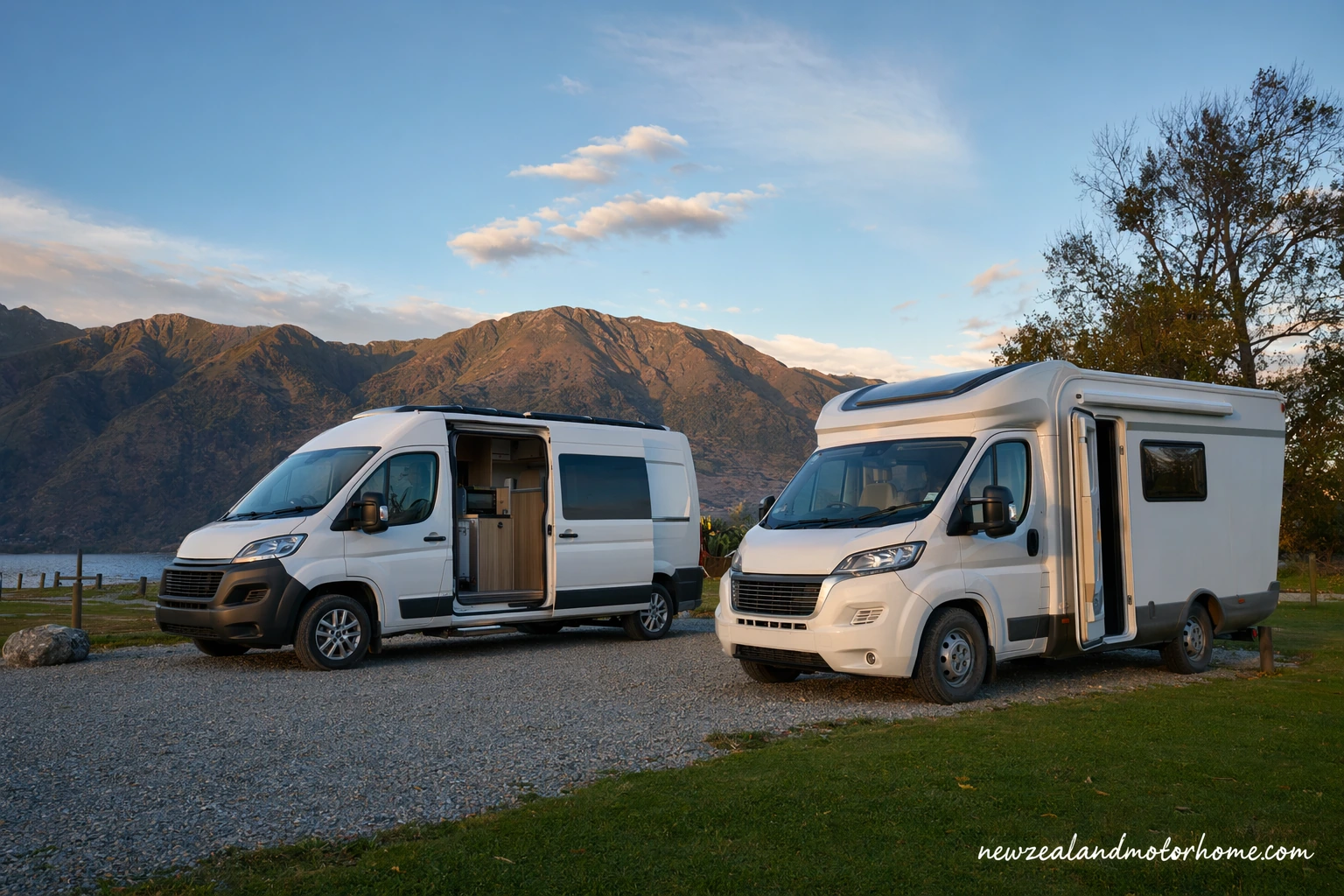
Maui is often the more familiar mainstream motorhome choice, with a broad range of layouts that can suit couples, families and travellers who want an established rental process. Wilderness tends to sit more toward the boutique, premium end, often appealing to couples or small groups who want a quieter, more fitted-out van and are happy to pay for comfort and thoughtful design.
For a self-drive trip, the practical difference shows up at 5 pm when you are choosing a site. A larger family motorhome gives you more beds and storage, but it may push you toward bigger powered pitches and easier-access holiday parks. A smaller or more manoeuvrable camper can make supermarket parking, DOC campground entrances and lakeside day stops feel less tense.
- Choose Maui if you want a wider spread of berth options and a conventional motorhome hire setup.
- Choose Wilderness if the living space, heating, storage and off-grid comfort matter more than simply getting the cheapest van.
- Check the exact vehicle length, height and layout before booking; brand reputation matters less than the specific van you are assigned.
Parking, road handling and where the van will actually fit
New Zealand rewards smaller vehicles on many scenic roads. The drive into Milford Sound, the Crown Range, the West Coast, the Coromandel and parts of Northland all involve bends, one-lane bridges, tight pull-offs and occasional gravel access roads. A longer motorhome is still manageable, but you will need to drive slower, use lay-bys properly and avoid last-minute turns into small scenic stops.
In towns, think about the boring-but-important details: supermarket bays, parallel parking near waterfronts, low branches at older campgrounds and height clearance at urban car parks. Neither Maui nor Wilderness is automatically easy or difficult here; the exact model is what matters. A compact two-berth is a different experience from a six-berth motorhome with a rear overhang.
- For city starts and finishes, plan fuel, food and LPG stops on the edge of town where forecourts are larger.
- Use marked long-vehicle parking where available rather than squeezing across standard car bays.
- Avoid multistorey car parks unless the height clearance is clearly suitable for your van.
- On narrow roads, let traffic pass at safe pull-over areas; locals will appreciate it and you will enjoy the drive more.
Campsites, powered sites and freedom camping eligibility
Your overnight options depend on the van setup as much as the hire brand. For freedom camping, you need to check that the vehicle meets current self-containment requirements and displays the correct certification. Do not assume every campervan from either company can stay anywhere; councils set local bylaws, and some areas only allow certified self-contained vehicles in clearly marked bays.
Powered sites are useful if you want to run mains appliances, recharge everything fully, use campground facilities, and have a straightforward dump station and fresh-water fill nearby. Unpowered sites suit travellers who are moving daily, using the onboard battery sensibly and not relying on power-hungry gear. Wilderness-style premium vans may feel more comfortable off-grid, but battery, solar and heating setups still vary by vehicle.
- If you want maximum freedom camping flexibility, confirm self-containment status before paying your deposit.
- If you are travelling in winter, ask how the van is heated when you are not plugged into power.
- For families, a powered holiday park every second or third night can make showers, laundry and battery management easier.
- For smaller vans, DOC and council campgrounds can be excellent, but check access roads and site length first.
Water, waste, LPG and the rhythm of life in the van
The more people sleeping in the motorhome, the faster you will fill the grey-water tank, use fresh water and need the toilet cassette emptied. This is where a big Maui-style family layout can be comfortable at night but more demanding during the day. A couple in a compact premium van may last longer between service stops, but they still need to plan dump stations and fresh-water fills rather than hoping they appear.
Build a service rhythm into your route. Holiday parks usually make this easy when you stay overnight, while public dump stations are useful on driving days. LPG is also worth watching, especially if you are cooking often or travelling in cooler months when heating and hot water are used more.
- Top up fresh water before heading into remote stretches such as the Catlins, East Cape or parts of the West Coast.
- Empty grey water and toilet cassettes only at signed dump stations; never at roadside drains or campsite taps.
- Check whether your vehicle uses swap bottles or refillable LPG, and where the gauge is located.
- Keep drinking water separate if you are unsure when the onboard tank was last sanitised.
Cost, comfort and who each brand tends to suit
There is no single cheapest choice in the Maui vs Wilderness motorhome decision because rental cost moves with season, van size, insurance option, one-way fees, extras and availability. Summer school holidays, Easter and major event periods can tighten supply quickly. The better comparison is total trip cost: campsite nights, fuel use, ferry requirements, insurance excess, bedding or kitchen inclusions, and whether a more comfortable van reduces your need for powered sites.
Maui may suit travellers who want a familiar rental structure, a bigger berth choice, or a family layout with straightforward campground touring. Wilderness may suit travellers who value interior comfort, off-grid capability and a more refined two-person touring experience. If you are unsure, map your first week night by night and see which van makes those stops easier.
- Couple doing a shoulder-season South Island loop: comfort, heating and easy parking may matter more than bed count.
- Family doing a school-holiday route: sleeping layout, storage, seatbelts and powered-site availability matter most.
- First-time motorhome travellers: choose the van you can confidently park, service and live in for two weeks.
- Longer NZ itinerary: fuel use, storage and dump-station rhythm become more important than a glossy interior photo.
If you would like help matching the van choice to a real route, use our plan-your-trip step and tell us your dates, sleeping setup and must-see regions. We will think about the roads, overnight stops and service points, not just the brochure layout.
Keep planning
Common questions
Is Maui or Wilderness better for freedom camping in New Zealand?
Neither brand is automatically better for freedom camping; the key is whether the specific van is certified self-contained under current NZ rules. Also check local council bylaws, because some places restrict overnight parking even for certified vehicles.
Which is easier to drive and park, Maui or Wilderness?
It depends on the exact model, not just the brand. A compact two-berth will usually be easier in supermarket car parks, ferry queues and tight scenic pull-offs than a larger family motorhome, regardless of who hires it to you.
Do I need powered campsites every night?
Usually no, but you will want powered sites regularly if you are using mains appliances, travelling in cold weather, or carrying several devices. Many travellers mix freedom camping, unpowered DOC-style sites and powered holiday parks to manage batteries, showers, laundry and waste.
Which option is better for a family motorhome trip?
Maui often has a wider range of larger berth layouts, which can suit families needing seatbelts, beds and storage. Still check the floor plan carefully: where children sleep, how much luggage fits, and whether everyone can sit belted while driving.
Should I choose the more comfortable van or the cheaper hire?
Look at total trip comfort and cost, not only the daily hire rate. A better-equipped van may make wet days, cold nights and unpowered stops easier, while a cheaper or larger van may cost more in fuel or push you toward paid powered sites more often.
Have a planner shape this for your dates
Send a short outline — your dates, party size, and the kind of trip you want. A planner replies with a vehicle recommendation, a paced route, and the realistic budget.