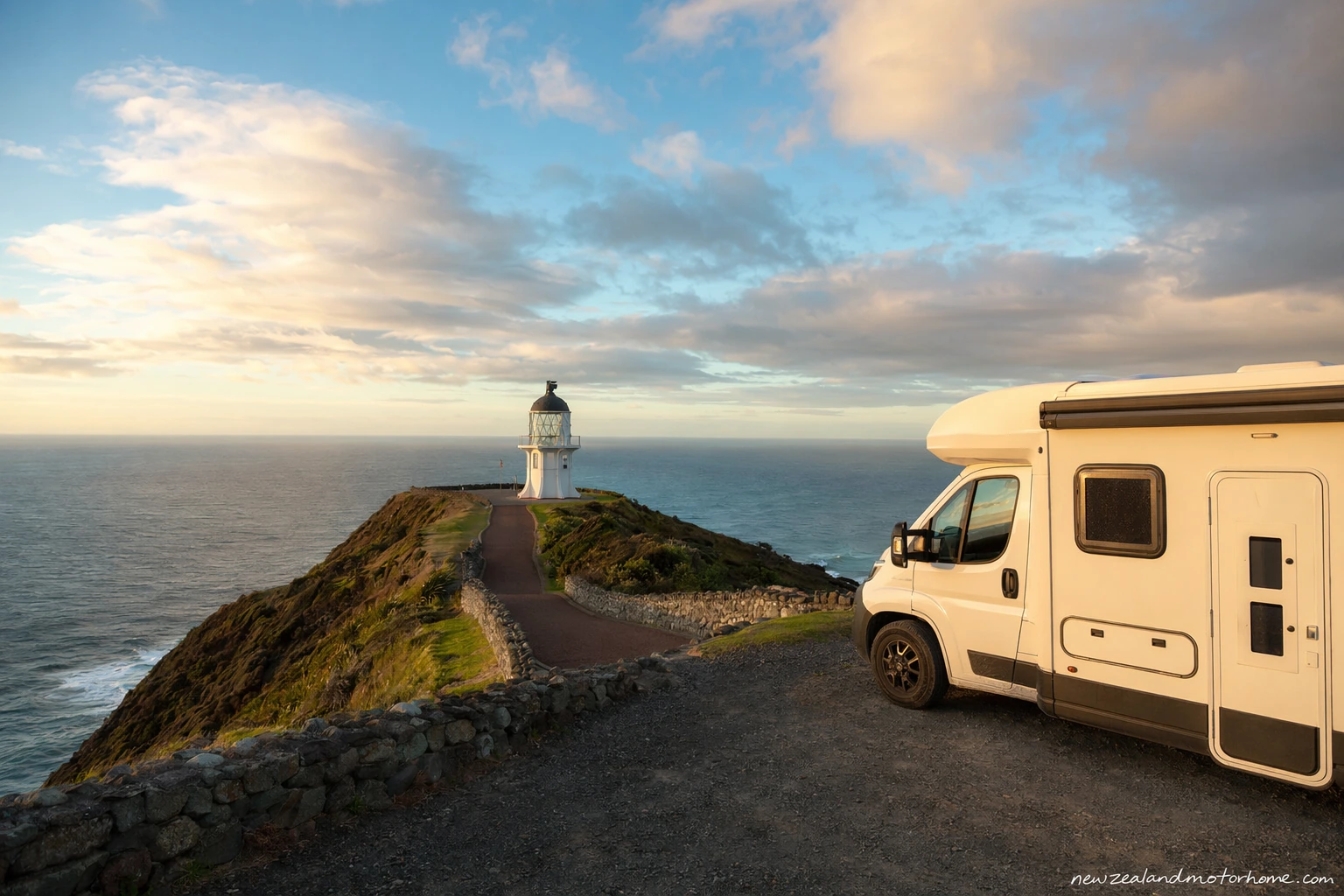
- Best with 2+ Far North nights
- Sealed road to cape car park
- No overnighting at lighthouse
- Mostly unpowered nearby camps
- Service the van in Kaitaia
Cape Reinga / Te Rerenga Wairua feels like the end of the road because, in a very real campervan sense, it is. The sealed highway narrows, the services thin out, and the last stretch is all big sky, wind-shaped hills and that first glimpse of two oceans meeting beyond the lighthouse.
This cape reinga campervan guide is written for travellers driving and sleeping in their own hired van. You’ll find practical notes on getting there safely, where to park the van, camping near Cape Reinga, what to top up before you go, and how to fit the cape into a wider Far North motorhome route without rushing the best parts.
Getting to Cape Reinga by campervan
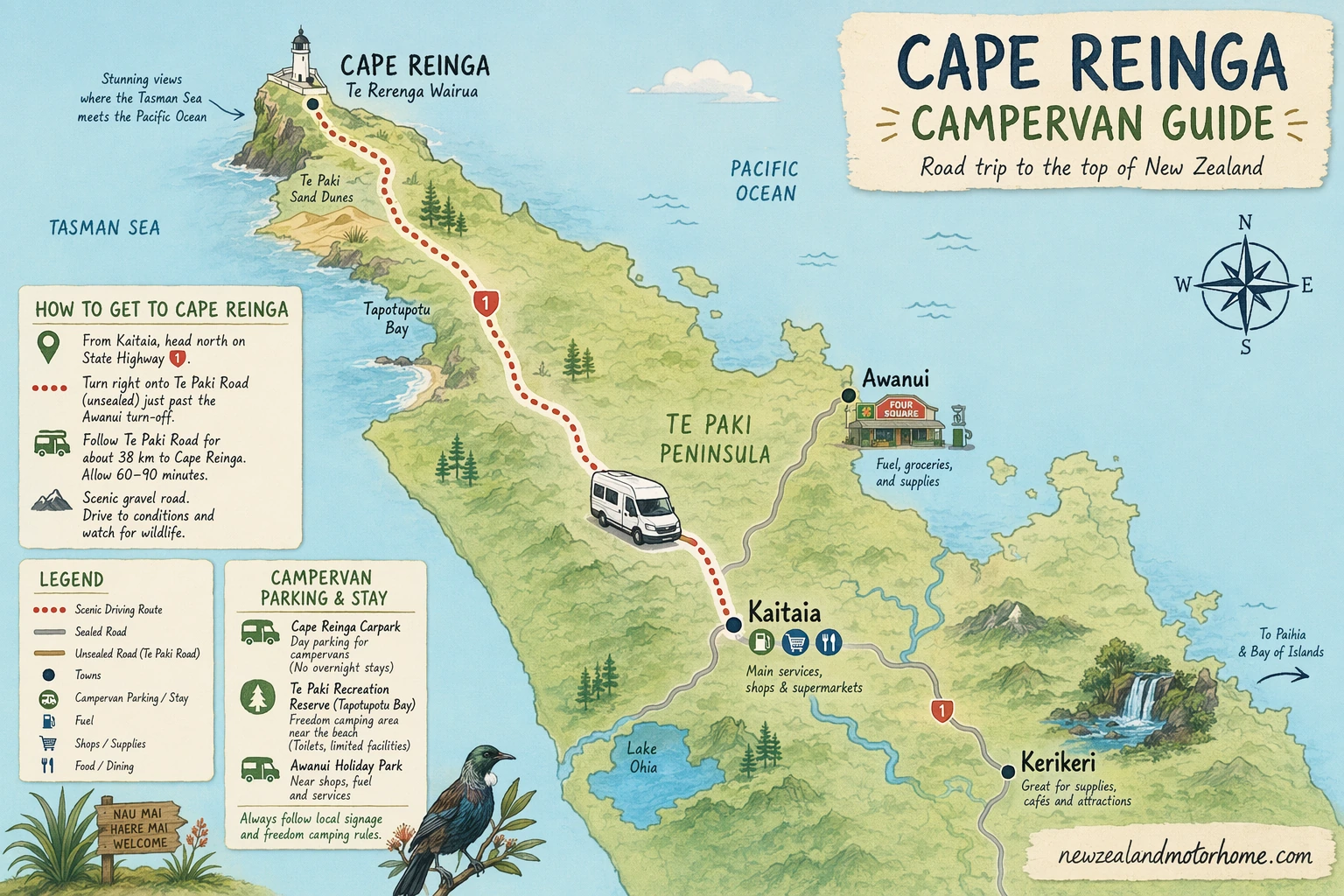
Most campervan Cape Reinga trips approach from Kaitaia on State Highway 1, then continue north through Awanui, Houhora and the long open run to the cape. From Kaitaia to the Cape Reinga car park is roughly a half-day out-and-back once you allow for photo stops, slower van speeds and the lighthouse walk, so it is not a quick side trip if you are already tired.
The road is sealed all the way to the main visitor car park, but it is still a remote Far North drive. Expect exposed sections, rolling corners, occasional stock or slow vehicles, and very limited places to sort supplies once you leave the larger service towns.
- Top up fuel, drinking water and groceries in Kaitaia rather than assuming you can sort it near the cape.
- Check your hire agreement before driving on Ninety Mile Beach; many campervan and motorhome rentals exclude beach driving and insurance cover can be void.
- Allow extra time if you are in a longer motorhome, especially when pulling back onto SH1 from scenic stops.
- Use headlights in poor visibility and keep your speed realistic; the wind can nudge a high-sided van around.
Parking the van at the lighthouse car park
The Cape Reinga visitor car park is at the end of the sealed road and is set up for day visitors only. There are toilets and marked parking areas, but it is not an overnight stop, and you should not plan to sleep there in either a campervan or a motorhome Cape Reinga setup.
Arrive early in the morning or later in the afternoon if you want an easier park and a calmer walk to the lighthouse. Midday can be busier, and a long vehicle may need a little more patience to find a sensible space without blocking turning areas.
- Do not leave the rear of the van hanging into the traffic lane or bus turning space.
- Keep the van locked and valuables out of sight before walking down to the lighthouse.
- The lighthouse path is sealed but exposed; take a layer and secure loose items before leaving the van.
- Respect Te Rerenga Wairua as a sacred place: stay on formed tracks and follow local signs around food, drones and restricted areas.
Where to stay overnight near Cape Reinga
For camping near Cape Reinga, the best options are usually managed campsites rather than trying to freedom camp at the cape itself. Tapotupotu Bay is the closest DOC-style coastal option and makes a lovely base if conditions are settled, while Kapowairua / Spirits Bay and Rarawa Beach suit travellers who want to slow down and add beach time to the Far North leg.
These northern camps are generally unpowered and simple, so arrive with your house battery charged, fresh water filled, toilet cassette empty and food sorted. If you need powered sites, laundry, Wi-Fi or a reliable dump station, look to holiday parks and campgrounds around Kaitaia, Ahipara, Houhora or other service settlements before or after the cape run.
- Choose a powered site before heading north if your fridge, medical device or heating relies on mains power.
- Book managed campsites in peak summer and school holidays where bookings are required.
- Use only permitted freedom camping areas, and only if your vehicle has the required self-containment certification.
- Avoid arriving after dark; narrow camp access roads and grassy pitches are much easier to judge in daylight.
Dump stations, water, LPG and van supplies
The cape itself has no campervan services, so treat the final northern section as a self-contained drive. Before you go beyond Kaitaia, empty your grey-water and toilet cassette at an approved dump station, fill your fresh-water tank, and check LPG levels if your van uses gas for cooking, hot water or heating.
There may be small settlements and seasonal services on the way north, but you should not depend on them for everything a motorhome needs. A simple rule for campervan Cape Reinga travel is to leave Kaitaia as if you are heading into a remote campsite for two nights, even if you only plan to stay one.
- Carry enough drinking water for the drive, cooking and an extra night in case weather changes your plan.
- Keep a rubbish bag in the van and take all waste back to a town service point.
- Download offline maps before you leave stronger mobile coverage.
- Check your tyre pressure, windscreen water and fuel range before the last long run north.
What to do once the van is parked
The lighthouse walk is the main reason to come, but do not treat it as a tick-box stop. From the path you can see the Tasman Sea and Pacific Ocean meeting, and on a clear day the sand dunes and offshore islands give the whole place a rare edge-of-the-map feeling.
If you have the time and your overnight base is nearby, add one or two coastal stops rather than rushing straight back to Kaitaia. Giant dunes at Te Paki are popular, but park carefully on firm ground, avoid soft shoulders, and never take a hired campervan onto sand tracks unless your rental terms explicitly allow it.
- Walk to the lighthouse and back, allowing time for wind, photos and reading the interpretation panels.
- Stop at Te Paki dunes only where vehicle access is clearly suitable for your van size.
- Swim only where conditions are safe; these are remote beaches with changeable surf and limited help nearby.
- Carry a light jacket even in summer, as the cape can be cooler and windier than Kaitaia.
How Cape Reinga fits a wider motorhome route
Cape Reinga works best as part of a slow Far North loop, not as a rushed return from Auckland. A comfortable pattern is to come north through the Bay of Islands or Hokianga, stock up around Kaitaia, spend one or two nights near the northern beaches, then return south with enough time for Ahipara, Hokianga Harbour or the east-coast bays.
If you are unsure how to balance driving time, powered-site nights and remote unpowered camping, you can use our plan-your-trip step to sense-check the route before locking in your van hire. The key is to keep the cape as a highlight, not a fatigue test at the far end of too many kilometres.
- Allow at least two nights north of the Bay of Islands if Cape Reinga is a priority.
- Build in a powered-site reset before or after remote DOC-style camping.
- Keep one flexible weather day in peak summer or winter, when wind and rain can change beach plans.
- Plan dump station and fresh-water stops around Kaitaia rather than the cape.
Keep planning
Common questions
Can you sleep overnight in a campervan at Cape Reinga car park?
No. The Cape Reinga visitor car park is for day use, and you should not plan to overnight there. Use nearby managed campsites or approved camping areas that suit your self-containment status.
What is the closest camping near Cape Reinga?
Tapotupotu Bay is one of the closest managed camping options to the cape, with a simple coastal setting rather than powered holiday-park facilities. Kapowairua / Spirits Bay and Rarawa Beach are also useful Far North camping bases if you have more time.
Is the road to Cape Reinga suitable for a motorhome?
Yes, the main road to the Cape Reinga car park is sealed and commonly driven by campervans and motorhomes. It is remote, exposed and winding in places, so drive to the conditions and allow more time than you would in a car.
Can I drive my hired campervan on Ninety Mile Beach?
Usually you should not. Many hire campervan agreements exclude beach driving, and getting stuck or damaged on sand may not be covered by insurance. Use the sealed road to Cape Reinga unless your rental terms clearly say otherwise.
Where should I fill water and empty the toilet cassette before Cape Reinga?
Kaitaia is the safest place to plan your service stop, with town facilities and better access to fuel, groceries and dump station options. Do this before heading north, as there are no campervan services at the cape itself.
Have a planner shape this for your dates
Send a short outline — your dates, party size, and the kind of trip you want. A planner replies with a vehicle recommendation, a paced route, and the realistic budget.