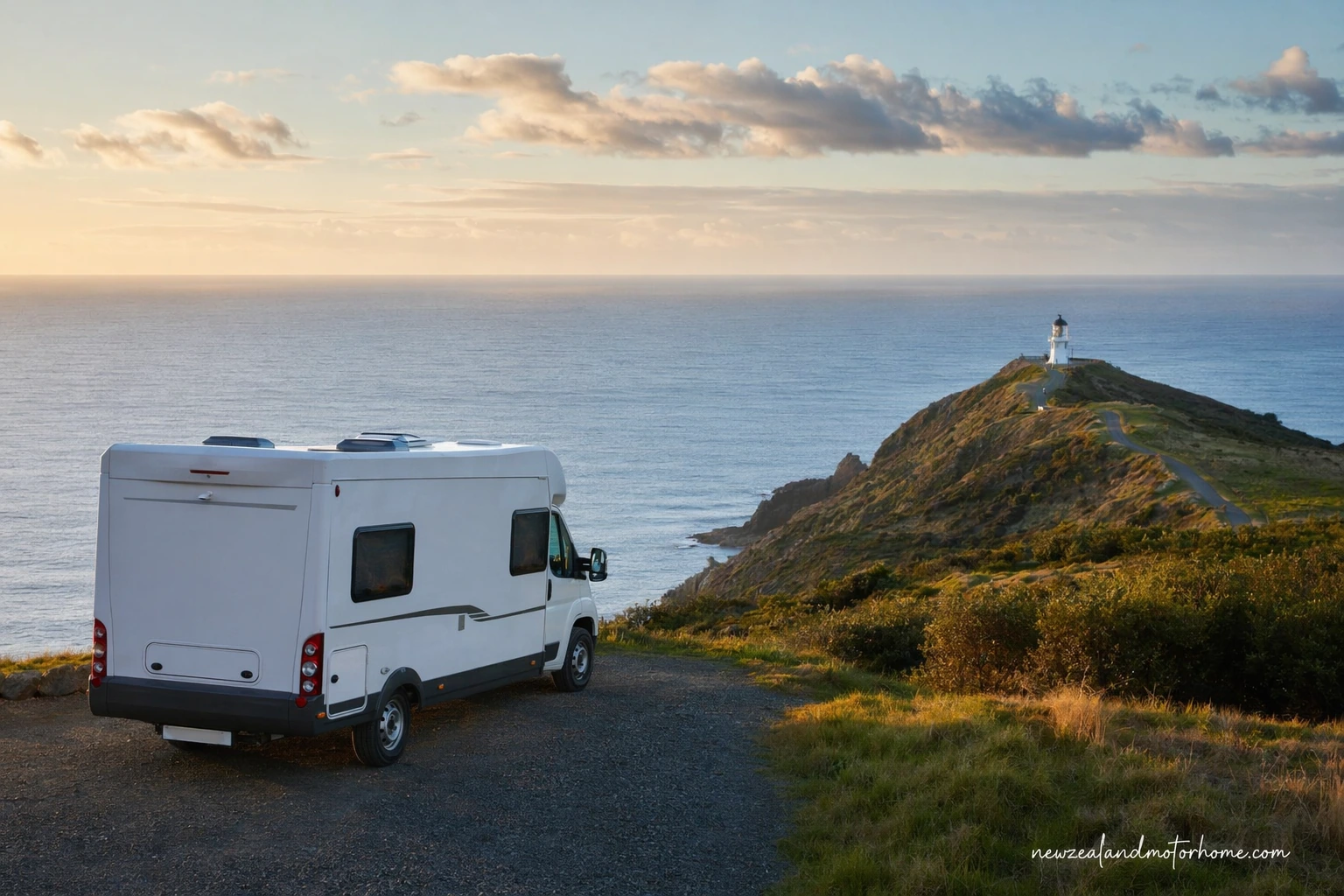
- No holiday park at the lighthouse
- Powered sites south of the cape
- Sealed road, exposed in wind
- Dump before heading north
- Allow 2 days for an easy visit
Cape Reinga / Te Rerenga Wairua feels like the end of the road in the best possible way: wind-bent mānuka, big Tasman Sea views, and that long sealed run up State Highway 1 with the van humming along behind you. For campervan travellers, though, the trick is knowing where to base yourself, because there are no full-service holiday parks at the lighthouse itself.
This guide looks at holiday parks cape reinga travellers can use as practical overnight bases, plus the nearby camping options, parking at the cape, dump station planning, fresh-water top-ups, and the scenic stops worth building into your Far North motorhome route.
Where the holiday parks actually are
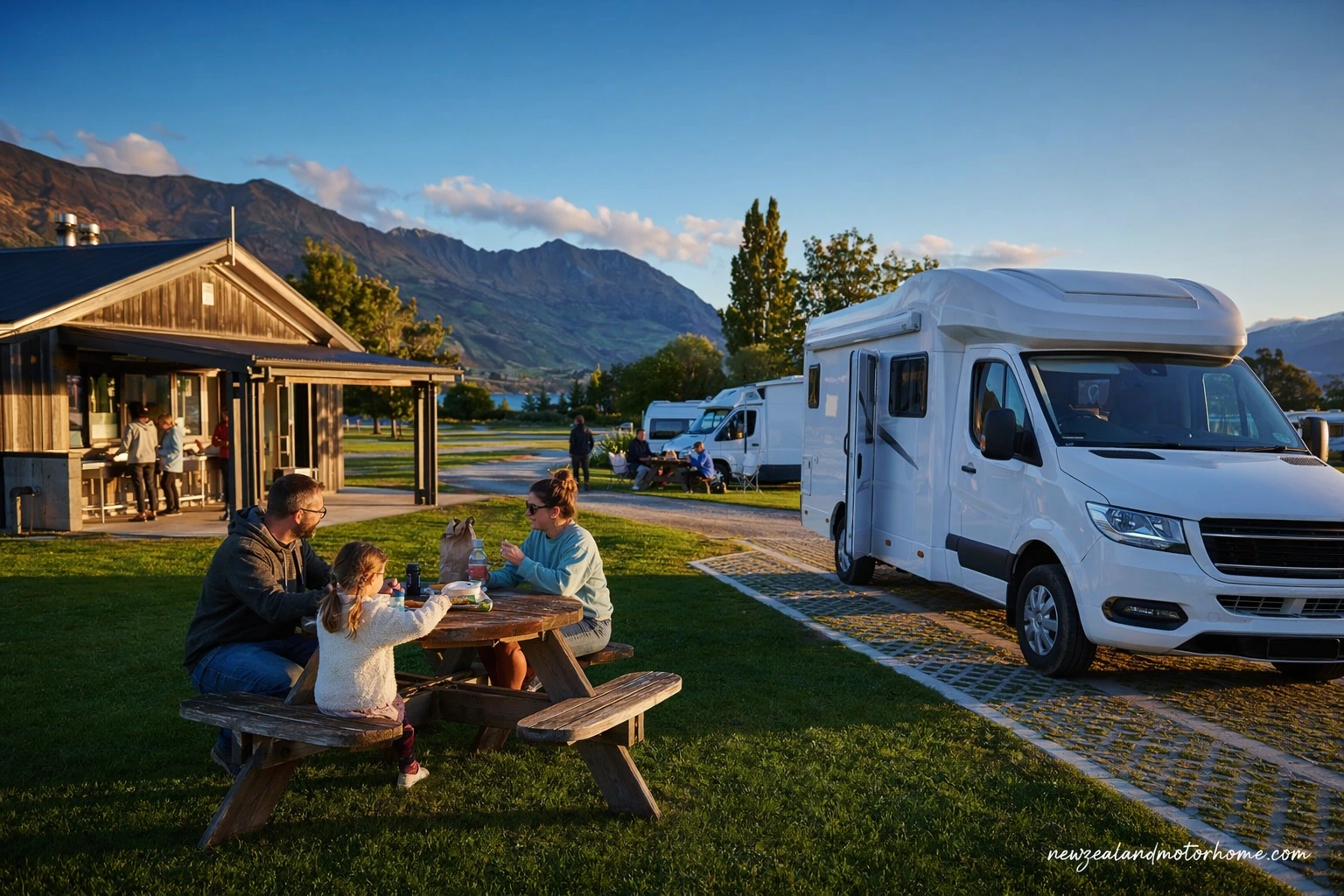
The cape itself is a day-visit area, not a place to plug into power or settle in for the night. If your search started with “cape reinga top 10 holiday park”, read that as a cue to look south: the closest full-facility campervan bases are generally around Pukenui, Houhora, Awanui and Kaitaia, depending on how much driving you want before or after your lighthouse visit.
For most vans, Kaitaia or Awanui makes a sensible first-night base if you are coming up from the Bay of Islands or Hokianga. Pukenui and Houhora put you closer to the cape, with a quieter harbour-side feel and shorter morning drive to Te Rerenga Wairua.
- Powered sites: best booked ahead in peak summer and school holidays, especially if you need to recharge house batteries or run mains appliances.
- Unpowered sites: often fine for self-contained motorhomes with solar, but check shelter from wind; the Far North can be breezy even on clear days.
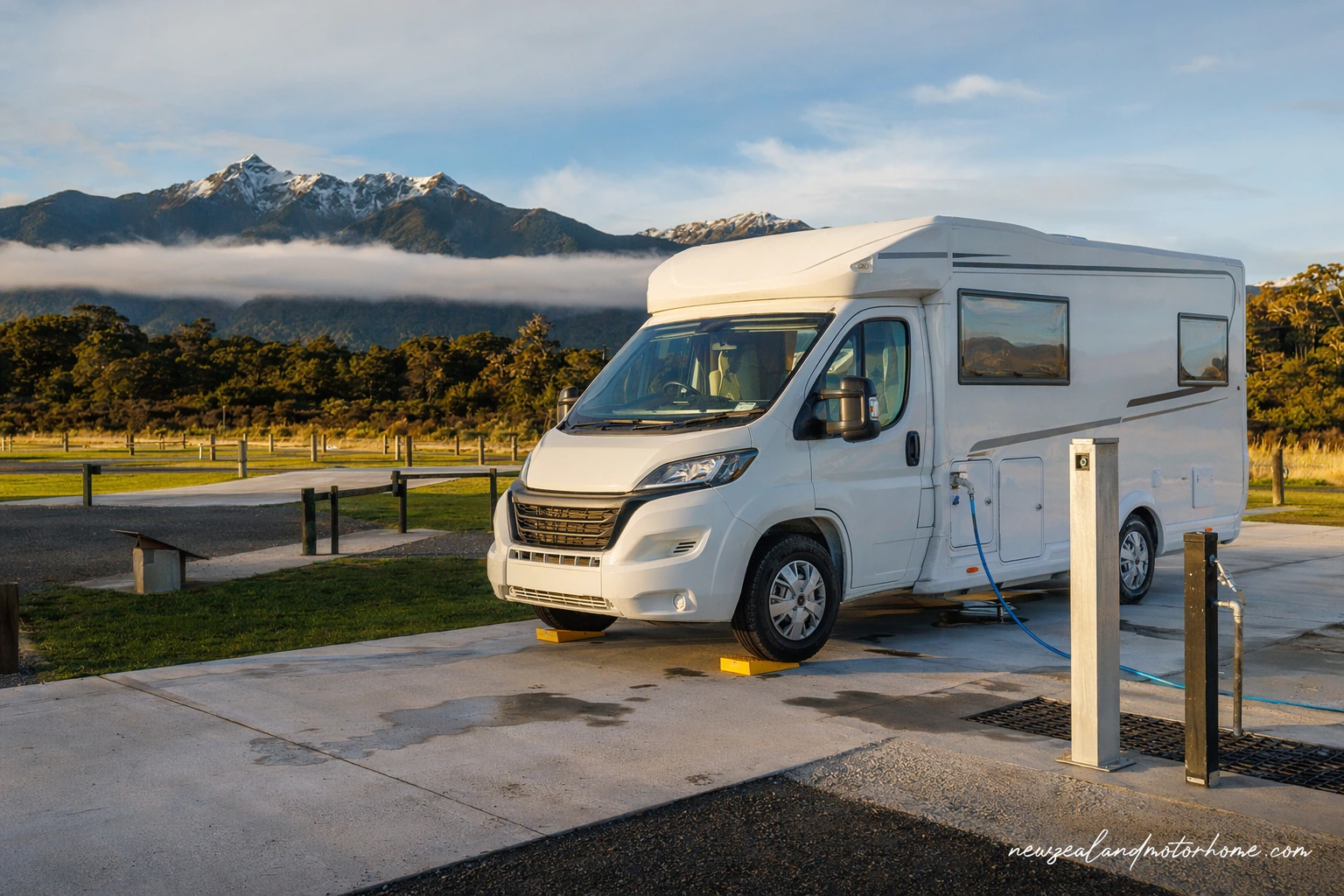
- Dump stations: use your holiday park dump point if available, or empty before heading north; there are no dump facilities at Cape Reinga.
- Water and LPG: top up before the final run north, rather than assuming you can sort it at the end of the road.
Driving to Cape Reinga in a campervan
The drive to Cape Reinga is sealed all the way, but it still feels remote. North of Kaitaia the road narrows in places, rolls over exposed ridges, and has stretches where you will want to let faster local traffic pass when it is safe. Take it steadily, especially in a taller motorhome if the wind is up.
Allow more time than the map suggests. Campervans climb and corner differently from cars, and you will likely stop for dunes, harbour views, and photos of that classic Far North landscape. Keep fuel, drinking water, and your toilet cassette in mind before you leave your overnight base.
- Van size note: larger 6-berth motorhomes are fine on the sealed road, but use pull-outs courteously and avoid last-minute U-turns on narrow sections.
- Beach driving: do not take a hired campervan onto Ninety Mile Beach or down Te Paki Stream unless your hire agreement explicitly allows it; most do not.
- Weather: rain can make side roads and unsealed access points less friendly for heavy vehicles.
Where to park a campervan at Cape Reinga
If you are wondering where to park campervan cape reinga, the answer is the sealed visitor car park near the walking track to the lighthouse. It is suitable for campervans and motorhomes, but it can fill on busy summer days, so arriving earlier in the morning gives you more room to choose a tidy spot without blocking turning space.
From the car park, it is a short walk down to the lighthouse and the meeting of the Tasman Sea and Pacific Ocean. Take a layer with you; it can be calm beside the van and properly gusty on the headland. Overnighting in the cape car park is not the plan here — treat it as a culturally significant day-visit area and return to a legal campsite or holiday park for the night.
- Best arrival time: morning or late afternoon for easier parking and softer light.
- Toilets: use facilities before you walk, and leave your onboard toilet for emergencies rather than stretching cassette capacity.
- Respect the place: Te Rerenga Wairua is deeply significant; keep to tracks and avoid treating the car park like a campground.
Camping Cape Reinga: what is realistic overnight
Camping Cape Reinga usually means staying nearby, not right at the lighthouse. A basic coastal campsite close to the cape can suit self-contained vans that do not need power, while holiday parks farther south are better when you want hot showers, laundry, a powered site, a dump point, or a sheltered place to reset after dusty dune stops.
Check current booking and access requirements before you drive in, because northern campsites can be seasonal, weather-affected, or limited in facilities. If you are in a larger motorhome, confirm that the access road and site layout suit your vehicle length, not just that “camping” is available.
- Choose a holiday park if: you need power, laundry, Wi-Fi, dump facilities, or an easy water refill.
- Choose a basic campsite if: you are self-contained, stocked with water, and comfortable without mains power.
- Freedom camping: only stay where local rules allow it, and make sure your vehicle’s self-containment certification is current.
Things to do near Cape Reinga with the van
The best things to do near cape reinga are spread along the approach, so plan them as part of the drive rather than trying to rush the headland and turn straight back. Te Paki Sand Dunes are the classic stop: park the van in the designated area, keep it off the sand, and walk in for the dune views or sandboarding if conditions suit.
Houhora Harbour and the Pukenui area are good slower stops, especially if you want a quieter evening after the cape. Farther south, Awanui and Kaitaia are your practical reset points for groceries, fuel, and service checks before you either return down the east coast or cross towards Hokianga.
- Te Paki Sand Dunes: use the car park; do not attempt stream or beach driving in a motorhome.
- Houhora Harbour: sheltered water views and a gentler overnight rhythm if you prefer not to base in town.
- Ninety Mile Beach viewpoints: enjoy it from safe access points, not as a driving route for the van.
- Kaitaia/Awanui: useful for supplies, water, LPG checks, and dump station planning.
A simple campervan overnight plan
A relaxed version is to stay around Kaitaia or Awanui on night one, drive to the cape the next morning, stop at Te Paki Sand Dunes on the way back, then overnight around Pukenui, Houhora or back south depending on your onward route. That keeps your longest driving day manageable and avoids hunting for a legal overnight stop after dark.
If you are travelling in peak season, book powered sites early and keep one eye on wind forecasts. Taller motorhomes are comfortable up here, but exposed headlands and open car parks can make doors, awnings and loose gear a nuisance if you are casual with them.
If you want this worked into a wider Northland loop with sensible driving days, service stops and overnight bases, you can talk to us before you lock in the van route.
Keep planning
Common questions
Is there a holiday park at Cape Reinga itself?
No. Cape Reinga / Te Rerenga Wairua is a day-visit headland with a visitor car park and walking access to the lighthouse, not a powered-site holiday park. Base your campervan farther south around Pukenui, Houhora, Awanui or Kaitaia.
Can I sleep in my campervan at the Cape Reinga car park?
Plan not to. The cape car park is for visiting the lighthouse and headland, not overnight camping. Use a legal campsite, holiday park, or permitted freedom camping area that matches your self-containment status.
Are there powered campervan sites near Cape Reinga?
Yes, but not at the cape itself. Look to the small settlements south of the cape for holiday parks with powered and unpowered sites, and book ahead in summer if you need mains power.
Where should I empty the toilet cassette before going north?
Do it before the final run to Cape Reinga, ideally at your holiday park dump point or an official dump station around the service towns farther south. Do not rely on finding dump facilities at the cape or at scenic car parks.
Is the road to Cape Reinga suitable for a large motorhome?
Yes, the main road is sealed and commonly used by campervans and motorhomes. Drive to the conditions, allow extra time for hills and wind, and use safe pull-outs to let faster vehicles pass.
Can I drive my campervan on Ninety Mile Beach?
In almost all hired campervan situations, no. Beach driving is risky for heavy vehicles and is usually excluded by hire agreements, so enjoy Ninety Mile Beach from safe access points and keep the van on formed roads and car parks.
Have a planner shape this for your dates
Send a short outline — your dates, party size, and the kind of trip you want. A planner replies with a vehicle recommendation, a paced route, and the realistic budget.