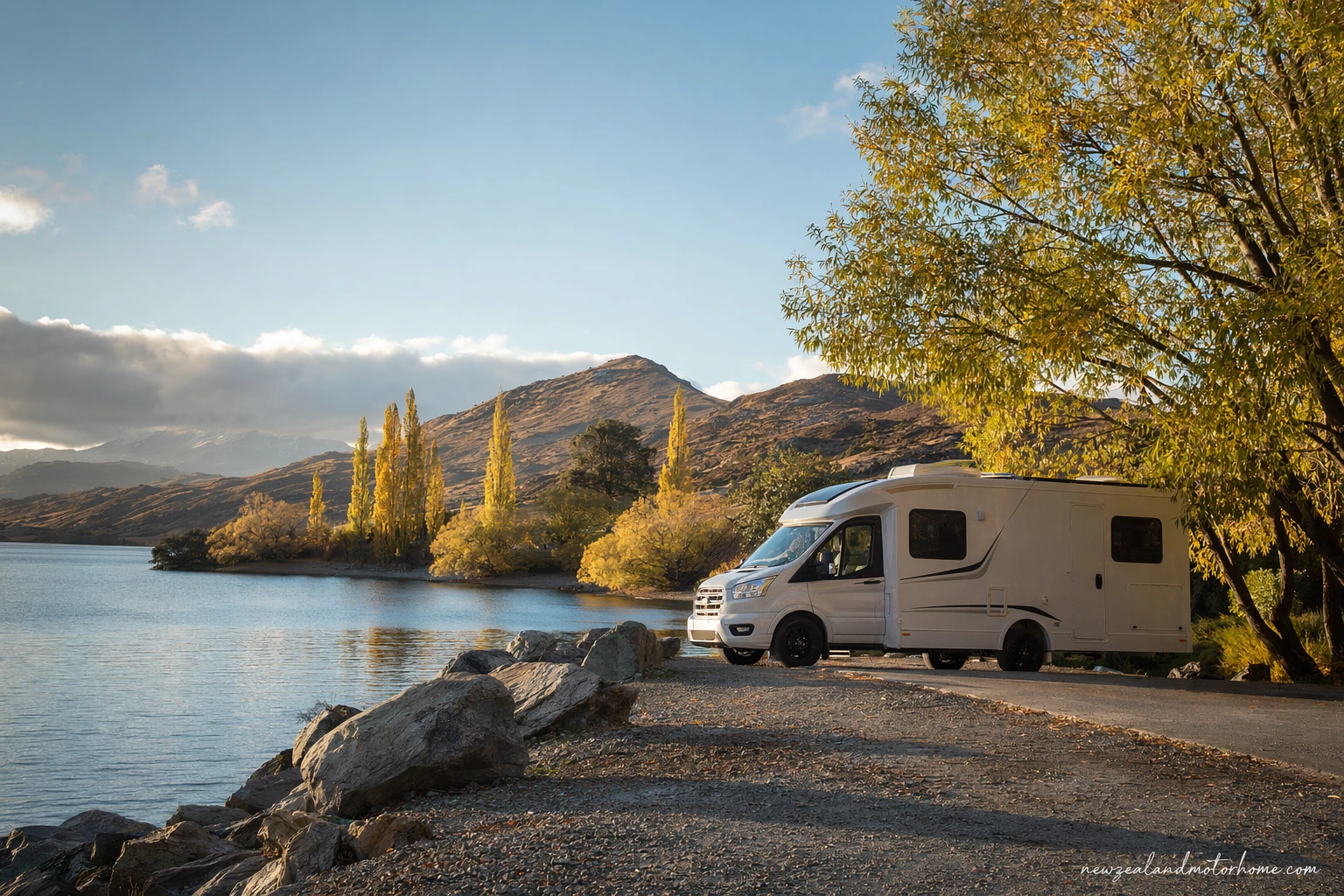
- Best for 1–2 nights
- Lake Dunstan stopover
- Good supply town
- Watch gorge and pass roads
- Powered and unpowered options
Cromwell is one of those Central Otago places that makes immediate sense in a campervan: flat town streets, big-sky lake views, fruit stalls on the approaches, and several route choices radiating out towards Wānaka, Queenstown, Alexandra and the Lindis Pass.
This Cromwell campervan guide is written for travellers driving and sleeping in their own hired van. You’ll find practical notes on arriving by van, where to park without blocking local traffic, how to think about camping near Cromwell, and how to work the town into a wider South Island motorhome route.
Getting to Cromwell by campervan
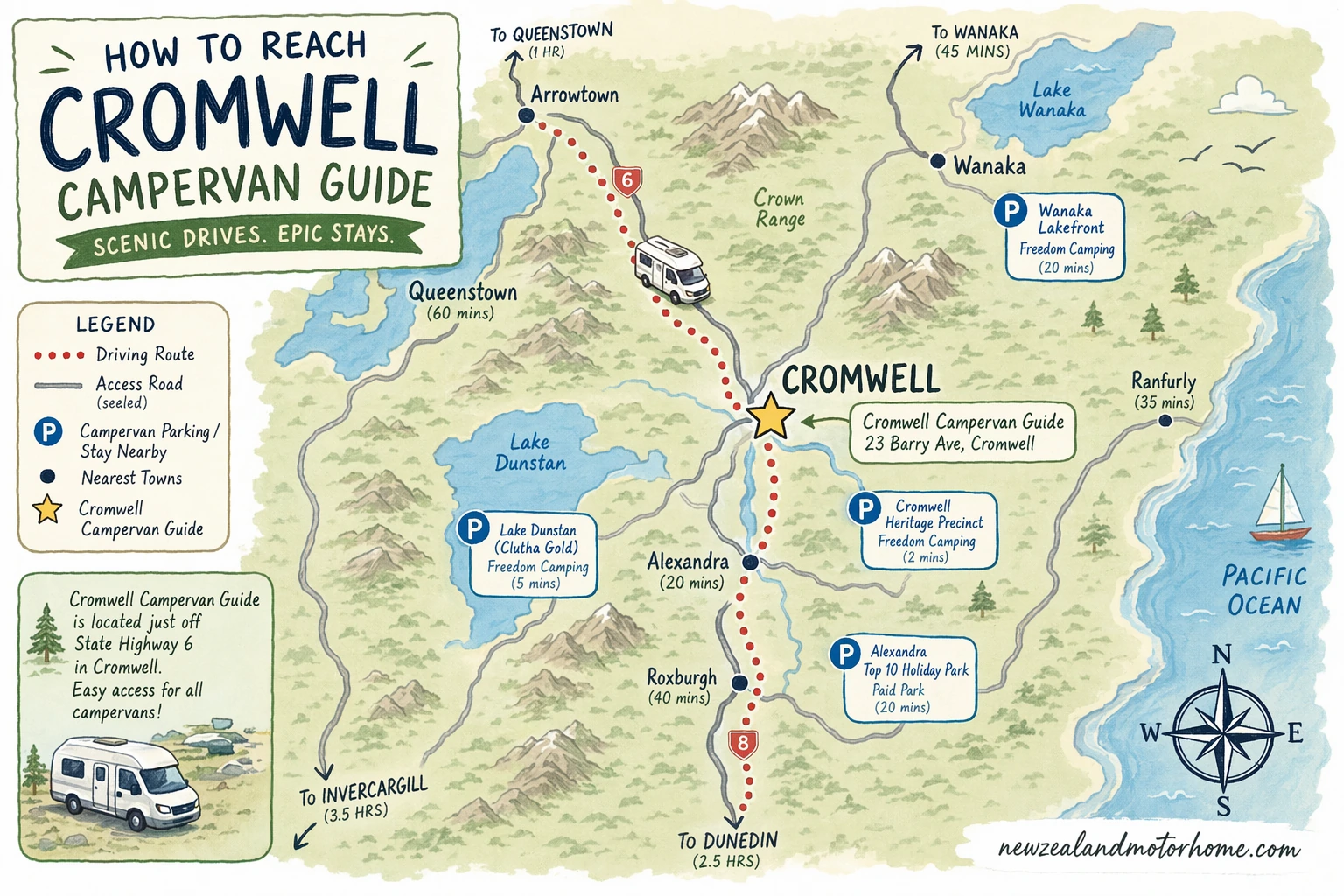
Cromwell sits where State Highway 6 meets State Highway 8B and State Highway 8, so it’s a useful reset point rather than a place you have to detour hard to reach. From Wānaka the drive is usually straightforward in a campervan, while the Queenstown approach through the Kawarau Gorge needs more patience: expect bends, tourist traffic, winery turn-offs and a few spots where it pays to hold your lane carefully.
If you’re arriving from the north via the Lindis Pass, fill fuel and check weather before committing in winter. The road is sealed and commonly driven by motorhomes, but snow, ice, wind and long descents change the feel quickly in a high-sided van. Use lower gears on the downhill sections rather than riding the brakes.
- From Wānaka: an easy lake-and-valley drive, but watch for cyclists and slow vehicles near the Lake Dunstan Trail access points.
- From Queenstown: allow extra time through the Kawarau Gorge, especially if your van is long or you’re new to left-side driving.
- From Alexandra: a gentler run through the Clutha valley, useful if you prefer a quieter Central Otago pace.
- From Tekapo or Aoraki/Mount Cook: the Lindis Pass is the key road note; check conditions and don’t arrive tired.
A campervan Cromwell stop works well because the town is compact once you’re there. You can park up, restock, walk the lakefront and decide whether your next day points towards Queenstown’s traffic, Wānaka’s mountain roads or the quieter goldfields side of Central Otago.
Parking the van around town and the lake
Cromwell is generally forgiving for vans, especially compared with busier lake towns, but it is still worth choosing your parking spot rather than squeezing into short retail parks. The supermarket and service areas can be busy with locals, tradies and travellers, so if you’re in a 7-metre motorhome, use the longer outer bays where available and avoid overhanging footpaths.
The Old Cromwell Heritage Precinct and Lake Dunstan edge are the most pleasant places to pause during the day. Arrive earlier if you want an easy space near the water in summer, and be considerate around boat ramps, cycle trail access and picnic areas; a campervan left across a trailer bay will earn no friends.
- Best daytime approach: park once, then walk the heritage precinct and lakefront rather than moving the van between short stops.
- Longer vehicles: look for end bays or parallel spaces where your rear overhang is not sitting over a kerb or garden.
- Height awareness: shade trees around reserves are lovely for picnics but can scrape vents, solar panels and roof pods.
- Summer heat: Central Otago sun is sharp; use reflective screens and keep the fridge ventilation side of the van clear.
For a motorhome in Cromwell, the easiest rhythm is to do practical errands first, then shift to a lake or heritage precinct park-up for coffee, a walk or a swim. Avoid treating any daytime car park as an overnight stop unless signs clearly allow it.
Overnight stays, freedom camping and services
Camping near Cromwell ranges from holiday park-style stays with powered sites to simpler lakeside or rural-feeling options around the wider basin. If you need laundry, showers, reliable fresh water and an easy dump station, book a proper campground or holiday park rather than trying to solve everything late in the day.
Freedom camping rules in Central Otago are specific and can change, so don’t rely on old forum posts or a pin someone saved years ago. You must follow current council signage, respect any prohibited areas, and use only permitted spots if your van is certified self-contained. Even with a self-containment certificate, “nice quiet reserve” does not automatically mean “legal overnight stop”.
- Powered sites: useful in winter, after several cloudy solar days, or if you’re running laptops, heaters or medical devices.
- Unpowered sites: fine for a night or two if your battery, water and grey-water capacity are healthy.
- Dump stations: check current dump station apps, council information or your campground host for the nearest legal point; never empty grey water into drains or onto gravel.
- Fresh water: fill only from taps marked potable, and top up before heading into smaller valleys or over the Lindis.
- LPG: Cromwell has service options, but not every forecourt fills every bottle type, so sort gas before you are down to your last dinner.
If you want help deciding whether Cromwell should be a one-night service stop or a two-night lake base, you can talk to us before you lock in your route. It’s often the small choices — powered or unpowered, early start or late arrival, gorge road or quieter loop — that make a van trip feel easy.
Things to do without making the van a burden
Cromwell rewards slow, simple stops. The Old Cromwell Heritage Precinct is compact and easy to explore on foot once the van is parked, with lake views and restored goldfields-era buildings giving you a good sense of how much the town changed when Lake Dunstan was formed.
Lake Dunstan is the obvious centrepiece. You can swim, picnic, walk short lakefront sections or organise a bike ride on parts of the Lake Dunstan Trail, but plan your van logistics first. Some access points are busier and tighter than they look on a map, especially when boat trailers, bikes and day trippers all arrive together.
- Old Cromwell Heritage Precinct: good for a gentle leg stretch after the gorge or Lindis Pass drive.
- Lake Dunstan: choose signed parking areas and keep clear of boat trailer turning space.
- Bannockburn Sluicings: a memorable dry-country walk; take water and expect exposed tracks rather than shade.
- Orchard and fruit stops: use proper pull-ins, not road shoulders, particularly in peak summer traffic.
- Vineyard roads: many are sealed but narrower; if your motorhome is large, check turning space before committing to a small driveway.
The best campervan days here are not overfilled. Park once, walk more, and leave enough time to get back to your overnight site before dusk, when unfamiliar campground layouts and low tree branches become harder to judge.
How Cromwell fits a wider South Island motorhome route
Cromwell is a useful hinge between alpine roads and Central Otago’s drier interior. It can be a practical supply stop between Queenstown and Wānaka, a calmer overnight after Aoraki/Mount Cook and the Lindis Pass, or a base for a slower loop through Bannockburn, Clyde and Alexandra.
If your itinerary is tight, one night lets you arrive, restock, use services and have a lakefront wander. With two nights, you can ride or walk sections of the Lake Dunstan area, visit Bannockburn without rushing, and keep a weather buffer before a longer drive.
- Queenstown to Cromwell: good if you want to leave the busiest resort roads behind before stopping for the night.
- Cromwell to Wānaka: short enough for a relaxed morning, with time to arrive before popular van parks fill.
- Cromwell to Clyde or Alexandra: a gentle Central Otago leg with goldfields history and less alpine pressure.
- Cromwell to Tekapo or Aoraki/Mount Cook: make it a proper driving day and check Lindis Pass conditions first.
In a hired campervan, Cromwell is less about ticking off a single attraction and more about making the route work well. It gives you food, fuel, water, waste options, lake air and several sensible next moves — exactly the kind of stop that keeps a self-drive trip smooth.
Keep planning
Common questions
Can I freedom camp in Cromwell in a campervan?
Only where current local rules and signs allow it, and usually only if your van is certified self-contained. Check Central Otago District Council information and on-site signage on the day, because a lakeside reserve may still be prohibited overnight.
Is Cromwell easy for a large motorhome?
Yes, the town itself is generally manageable, with flat streets and service areas. The main thing is choosing longer parking bays, avoiding tight vineyard driveways unless you have checked turning space, and taking care through the Kawarau Gorge or Lindis Pass approaches.
Should I stay in Cromwell or just pass through?
If you only need fuel, food and a dump station, Cromwell can be a short practical stop. For a more relaxed route, one or two nights gives you time for Lake Dunstan, the heritage precinct, Bannockburn and a proper reset before Queenstown, Wānaka or the Lindis.
Are there powered campsites near Cromwell?
Yes, the Cromwell area has campground and holiday park options with powered sites, and these are the best choice when you need showers, laundry, fresh water or reliable battery charging. Book ahead in summer, school holidays and around major event weekends.
Where can I dump grey water and fill fresh water?
Use a legal dump station or your campground facilities, and confirm the nearest current point through council information, signage or a trusted camping app. Fill fresh water only from taps marked potable; do not assume every tap near a dump point is drinking water.
Have a planner shape this for your dates
Send a short outline — your dates, party size, and the kind of trip you want. A planner replies with a vehicle recommendation, a paced route, and the realistic budget.