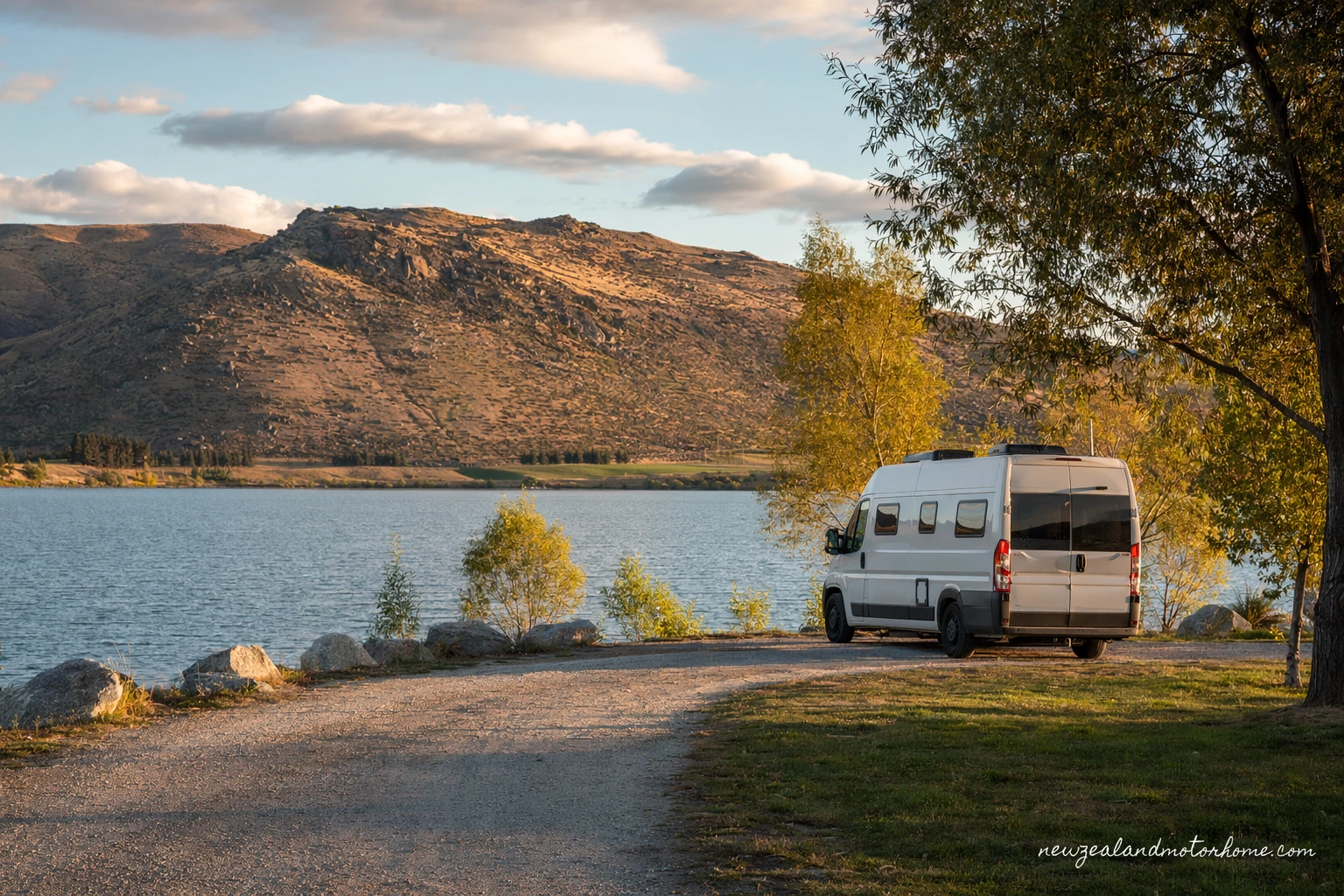
- Best for 1–3 nights
- Powered and unpowered sites
- Lake Dunstan and vineyard country
- Check freedom camping rules
- Tell parks your van length
Cromwell is one of those Central Otago stops that works especially well in a campervan: wide skies, lake edges, fruit stalls, vineyards, and road links in every direction. If you are looking for holiday parks Cromwell, you are probably weighing up where to plug in, where to empty the toilet cassette, and how close you want to be to Lake Dunstan or the town centre.
This guide is written for self-drive travellers sleeping in their hired van. It covers the surroundings, access by motorhome, powered and unpowered site considerations, where to park campervan Cromwell during the day, and the things to do near Cromwell that are easiest when your bed is already on board.
Why Cromwell suits a campervan night
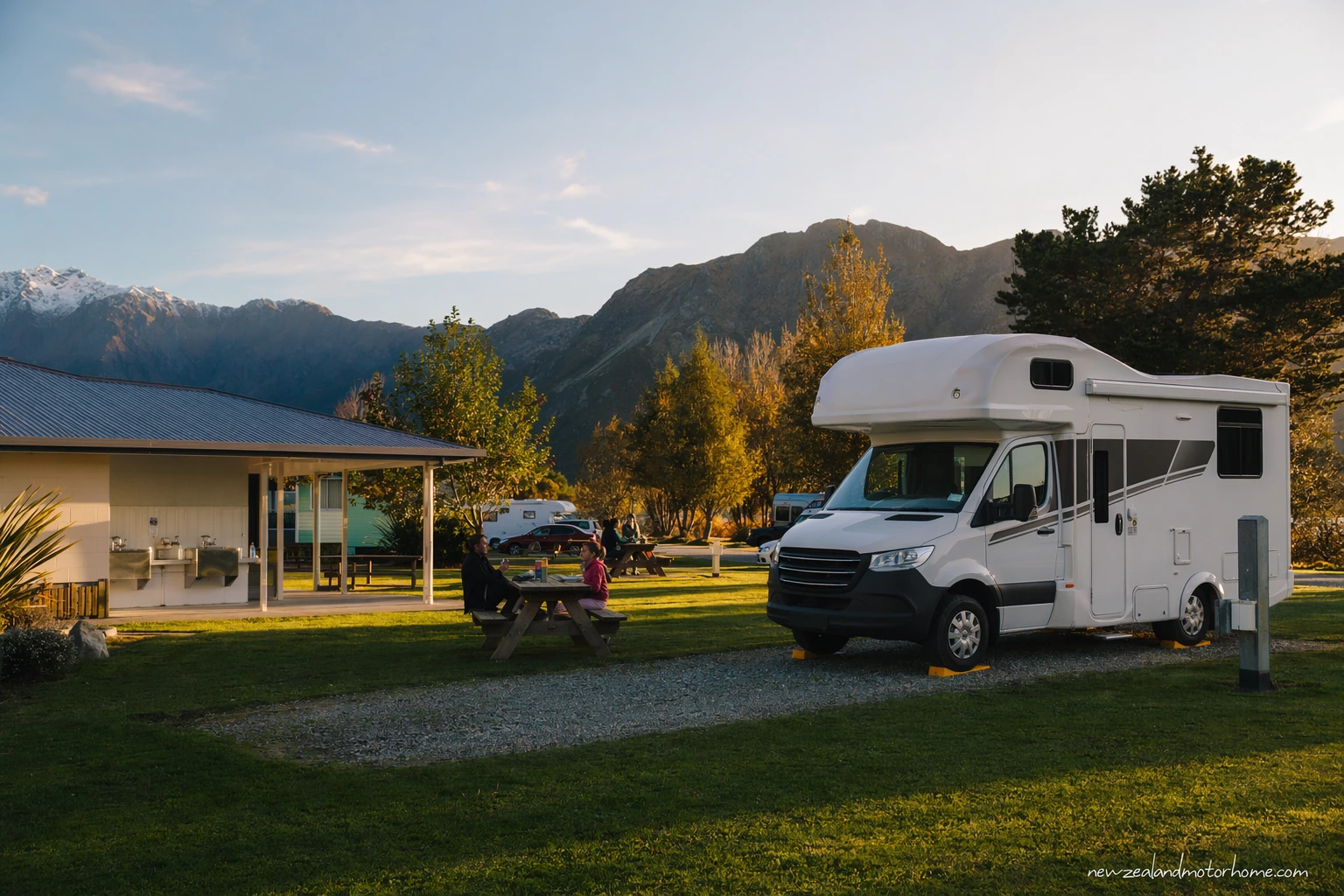
Cromwell sits at the meeting point of State Highways 6, 8, and 8B, so it makes a practical overnight stop between Wānaka, Queenstown, Alexandra, and the Lindis Pass. Unlike some tight alpine towns, Cromwell has a more open layout, with flatter roads, newer commercial areas, and several easy places to turn a larger van around if you miss a driveway.
The setting is the real reason to linger. Lake Dunstan wraps around the town, bare Central Otago hills rise behind the orchards, and the evening light can make even a simple unpowered site feel properly scenic. If you have been driving through gorges or over higher passes, a Cromwell holiday park gives you a chance to reset: top up fresh water, plug into power, do laundry, and check tyre pressure before the next leg.
- Best fit: one or two nights for a practical Central Otago stop, longer if you are cycling or touring vineyards.
- Van comfort: powered sites are useful in winter and shoulder seasons when nights can be cold.
- Road feel: main approaches are sealed highways, but expect exposed sections and strong winds around the lake and open plains.
Choosing a holiday park area around Cromwell
Camping Cromwell is less about being in a dense town centre and more about choosing which edge of the district suits your route. Some holiday park-style stays sit closer to the town services and supermarket, while others are better for lake views, cycle access, or a quieter orchard-country feel. When people search for a cromwell top 10 holiday park, they are often really looking for that familiar mix of powered sites, shared kitchens, showers, laundry, and a reliable check-in process.
Before booking, check the details that matter for your specific motorhome rather than assuming every park is set up the same way. A compact two-berth can usually fit almost anywhere; a longer six-berth with bikes on the back needs more swing room, a clearer approach, and a site that is easy to reverse into after dark.
- Powered sites: best if you need heating, battery charging, or appliance use without running down the house battery.
- Unpowered sites: fine for self-contained vans with solar in settled weather, but check whether showers and kitchen access are included.
- Dump stations: confirm whether the park has one on site, or plan a public dump station stop before you settle in.
- Water fills: ask whether fresh-water taps are available near the sites or only at a service point.
- LPG: refill and swap options are usually found around larger service areas; do it in daylight rather than leaving it until a cold evening.
Getting there by motorhome
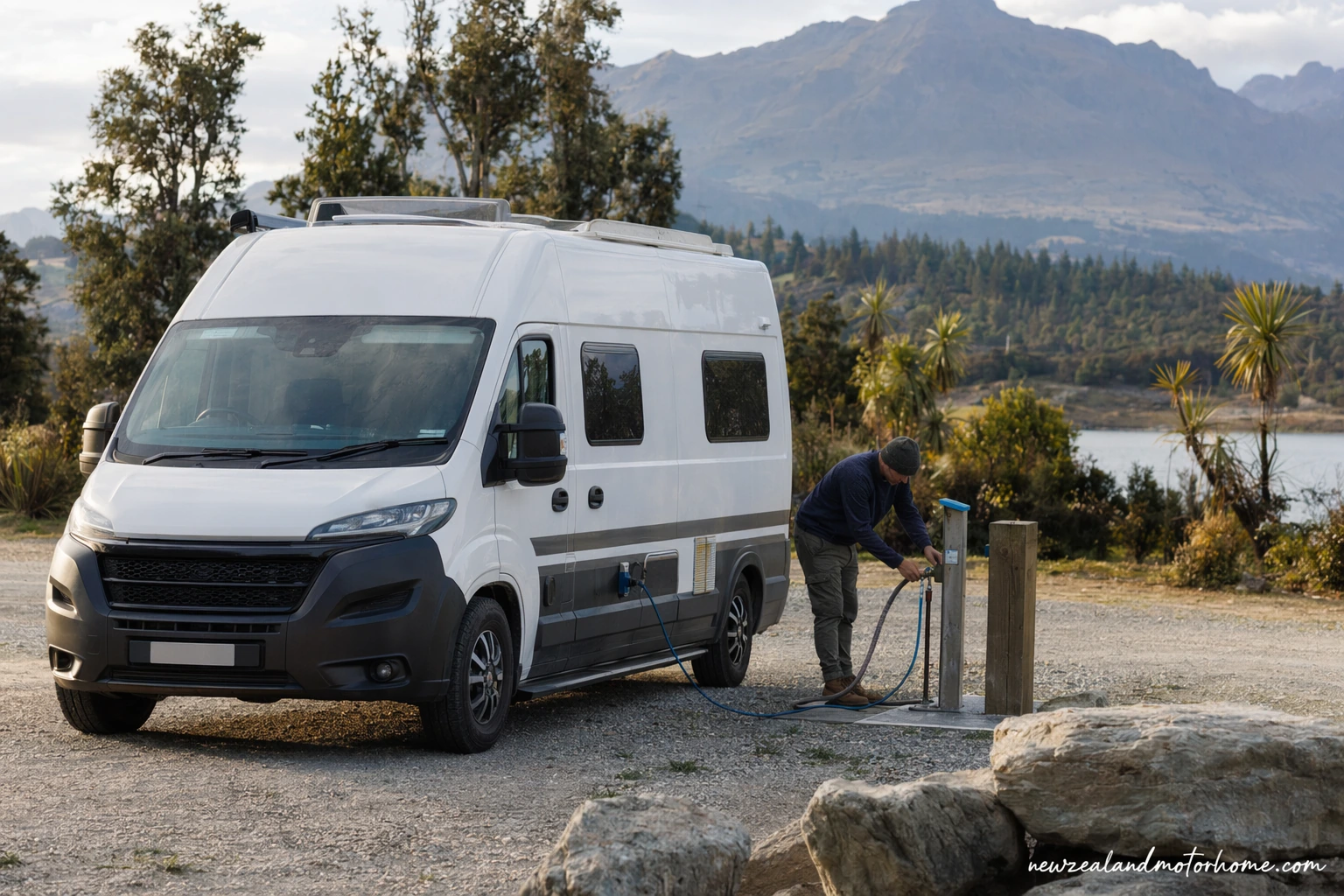
From Queenstown, the drive through the Kawarau Gorge is sealed and spectacular, but it needs calm, patient driving in a motorhome. There are bends, narrow-feeling sections, and tourist traffic pulling into viewpoints, so keep your speed comfortable and use slow-vehicle bays where available. From Wānaka, the approach over State Highway 6 is more open, but it can still be windy and icy in winter.
If you are coming from Ōmarama or the Lindis Pass, treat Cromwell as a sensible services stop after a big inland drive. Fuel, food, water, and a proper overnight site are all easier to sort here than on the more remote sections of highway. In winter, check road conditions before committing to higher routes, and give yourself enough daylight to park the van without rushing.
- Queenstown to Cromwell: allow extra time for gorge driving and photo stops, not just the map estimate.
- Wānaka to Cromwell: a straightforward link, but exposed in strong winds.
- Lindis Pass to Cromwell: good place to recover services after a remote, weather-sensitive route.
- Long vans: avoid last-minute lane changes near highway junctions; Cromwell’s roundabouts are easier when you approach slowly.
Day parking, lake stops, and freedom camping rules
If you are wondering where to park campervan Cromwell during the day, start with purpose-built car parks around the town centre, Old Cromwell precinct, and lake access areas. Look for longer bays or quiet edges of larger car parks rather than squeezing across standard spaces. Always keep access clear for boat trailers, local traffic, and emergency vehicles, especially around Lake Dunstan.
Do not assume a pretty lakeside car park is an overnight spot. Freedom camping rules in Central Otago are location-specific and can change, with some reserves and lakefront areas restricted or prohibited. If you are not booked into a holiday park, use the local council information and a current camping app, and make sure your van’s self-containment certification matches the rules for the place you intend to stay.
- Day parking: use marked public parking and avoid blocking boat ramps or narrow residential streets.
- Overnighting: check current council signage on site; signs overrule older app comments.
- Self-contained vans: carry your certification details and still follow local restrictions.
- Waste: never empty grey water or toilet cassettes anywhere except an approved dump station.
Things to do near Cromwell without moving the van too often
One advantage of staying in a holiday park is being able to park up, level the van, and explore without repacking every cupboard. Old Cromwell Town is an easy half-day wander for heritage buildings, galleries, cafés, and lake views. The Lake Dunstan Trail is a major draw for cyclists, with sections that are better planned ahead if you are carrying bikes on the back of the van or arranging a shuttle.
Bannockburn is close by for vineyard country, dry hills, and gold-mining history, while Clyde and Alexandra make good day trips if you want more rail-trail scenery. Highlands Motorsport Park is also nearby for travellers who want something completely different from lake and vineyard stops. If you would like help matching your route, van size, and overnight stops through Central Otago, our plan-your-trip step is a simple place to ask before you lock in dates.
- Old Cromwell: park in designated areas and walk the precinct rather than driving between tiny stops.
- Lake Dunstan: plan for wind; secure awnings, chairs, and bike covers at your site.
- Bannockburn: narrower rural roads in places, so take it slowly in a wider motorhome.
- Clyde and Alexandra: good add-ons if you want another serviced overnight option nearby.
What to check before you book a Cromwell site
Holiday parks Cromwell can be busy in summer, during school holidays, and around event weekends, so book ahead if you need a powered site. If you are travelling in a larger motorhome, give the park your vehicle length when booking; it is much easier for staff to allocate a suitable site before arrival than to reshuffle vans at dusk.
Ask practical questions rather than just looking at photos. Is the dump station easy to access for your side of the van? Are there trees that could affect roof clearance or satellite reception? Can you fill fresh water near your site? Are late arrivals allowed, and if so, will you be able to find your site without disturbing other campers?
- Tell them: van length, whether you need power, and if you are towing or carrying bikes.
- Ask about: dump station access, fresh-water taps, laundry, kitchen, and grey-water disposal.
- Arrive prepared: keep levelling ramps handy; some lake-country sites can have a slight slope.
- Respect quiet hours: sound travels on still Central Otago nights, especially in open sites.
Keep planning
Common questions
Do Cromwell holiday parks usually have powered campervan sites?
Most holiday park-style stays around Cromwell offer powered sites, but the number and layout vary. Book ahead in summer and tell them your van length so you are not given a tight site meant for a smaller camper.
Can I freedom camp beside Lake Dunstan in my campervan?
Only in places where current local rules allow it. Lakefront areas can be restricted or prohibited, so check Central Otago District Council information and on-site signs before settling in for the night.
Where can I empty the toilet cassette in Cromwell?
Use an approved dump station, either at your holiday park if provided or at a current public facility listed by council or a trusted camping app. Do not rely on old app comments, as dump station access can change.
Is Cromwell easy to drive through in a large motorhome?
Cromwell is generally more manageable than many tighter tourist towns, with good highway access and open commercial areas. Take extra care on the Kawarau Gorge approach, in high winds, and when turning near busy roundabouts.
How many nights should we stay in Cromwell in a campervan?
One night works well as a services stop between Queenstown, Wānaka, and the Lindis Pass. Stay two or three nights if you want to cycle the Lake Dunstan Trail, visit Bannockburn, or enjoy a slower Central Otago break.
Have a planner shape this for your dates
Send a short outline — your dates, party size, and the kind of trip you want. A planner replies with a vehicle recommendation, a paced route, and the realistic budget.