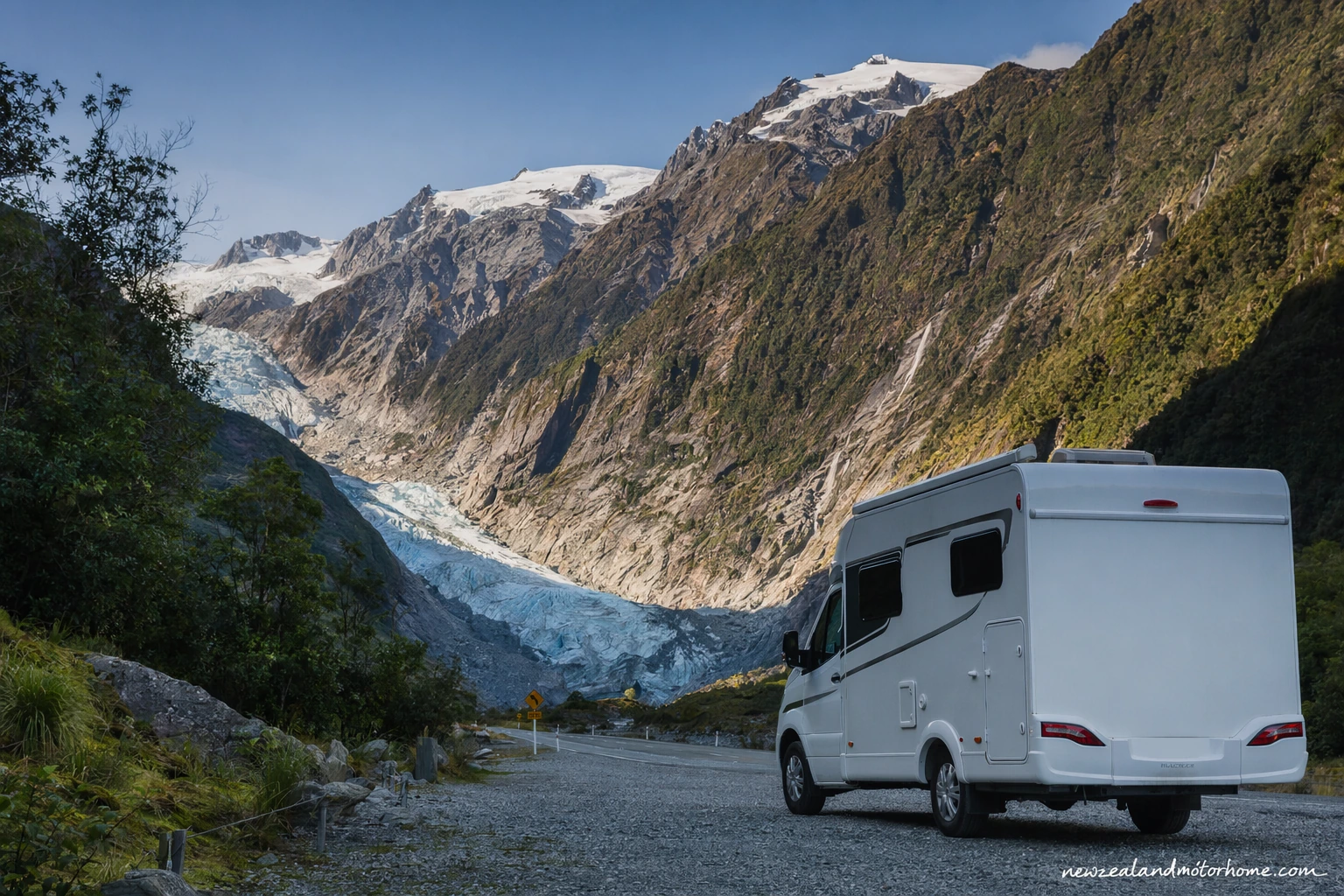
- Best with 1–2 nights
- SH6 single-lane bridges nearby
- Powered sites recommended in wet weather
- Self-contained only where permitted
- Lake Matheson parking fills early
Fox Glacier / Te Moeka o Tuawe is one of those West Coast stops where the weather, road and glacier all set the pace. In a campervan, that is part of the appeal: you can arrive between rain bands, make an early start for Lake Matheson, and keep your overnight base close enough that you are not driving SH6 in the dark.
This fox glacier campervan guide is written for travellers sleeping in their own hired van or motorhome. You will find practical notes on getting there, where to park without blocking the small township, camping near Fox Glacier, what to do when cloud hides the peaks, and how to link it into a wider West Coast route.
Getting to Fox Glacier by campervan
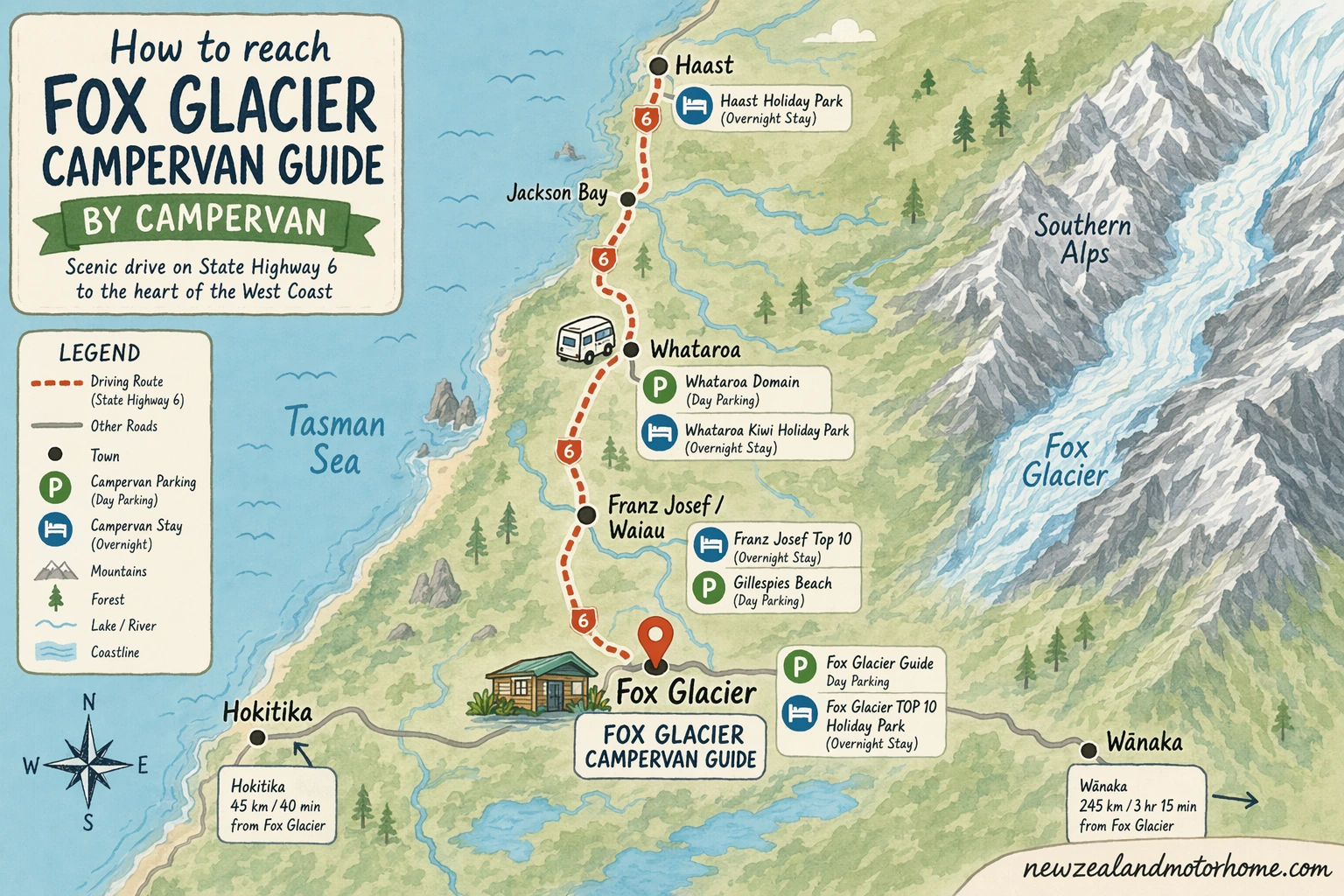
Fox Glacier sits on State Highway 6, between Franz Josef to the north and Haast to the south. The road is one of New Zealand’s great self-drive stretches, but it is not a road to rush in a high-sided motorhome: expect single-lane bridges, rainforest shade, sudden rain, loose grit after slips, and impatient traffic behind you on the straighter sections.
If you are driving south from Hokitika or Franz Josef, give yourself time to stop before Fox rather than rolling in tired at dusk. From the south, the Haast Pass and West Coast section can feel remote, with fewer easy pull-offs for larger vans. Keep your fuel, fresh water and food topped up before you reach the glacier townships.
- Drive in daylight: road edges are narrow in places and rain can sit in hollows under the bush.
- Use slow-vehicle bays: let locals and smaller cars pass when it is safe.
- Check conditions: SH6 can be affected by slips, flooding or maintenance after heavy West Coast rain.
- Watch your height and length: some side roads and viewpoint car parks are better suited to compact campervans than long motorhomes.
Parking the van in Fox Glacier township and at the walks
Fox Glacier township is compact, so think of it as a small service stop rather than a place to circle endlessly in a large van. Park only in marked public spaces, keep clear of accommodation driveways and tour operator entrances, and avoid taking up multiple short-stay parks if your vehicle has a long rear overhang.
For Lake Matheson, the main visitor car park is the usual base for campervan travellers. It is a popular sunrise and late-afternoon spot, so arrive early if you want an easy park and room to turn. Do not treat the Lake Matheson car park as an overnight stop unless signs specifically allow it.
Glacier access roads and viewpoints can change after flood damage or slips, so follow current DOC notices and local road signs rather than relying on an old map screenshot. If you are in a longer motorhome, check whether the access road has enough turning room before committing.
- Best parking rhythm: township for supplies, Lake Matheson for the loop walk, signed glacier viewpoints for short stops.
- Do not block gates: farm, conservation and emergency access is important around the glacier valley.
- Secure the van: take valuables out of sight before walking away from remote car parks.
Where to stay overnight: powered sites, DOC-style camping and freedom camping
For most travellers, the simplest motorhome Fox Glacier overnight is a local holiday park or campground in or near the township. That gives you a legal place to sleep, plus the practical things that matter after a wet West Coast day: powered sites, hot showers, laundry, rubbish facilities and somewhere to recharge batteries without idling the engine.
If you prefer a more basic night, look for DOC or council-listed camping near Fox Glacier, such as coastal or bush camps within driving distance. These are typically unpowered and may have limited facilities, so arrive with fresh water, empty grey and black-water tanks, and enough battery for your fridge and heater fan.
Freedom camping rules are set locally and can change, especially around busy visitor areas. A certified self-contained vehicle is the starting point, not a guarantee that you can stay anywhere. Always check current Westland District Council signs or an official camping map before settling in for the night.
- Powered site: best after rain, cold nights or several days off-grid.
- Unpowered site: fine if your house battery, gas and water are in good shape.
- Freedom camping: only where permitted and with valid self-containment certification.
- Late arrivals: book ahead or call during the day; small townships have limited spaces in peak season.
Water, dump stations, LPG and food supplies
Fox Glacier has basic traveller services, but it is still a small West Coast township. Do not arrive with full waste tanks, an empty fresh-water tank and a nearly empty LPG bottle expecting everything to be available at all hours. A good campervan Fox Glacier stop starts with topping up in larger centres before the remote stretch.
If you are staying at a campground, use its fresh-water and dump facilities as directed. If you are not staying, plan your dump station stops around official public facilities in the wider route area and confirm locations on council or camping apps before you drive past them. Never empty grey water into roadside drains, bush edges or car parks.
LPG bottle swaps and fuel availability can be affected by opening hours and supply, so check before you are down to your last cooking night. Stock up on groceries in larger towns such as Hokitika, Greymouth, Wānaka or Queenstown if you want choice; Fox is better treated as a top-up stop than a full pantry reset.
- Before arriving: fill fresh water, empty waste, check diesel/petrol and LPG.
- On a powered site: recharge devices, house battery and heater controls.
- Before leaving: dump responsibly and carry rubbish to an approved bin.
Things to do around Fox Glacier without moving the van all day
Lake Matheson is the classic campervan-friendly outing: park once, walk the loop, and linger if Aoraki/Mount Cook and Mount Tasman appear in the reflections. The full loop is a good leg-stretcher after hours on SH6, while shorter viewpoints suit days when rain is coming through in bursts.
Glacier valley viewpoints and short rainforest walks are worth checking, but access changes over time because this is an active, flood-prone landscape. Guided glacier trips and scenic flights depend heavily on weather; if you have one booked, stay close enough that you are not making a rushed dawn drive from far away.
For a quieter feel, consider coastal side trips only if your van size and road conditions suit. Some side roads west of the township are narrow, winding or unsealed in parts, so long motorhomes should be cautious and avoid turning small beach roads into a stressful reversing exercise.
- Easy van day: Lake Matheson, township supplies, short DOC walk, powered site.
- Weather backup: café stop, laundry, route planning, or a short drive to Franz Josef if conditions improve there.
- Early start: sunrise at Lake Matheson, then move the van before the car park fills.
How Fox Glacier fits a wider West Coast motorhome route
Fox Glacier works best as a one or two-night pause on a West Coast motorhome route rather than a quick photo stop. One night is enough if you only want Lake Matheson and a weather window; two nights give you breathing room for rain, flight cancellations or a slower morning after the Haast Pass.
Northbound, Fox pairs naturally with Franz Josef, Ōkārito, Hokitika and the Punakaiki coast. Southbound, it links into Bruce Bay, Haast, Makarora, Wānaka and Queenstown. Try not to stack too many kilometres either side of Fox, because SH6 rewards unhurried driving and the weather can easily add time.
If you want help shaping the right overnight spacing, especially with dump stations, powered-site nights and vehicle size in mind, you can use our talk-to-us step as a soft planning check before you lock in your West Coast dates.
- Fast but sensible: Franz Josef to Fox, one night, then Haast or Wānaka next day.
- Slower route: two nights at Fox, with Lake Matheson and weather-flex time.
- Van-friendly rule: plan fewer kilometres than the map suggests, especially in rain.
Common questions
Can I freedom camp in Fox Glacier in a certified self-contained campervan?
Only where local signs and current Westland District Council rules allow it. Being certified self-contained is essential, but it does not give automatic permission to stay in township car parks, road ends or scenic reserves.
Is Fox Glacier suitable for a large motorhome?
Yes, you can reach Fox Glacier on SH6 in a large motorhome, but drive defensively and allow extra time. Be cautious with side roads, small car parks and coastal detours, as turning space can be limited.
Where is the best place to park a campervan for Lake Matheson?
Use the main Lake Matheson visitor car park and arrive early for the easiest spaces. It is a day-use walking base, not a default overnight stop, so check signs and move on to a legal campsite for the night.
Do I need to book a powered site near Fox Glacier?
In summer, school holidays and good weather windows, booking ahead is wise because the township is small. A powered site is especially useful after wet days when you need heat, dry clothes and a full battery.
Are there dump stations and fresh-water fills in Fox Glacier?
Facilities are limited compared with larger towns, so do not rely on Fox for every service. Use campground facilities if you are staying, and plan official dump station and water stops as part of your wider West Coast route.
How many nights should we allow in a campervan at Fox Glacier?
Allow one night for a simple Lake Matheson and glacier-viewpoint stop, or two nights if you want weather flexibility. The West Coast often rewards travellers who leave room in the plan rather than driving through on a fixed timetable.
Have a planner shape this for your dates
Send a short outline — your dates, party size, and the kind of trip you want. A planner replies with a vehicle recommendation, a paced route, and the realistic budget.