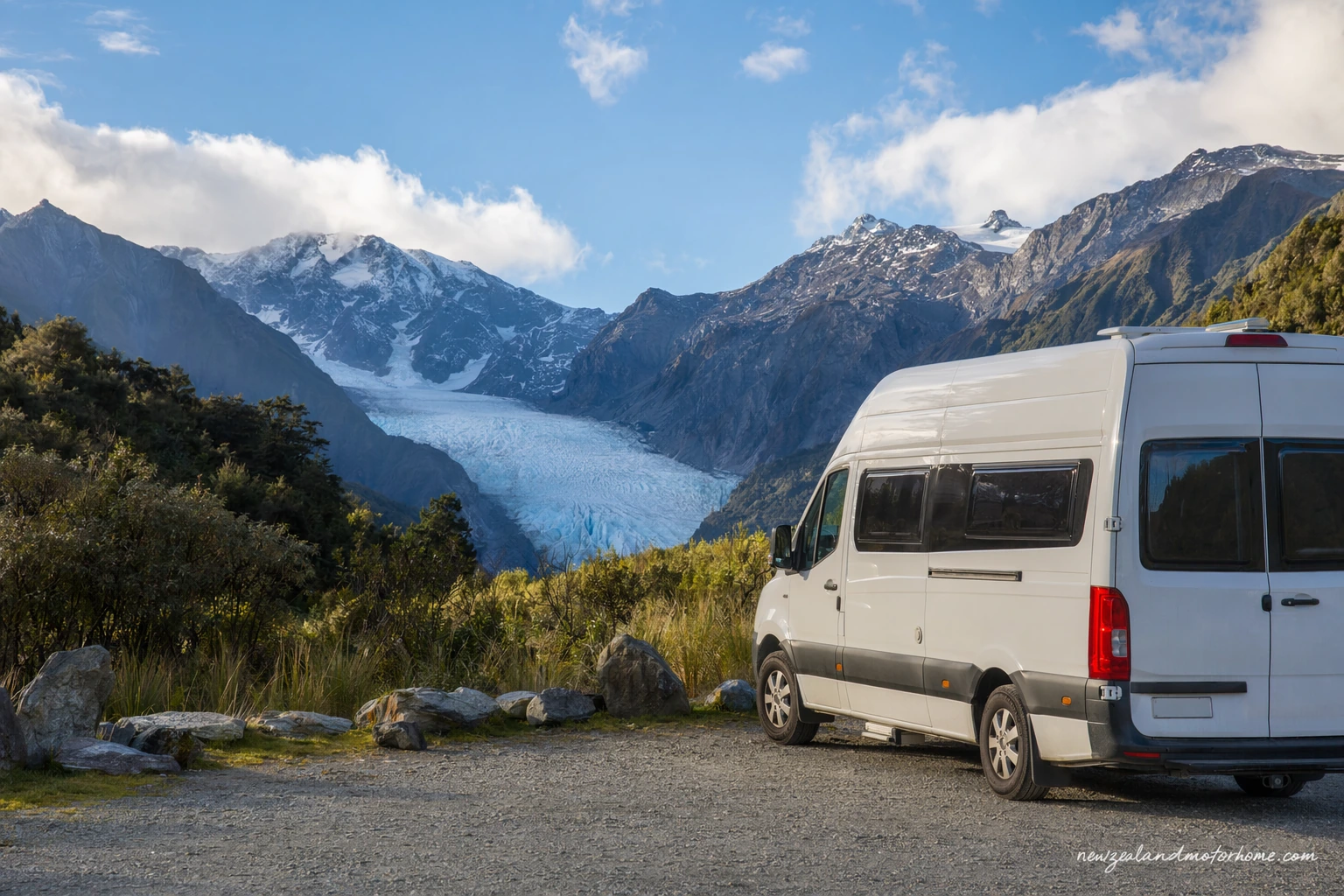
A west coast glacier campervan trip NZ built around the van
- Best with 7–10 days
- Powered glacier village nights
- Self-contained van recommended
- Narrow bridges and wet roads
- Christchurch to Queenstown flow
This west coast glacier campervan trip nz is a packaged self-drive holiday for travellers who want the big South Island glacier scenery without rushing the van from lookout to lookout. It links the coast, rainforest, glacier valleys and alpine passes with overnight stops chosen for practical campervan life: power when you need it, water and waste points at the right moments, and driving days that still leave time to walk.
The package is shaped around a hired self-contained campervan or motorhome, not hotels or coach stops. We plan where you can park for glacier walks, when to book a powered site, which road sections deserve an early start, and how to tailor the route if you are finishing in Christchurch, Queenstown or looping back north.
The shape of the glacier-country route
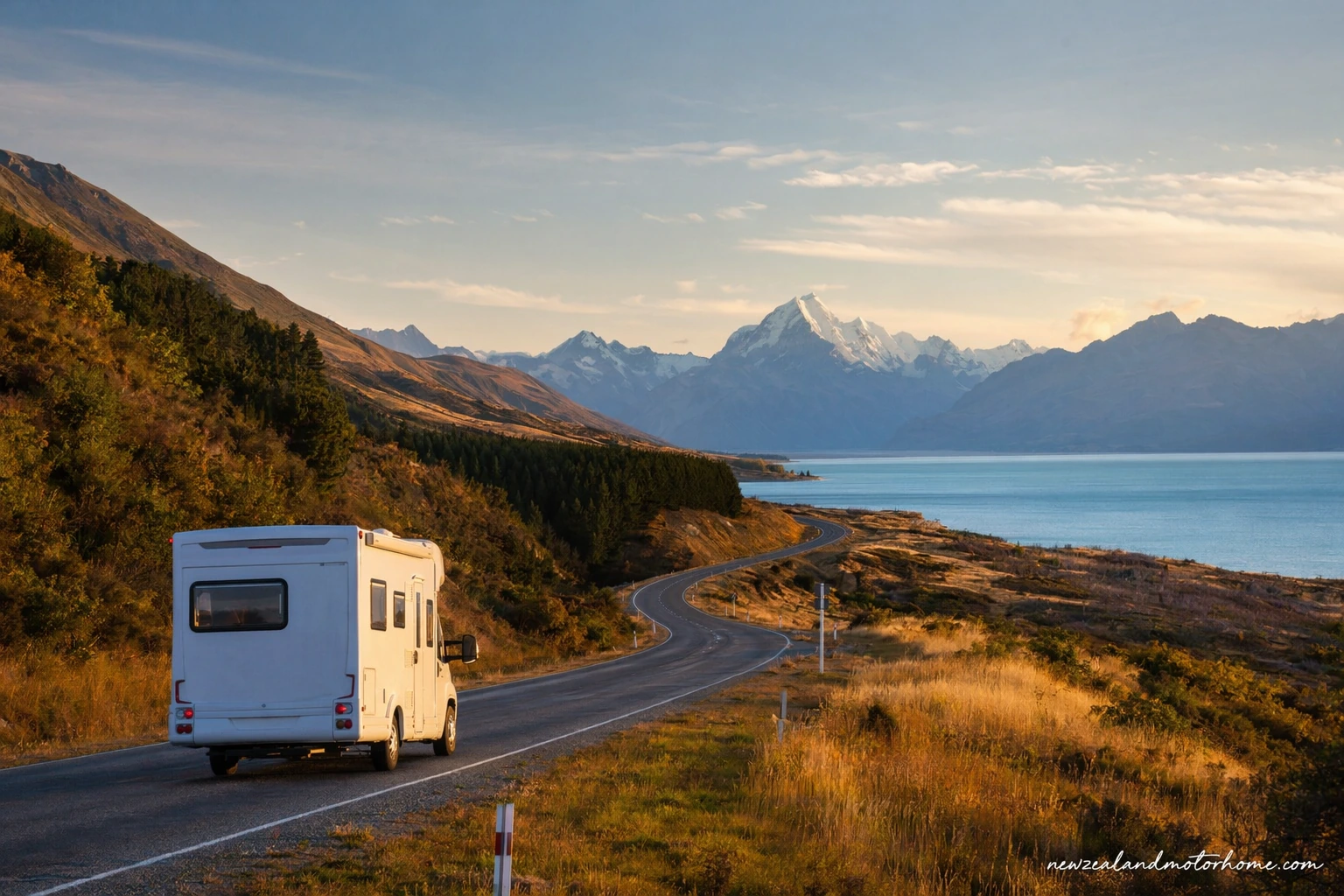
A classic version starts in Christchurch, crosses Arthur’s Pass to the West Coast, then follows State Highway 6 through Hokitika, Franz Josef / Waiau, Fox Glacier / Weheka and down towards Haast. From there, many campervan travellers continue over the Haast Pass to Wānaka or Queenstown, while others slow the trip down and return north along the coast.
The package keeps the glacier villages as overnights rather than quick stops. That matters in a campervan: morning parking is easier, cloud often shifts through the day, and you are not trying to manage a long drive, a walk, a dump station and dinner all after sunset.
- Typical length: 7 to 10 days for a one-way South Island route, longer if you want rest days.
- Best flow: Christchurch to Arthur’s Pass, Hokitika, Franz Josef, Fox Glacier, Haast, then Wānaka or Queenstown.
- Van rhythm: alternate powered holiday park nights with simpler unpowered or scenic stops where allowed.
- Good add-ons: Punakaiki before Hokitika, Lake Matheson near Fox, or an extra night around Haast for short rainforest walks.
Overnight stops and campsite choices
Glacier Country is not a place to assume you will find a last-minute freedom camping spot beside the road. Local rules can change, self-containment requirements are enforced, and some valleys are narrow, wet and busy. We normally build the package with booked holiday park nights in the glacier villages so you have a legal base, a warm shower, laundry options and a powered plug-in after cooler, damp days.
Powered sites are especially useful here if you are using the heater, drying wet gear or topping up camera batteries. If your van has solar and you are travelling in summer, we can mix in unpowered nights, but the West Coast’s cloud and rainforest shade mean it is sensible not to rely on solar every day.
For each overnight we look at:
- vehicle length and whether the site can take a larger motorhome without awkward reversing;
- access to fresh water, grey-water disposal and toilet cassette facilities;
- whether you can walk to food, short tracks or shuttle pick-ups instead of moving the van again;
- how far the next reliable LPG, fuel and supermarket stop is likely to be.
Driving notes for the West Coast and glacier roads
The West Coast is rewarding in a campervan, but it asks for patient driving. Expect winding sections, one-lane bridges, roadside waterfalls, sudden rain and slower traffic around the glacier turn-offs. A bigger motorhome is fine on the main state highways, but you will want to use pull-outs generously and avoid squeezing into unsigned gravel lay-bys just because a car has parked there.
Arthur’s Pass and the Ōtira side are steep in places, so we plan the first day with enough time for low-gear descents and scenic stops without arriving on the coast in the dark. South of the glaciers, the road towards Haast has long stretches with limited services, so fuel and water planning becomes part of the day rather than an afterthought.
- Keep daylight margins: west coast rain and shadowy forest make late arrivals harder in a large van.
- Watch bridge signs: many single-lane bridges have give-way controls and limited sight lines.
- Use engine braking: especially on alpine approaches and wet descents.
- Check clearances: know your van height before entering older service areas, covered forecourts or low tree-lined campground lanes.
Parking the van for glacier walks and viewpoints
For Franz Josef / Waiau and Fox Glacier / Weheka, the best plan is usually to leave the van in a signed public or campground parking area, then walk or use local transport where available. Glacier access areas can be busy, and some car parks are not pleasant places to manoeuvre a long vehicle once they fill. Early starts help, especially in summer or during school holidays.
We do not build the package around driving down every side road. Instead, we choose a small number of walks and viewpoints that suit the day’s weather and the van’s size. Lake Matheson, for example, is a favourite near Fox because the parking is set up for visitor traffic and the walk works well before or after an overnight nearby, but it is still worth arriving before the peak mid-morning rush.
Your route notes can flag when to carry lunch from the van, when to leave wet boots in the rear locker, and when it is better to return to the campsite for a heater-and-tea reset rather than push on to the next town.
What the package thinking includes
This is not just a line on a map. The package is designed as a campervan holiday plan: hire period, pick-up and drop-off logic, first-night distance, campground style, service stops, and how much driving feels realistic once you add walks and weather. It also accounts for your vehicle being your bed, kitchen and luggage space.
We can shape the trip around a compact two-berth camper, a family motorhome, or a longer vehicle where site length and turning space need more care. If you are new to self-contained travel in New Zealand, we will also talk through the practical side: certified self-containment, where freedom camping is not appropriate, how often to empty waste, and why booking the glacier village nights is usually worth it.
- Suggested day-by-day route with driving distances that suit a campervan.
- Powered and unpowered overnight mix, with notes on when to book ahead.
- Dump station, fresh-water, fuel and LPG planning points.
- Weather-aware alternatives if glacier visibility is poor.
- Pick-up and drop-off flow for Christchurch, Queenstown or a longer South Island loop.
If you want the route adapted to your dates, van size and walking style, start with the soft planning step at /talk-to-us/ and we will shape the glacier-country version around how you actually like to travel.
How to tailor the pace
A seven-day version suits travellers who are comfortable moving most days and want the core coast-and-glacier experience. It works best with two nights in the glacier area so you are not depending on one narrow weather window. If you have ten days or more, the route becomes much more relaxed, with space for Punakaiki, extra Hokitika time, or a slow Haast-to-Wānaka day with short walks.
Families often prefer shorter driving days and powered sites with easy evening routines. Couples in a compact camper may be happier mixing in simpler sites, provided the van is certified self-contained and local rules allow it. In winter or shoulder season, we usually build in more powered nights, earlier arrivals and a little less distance because daylight and drying time matter.
- Relaxed: 9 to 12 days, fewer one-night stops, more wet-weather flexibility.
- Classic: 7 to 9 days, the main glacier route with sensible service stops.
- Compact: 5 to 6 days only if you are already starting near the West Coast or finishing nearby.
- Winter-aware: shorter days, powered sites, and pass-condition checks before driving.
Keep planning
Holiday parks west coast
Read onFarmers markets west coast
Read onCampervan guide west coast nz
Read onBest time to visit west coast nz
Read onBest campervan stops west coast
Read onPetrol stations new zealand road trip
Read onCommon questions
Do I need a self-contained campervan for this glacier route?
Should I book powered sites in Franz Josef or Fox Glacier?
Can a larger motorhome manage the West Coast glacier roads?
How often will we need to empty waste and refill water?
What if the glaciers are covered in cloud or it rains?
Have a planner shape this for your dates
Send a short outline — your dates, party size, and the kind of trip you want. A planner replies with a vehicle recommendation, a paced route, and the realistic budget.