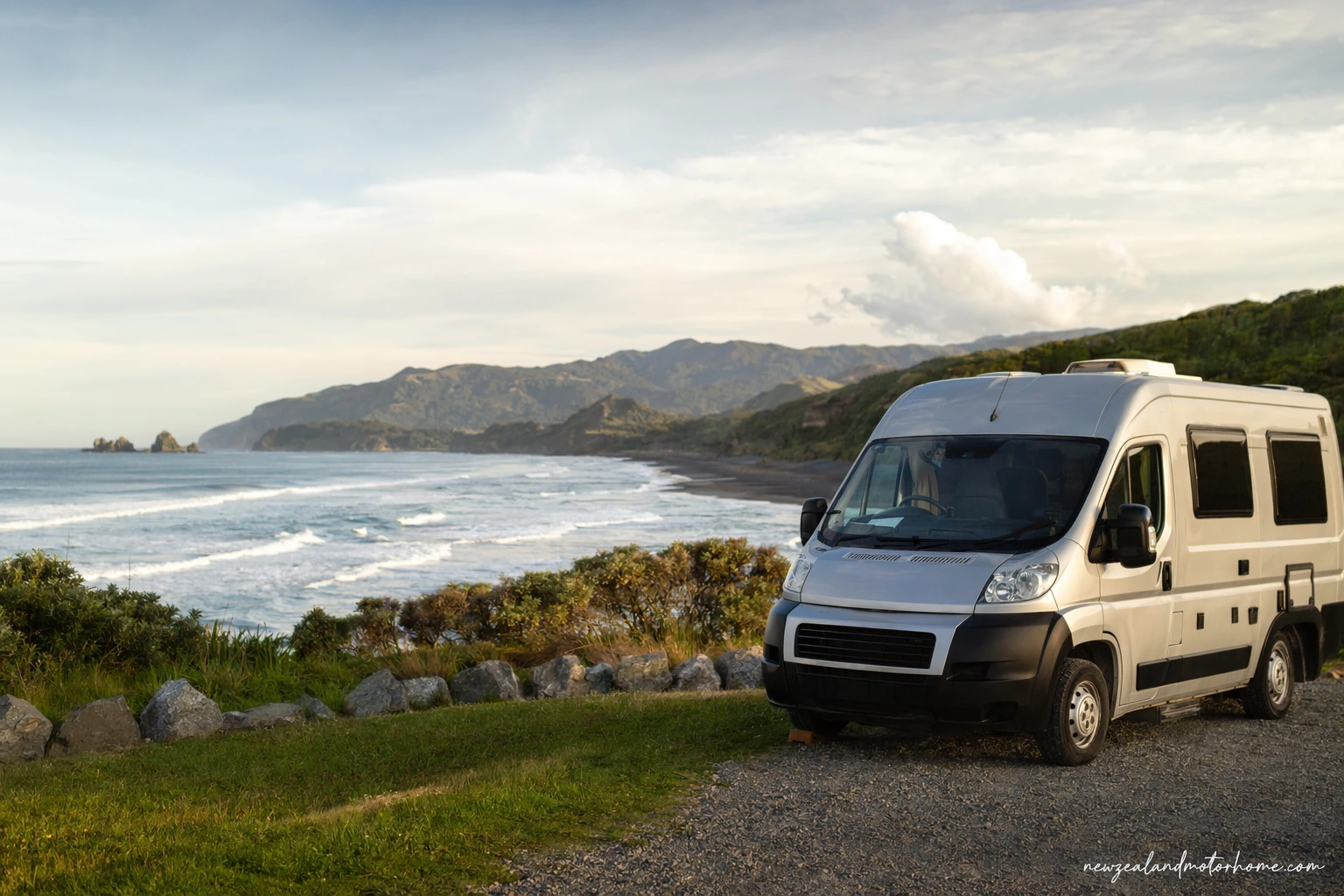
- Best as a 3–6 day coast drive
- Certified self-contained needed for freedom camping
- Powered nights useful in wet weather
- Large vans: take care on gravel detours
- Main service towns spaced far apart
The West Coast is made for a slow self-drive campervan trip: rainforest tight to the road, wild beaches where the van door opens to salt air, and glacier valleys where you will want a dry pair of socks handy. The trick is not just knowing what to see, but where a van actually fits, where you can empty the grey water, and when a scenic pull-in is better for lunch than for the night.
This guide strings together the best campervan stops West Coast routes can offer, from the Buller and Punakaiki down to Glacier Country and Haast. If you are working out where to stay in a campervan on the West Coast, including freedom camping West Coast rules and more reliable powered-site nights, use this as your on-road plan — or send your dates and van size through /talk-to-us/ if you want the stops shaped into a full route.
Westport, Karamea and the northern coast: start with space around the van
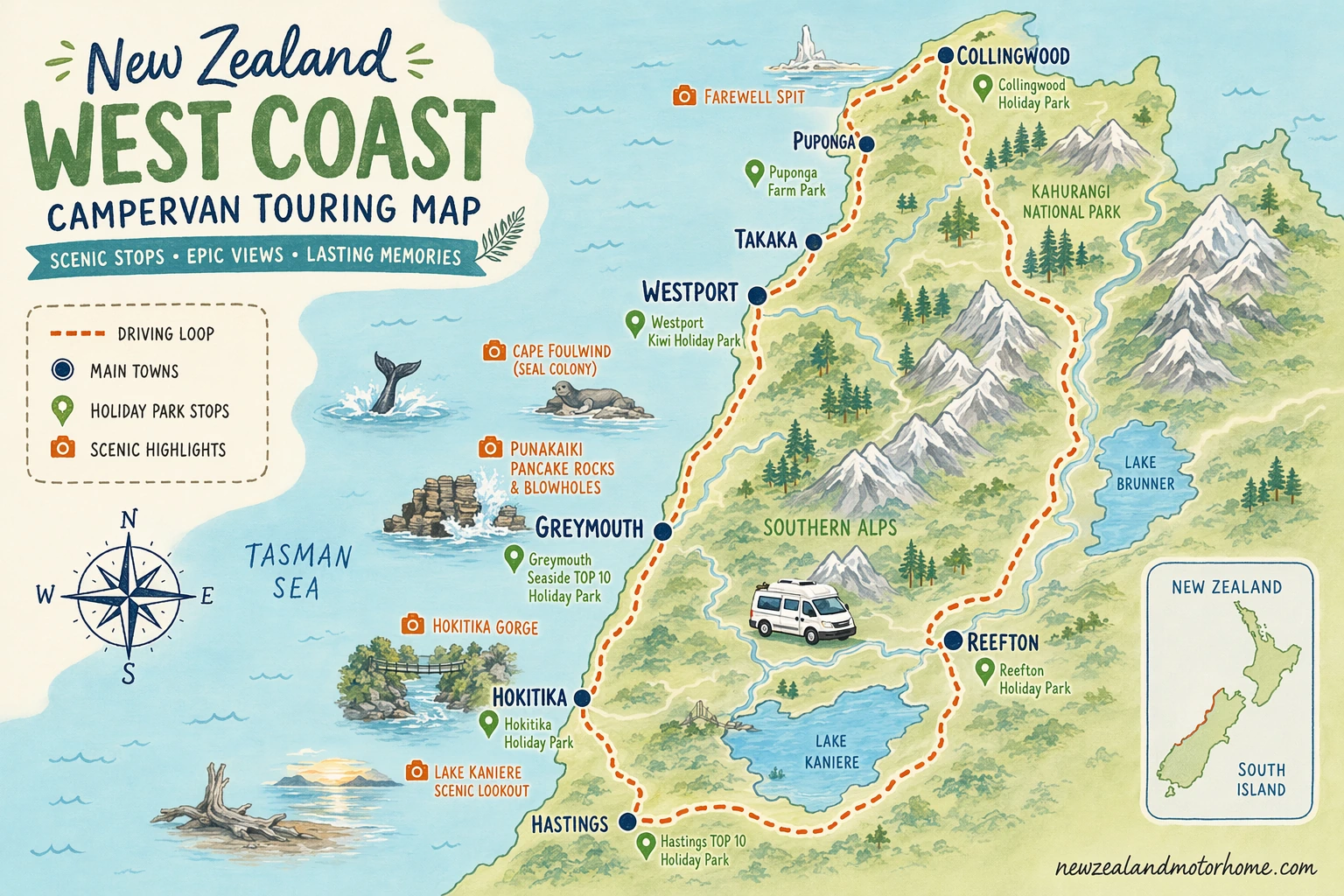
If you are coming in from Nelson or the Buller Gorge, Westport is a practical first West Coast reset. It is the sort of place to top up groceries, check the LPG bottle, refill fresh water where facilities allow, and use a dump station before the road narrows and the distances start to feel bigger.
North of Westport, the road to Karamea and Kohaihai is beautiful but not a road to rush in a high-sided motorhome. Expect bends, patches of shade that stay damp, and the odd place where you will want to let traffic pass rather than hold a queue. Longer vans are fine with patient driving, but avoid arriving late and tired.
- Cape Foulwind and Tauranga Bay: good daytime stops for sea views and a leg stretch; use marked parking and avoid blocking turning areas.
- Karamea: a quiet base if you want a northern-end overnight, with campground-style stays more dependable than trying to interpret roadside freedom camping signs in the dark.
- Kohaihai: a stunning end-of-road picnic and walk area, but treat it as a remote stop — arrive with water, an empty toilet cassette, and enough food for the night if you are booked or staying legally nearby.
Punakaiki to Greymouth: pull-ins, tides and practical overnight bases
The coast road between Punakaiki and Greymouth delivers some of the most memorable van-window scenery in the country, but the best stops are not always the biggest. At Pancake Rocks, use the formal visitor parking and go early or late if you are in a longer motorhome; the middle of the day can feel tight when cars, buses and rental vans all arrive together.
Truman Track is a favourite short walk stop, with roadside-style parking that suits compact and mid-sized campervans better than very long rigs. Motukiekie Beach is spectacular at low tide, but it is not a casual all-weather camper stop: check tides, keep the van well off soft edges, and do not park where you would need to reverse blind onto the highway.
- Punakaiki: good for a paid overnight if you want the coast sound at night and an easy morning walk before traffic builds.
- Barrytown area: useful for scenic pauses, but follow all local signage as freedom camping rules can change by exact reserve or roadside.
- Greymouth: a sensible service night, with supermarkets, fuel, LPG swap options, fresh-water points where provided, and dump station access in town or at holiday-park facilities.
If the forecast is heavy rain, Greymouth is often the better overnight choice than pushing on. The West Coast can turn from golden evening to surface water and low cloud quickly, and a powered site gives you a dry-out night for towels, boots and camera gear.
Hokitika and Lake Mahinapua: beach sunsets without gambling on bylaws
Hokitika is one of the easiest West Coast towns to enjoy in a campervan because the beach, food, fuel and town walks are close together. Park the van in town during the day, wander to the driftwood beach and river mouth, then move to a legal overnight site rather than assuming any seaside space is available for sleeping.
Lake Mahinapua, just south of town, is a calmer contrast to the surf coast. The access road and parking are generally manageable for campervans in settled weather, though you should still watch for low branches and soft shoulders after rain. It is a good place for a late-afternoon brew-up if your van is self-contained and you pack out every scrap.
- Best use of Hokitika: service stop plus sunset, especially if you need groceries, laundry or a dump-station run.
- Powered vs unpowered: choose a powered site if you have had several wet nights; unpowered is fine when your house battery is healthy and you have been driving enough to recharge.
- Freedom camping West Coast note: Hokitika district rules are location-specific, so rely on current council signage and your self-containment certification, not old blog posts.
Glacier Country: Franz Josef, Fox, Ōkārito and Lake Matheson
Glacier Country is where many West Coast campervan plans slow down for two nights, and that is wise. Franz Josef and Fox both have holiday-park and campground options, plus the services you want before going further south: fuel, food, public toilets, and places to deal with waste responsibly. Glacier car parks are for visits, not informal overnights.
For Franz Josef Glacier and Fox Glacier access roads, take it easy after rain. Car parks can fill, turning circles can get awkward, and low cloud changes visibility fast. A shorter campervan is easy here; a long motorhome is still workable if you arrive outside peak walking times and avoid nosing into spaces you cannot reverse out of cleanly.
- Ōkārito: a special coastal detour for birdlife, lagoon views and quiet evenings; the road is sealed but narrow in places, so keep left and give yourself time.
- Lake Matheson: park in the marked area and walk the loop early for the best chance of reflections; do not treat the car park as an overnight stop.
- Gillespies Beach: wild and memorable, but the access is gravel and can be rough. Larger motorhomes should check current road conditions before committing.
If you are deciding where to stay campervan West Coast style in this section, think in pairs: a serviced township night for showers, power and cassette emptying, then a quieter legal campsite or unpowered night when the weather and your battery allow.
Fox to Haast: remote beaches, longer gaps and fewer second chances
South of Fox, the West Coast feels more remote. Bruce Bay, Knights Point and Ship Creek are all worth stopping for, but they are daytime scenic stops first: park fully off the highway, keep an eye on wind when opening high doors, and do not block access for locals, emergency vehicles or other travellers.
Haast is the practical end-of-coast base before the Haast Pass or the drive back north. Use it to reset the van: fuel up, check fresh water, empty waste where facilities are available, and confirm your next overnight. Once you turn inland, you are dealing with mountain weather, one-lane bridges and fewer places to pull a large motorhome around.
- Bruce Bay: good for a coffee stop and beach wander; avoid parking on soft sand or grass margins.
- Knights Point: a classic lookout, but spaces are limited, so be courteous in a longer van and do not overstay at busy times.
- Ship Creek: excellent short walks and coastal rainforest; keep food sealed in the van and be ready for sandflies.
- Haast: choose a legal overnight before driving the pass tired — it is not a road for pushing on after dark in bad weather.
How to link the stops into a relaxed campervan plan
A comfortable West Coast campervan run is usually three to six days between Westport and Haast, longer if you add Karamea, Ōkārito or a weather buffer for glacier walks. The road distance is not huge on a map, but rain, photo stops, single-lane bridges and slow vehicles make the days feel full.
A good rhythm is one scenic coast night, one serviced town night, then one glacier or forest night. That keeps your toilet cassette, grey water, rubbish and battery under control, which matters more here than squeezing in another lookout. Freedom camping is possible in some areas for certified self-contained vehicles, but it is never a blanket right across the West Coast.
- Before a remote night: fill fresh water, empty grey and black water, and check you have enough gas for cooking and heating.
- For wet-weather comfort: book a powered site every few nights so you can run heating safely, charge devices and dry gear.
- For bigger motorhomes: start early, avoid tight beach margins, and choose campgrounds with clear turning space rather than squeezing into small informal areas.
- For freedom camping: use current council rules, obey signs on the ground, and only stay where your certified self-contained van is permitted.
Common questions
Can I freedom camp on the West Coast in a campervan?
Sometimes, but only in permitted places and usually only with current self-containment certification. Freedom camping West Coast rules vary by district and even by reserve, so read the signs where you park and check the current council information before settling in for the night.
How many days should I allow for the best campervan stops West Coast route?
Allow at least three days from Westport to Haast, but five or six days feels much better in a campervan. That gives you time for Punakaiki, Hokitika, Glacier Country, Ōkārito or Lake Matheson, plus a weather buffer.
Are the West Coast roads suitable for a large motorhome?
Yes, State Highway 6 is a main touring route, but it is narrow and winding in places with one-lane bridges and damp shaded corners. Longer motorhomes should travel in daylight, use pull-outs to let traffic pass, and avoid tight gravel beach roads unless conditions are clearly suitable.
Where can I empty the toilet cassette and refill fresh water?
Plan around the larger townships such as Westport, Greymouth, Hokitika, Franz Josef, Fox Glacier and Haast, where public facilities or holiday parks are more likely to have dump stations and water. Do not leave it until the tank is full; remote sections have fewer options.
Do I need to book holiday parks on the West Coast?
In summer, school holidays and around popular glacier walking days, booking is sensible, especially if you need a powered site. In quieter months you may have more flexibility, but wet weather often pushes more campervan travellers into powered holiday-park nights.
Can I sleep overnight in glacier or lookout car parks?
Do not assume so. Glacier access car parks, lake lookouts and short-walk parking areas are generally for daytime visits unless signage clearly allows overnight stays, so use a legal campground, holiday park or permitted freedom camping area instead.
Have a planner shape this for your dates
Send a short outline — your dates, party size, and the kind of trip you want. A planner replies with a vehicle recommendation, a paced route, and the realistic budget.