- Allow 5–7 days for an easy pace
- Main route is SH6 with winding sections
- Powered sites useful after wet nights
- Certified self-contained rules apply
- Dump and refill in larger towns
The West Coast is one of New Zealand’s great self-drive regions: rainforest right to the road edge, rough-surf beaches, glacial valleys, one-lane bridges and small towns where you can refill, empty out and slow down. In a campervan or motorhome, it works best when you leave space in the day for weather, short walks and the odd roadside coffee while the rain hammers on the roof.
This campervan guide west coast nz page is written for travellers driving and sleeping in their own hired van. You’ll find practical notes on how many days to allow, where to park the van for key stops, powered and unpowered overnight options, dump station planning, fresh water, LPG, road conditions and the places that suit a West Coast campervan trip without rushing it.
How many days to allow for a West Coast campervan route
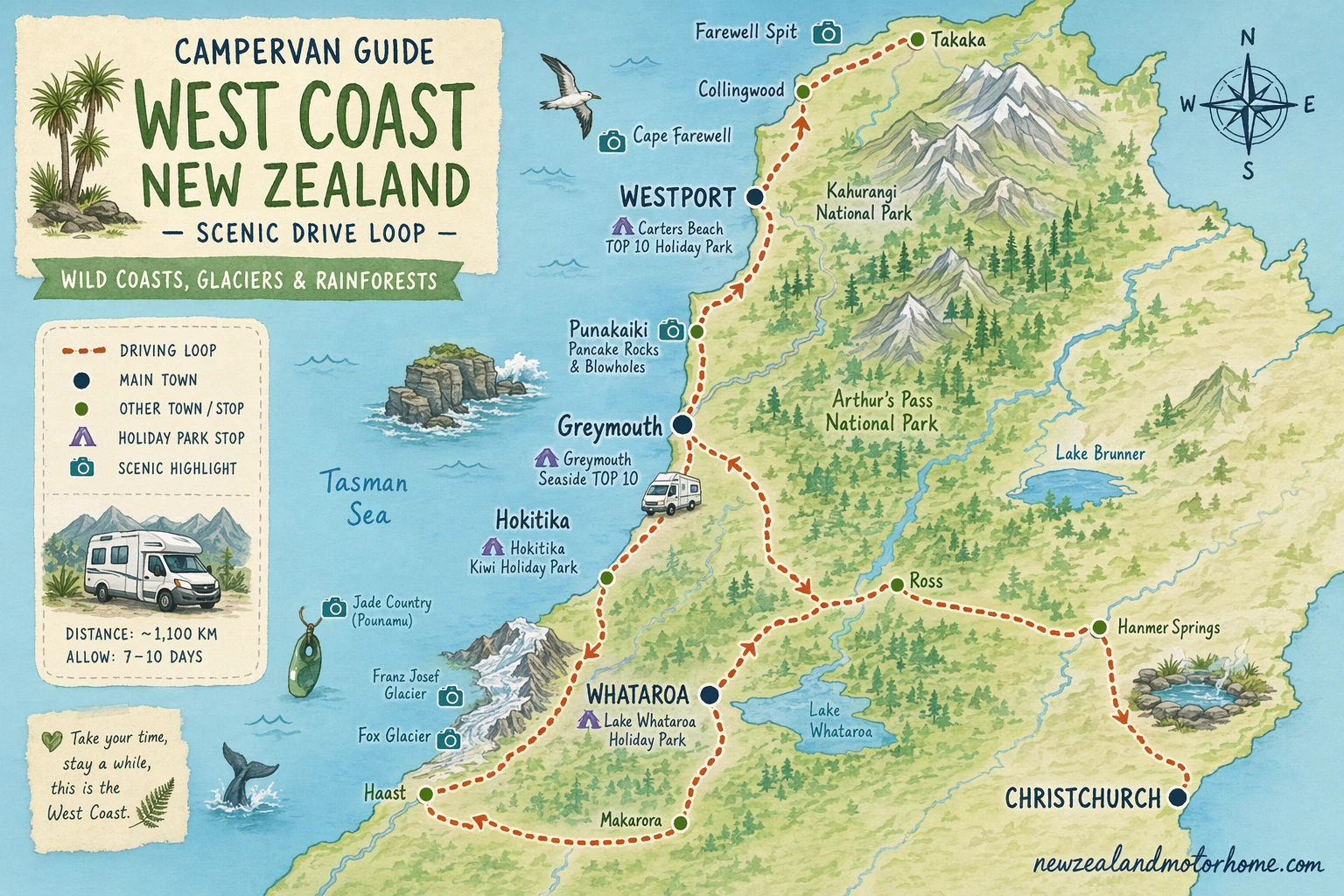
You can technically drive the West Coast in two long days, but that is not the trip most campervan travellers come for. The coast rewards short driving blocks, early starts for glacier valleys and enough spare time to sit out a rain band before moving the van again.
For a practical motorhome West Coast route, allow at least four to six days between Westport and Haast. Add extra nights if you are linking in Karamea, Arthur’s Pass, Lake Brunner or Wanaka, or if you prefer two-night stays so you can leave the van levelled up while you walk.
- 3 days: a fast transit, best only if you are travelling one way and skipping longer walks.
- 5 to 6 days: a comfortable campervan pace from Punakaiki to the glaciers and Haast.
- 7 to 10 days: ideal if you want Karamea, Okarito, Lake Kaniere, beach stops and weather flexibility.
- Direction: north-to-south works well if you are continuing to Wanaka or Queenstown; south-to-north suits Nelson or Picton connections.
Driving the West Coast in a campervan or motorhome
State Highway 6 is the main spine of the West Coast. It is sealed and commonly driven by hire campervans, but it is not a road for rushing: expect winding sections, narrow shoulders, sudden rain, slips after storms and one-lane bridges where you need to read the give-way signs before committing the van.
Large motorhomes should take particular care on the coast road between Westport and Greymouth, the approaches to glacier townships, and the Haast Pass if continuing inland. Pull into marked bays to let faster traffic pass, avoid parking with wheels on soft road edges, and remember that a high-sided van can feel wind gusts around exposed beaches and river mouths.
- Arthur’s Pass access: SH73 is scenic but steeper and more alpine than the coastal highway; check conditions before taking a heavy van through in winter.
- Haast Pass: sealed and spectacular, with waterfalls and tight corners; use lower gears on descents and do not rely on mobile coverage.
- Side roads: places like Okarito, Lake Kaniere and some beach ends are manageable in most vans, but check gravel, potholes and turning space before going too far.
- Parking height: watch for low tree limbs in rainforest car parks and choose end bays where you can open side doors safely.
Best stops and things to do with the van parked nearby
The best things to do West Coast campervan travellers can reach are often simple: park at the beach, walk through nikau or podocarp forest, then come back to the van for dry socks and a hot drink. Aim to arrive at popular car parks early, especially at Punakaiki and the glacier valleys, because long bays fill quickly and turning a motorhome in a tight car park is never fun.
North of Greymouth, Punakaiki is a natural overnight or long lunch stop, with the Pancake Rocks walk close to visitor parking. Around Hokitika, use town parking for the beach, river mouth and supplies, then consider Lake Kaniere or the gorge area for a slower inland detour if road conditions suit your van.
- Karamea and Ōpārara area: allow extra days; some access roads are narrow or gravel, so check suitability for your hire vehicle before committing.
- Punakaiki: great for a short walk from the van; avoid blocking coach and long-vehicle spaces.
- Hokitika: easy resupply town with flat walking, fuel and places to regroup after wet weather.
- Ōkārito: a quieter coastal detour for lagoon views, birdlife and a small-settlement pace; book overnight sites ahead in busy periods.
- Franz Josef and Fox Glacier: park in designated visitor areas and check current glacier valley access before driving out.
- Haast and Jackson Bay: remote-feeling coastal country; fill fuel and water before you depend on either.
Where to stay: powered, unpowered, DOC and freedom camping
The West Coast has a useful mix of holiday parks, council-approved areas, DOC camps and basic coastal stops, but you should not assume you can simply pull over and sleep anywhere. Freedom camping rules vary by district, and many town, beachfront and lake areas are restricted to certified self-contained vehicles or closed to overnight stays altogether.
If you need power, laundry, hot showers or a reliable place to dry wet gear, book a holiday park in towns such as Westport, Punakaiki, Greymouth, Hokitika, Franz Josef, Fox Glacier or Haast. Unpowered sites suit vans with good house batteries, but rain and short winter daylight can reduce solar input, so plan powered nights into a longer West Coast campervan itinerary.
- Powered sites: best after two or three off-grid nights, especially in winter or if you run a heater, fridge and device charging.
- Unpowered sites: good for self-contained vans with careful water and battery use.
- DOC-style camps: often scenic and simpler; expect fewer facilities and sometimes sandflies.
- Freedom camping: only where permitted, and only if your van meets the current self-containment requirements.
For busy summer weeks, long weekends and the glacier townships, pre-book at least the key nights. If you want a hand matching overnight stops to your van range, travel dates and comfort level, you can talk to us before locking the route in.
Dump stations, fresh water, LPG and resupply rhythm
Distances between West Coast towns are not huge on a map, but weather, roadworks and side trips can stretch the day. Treat Westport, Greymouth, Hokitika, Franz Josef, Fox Glacier and Haast as your main resupply rhythm rather than waiting until tanks or gas are nearly empty.
Dump stations are available in larger service towns and at many holiday parks, but access and conditions can change, so confirm current dump station locations in your camping app, with the local council, or at visitor information points before relying on one. Never empty grey water or toilet cassettes into drains, bush or roadside pull-offs; the coast’s high rainfall does not make that acceptable.
- Fresh water: refill when you can, especially before Ōkārito, Haast, Jackson Bay or DOC-style camps.
- Waste tanks: empty before remote stretches so you are not forced into an inconvenient town stop.
- LPG: top up or swap in larger towns; do not assume small settlements have gas available after hours.
- Groceries: Greymouth and Hokitika are the easiest major stock-up points; glacier townships are better for top-ups.
Weather, seasons and West Coast campervan comfort
The West Coast is wet, green and changeable. That is part of its character, but it affects campervan travel more than it does a quick day drive: awnings stay packed away in wind, wet boots need somewhere to live, and a shaded campsite can keep solar panels from doing much at all.
Summer brings longer daylight, busy glacier parking and more demand for powered sites. Autumn is often calmer and very good for a motorhome West Coast trip, while winter can be beautiful but requires more care around alpine approaches, damp interiors and shorter driving windows.
- Pack for rain: keep jackets and towels near the sliding door so the living area stays drier.
- Manage sandflies: choose breezier sites when possible and keep flyscreens closed around dusk.
- Dry the van out: use powered nights to run ventilation and reset batteries.
- Check roads: after heavy rain, confirm highway status before driving to glacier valleys, Haast Pass or remote side roads.
Common questions
Is the West Coast suitable for a large motorhome?
Can I freedom camp on the West Coast in a campervan?
Where should I plan powered nights on a West Coast campervan trip?
How often should I empty waste and refill water?
Are the glacier car parks okay for campervans?
What is the best season for a West Coast campervan holiday?
Have a planner shape this for your dates
Send a short outline — your dates, party size, and the kind of trip you want. A planner replies with a vehicle recommendation, a paced route, and the realistic budget.