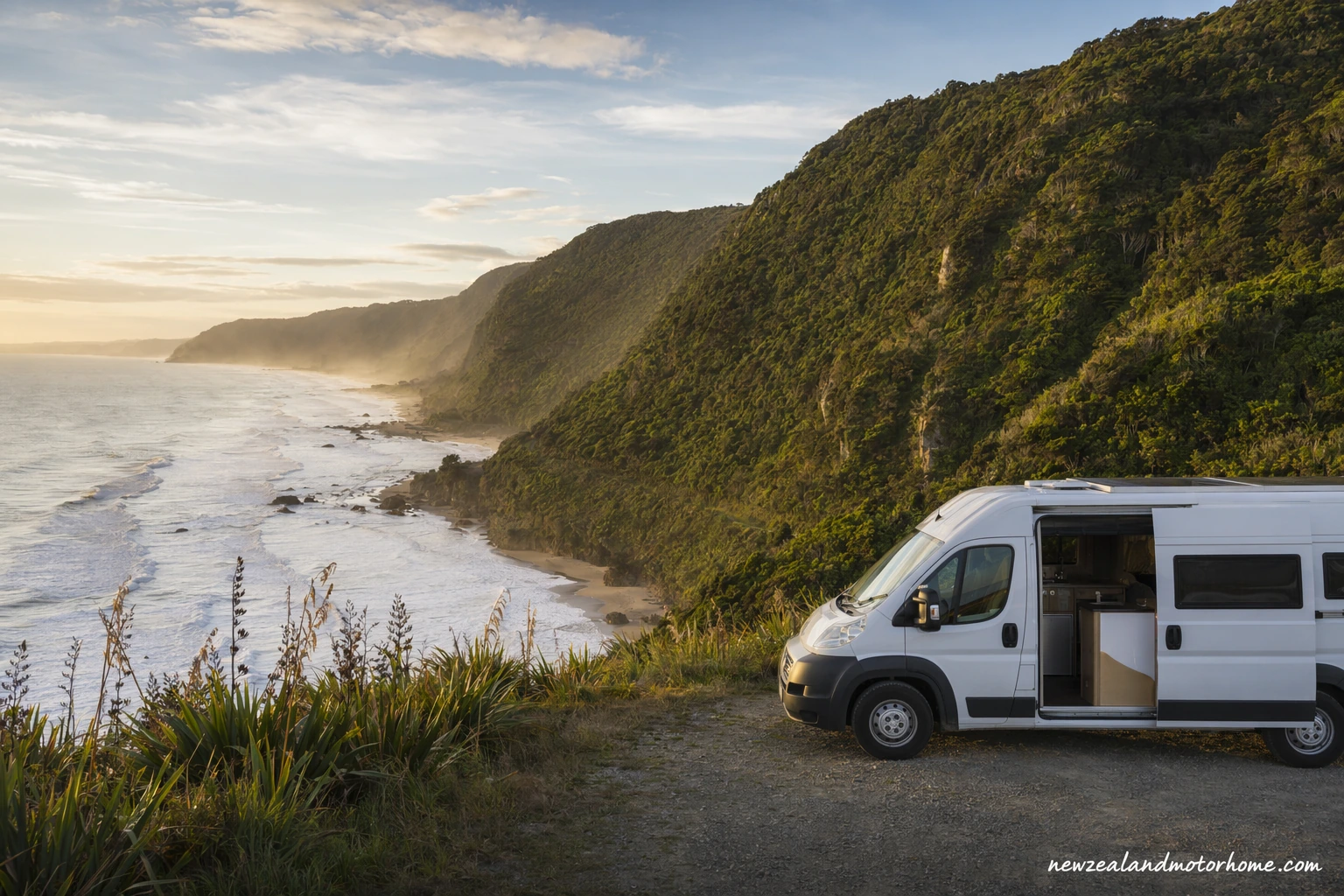
- Best months: February to April
- Allow 5–7 days for a relaxed Coast run
- Certified self-contained needed for many freedom sites
- Powered sites useful after wet weather
- Check pass roads in winter
The West Coast rewards unhurried campervan travel: rainforest pressed against the road, wild beaches, glacier country, river flats and small towns where you can top up water, empty the cassette and keep moving at your own pace. The best time to visit west coast nz depends less on one perfect month and more on how you feel about rain, sandflies, busy holiday parks and driving long, wet stretches of State Highway 6.
This guide is written for people sleeping in the van, not just passing through. You’ll find the most useful months for a motorhome route, what West Coast weather by month really means on the road, when powered sites are easier to get, and the seasonal driving notes that matter when your home-on-wheels is taller, wider and slower than a car.
Quick answer: late summer and early autumn suit most vans
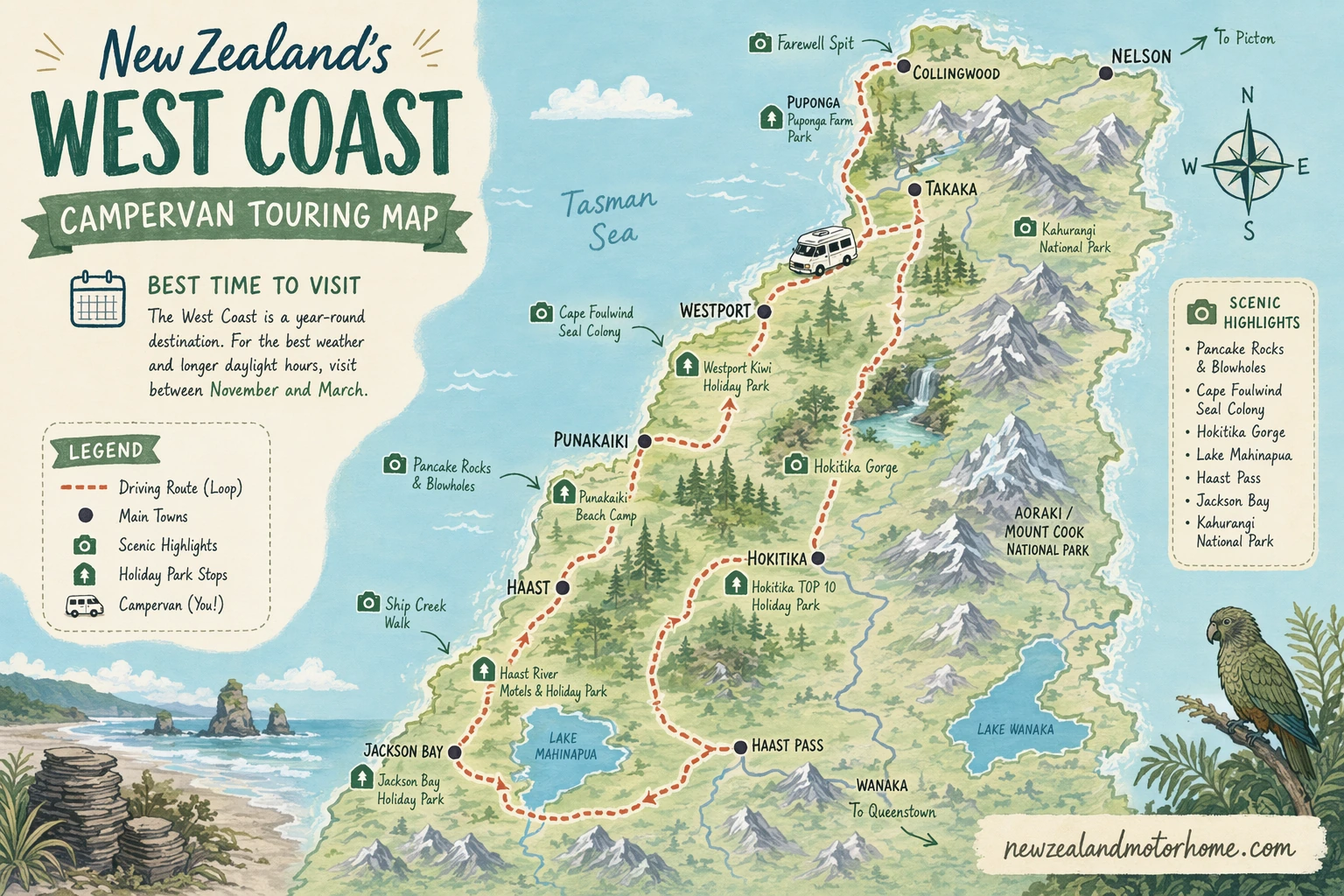
For most self-drive campervan travellers, February to April is the sweet spot. The school-holiday rush has eased, daylight is still generous, glacier and rainforest stops are open, and holiday parks in places like Westport, Punakaiki, Hokitika, Franz Josef/Waiau, Fox Glacier and Haast are usually less stretched than in late December and January.
March is often the easiest month to live in the van on the Coast: warm enough for beach and lake evenings, cooler overnight for sleeping, and more flexibility if you want to change plans after a wet forecast. April brings shorter days but calmer travel, especially if you prefer unpowered sites, quieter DOC-style camps and less pressure to pre-book every night.
- Best all-round months: February, March and April.
- Warmest, busiest spell: late December through January.
- Quietest useful touring months: May and September, if you allow weather days.
- Winter for confident drivers: June to August, with shorter daylight and more road-condition checks.
West Coast weather by month: what it means in a motorhome
When people ask when to visit West Coast, they are usually asking how much rain they can expect. The honest answer is: rain can arrive in any month. The difference is how warm it feels, how long the daylight lasts, and how forgiving your itinerary is when a front moves through from the Tasman Sea.
Looking at West Coast weather by month is useful for van planning, but do not build a tight schedule around a dry forecast. The Coast’s best days are magic, and its wet days can still work well if you have a powered site, a drying room, a short drive day and a café or hot pools stop rather than a long hike planned.
- December to February: warm, humid and changeable; book popular powered sites early, especially around New Year.
- March to April: still mild, often excellent for touring; fewer peak crowds and better freedom to choose overnight stops.
- May: cooler and quieter; good for flexible travellers with warm bedding and a plan for wet clothes.
- June to August: cold nights, short days and possible snow or ice on alpine approaches; check road updates before committing to long legs.
- September to November: spring waterfalls and lush bush, with unsettled weather; build in spare time for delays and laundry.
Holiday parks, freedom camping and seasonal availability
In peak summer, the main pressure point is not usually finding somewhere on the West Coast to park a campervan; it is finding the right kind of site in the town you want, especially a powered site long enough for a larger motorhome. Glacier villages, Punakaiki and Hokitika can feel tight when the weather is good and everyone decides to stop at the same time.
Freedom camping rules vary by district and site, and many areas require a certified self-contained vehicle. Always check local signage on arrival, even if an app suggests overnight parking, and avoid squeezing into beach or river pull-offs that are not marked for overnight stays. In wet months, grassy areas can become soft, so a legal hardstand or holiday-park site may be the better choice for a heavier van.
- Peak summer: pre-book powered sites in the popular towns and keep a backup overnight option.
- Shoulder seasons: better chance of choosing between powered and unpowered sites on the day.
- Winter: some smaller campgrounds reduce services or close; confirm before driving to a remote stop late in the day.
- Self-contained vans: carry enough fresh water and grey-water capacity to stay flexible, but still use designated dump stations regularly.
Driving conditions: rain, one-lane bridges and long coastal legs
The West Coast is a superb motorhome drive, but it asks for patience. State Highway 6 is the main north-south spine, with long forested stretches, one-lane bridges, narrow shoulders and plenty of places where rain, slips or fallen branches can slow traffic. In a tall campervan, give yourself more stopping distance and be realistic about how far you can drive comfortably in a day.
After heavy rain, waterfalls appear everywhere, but so can surface water and roadworks. Pull over only where the van is fully clear of the lane, and remember that scenic lay-bys can fill quickly when the clouds lift. If you are driving a longer motorhome, turnarounds at small beach access roads and bush car parks can be awkward, so scout the entrance before committing.
- Watch your height: roadside trees, low branches and older service-station canopies can catch out high-roof vans.
- Allow time: Westport to glacier country or glacier country to Haast is not a leg to rush in poor weather.
- Use daylight: winter and heavy rain make road markings and bridge approaches harder to read.
- Check before alpine links: if arriving via Arthur’s Pass, Lewis Pass or Haast Pass, look at current road and weather conditions before setting off.
Servicing the van: fuel, LPG, water and dump stations by season
Services are spread out on the Coast, so make a habit of topping up before you are empty. Larger towns such as Westport, Greymouth and Hokitika are the easiest places to deal with fuel, groceries, fresh water, LPG bottle swaps or fills, and dump stations. Glacier villages and smaller settlements have fewer options, and opening hours can be shorter outside the main season.
Plan your overnight stops around the practical jobs as much as the views. A powered site after two wet nights lets you run heating, charge devices and dry towels properly. An unpowered site near a beach or lake can be perfect in settled weather, but only if your battery, water and toilet cassette are not already stretched.
If you want help matching your travel dates with sensible overnight stops, dump-station gaps and daily driving distances, you can use our talk-to-us step before you lock in the route.
- Before remote legs: fill fuel and fresh water, empty grey water and cassette, and check LPG.
- After wet days: choose a powered site or holiday park facilities for drying gear.
- In winter: do not assume every smaller campground facility is operating; check ahead where possible.
- For longer vans: look for dump stations and water taps with easy access, not tight corners or busy roadside parking.
Common questions
What is the best month to campervan the West Coast NZ?
March is the safest single pick for many motorhome travellers: it is usually still mild, the busiest school-holiday period has passed, and powered sites are easier to secure. February and April are also strong choices if you want warm weather or quieter travel.
Is the West Coast too wet for a campervan trip?
No, but you need a flexible plan. Rain is part of the West Coast experience, so allow spare days, keep wet-weather driving distances short, and book a powered site when you need heat, charging and dry towels.
Do I need to book campsites in advance on the West Coast?
In late December and January, book ahead for popular powered sites, especially in glacier country, Punakaiki and Hokitika. In March, April and much of spring, you can often be more flexible, but it still pays to check availability before arriving late in the day.
Can I freedom camp along the West Coast in a hired campervan?
Only in places where overnight camping is permitted, and usually only if your vehicle is certified self-contained. Local rules and signage matter more than app comments, so check each site on arrival and use dump stations before your tanks are full.
Is winter a good time to visit the West Coast by motorhome?
Winter can be quiet and atmospheric, but it suits confident drivers with warm bedding and a slower itinerary. Expect shorter days, colder nights, some reduced campground services, and the need to check road conditions on passes and remote stretches.
Have a planner shape this for your dates
Send a short outline — your dates, party size, and the kind of trip you want. A planner replies with a vehicle recommendation, a paced route, and the realistic budget.