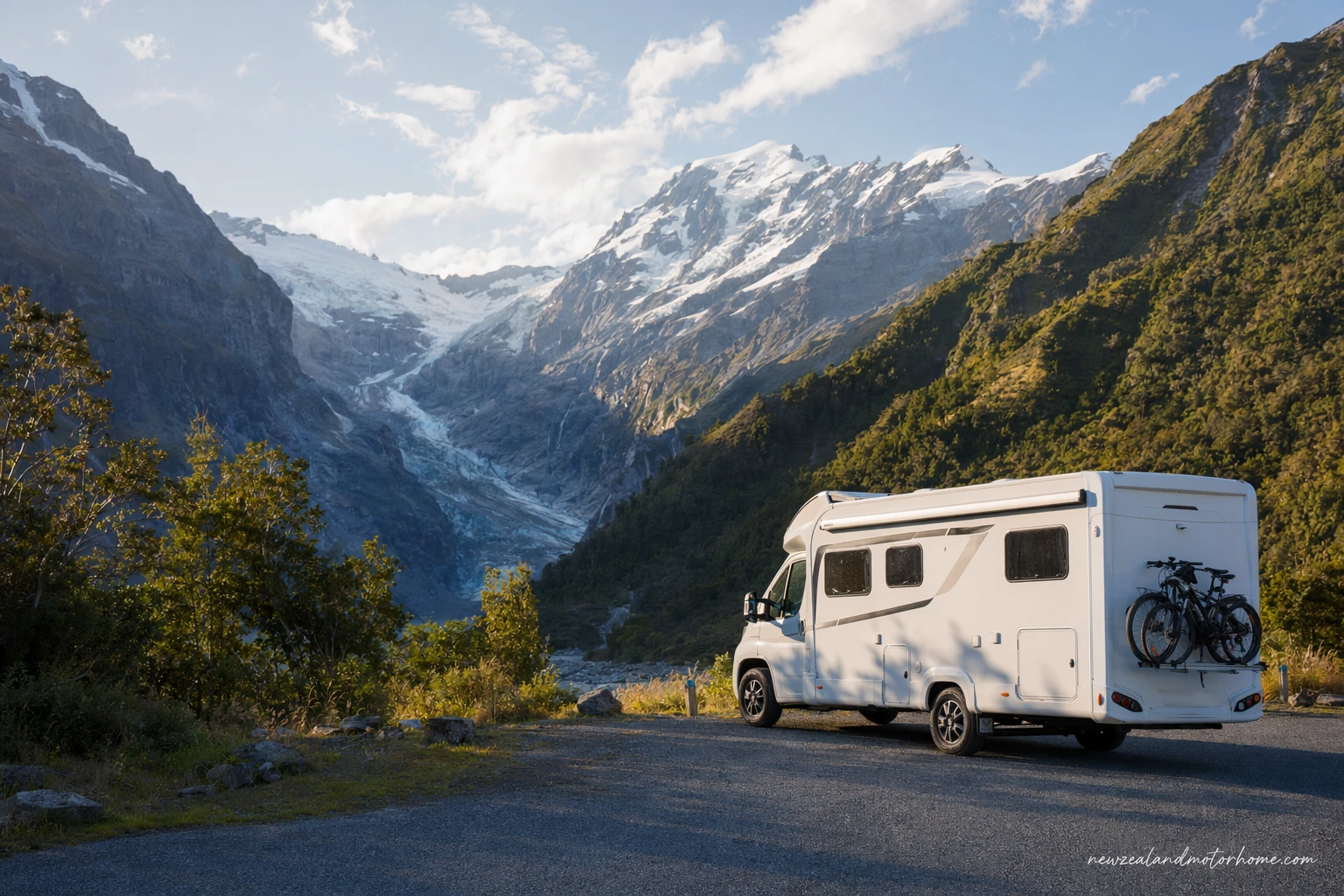
- Best with 1–2 nights
- Powered sites useful in wet weather
- SH6 has one-lane bridges
- Freedom camping restricted
- Top up LPG before remote legs
Franz Josef / Waiau is one of those West Coast stops where the van feels like part of the landscape: wet bush on one side, snow and ice above, and a small township built around travellers arriving under their own steam. For campervan and motorhome drivers, it is a practical pause between Hokitika, Fox Glacier, Haast and the alpine passes.
This franz josef campervan guide covers the bits that matter when your vehicle is also your bed: how to approach the village on SH6, where to park for glacier walks, what to expect from camping near Franz Josef, and how to manage water, waste, LPG and weather without turning the stop into a scramble.
Getting to Franz Josef by campervan on SH6
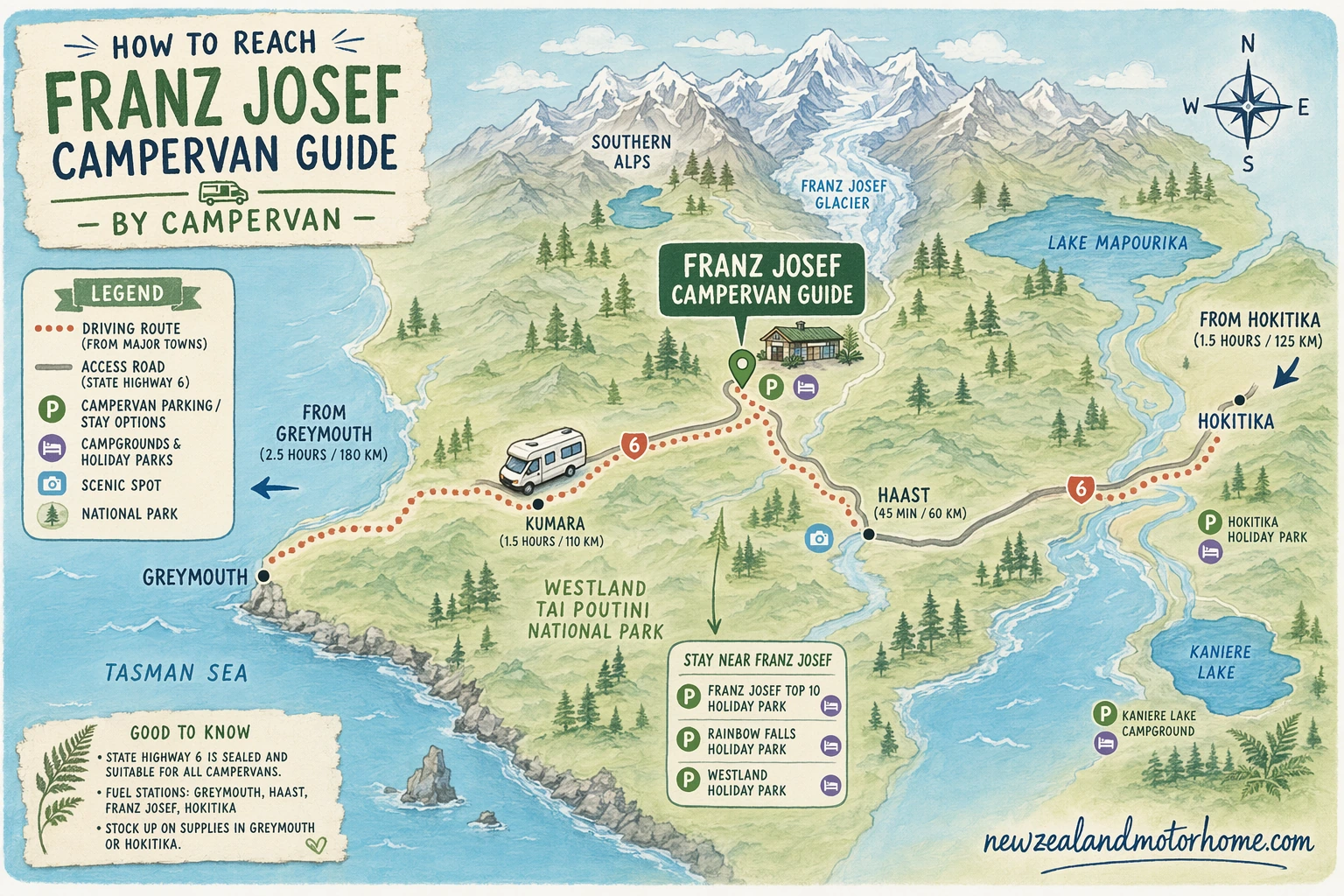
Franz Josef sits on State Highway 6, roughly in the middle of the wild West Coast drive. The road is sealed all the way, but it is not a fast highway: expect tight bends, single-lane bridges, sudden rain, and stretches where there is nowhere sensible to pull over a long motorhome. Build in time for slower travel rather than trying to make big kilometres after dark.
Coming from the north, many vans arrive from Hokitika or Greymouth after a coastal and rainforest run. From the south, the drive up from Haast is remote and beautiful, with limited services between settlements. If you are crossing from Canterbury or Otago, remember that Arthur’s Pass, Lewis Pass and Haast Pass can all be affected by snow, slips or strong wind at different times of year.
- Fuel: fuel is usually available in the township, but top up earlier if your gauge is low; West Coast distances can feel longer in wet weather.
- Vehicle size: larger motorhomes are fine on SH6, but take bridge give-way signs seriously and use slow-vehicle bays when traffic builds behind you.
- Weather: check road conditions before committing to a pass or a long southbound leg towards Haast.
- Arrival tip: try to arrive before dusk so you can find your campsite, plug in if needed, and avoid reversing a high-sided van in heavy rain.
Parking the van for glacier walks and the township
The Franz Josef township is compact, with cafés, booking offices and short walks clustered close together. Standard campervans can usually use marked public parking, but longer motorhomes should look for end spaces and avoid squeezing into small car parks where overhang blocks the footpath. In peak summer, arrive early or later in the afternoon if you want an easy park.
For the glacier valley area, follow local signs and current access information. The main glacier access road leads towards the walking tracks and car parking, but West Coast riverbeds and slips can change track access after storms. Do not assume an old map or blog is still accurate; check DOC notices in town before driving out.
Once parked, keep valuables out of sight and take wet-weather gear even if the village looks calm. The glacier valley can turn cold and damp quickly, and returning to a steamed-up campervan is much easier if you have a dry layer waiting by the door.
- Town centre: best for food, bookings, short strolls and a quick supplies stop.
- Glacier access parking: use for walks only; it is not an overnight camping spot.
- Long vehicles: avoid tight turning areas and do not park across multiple spaces unless signs allow it.
- Flood awareness: the Waiho River area is dynamic; obey closures and never drive through floodwater.
Where to stay overnight in and near Franz Josef
For most campervan Franz Josef stays, the easiest option is a holiday park or campground in or close to the village. Powered sites are useful here because nights can be cold and damp even outside winter, and you may want to run a heater, charge camera batteries and dry boots. Unpowered sites can work well for self-contained vans in settled weather, but make sure your house battery is healthy before relying on it for more than one night.
Camping near Franz Josef ranges from serviced township campgrounds to more basic DOC-style sites further out, including options around the Lake Mapourika area north of the village. Basic sites are quieter and cheaper in feel, but they may have limited facilities, no power, and less room for big motorhomes. Always check whether bookings are required, whether your vehicle length is suitable, and whether water is treated before filling your tanks.
Freedom camping is tightly controlled in this part of Westland, and glacier car parks, road ends and scenic pull-offs should not be treated as overnight stops. If you have a certified self-contained campervan, still use only places where overnight camping is clearly permitted by current signage and council rules.
- Powered site: best for wet gear, heater use and multi-night stays.
- Unpowered site: fine for a short stop if your batteries, gas and water are topped up.
- Basic campsite: check access road condition and turning space before taking a large motorhome in.
- Freedom camping: only where allowed, and only if your self-containment certification meets current NZ requirements.
Water, dump stations, LPG and practical van chores
Franz Josef is a small settlement, so treat it as a destination rather than a full service hub. Many serviced campgrounds provide fresh-water taps and dump points for guests, but you should not rely on finding every motorhome service you need at short notice. If your toilet cassette is nearly full or your grey tank is heavy, sort it at your overnight stop rather than waiting until departure morning.
For LPG, supermarket-level supplies and fuel-stop options can be variable on the Coast, especially for less common bottle sizes or vehicle-mounted systems. The safer rhythm is to fill or swap before you are desperate, particularly if you are heading south towards Haast or inland over a pass. Fresh water is also worth managing carefully; heavy rain does not mean drinking water is available at every campsite.
- Dump before remote legs: use an approved dump station at your campground or a listed public facility; never empty grey or black water into drains or bush.
- Carry a short hose: some taps are awkwardly placed for larger vans.
- Check LPG early: cold nights make gas use more noticeable if you are cooking and heating water.
- Rubbish: pack out what your campsite cannot take; remote bins are limited for a reason.
If you would rather have the service stops built into a wider West Coast loop, you can use the talk-to-us planning step and ask for a route that matches your van size, battery setup and travel pace.
Things to do from a motorhome base in Franz Josef
The classic reason to stop is Kā Roimata o Hine Hukatere / Franz Josef Glacier, but the best campervan stays here are not rushed. Spend one night and you can walk to a viewpoint if the weather behaves; spend two and you have room for Ōkārito, Lake Mapourika or a side trip to Fox Glacier without driving tired.
Helicopter and guided glacier activities usually involve meeting in the village, so check where operators want campervans parked before your booking time. For self-guided walks, DOC tracks around the valley, forest and river areas are a good fit for van travellers because you can return to your own kitchen, dry socks and lunch rather than hunting for facilities.
- Franz Josef Glacier valley walks: check current DOC access and allow extra time for photo stops and weather changes.
- Lake Mapourika: a calm-water stop north of town, good for a slower morning if rain is hanging over the glacier.
- Ōkārito: a worthwhile coastal detour for lagoon views and birdlife; take care on the access road with larger motorhomes.
- Fox Glacier and Lake Matheson: an easy onward leg south if you are continuing towards Haast.
How Franz Josef fits into a wider West Coast route
Franz Josef works best as a hinge stop, not just a tick-box photo. Northbound, it breaks the long run from Haast and gives you a sensible overnight before Hokitika, Punakaiki or Abel Tasman. Southbound, it is the last major glacier village before the road becomes more remote towards Haast Pass and Wānaka.
A simple motorhome Franz Josef plan is one night if the forecast is clear and you only want the glacier valley, or two nights if you want a buffer for rain. The West Coast is famous for weather arriving sideways, and having a spare morning often makes the difference between seeing the glacier and sitting in the van watching the wipers work.
- Hokitika to Franz Josef: a comfortable day with time for stops if you leave early.
- Franz Josef to Fox Glacier: short driving day, useful if you want Lake Matheson at sunrise or sunset.
- Franz Josef to Haast: allow plenty of time; services thin out and the road deserves attention.
- Two-night stay: best for walkers, photographers and anyone travelling in a larger van at a slower pace.
Common questions
Can I freedom camp in Franz Josef in a certified self-contained campervan?
Only where current local signage and council rules allow it. Do not overnight in the glacier car parks, road ends or scenic pull-offs unless they are specifically signed for camping. A certified self-contained vehicle is required in many permitted freedom camping areas, but certification alone does not let you stay anywhere.
Is Franz Josef suitable for a large motorhome?
Yes, large motorhomes can reach Franz Josef on SH6, but the road is winding and includes one-lane bridges. Choose campsites that state they can take your vehicle length, and be patient with parking in the village. Use slow-vehicle bays when traffic builds behind you.
Do I need a powered site in Franz Josef?
You do not always need one, but powered sites are very useful in Franz Josef’s damp climate. They help with heating, charging devices and drying wet walking gear. If you are on an unpowered site, make sure your battery, LPG and water are in good shape before you settle in.
Where should I empty my toilet cassette near Franz Josef?
Use an approved dump station only, either at your campground if you are staying there or at a listed public facility on your route. Do not leave this until your tank is full, especially if you are heading south towards Haast or inland over a pass. Campground staff can usually confirm the nearest legal option.
How many nights should I spend in Franz Josef by campervan?
One night works if you arrive early and the forecast is kind. Two nights is better for most campervan travellers because West Coast weather can close in quickly, and it gives you time for Lake Mapourika, Ōkārito or Fox Glacier without rushing the drive.
Have a planner shape this for your dates
Send a short outline — your dates, party size, and the kind of trip you want. A planner replies with a vehicle recommendation, a paced route, and the realistic budget.