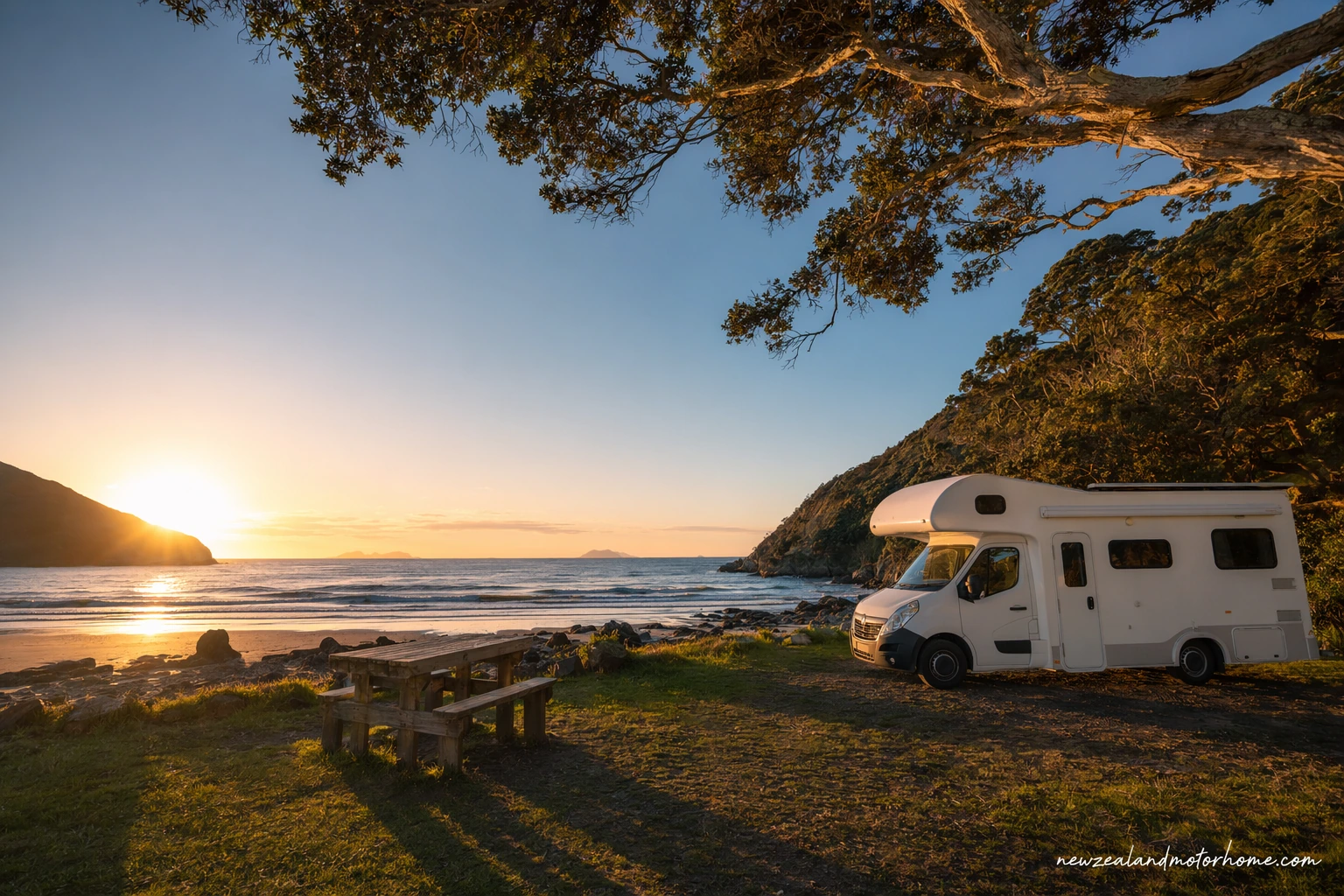
- Best with 3–5 nights
- Sealed but winding Tākaka Hill access
- Powered sites in main settlements
- Self-contained rules apply
- Return route via SH60
Golden Bay feels like the South Island has tucked one more coastline behind the hills: tidal flats at Collingwood, clear water around Pōhara and Tata Beach, limestone country near Tākaka, and the long wild edge of Wharariki. In a campervan, Golden Bay is rewarding because you can slow down, sleep close to the coast, and choose your beach according to the wind.
This golden bay campervan guide is written for travellers driving and sleeping in their own hired van or motorhome. You’ll find notes on the Tākaka Hill drive, where to park the van, powered and unpowered overnight options, dump stations, fresh water, LPG, and how to fit Golden Bay into a wider Nelson Tasman route.
Getting to Golden Bay by campervan
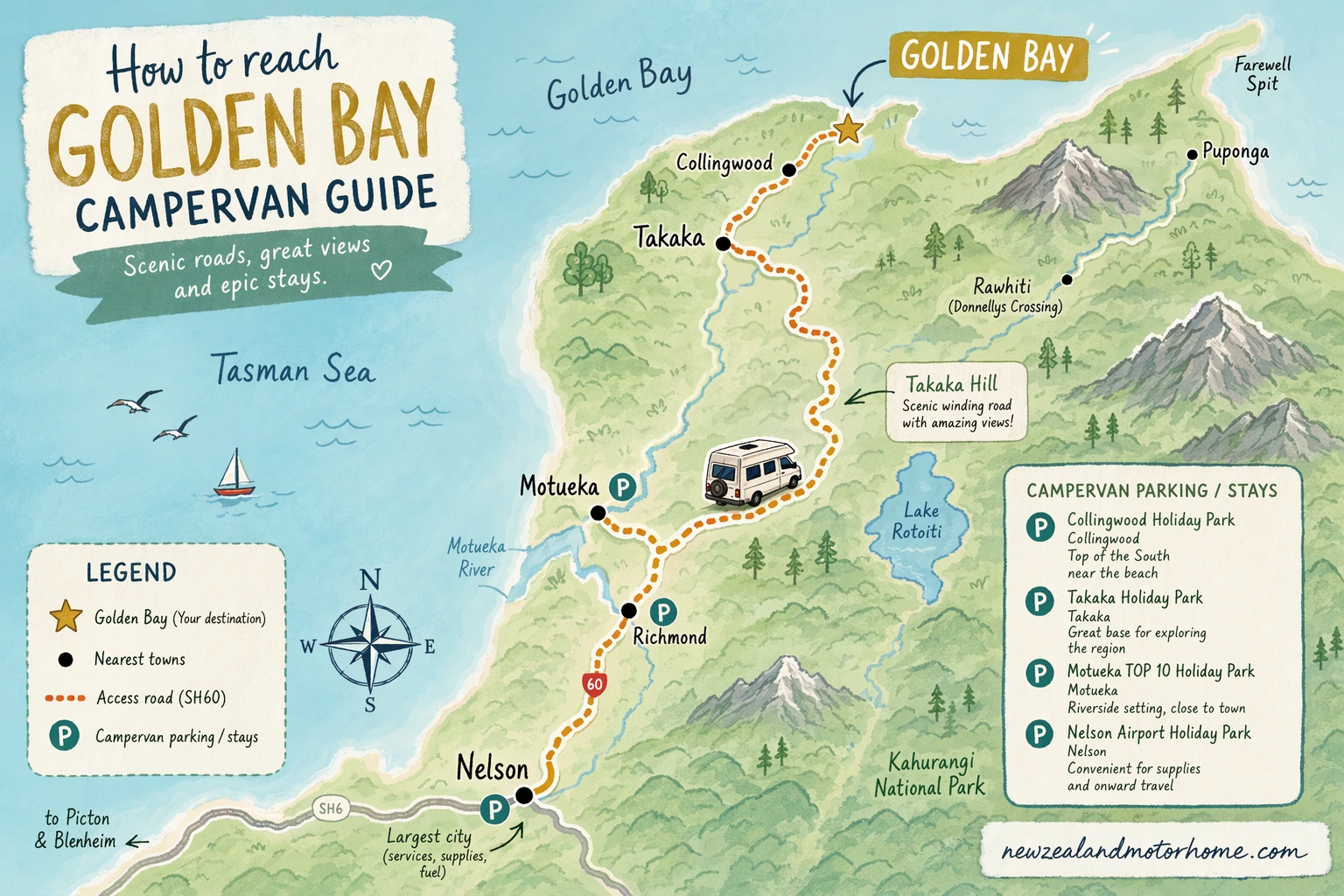
Most campervan Golden Bay trips come over State Highway 60 from Motueka, crossing Tākaka Hill before dropping into the valley. The road is sealed and used by motorhomes every day, but it is steep, twisting and slow in places. Take your time, use lower gears on the descent, and let local traffic pass where it is safe. If you have hired a larger six-berth motorhome, expect the hill to take longer than the map suggests.
Fuel and groceries are easiest before you go over the hill in Motueka, then again in Tākaka once you are in the bay. If your LPG bottle is low or your grey-water tank is getting close to full, sort it before pushing north towards Collingwood, Pakawau or the Farewell Spit end of the road.
- Best approach: Nelson or Motueka to Tākaka via SH60.
- Road feel: sealed, scenic, narrow and winding over Tākaka Hill.
- Van tip: secure cupboards and fridge doors before the hill; the bends find every loose mug.
- Weather note: heavy rain or low cloud can make the descent more tiring, especially in a high-sided motorhome.
Where to stay overnight in a van
Camping near Golden Bay ranges from full-service holiday parks to simple beachside DOC-style camps. Tākaka and Pōhara suit the first night if you want powered sites, showers, laundry and an easy reset after the hill. Collingwood, Pakawau and the northern coast feel quieter and work well if Farewell Spit or Wharariki Beach are your main goals.
Freedom camping is not a free-for-all in Golden Bay. Tasman District rules apply, and some beach reserves are day-use only or have tight self-contained vehicle conditions. Always check current signage, the council map or your camping app before you park up for the night. A self-containment certificate helps, but it does not override a no-camping sign.
- Powered sites: look around Tākaka, Pōhara, Collingwood and Pakawau for holiday park-style stays.
- Unpowered sites: beach and conservation-style campgrounds are good for quieter nights if your battery and water levels are healthy.
- Large motorhomes: book ahead in summer and mention your vehicle length when reserving.
- Late arrivals: avoid arriving after dark on narrow coastal access roads; it is much easier to line up a site in daylight.
Parking the van for beaches, walks and town stops
Tākaka is the practical town stop: groceries, cafés, fuel, and time to repack the van before heading back to the coast. Use signed public parking and avoid squeezing a long motorhome into small kerbside spaces on the main street. If you need to spread out for lunch, choose a proper parking area rather than blocking shopfronts or residential driveways.
Beach parking around Pōhara, Ligar Bay and Tata Beach is usually straightforward outside peak summer, but spaces fill quickly on hot afternoons. Treat most beach car parks as day parking unless overnight camping is clearly allowed. At Te Waikoropupū Springs, stay within the marked parking areas and remember the springs are a short walk, not a place to camp or fill water tanks.
- Pōhara and Tata Beach: good day stops, but check signs carefully before assuming overnight parking.
- Wharariki Beach: park in the signed car park and walk in; do not try to drive a campervan onto the sand.
- Farewell Spit: private vehicles are restricted; park as directed and join permitted access only.
- Town errands: combine rubbish, groceries, fuel and water jobs in Tākaka so the coastal days stay relaxed.
Water, dump stations, rubbish and LPG
Golden Bay is not the place to leave van chores until the last litre. Tākaka is the main service hub, with public and commercial facilities changing over time, and some holiday parks also provide dump stations or fresh-water access for guests. Use signed potable taps only; never assume a beach tap is drinking water or suitable for filling the van tank.
For motorhome Golden Bay travel, plan your waste and water around where you are sleeping. A powered holiday park night is useful after a few unpowered coastal nights: charge devices, top up fresh water, empty grey water, do laundry and reset the fridge. LPG bottle swaps and fuel are more reliable in the main settlements than at the far end of the bay.
- Dump before you roam: empty grey and toilet tanks before heading north or into smaller campgrounds.
- Carry cashless and backup options: some facilities may use apps, cards or guest-only access.
- Rubbish: take it back to proper bins or transfer stations; do not leave bags beside overflowing beach bins.
- Fresh water: fill only from taps marked potable, and be conservative during dry summer periods.
How many days to allow and a simple route shape
Two nights is enough for a taste of Golden Bay, but three to five nights suits a campervan much better. You can spend one night near Tākaka or Pōhara, one or two nights around Collingwood or Pakawau, and then return over Tākaka Hill without feeling rushed. If you are hiring a van from Nelson, this makes a compact loop with plenty of time outside the driver’s seat.
A simple route is Nelson or Motueka to Tākaka, then Pōhara and Tata Beach, north to Collingwood and Farewell Spit, with Wharariki Beach as a separate day stop before returning the same way. The road does not continue through to the West Coast, so every campervan Golden Bay itinerary has to come back over the hill.
If you want us to sanity-check drive times, overnight stops and whether your van size suits the roads you’ve chosen, you can use the talk-to-us step before locking in your route.
Seasonal notes for Golden Bay campervan travel
Summer brings warm swimming days, busy beach car parks and the greatest pressure on powered sites. Book the key nights early if you need electricity for a medical device, fridge confidence or easy battery charging. Shoulder seasons are excellent in a self-contained van: quieter roads, easier parking and still enough daylight for beaches and short walks.
Winter can be calm and beautiful, but nights are cooler and some campground facilities may be limited. Check opening dates before building an itinerary around a particular unpowered camp. On wet days, gravel access roads and grassy parking areas can become soft; keep the van on formed surfaces and avoid testing the traction of a heavy motorhome.
- Summer: book ahead, arrive early at beach car parks, and keep water topped up.
- Autumn: settled conditions and fewer vans make it a strong choice.
- Winter: check campground openings and allow extra warmth overnight.
- Spring: watch for changeable hill weather and windy coastal parking.
Keep planning
Common questions
Can I take a large motorhome over Tākaka Hill?
Yes, large motorhomes use SH60 over Tākaka Hill, but it is a slow, winding climb and descent. Use low gears downhill, pull over where safe to let traffic pass, and avoid driving it for the first time in darkness or heavy rain if you can.
Is freedom camping allowed in Golden Bay?
Only in permitted places and under the current Tasman District rules. You generally need a certified self-contained vehicle, but even then you must obey local signs and stay out of no-camping reserves and beach car parks where overnight stays are banned.
Where should I base myself for camping near Golden Bay beaches?
Pōhara and Tata Beach are handy for swimming and short coastal drives, while Collingwood and Pakawau are better for Farewell Spit and Wharariki Beach. Tākaka is less beachy but very practical for groceries, fuel, water and a powered-site reset.
Can I drive my campervan onto Farewell Spit or Wharariki Beach?
No. Farewell Spit has vehicle restrictions, and Wharariki is reached by parking in the signed car park and walking to the beach. Keep the van on formed roads and car parks; sand and heavy motorhomes are a bad mix.
How long should I allow for a Golden Bay campervan trip?
Allow at least two nights, but three to five nights gives you a much better rhythm. That lets you cross Tākaka Hill without rushing, spend time on both the Pōhara side and the Collingwood side, and still manage dump station and water stops sensibly.
Do I need to book powered sites in Golden Bay?
In summer and school holidays, yes, especially if you are travelling in a larger motorhome or need power every night. Outside peak periods you may have more flexibility, but it is still wise to check availability before committing to a long coastal drive late in the day.
Have a planner shape this for your dates
Send a short outline — your dates, party size, and the kind of trip you want. A planner replies with a vehicle recommendation, a paced route, and the realistic budget.