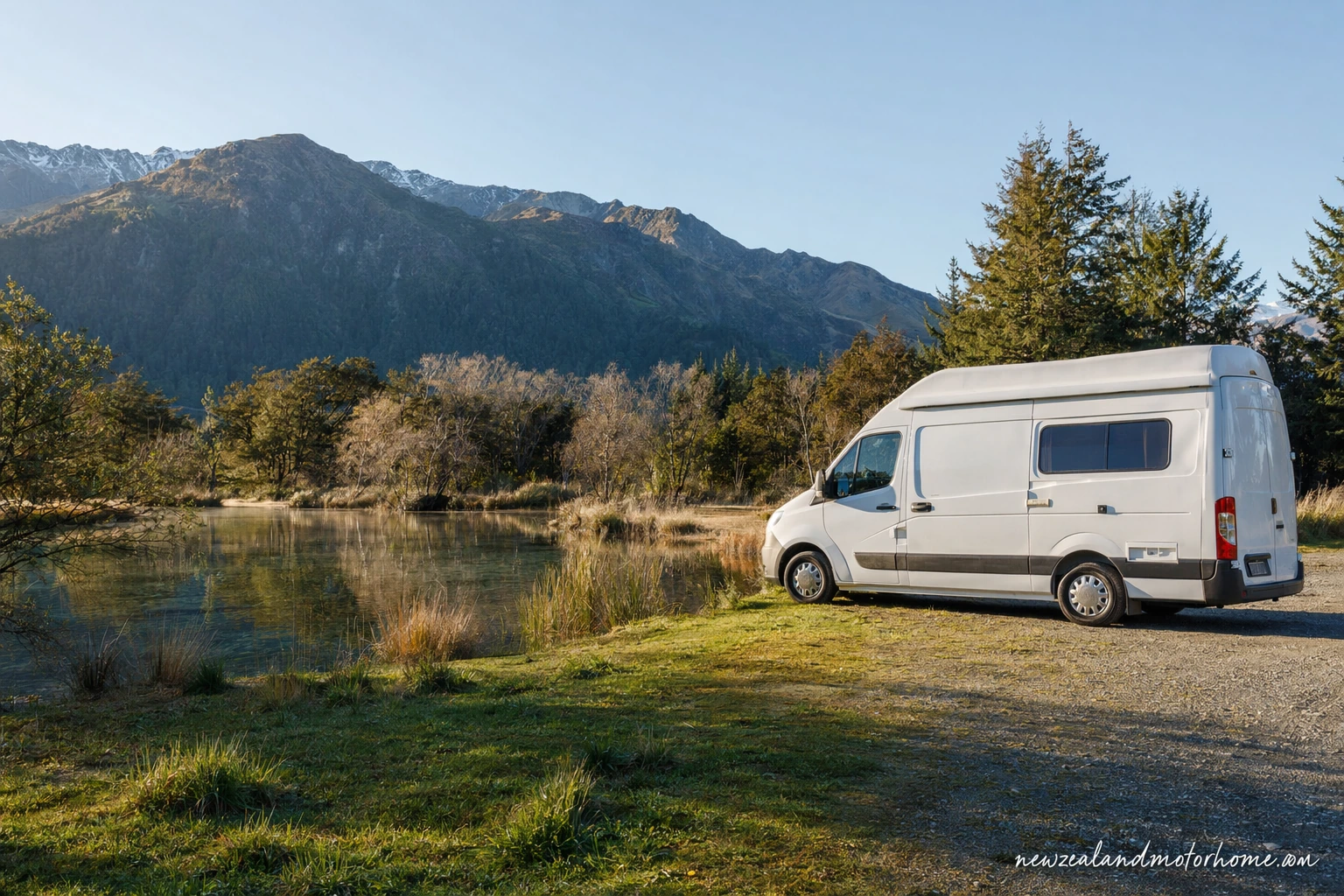
- Best as a 1-2 night stop
- Powered sites useful in winter
- Check freedom camping rules
- Lewis Pass weather can affect plans
- Book ahead for holidays
Hanmer Springs is one of those South Island stops that works beautifully in a campervan: easy village streets, forested hills close enough for a morning walk, and hot pools waiting after a day on the road. It sits just off State Highway 7, so it is a natural pause between Christchurch, the Lewis Pass, Nelson Lakes, Kaikōura and the West Coast.
This hanmer springs campervan guide is written for people driving and sleeping in their own hired van. You will find practical notes on getting there, where to park the van, how to think about powered and unpowered sites, what to check for dump stations and water, and how to fit Hanmer into a wider motorhome route without rushing it.
Getting to Hanmer Springs by campervan
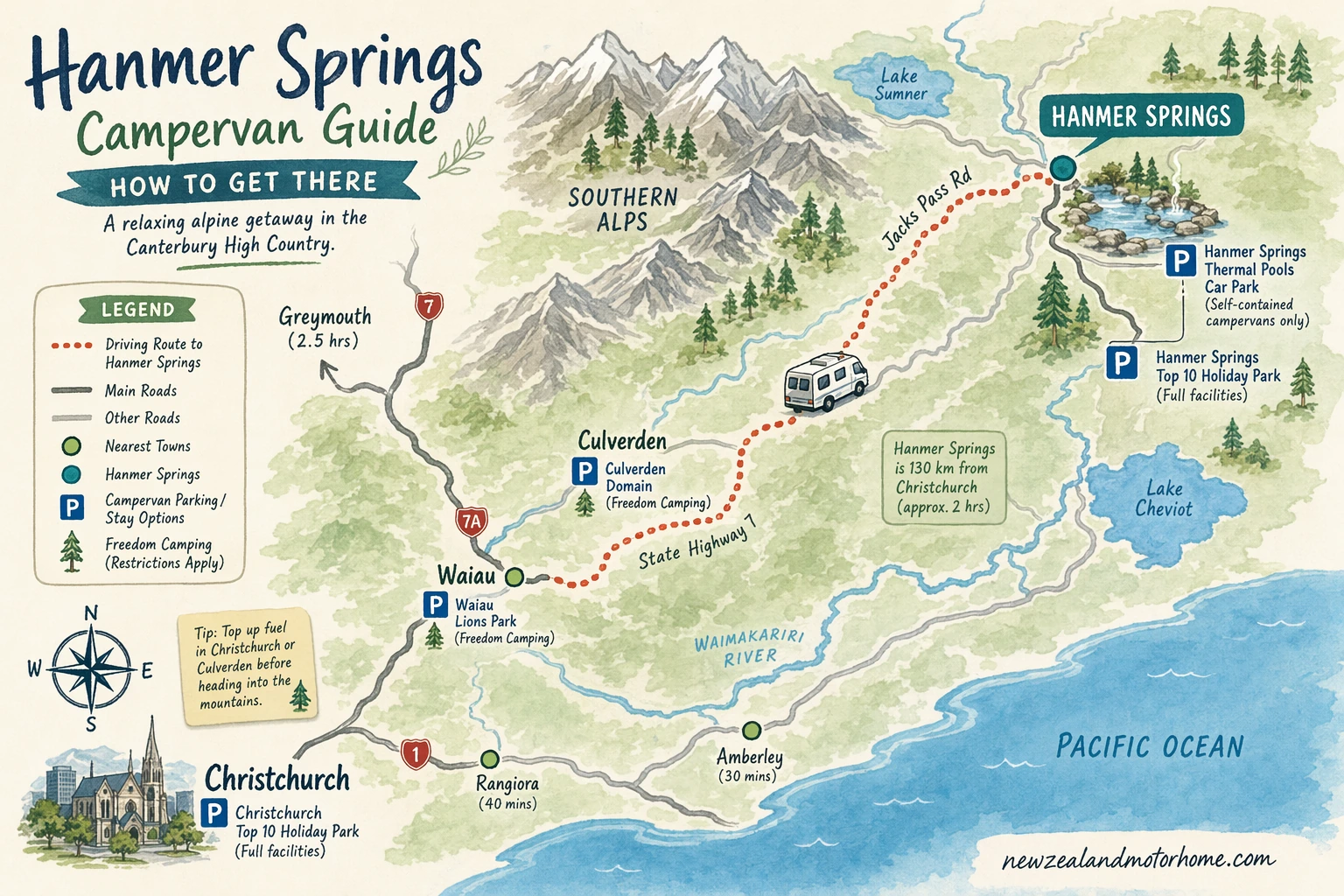
Most self-drive travellers reach Hanmer Springs from Christchurch by heading north through Waipara and Culverden, then turning off SH7 onto Hanmer Springs Road. The final approach is straightforward sealed driving, but it does feel more alpine than coastal: expect cooler temperatures, frosty mornings in winter, and occasional strong winds across open sections.
If you are arriving from the West Coast or Nelson Lakes, the Lewis Pass route is scenic but more demanding in a larger motorhome. Take your time on the bends, use pull-outs to let faster traffic pass, and avoid driving tired after a long day over the pass.
- From Christchurch: allow a comfortable half day with a supermarket or fuel stop before the smaller inland towns.
- From Lewis Pass: check winter road conditions, especially for ice, snow warnings and chain requirements.
- Van size note: long rear overhangs need care on steep driveways, forest car parks and tight village turns.
- Fuel and LPG: top up before you are low; do not assume every small inland stop will have LPG bottle swaps or fills.
Parking the van around the village and hot pools
Hanmer Springs village is compact, which is good news when you are in a campervan. For daytime exploring, look for signed public parking areas around the village centre and thermal pools, then walk the last few minutes rather than circling tight streets. In peak holiday periods, arrive early or later in the afternoon if you need a longer space for a motorhome.
Do not treat village day parking as an overnight stop unless signs specifically allow it. Local rules can change, and popular hot-pool towns tend to be closely managed because space is limited. If your van is tall, also watch for tree branches on quieter side streets and in shaded car parks near the forest edge.
- Park squarely within marked bays where possible; avoid overhanging footpaths or blocking visibility at corners.
- Use end spaces if your campervan has a bike rack or long rear step.
- Keep thermal-pool gear handy so you are not opening every locker in a busy car park.
- Move the van before dusk if you are booked into a campground outside the village centre.
Where to stay overnight in and near Hanmer Springs
For most visitors, the easiest overnight option is one of the established campgrounds or holiday parks in or near the village. These are the best fit if you want a powered site, hot showers, laundry, a kitchen block, and a simple walk or short drive to the pools. Book ahead for school holidays, long weekends and winter weekends when the hot pools are especially popular.
Camping near Hanmer Springs ranges from village-style holiday park sites to more basic camp-style stays on the edge of the forest. If you are travelling in a larger motorhome, ask about site length, turning space and whether the site is grass, gravel or sealed. Winter frost can make grass sites soft, so a level, firm pitch is worth requesting.
Freedom camping is not something to guess here. Hurunui District rules apply, and only certified self-contained vehicles may use permitted freedom camping areas where they exist. Check the current council map and on-site signage on the day you arrive, and have a paid campground backup if the permitted spaces are full or not suitable for your van.
- Powered site: useful in winter for heating, battery charging and drying towels after the pools.
- Unpowered site: fine for a short summer stay if your house battery and fridge are coping.
- Self-containment: carry proof of certification and use your onboard toilet rather than public facilities overnight.
- Dump station: confirm availability with your campground, or plan a verified dump point on your route before your tanks are near full.
Water, waste and van chores before you settle in
Hanmer is a good place to pause and reset the van, but it is still a small inland town, not a big service hub. Fill fresh water when you have a confirmed safe tap, empty grey and black water only at an approved dump station, and deal with rubbish through campground facilities or public bins intended for that use.
If you are coming in for two nights, it is worth arriving with groceries, LPG and fuel already sorted. There are supplies in the village, but choice can be narrower and opening hours may not match a late arrival. A tidy motorhome Hanmer Springs stop is much easier when the practical jobs are done before you want to soak in hot water.
- Empty the toilet cassette before heading into more remote country such as Lewis Pass or Molesworth-side roads.
- Keep a separate drinking-water hose and do not use dump-station rinse hoses for filling tanks.
- Top up the fresh tank before a cold night if your van heater uses water or you plan showers onboard.
- Check gas levels before cooking inside during wet or frosty weather.
What to do once the campervan is parked
The hot pools are the obvious draw, and they suit campervan travel well: park once, soak, then wander back to the van or your site without needing a big plan. Take a small day bag, jandals and dry layers, especially in winter when the walk back to the vehicle can feel brisk.
Hanmer Forest gives the place its slower rhythm. Conical Hill is a classic short walk with views over the village, while the wider forest tracks are good for stretching out after a drive. If you are carrying bikes on the back of the van, check track suitability and keep the vehicle locked and tidy at trailhead parking areas.
- Easy walk: village strolls, forest loops and Conical Hill when conditions are dry.
- Wet-day plan: hot pools, café time, laundry and a battery top-up on a powered site.
- Scenic drive caution: gravel or seasonal back roads may be excluded by campervan hire agreements, so check before heading beyond the sealed route.
- Family travel: choose a campground close enough that tired children are not walking far after an evening swim.
How Hanmer Springs fits a wider South Island route
Hanmer Springs works best as a one or two-night reset rather than a quick photo stop. It breaks up the drive between Christchurch and the Lewis Pass, and it also pairs well with a Kaikōura coast route if you want mountains, hot pools and sea in the same few days. In winter, adding a night here gives you flexibility if alpine road conditions slow the journey.
A simple campervan Hanmer Springs loop might run Christchurch to Hanmer, then over Lewis Pass towards the West Coast, or north towards Nelson Lakes. If you are unsure how many nights to allow, or whether your hired van is a good fit for your planned roads, send us your rough dates through talk to us and we can help shape a practical self-drive route.
- Short stop: one night if you mainly want the pools and a break from driving.
- Better pace: two nights for forest walks, van chores and a slower morning departure.
- Winter buffer: add flexibility around Lewis Pass and early-morning ice.
- Route pairing: Christchurch, Hanmer Springs, Lewis Pass, West Coast or Nelson Lakes all connect naturally.
Common questions
Can I freedom camp in Hanmer Springs in a campervan?
Only where current Hurunui District rules and signs allow it, and generally only in a certified self-contained vehicle. Do not assume village car parks or hot-pool parking areas are overnight spots; check the council map on the day and have a campground backup.
Do I need to book a powered site in Hanmer Springs?
In summer you may manage with an unpowered site for a short stay, but powered sites are very handy in Hanmer because evenings can be cool. In winter, a powered site helps with heating, battery charging and drying wet towels after the pools.
Is the road to Hanmer Springs suitable for larger motorhomes?
The main sealed route via SH7 and Hanmer Springs Road is suitable for normal hired campervans and motorhomes when driven carefully. Take extra care in winter, watch for ice, and avoid unsealed alpine or back-country roads unless your hire agreement clearly permits them.
Where should I empty waste tanks near Hanmer Springs?
Use an approved dump station only. The simplest option is to confirm facilities with your booked campground, or plan a verified dump point on your route before arriving or after leaving; never empty grey water or toilet waste into stormwater drains, toilets or the ground.
How many nights should I allow for Hanmer Springs by campervan?
One night works as a useful road-trip break, especially between Christchurch and Lewis Pass. Two nights feels more relaxed, giving you time for the hot pools, a forest walk, laundry, water top-ups and a slower start the next morning.
Have a planner shape this for your dates
Send a short outline — your dates, party size, and the kind of trip you want. A planner replies with a vehicle recommendation, a paced route, and the realistic budget.