- Best with 7-18+ days
- Powered sites recommended
- Self-contained van preferred
- Good in shoulder seasons
- Van size matched to route
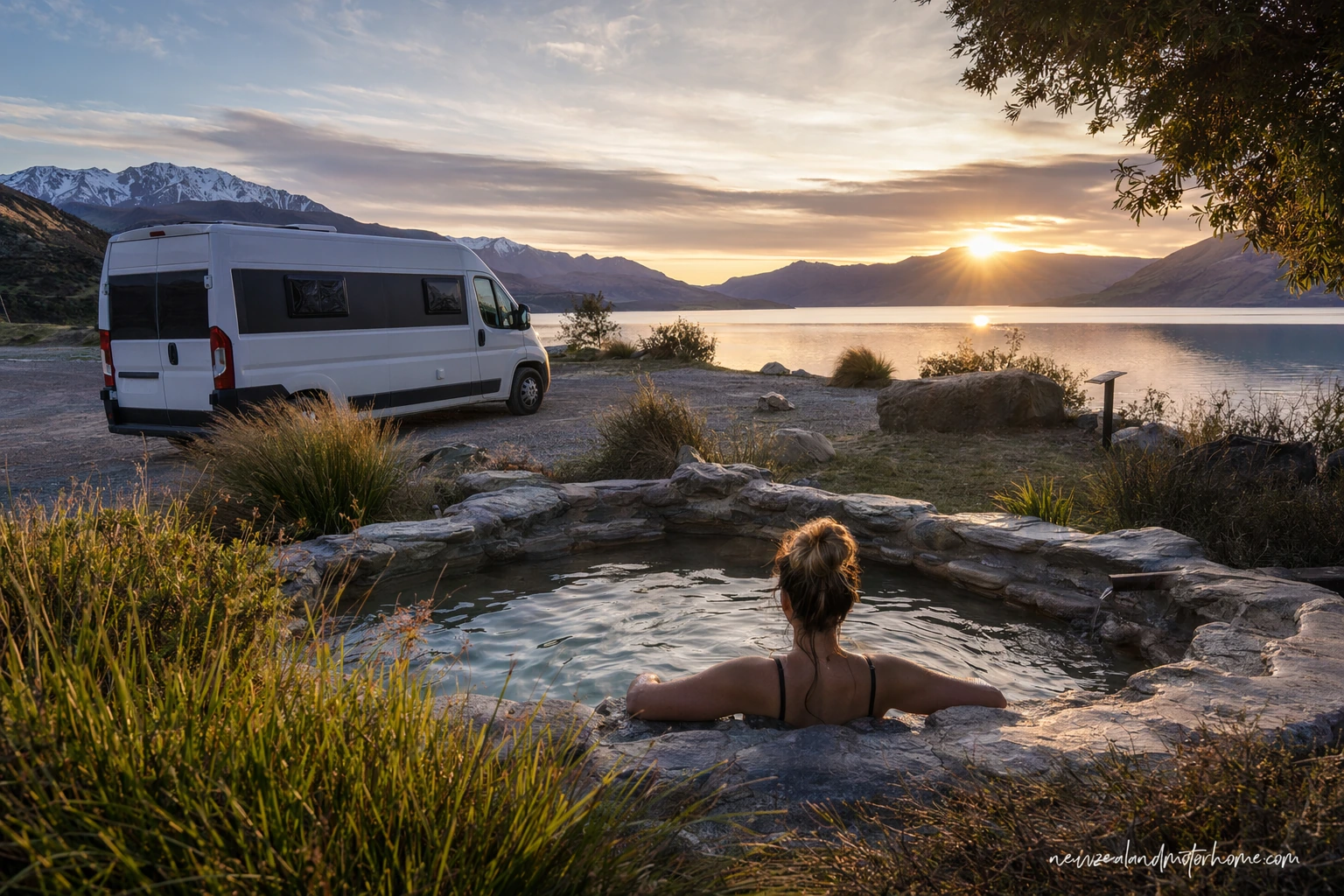
There is a particular pleasure in finishing a New Zealand driving day with steam rising from a hot pool and your campervan parked close enough that you can wander back for a simple dinner. This packaged self-drive holiday is built around that rhythm: short-to-middling drives, thermal stops worth planning around, and overnight places that work for a hired motorhome.
We shape the route around the van, not the other way round. That means thinking about powered sites after soak-and-swim days, where to top up fresh water before a quieter stop, which roads feel comfortable in a 6-berth, and when a self-contained van gives you useful flexibility without relying on freedom camping every night.
The shape of the hot pools route
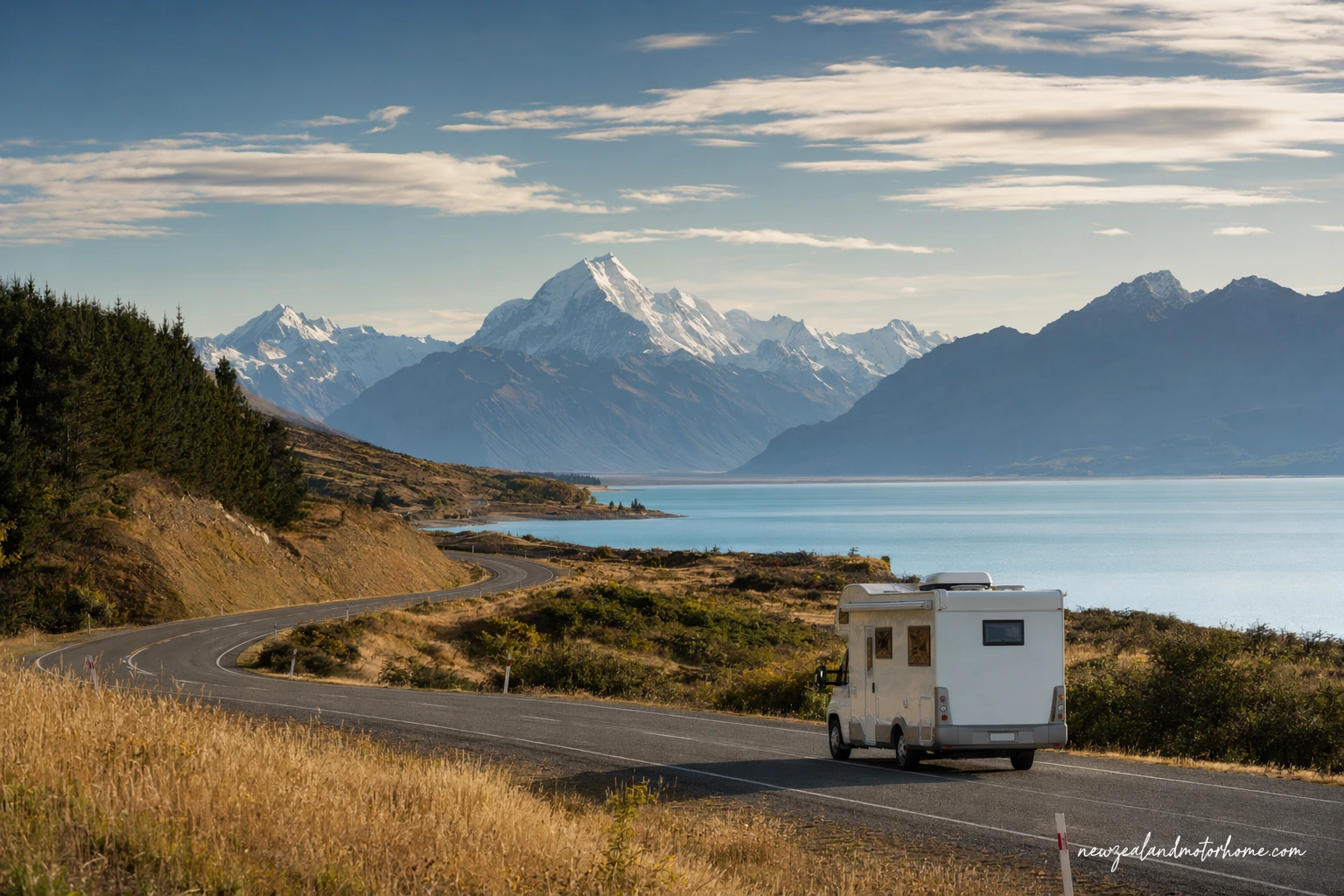
A classic new zealand hot pools campervan trip can be planned as a relaxed North Island loop, a South Island alpine soak route, or a longer two-island holiday if you have enough days. For most travellers, the best version is not a race between pools; it is a string of comfortable driving days with time to park the van, plug in, dry towels, and enjoy the place you have come for.
In the North Island, the route often leans into Rotorua, Taupō, Tokaanu and the central plateau, with optional coastal time if the season suits. In the South Island, the feel changes to mountain roads, lake stays and alpine pools around places such as Hanmer Springs, Mackenzie Country and Central Otago.
- Shorter package: 7 to 10 days on one island, with fewer one-night stops.
- Comfortable package: 12 to 16 days, allowing rest days and laundry nights at holiday parks.
- Two-island package: 18 days or more, with ferry timing and overnight stops planned around the van.
What the campervan package planning covers
The package planning starts with the vehicle: how many people are travelling, how much internal space you want on wet evenings, and whether you are comfortable with a longer motorhome on narrower thermal-country roads. A compact 2-berth is easy to park at busy pool car parks, while a larger 4- or 6-berth gives families more room for gear, damp swimwear and slower mornings.
We then build the trip around practical campervan needs. Hot-pool days often mean extra showers, wet towels and more power use, so powered sites are useful at regular intervals. We also plan dump station stops, fresh-water fills and LPG top-ups so you are not trying to solve van chores after dark.
- Van size matched to your sleeping layout, luggage and confidence on NZ roads.
- Holiday park nights placed where power, showers and laundry genuinely help.
- Freedom camping considered only where it is legal, suitable and sensible for your certified self-contained vehicle.
- Driving notes for passes, lake roads, town parking and pool car parks.
If you want us to shape the version that fits your dates and travel style, use the talk to us step and tell us who is travelling, your preferred island, and how much soaking versus sightseeing you want.
Overnight stops: powered sites, freedom camping and thermal towns
For this style of trip, a mix of holiday parks and carefully chosen quieter stops works best. Powered sites are especially helpful near major hot-pool towns because they give you easy access to dump stations, fresh water, camp kitchens and proper drying space. After an evening soak, being able to plug in the heater and make a cup of tea without watching the house battery is a small luxury.
Freedom camping can be part of the plan if your hired campervan is certified self-contained and the local rules allow it, but it is not something to assume around thermal attractions. Some districts have tight restrictions, and popular lakeside or riverside spots can fill early in summer. We plan these nights conservatively so you have a legal overnight option rather than a stressful late search.
- Near busy pools: book a holiday park or designated motorhome site early, especially school holidays and long weekends.
- Between pool towns: use practical stopovers with easy access, level parking and sensible morning exits.
- Every few nights: schedule dump station, rubbish, laundry and fresh-water time.
Road notes for hot spring country
Thermal routes are not always big, straight highways. You may meet winding lake roads, alpine passes, geothermal areas with sulphur smells, and tourist-town parking that gets tight by mid-morning. The trick in a campervan is to arrive early, use marked longer-vehicle spaces where provided, and avoid squeezing into small car parks that make turning around awkward.
In winter and shoulder seasons, we build in extra time for weather. South Island alpine roads can be icy in the morning, and central North Island routes can bring fog, rain or cold snaps even when the pool itself feels wonderfully warm. A later start after the road warms up is sometimes better than chasing a long itinerary.
- Check height clearance before entering covered parking or tight motel-style lanes near pools.
- Allow more stopping distance on wet roads, especially after dark when you are tired from soaking.
- Keep swim gear accessible so you are not unpacking the whole rear locker in a public car park.
- Refuel before remote stretches; do not assume every small settlement has LPG or diesel when you need it.
How we tailor the trip for your style of soaking
Some travellers want the big-name thermal towns, easy powered sites and plenty of restaurants within walking distance. Others prefer quieter valley pools, lake-edge nights and cooking beside the van. A good package can do either, but it needs a different pace and a different campsite pattern.
Families usually appreciate two-night stops, pools with easy changing facilities, and holiday parks where the van can stay put while everyone resets. Couples often like a smaller van, a few scenic unpowered nights, and occasional private-soak experiences fitted around the drive. If mobility, privacy, or driving confidence matters, we factor that into the overnight choices rather than leaving it to chance.
- Easy comfort: more powered sites, shorter drives and walkable pool access where possible.
- Scenic and quiet: more lake, river or reserve-style nights where legal for your vehicle.
- Family-friendly: fewer pack-up days, laundry built in, and pools chosen for practical facilities.
- Winter-warm: powered sites, conservative road timing and less reliance on remote camping.
Keep planning
Visiting hanmer springs thermal pools by campervan
Read onVisiting hot water beach by campervan
Read onPetrol stations new zealand road trip
Read onHoliday parks hanmer springs
Read onHanmer springs campervan guide
Read onNew zealand great walks campervan trip
Read onCommon questions
Do I need a self-contained campervan for a hot pools trip?
It is strongly recommended. A certified self-contained campervan gives you more legal overnight options and makes the route more flexible, but you still need to follow each district's freedom camping rules. We would not plan the whole holiday around freedom camping near popular hot pools.
Are hot-pool car parks suitable for larger motorhomes?
Some are easy, especially if you arrive early, but others are tight or busy during peak times. For a longer motorhome, we plan arrival times, nearby overnight stays and alternatives so you are not trying to reverse out of a crowded car park after dark.
How many days should we allow for a New Zealand hot pools campervan trip?
Allow at least 7 to 10 days for a one-island version, and 18 days or more if you want both islands without rushing. The best trips include two-night stops so towels, batteries and travellers all get a proper reset.
Should we book powered sites in advance?
Yes, for major thermal towns, school holidays, long weekends and winter weekends in alpine areas. Powered sites are useful on this route because you are often running heating, charging devices and drying swim gear after evening soaks.
Can we include winter hot pools in a campervan holiday?
Yes, winter can be excellent for hot pools, but the route needs more conservative planning. We favour powered sites, shorter driving days and road choices that allow for ice, snow warnings or late-morning starts in colder regions.
Have a planner shape this for your dates
Send a short outline — your dates, party size, and the kind of trip you want. A planner replies with a vehicle recommendation, a paced route, and the realistic budget.