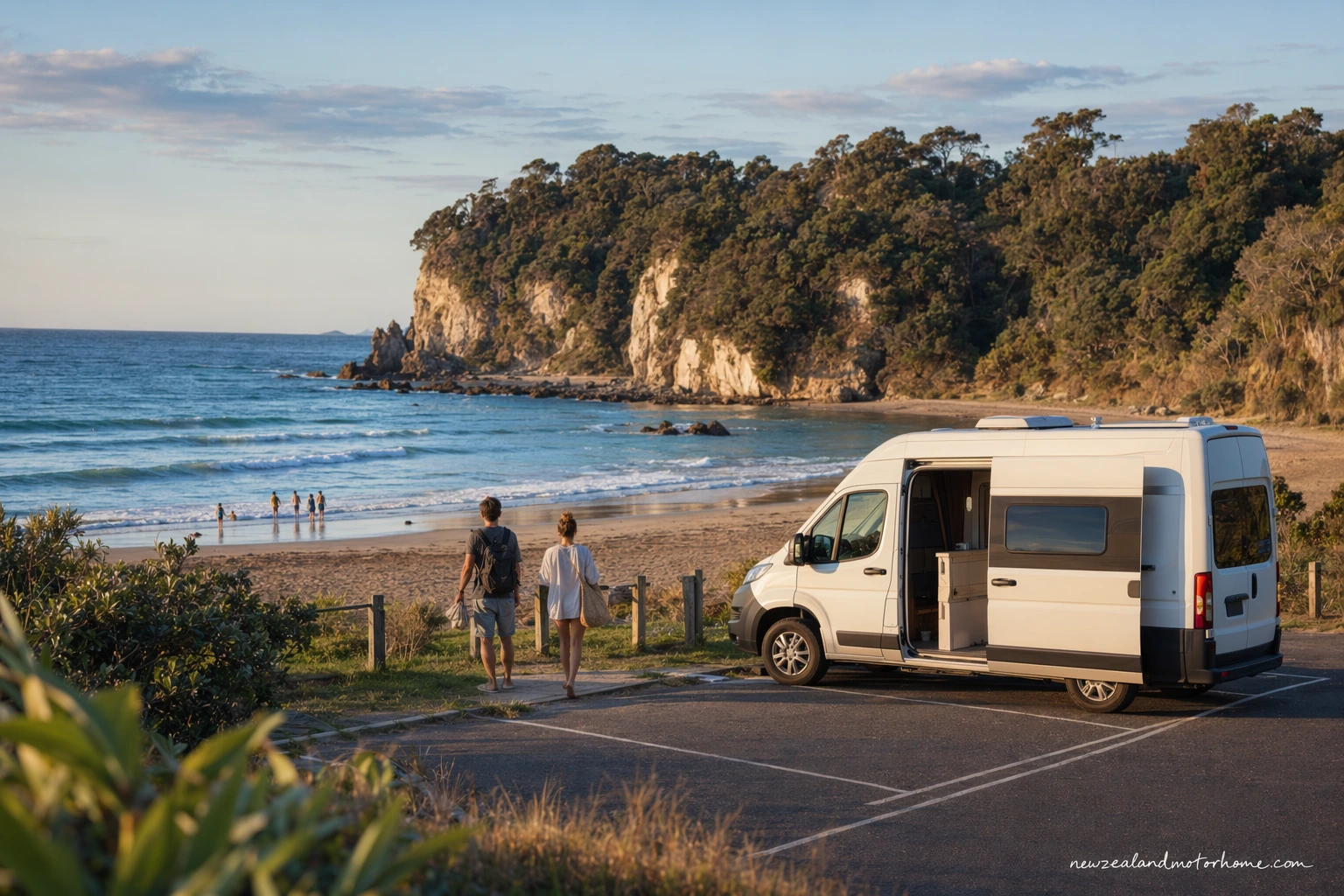
Visiting Hot Water Beach by campervan: parking, tides and overnight stops
- Best around low tide
- Allow 2–3 hours on site
- No beach car park overnights
- Nearby powered sites available
- Winding Coromandel roads
Hot Water Beach is one of those Coromandel stops that sounds simple until you arrive in a tall van at the same time as everyone else chasing low tide. The beach itself is easy to love: dig a shallow pool in the sand, let the geothermal water seep through, then cool off in the surf when it gets too warm.
For self-drive campervan travellers, the trick is timing and logistics. This guide covers hot water beach campervan parking, how to get to Hot Water Beach on the road, where to sleep nearby, and what to sort before you roll in — water, waste, LPG and a sensible overnight plan.
Where to park the van at Hot Water Beach
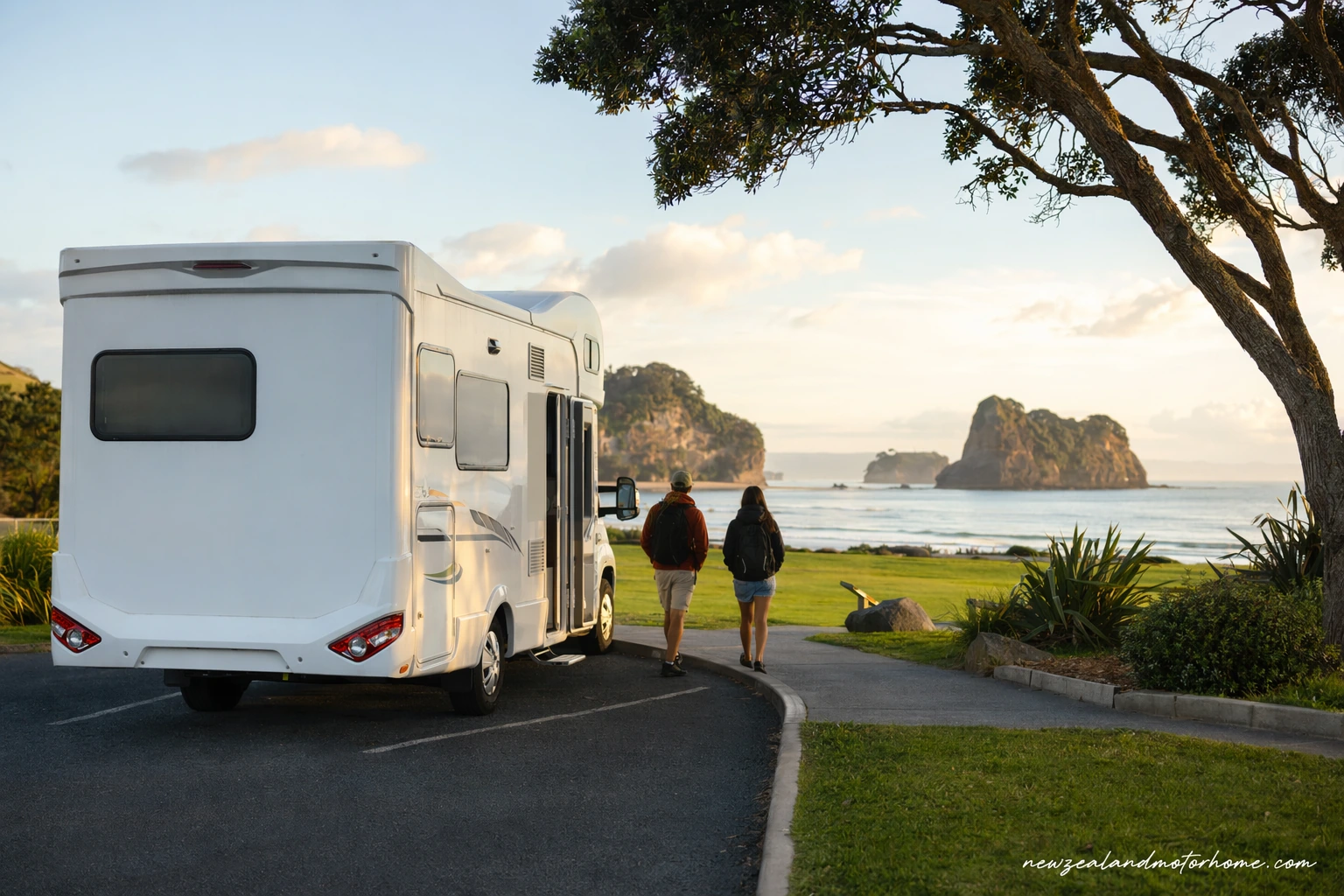
The main visitor parking is on the inland side of Hot Water Beach Road, within walking distance of the sand. It is open-air parking, but spaces can fill quickly around the low-tide window, especially in summer, school holidays and fine weekends. If you are driving a longer motorhome, arrive early rather than trying to squeeze into the last awkward corner.
Do not count on parking right beside the beach access with a large van. Use signed public parking, obey any time-limit or payment signs on the day, and avoid blocking driveways, shop parking, grass verges or turning areas. Overnight camping is not allowed in the beach car parks unless a sign specifically says otherwise.
- Best arrival plan: be parked at least 60–90 minutes before the ideal digging time.
- Large motorhomes: look for spaces where you can drive in and out without reversing into foot traffic.
- Height note: check entrance signs before committing; if in doubt, keep to the larger signed public car park rather than small private parking areas.
- After dark: carry a torch for the walk back to the van, and keep sand out of your grey-water system by rinsing feet before stepping inside.
Tide timing: the bit that makes or breaks the visit
The hot springs are accessible only around low tide, usually for about two hours either side, depending on sea conditions and sand levels. Outside that window the spring area is under water, so turning up at midday because it suits your driving day may mean you just get a normal beach walk.
Plan your campervan day around the tide first, then work backwards for driving, parking and meals. If low tide falls early morning, it can be worth staying nearby the night before. If it falls late afternoon, think carefully about where you will sleep afterwards, because beach car parks are not an overnight backup.
- Allow on site: 2–3 hours for parking, walking down, digging, soaking and getting cleaned up.
- Bring: towels, drinking water, jandals, sun protection and a small spade if you have one.
- Safety: test the water before sitting; some patches are extremely hot.
- Surf: this is an open beach with rips, so swim only when conditions are safe and between flags if lifeguards are operating.
How to get to Hot Water Beach by road
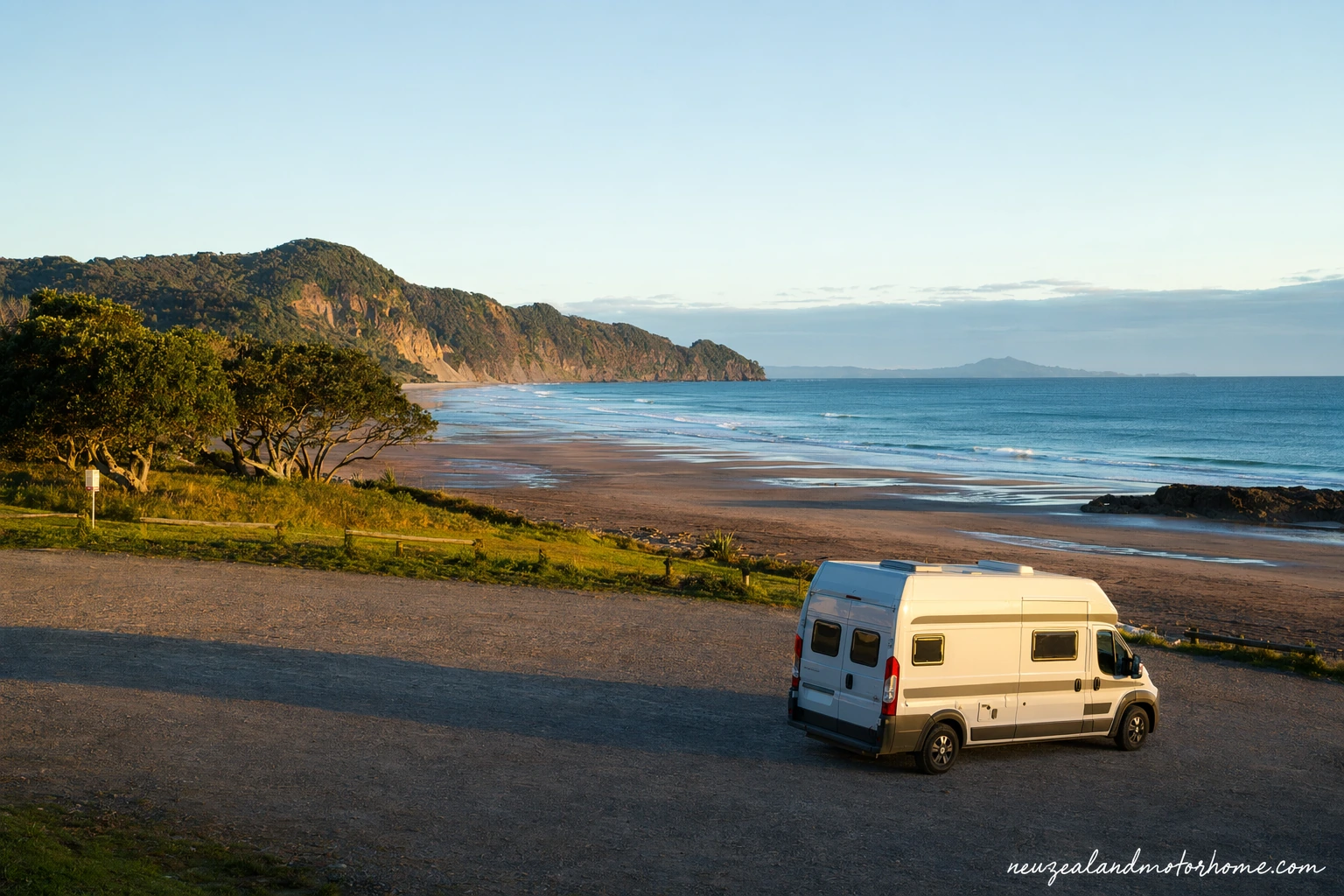
If you are wondering how to get to Hot Water Beach in a campervan, expect classic Coromandel driving: winding roads, narrow shoulders, changing speed limits and plenty of drivers who know the bends better than you do. The beach sits on the eastern side of the Coromandel Peninsula, reached via local roads off the SH25 network.
From Auckland or Hamilton, most campervan travellers come through the Kopu/Thames side and then across or around the peninsula, depending on their wider route and current road conditions. From Whitianga, Hahei and Cooks Beach, it is a shorter local drive, but still not one to rush in a high-sided van.
- Drive style: use lower gears on descents, let faster traffic pass safely, and avoid cutting corners on narrow bends.
- Fuel and groceries: top up in larger nearby towns such as Whitianga, Tairua or Thames rather than assuming beachside options will suit a motorhome day.
- Weather: heavy rain can bring slips, surface water and debris on Coromandel roads; check conditions before committing to a late drive.
- Navigation: follow main sealed routes rather than letting an app send you down minor side roads to save a minute or two.
Campsites near Hot Water Beach and overnight options
There are campsites near Hot Water Beach, including a local holiday park-style option close enough to make an early low tide realistic. Staying nearby is the easiest choice if you want to dig pools at sunrise, avoid a long pre-dawn drive, or travel with children who need a simple shower-and-bed routine afterwards.
Expect the closest options to book out in peak season. Powered sites suit travellers who want to run heating, charge devices or reset the van after a few nights off-grid. Unpowered sites can work well if your house battery and fridge are in good shape, but remember the Coromandel is not the place to rely on last-minute spaces during holidays.
Freedom camping rules on the Coromandel are strict and location-specific, even for certified self-contained vehicles. Do not assume you can sleep at the beach, in a beach access car park or beside a reserve just because you are self-contained; always check current council signage and designated areas before settling in.
Water, waste, LPG and van chores before you arrive
Hot Water Beach is not a place to arrive with a full toilet cassette, nearly empty fresh-water tank and no plan. Sort the practical campervan jobs in a service town or at your campground before you point the van towards the beach roads.
Holiday parks may provide fresh water and dump station access for guests, while public dump stations are generally found in larger nearby centres rather than at the beach itself. LPG refills and swaps are also easier in service towns, so check your cooking and heating supply before committing to a couple of quiet Coromandel nights.
- Fresh water: fill before arrival if you are cooking, showering or rinsing sandy gear in the van.
- Grey water: empty only at approved dump stations; beach drains and roadside pull-offs are not an option.
- Toilet cassette: deal with it before a one-night stop becomes two.
- LPG: top up before remote beach-hopping, especially outside summer.
If you want help fitting Hot Water Beach into a wider Coromandel loop with sensible overnight stops, you can use our plan-your-trip step and we will help shape the driving days around tide times rather than guesswork.
What to see nearby without overloading the day
Hot Water Beach pairs naturally with Hahei, Cathedral Cove, Cooks Beach, Shakespeare Cliff and Whitianga, but do not try to squeeze everything into one tide-chasing afternoon. Campervan travel on the Coromandel is better when you allow for slow roads, full car parks and time to actually enjoy the coast.
Cathedral Cove access arrangements and parking can change, and campervans are not always the easiest vehicles to position near busy trailheads. Check current access before you go, then decide whether to use a shuttle, walk from a suitable parking area, or leave it for a separate morning from a nearby campground.
- Easy add-on: Hahei for beach time, food and a wander if parking suits your van.
- Viewpoint stop: Shakespeare Cliff area, if your vehicle size and the road/parking conditions feel comfortable.
- Service base: Whitianga for groceries, fuel, laundry, dump station planning and a reset night.
- Quieter rhythm: stay two nights nearby and let the tide dictate one half-day only.
Keep planning
New zealand hot pools campervan trip
Read onHoliday parks ninety mile beach
Read onCampervan dump stations new zealand
Read onNinety mile beach campervan guide
Read onVisiting zealandia wellington by campervan
Read onVisiting weta workshop wellington by campervan
Read onCommon questions
Can I freedom camp at Hot Water Beach in a certified self-contained campervan?
Do not assume so. The beach car parks and nearby reserves are controlled by local rules and signage, and many areas are not overnight camping spots even if your van is certified self-contained. Check the current council map and on-site signs before choosing where to sleep.
Is Hot Water Beach suitable for a large motorhome?
Yes, many larger vans visit, but parking is the limiting factor. Arrive early around low tide, use signed public parking, and avoid tight private parking areas where turning around could be difficult.
How long should I allow when visiting Hot Water Beach by campervan?
Allow at least 2–3 hours on site, plus extra driving time on Coromandel roads. If low tide is early or late, staying at a nearby campsite is much easier than trying to drive in and out in the dark.
Are there dump stations or fresh-water fills at Hot Water Beach?
Do not rely on finding full motorhome services at the beach. Use your campground facilities if you are staying locally, or sort fresh water, grey water and toilet waste in larger nearby towns before arriving.
What is the best time to dig a hot pool?
The spring area is usually workable for about two hours either side of low tide. Check the tide table for Hot Water Beach specifically, then build your driving and parking plan around that window.
Can I visit Hot Water Beach and Cathedral Cove on the same day?
You can, but it depends on tide time, weather, access arrangements and parking. In a campervan, it is often more relaxed to give Hot Water Beach its own half-day and visit Hahei or Cathedral Cove from a nearby overnight stop.
Have a planner shape this for your dates
Send a short outline — your dates, party size, and the kind of trip you want. A planner replies with a vehicle recommendation, a paced route, and the realistic budget.