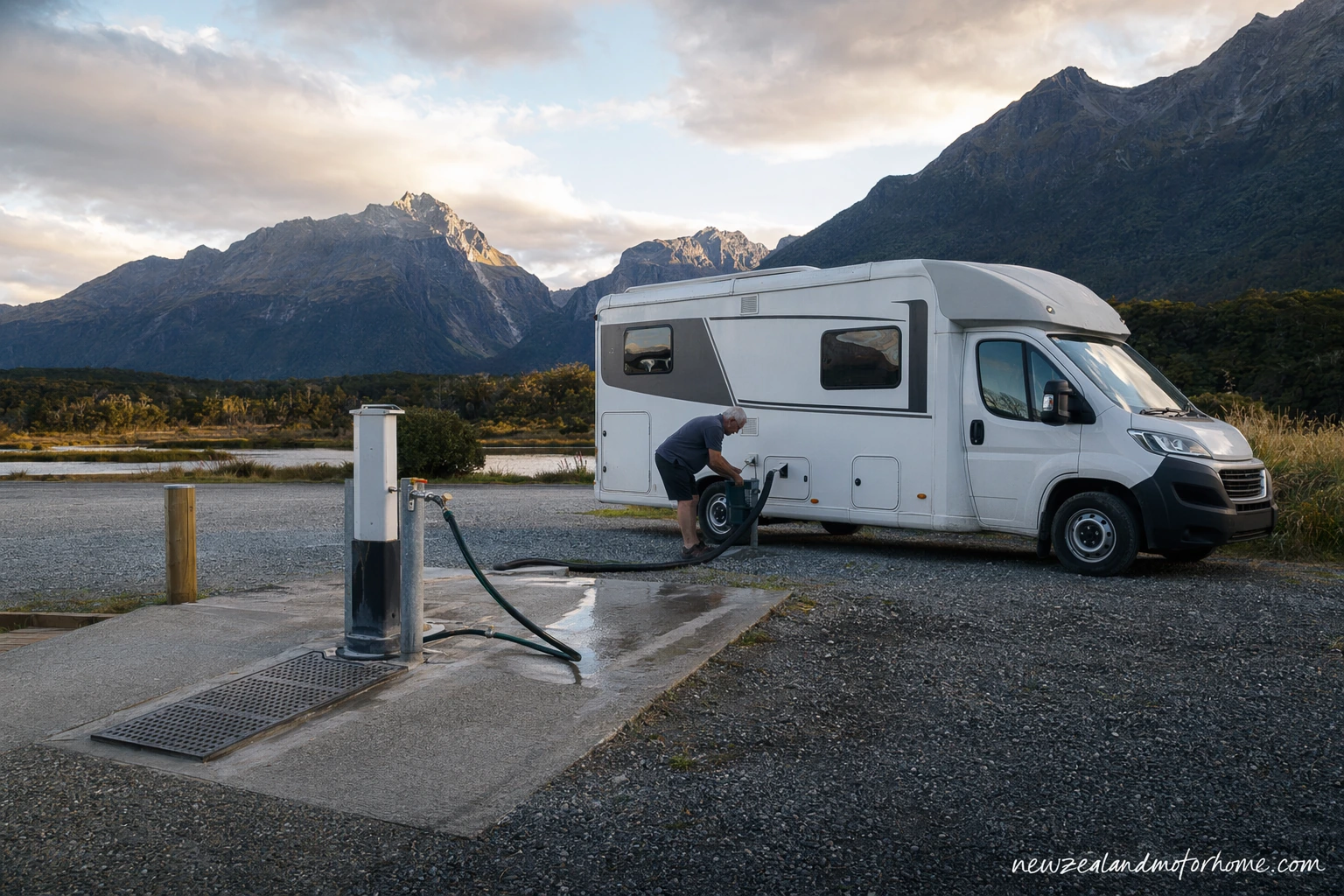
- Service every few days
- Potable taps only for fresh water
- Check self-containment rules
- Plan ahead in remote areas
- Powered sites help reset the van
Managing waste and fresh water is part of the rhythm of a New Zealand campervan trip. It is not glamorous, but it is simple once you know where to stop, which tap is safe to use, and how often your hired motorhome needs emptying.
This guide is written for self-drive travellers sleeping in their own van: how to use campervan dump stations New Zealand wide, how to plan around remote stretches, and how to keep your grey water, toilet cassette, drinking water and LPG sorted without wasting a day hunting for services.
What a dump station is, and what goes where
A dump station is a purpose-built point for emptying your campervan toilet waste and grey water. You will usually find a ground-level drain, a rinse hose, and sometimes a separate drinking-water tap nearby. Do not assume every tap is potable; the rinse hose at the waste point is for cleaning the cassette area only.
Most hire campervans in New Zealand use either a removable toilet cassette or a fixed black-water tank, plus a separate grey-water tank for sink and shower water. Before you leave the depot, ask where the valves, caps and tank gauges are, and check that your fresh-water hose is separate from any waste rinse gear.
- Park the van close enough that the waste hose reaches without stretching across a traffic lane.
- Put on gloves before removing cassette caps or grey-water fittings.
- Empty toilet waste first, rinse the cassette, then drain grey water if the layout allows.
- Never tip toilet waste into a public toilet, stormwater drain, roadside ditch or campground garden.
How often to empty and refill on a self-drive route
How often you need a dump station depends on your van size, number of travellers, shower habits and whether you stay at powered holiday parks or unpowered freedom camping spots. A couple in a compact camper may need to think about the cassette every second day, while a larger motorhome with bigger tanks can usually stretch longer if showers are taken at campgrounds.
The easiest routine is to service the van before you need to. Empty waste and top up fresh water when you leave a holiday park, before a long scenic drive, or before heading to a Department of Conservation-style basic campsite with no dump point.
- Plan a service stop before remote areas such as the Catlins, East Cape, West Coast side roads, the Mackenzie Basin or the Milford Road.
- Use powered sites when you want to recharge house batteries, run appliances and reset the van properly.
- Use unpowered sites only when your fresh water, waste capacity and battery level are already comfortable.
- Keep an eye on tank gauges, but trust what you can see and smell as well — gauges are not always perfect on a moving van.
Where to find campervan services without stress
Dump stations can be found at many holiday parks, council service areas, some fuel stops, marinas and town edges where there is room for a longer vehicle to turn. Some are free, some are for paying guests, and some require a small access charge or token. Check the local rules before you pull in, especially at private campgrounds.
When you are mapping a day, look beyond the dot on the map. A central-town dump point might be fine for a small van but awkward for a long motorhome in summer traffic. Favour places with a clear approach, a turning bay, and room to queue without blocking locals.
If you would rather have the service stops built into a wider route, our talk-to-us planning step is a good place to mention your van size, travel season and how often you prefer holiday parks over freedom camping.
- Download maps before driving into valleys or coastal areas with patchy coverage.
- Check height clearance if a dump point sits behind a service station canopy or campground barrier.
- Avoid arriving just on dark if you are unfamiliar with the access lane.
- Have a backup dump station in mind during public holidays, when queues and closures are more common.
Fresh water, drinking taps and LPG top-ups
Fresh-water filling is often close to a dump station, but it should be treated as a separate job. Use only taps marked as drinking water or potable water, and keep your clean hose and fittings away from the waste drain. If a town has a boil-water notice or a seasonal restriction, follow the local advice rather than relying on habit.
For LPG, many motorhomes use a bottle in an exterior locker, while some larger vehicles have a fixed gas system. Refill or swap arrangements vary by van and by location, so confirm the correct bottle type and fitting with the hire depot before you drive off. Do not wait until a cold South Island evening to discover the bottle is low.
- Carry a dedicated drinking-water hose and a simple tap adaptor if supplied with the van.
- Fill slowly so the tank can vent properly and does not splash back.
- Top up fresh water before staying at basic unpowered sites.
- Check LPG before heading into alpine or rural areas where refill points are further apart.
Freedom camping rules and self-containment
New Zealand freedom camping rules are local and can change from one district to the next. Having a toilet in the van does not automatically mean you can overnight anywhere. Your campervan needs the correct self-containment certification for the site you are using, and you must follow any council signs, app listings and on-site notices.
Newer self-containment requirements have tightened around toilets and certification, so check the displayed warrant and paperwork on your hire vehicle before relying on freedom camping. If a site says certified self-contained only, expect that to include managing all toilet and grey-water waste inside the vehicle until you reach a proper dump station.
- Read signs at the actual car park, not just the listing you saved earlier.
- Do not drain grey water onto grass, gravel or roadside pull-offs.
- Use holiday parks when you need showers, laundry, a powered site or an easy dump-and-fill reset.
- Leave early and quietly from small coastal reserves where locals share the space.
Good dump-station etiquette for NZ roads
A good dump-station stop is quick, clean and considerate. In busy summer towns there may be two or three vans waiting, so prepare before you reach the drain: gloves ready, cassette unlocked, hose accessible, and passengers clear of the work area.
Road layout matters too. On narrow highways, do not stop with your rear overhanging the lane while you decide whether to turn in. If you miss the entrance, carry on to a safe turning point rather than reversing a long motorhome across traffic.
- Leave the drain area cleaner than you found it.
- Use only the hose provided for rinsing waste equipment, not your fresh-water hose.
- Close every cap, hatch and valve before driving away.
- Let faster local traffic pass once you are back on the road, especially after a slow service stop in a larger van.
Common questions
Do all New Zealand campgrounds have dump stations?
No. Many holiday parks do, but small basic campsites and some scenic overnight areas may not. Check before you book or arrive, especially if you are relying on an unpowered site with limited facilities.
Can I fill drinking water at the same place I empty the toilet cassette?
Sometimes, but only if there is a separate tap marked for drinking or potable water. Never use the dump-station rinse hose for fresh water, and keep your clean hose away from the waste drain area.
How do I know if my campervan is self-contained?
Your hire van should display current self-containment certification and the depot should explain what it covers. Check this before you leave, because freedom camping sites can require certified self-contained vehicles and local councils do enforce the rules.
Is it OK to empty grey water beside the road if it is only sink water?
No. Grey water still contains food scraps, soap and waste residue, and it should go into an approved dump station. Draining it onto land or into stormwater is poor practice and can breach local rules.
Should I dump and fill before driving remote roads?
Yes, it is a smart habit. Before longer stretches such as remote coast roads, alpine routes or areas with few towns, empty waste, top up fresh water, check LPG and make sure the van battery is healthy.
Have a planner shape this for your dates
Send a short outline — your dates, party size, and the kind of trip you want. A planner replies with a vehicle recommendation, a paced route, and the realistic budget.