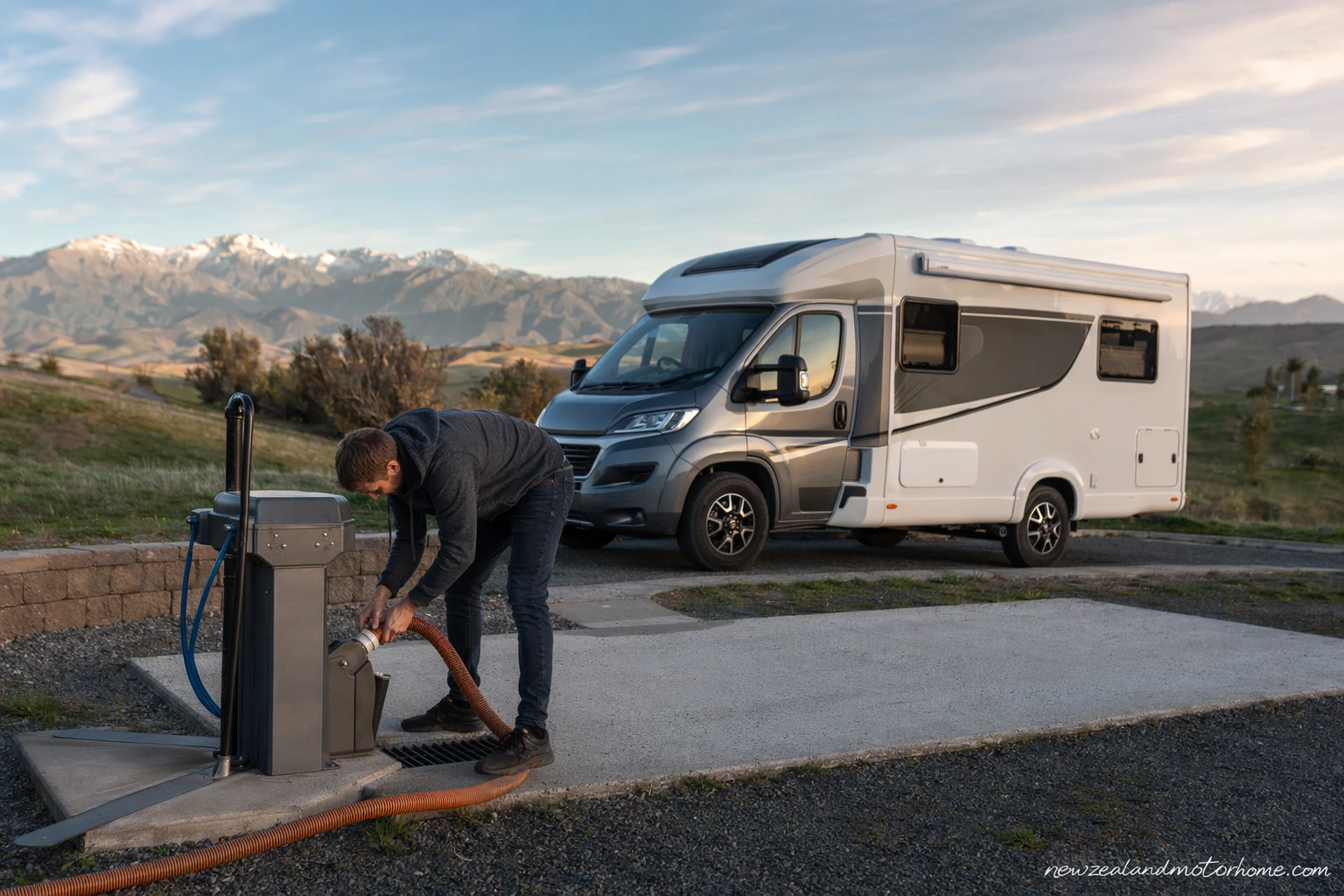
- Use approved dump points only
- Keep rinse and drinking hoses separate
- Plan every 2–3 days
- Check access for longer motorhomes
- Dumping does not mean overnight parking
Emptying the toilet cassette and grey-water tank is one of those quiet little jobs that makes a self-drive campervan trip work. Public campervan dump stations New Zealand-wide range from simple roadside pull-ins to well-marked facilities beside holiday parks, service stations, marinas and council reserves.
This guide is for travellers living in their hired van: where to look for dump points, how to use them without making a mess, what to check before you park a longer motorhome, and how to bundle the job with fresh-water fills, LPG swaps, rubbish, groceries and an overnight stop.
What a public dump station is for
A public dump station is a designated place to empty wastewater from your campervan or motorhome. In New Zealand that usually means your toilet cassette, black-water holding tank if fitted, and grey water from the sink and shower. It is not a general drain, and it is never a place to tip food scraps, wipes, oil or rubbish.
Most public sites have a ground-level dump point with a hinged lid, a rinse hose, and sometimes a separate fresh-water tap. Treat the rinse hose as non-drinking water unless it is clearly labelled otherwise. Keep your drinking-water hose separate in the van, with its own fittings and caps.
- Use the dump point only for toilet waste and grey water.
- Do not wash dishes, boots or fish gear at the dump grate.
- Never connect the dump-station rinse hose to your fresh-water tank.
- Leave the area clean enough for the next campervan to pull in straight after you.
Where to find dump stations on the road
The easiest rhythm is to check for dump stations before you need one. Many are on council land near recreation reserves, transfer stations, boat ramps, public toilets or visitor facilities. Others sit inside holiday parks or beside fuel stops; some are free to use, while others may be for guests or customers only, so read the sign before you unroll hoses.
When you are planning a drive day, search around the town where you expect to stop for groceries or fuel rather than waiting until evening. Small towns on touring routes often have a practical cluster: supermarket parking nearby, public toilets, a water tap, and a dump point on the edge of town where a motorhome can turn around.
- Check council camping pages and local signs when you enter a district.
- Look near holiday parks if you also need a powered site, laundry or showers.
- Use fuel and LPG stops as a chance to ask where the nearest public facility is.
- Keep a backup dump point in mind on long rural legs, especially on the West Coast, East Cape and parts of the Far North.
How to empty the cassette and grey water cleanly
Park the van so the service side is close to the dump point without blocking the lane. Put the handbrake on, keep children and bare feet away from the area, and work slowly. Wind can make the job unpleasant, so open the cassette away from your body and do not rush the pour.
For a toilet cassette, carry it level, remove the cap only at the dump point, press the air button if your cassette has one, and rinse with the dump-station hose. For a fixed grey-water outlet, connect your own wastewater hose if needed and make sure it reaches the grate without spilling across the concrete or gravel.
- Wear disposable or washable gloves kept in your van service kit.
- Empty toilet waste first, then grey water if the layout allows.
- Rinse the cassette and replace the cap before walking back through the campsite or car park.
- Use only toilet chemicals that are accepted by your rental operator and appropriate for NZ wastewater systems.
- Wash your hands afterwards, even if you used gloves.
Timing your dump stops with water, LPG and overnight sites
A good campervan day often starts or ends with the service loop: dump waste, fill fresh water, top up fuel, check LPG, then park up for the night. If you are staying at a holiday park, ask on arrival where the dump station is and whether the fresh-water tap is suitable for drinking. Powered sites are useful if you need to recharge house batteries after several unpowered nights, while an unpowered site may be enough if you are already topped up and travelling light.
Freedom camping adds a little more responsibility. Even with a certified self-contained vehicle, you still need to empty tanks at approved dump stations and follow local council rules for where you can sleep. Do not assume a public dump station means overnight parking is allowed beside it; the signs for waste disposal and camping are separate.
If you would like help linking practical stops into a realistic driving route, mention your van size, toilet type and preferred site style when you talk to us. It makes a big difference to whether a day feels easy or like a hunt for services after dark.
Van size, access and road-side common sense
Some public dump stations were built with compact campervans in mind, not every 7-metre motorhome with bikes on the back. Before you commit to a narrow driveway, check the turn-in, overhead branches, kerbs, bollards and whether another vehicle can get past while you are servicing the van. If it looks tight, park safely nearby and walk in to inspect first.
On New Zealand roads, dump stops often sit just off state highways or in small-town service areas. Indicate early, watch for vehicles behind you, and avoid stopping half on the road shoulder while you look at a map. In busy summer towns, it is kinder to dump early in the morning or mid-afternoon rather than during the checkout rush at holiday parks.
- Know your van height before entering covered service bays or tree-lined reserves.
- Allow extra swing room if your motorhome has a long rear overhang.
- Do not queue across footpaths, cycle lanes or fuel-station entrances.
- If a dump station is blocked, dirty or out of order, move on to your backup rather than improvising.
Rules and etiquette for self-contained travel
New Zealand’s self-containment requirements are about keeping wastewater contained until it can be disposed of properly. Your hired campervan should have the correct certification for the way you intend to camp, but certification does not remove the need to use public dump stations, respect no-camping areas, and keep grey water off the ground.
Good dump-station etiquette is simple: wait your turn, be quick without being careless, and leave no trace of the job. If a facility is damaged or overflowing, do not use it. Report it to the council or site operator if the sign gives instructions, then head to the next approved place.
- Only empty tanks into an approved dump point.
- Keep valves closed until hoses are in position.
- Take rubbish and wipes away with you.
- Use drinking-water taps only for fresh-water filling, never for cassette rinsing.
- Respect any posted hours, access limits or customer-only conditions.
Common questions
How often should I use a dump station in a campervan?
It depends on tank size, number of people and how much you use the onboard shower and toilet. Many couples plan a dump and fresh-water stop every two to three days, sooner if freedom camping or travelling with children.
Can I empty grey water onto the ground if it is only sink water?
No. Grey water still contains food residue, soap and bacteria, and it should go into an approved dump station. Keeping it contained is part of travelling responsibly in a self-contained campervan.
Are public dump stations in New Zealand always free?
Not always. Some council dump stations are free, while others may require a small fee, key, token, or be limited to holiday park guests or customers. Read the sign on site before using it.
Can I fill my fresh-water tank at the same place?
Sometimes, but only if there is a separate tap clearly marked as drinking water. Never use the rinse hose from the dump point for your fresh tank, and keep your own clean hose stored separately in the van.
What if the dump station is full, blocked or overflowing?
Do not use it and do not try to empty waste nearby. Close up the cassette or tank valve, find your backup dump station, and report the problem if the site signage gives council or operator instructions.
Do I need a certified self-contained campervan to use public dump stations?
No, dump stations are for disposing of wastewater from suitable campervans and motorhomes, but self-containment certification matters for where you are allowed to freedom camp. Your rental operator should explain your vehicle’s certification and tank setup before you leave.
Have a planner shape this for your dates
Send a short outline — your dates, party size, and the kind of trip you want. A planner replies with a vehicle recommendation, a paced route, and the realistic budget.