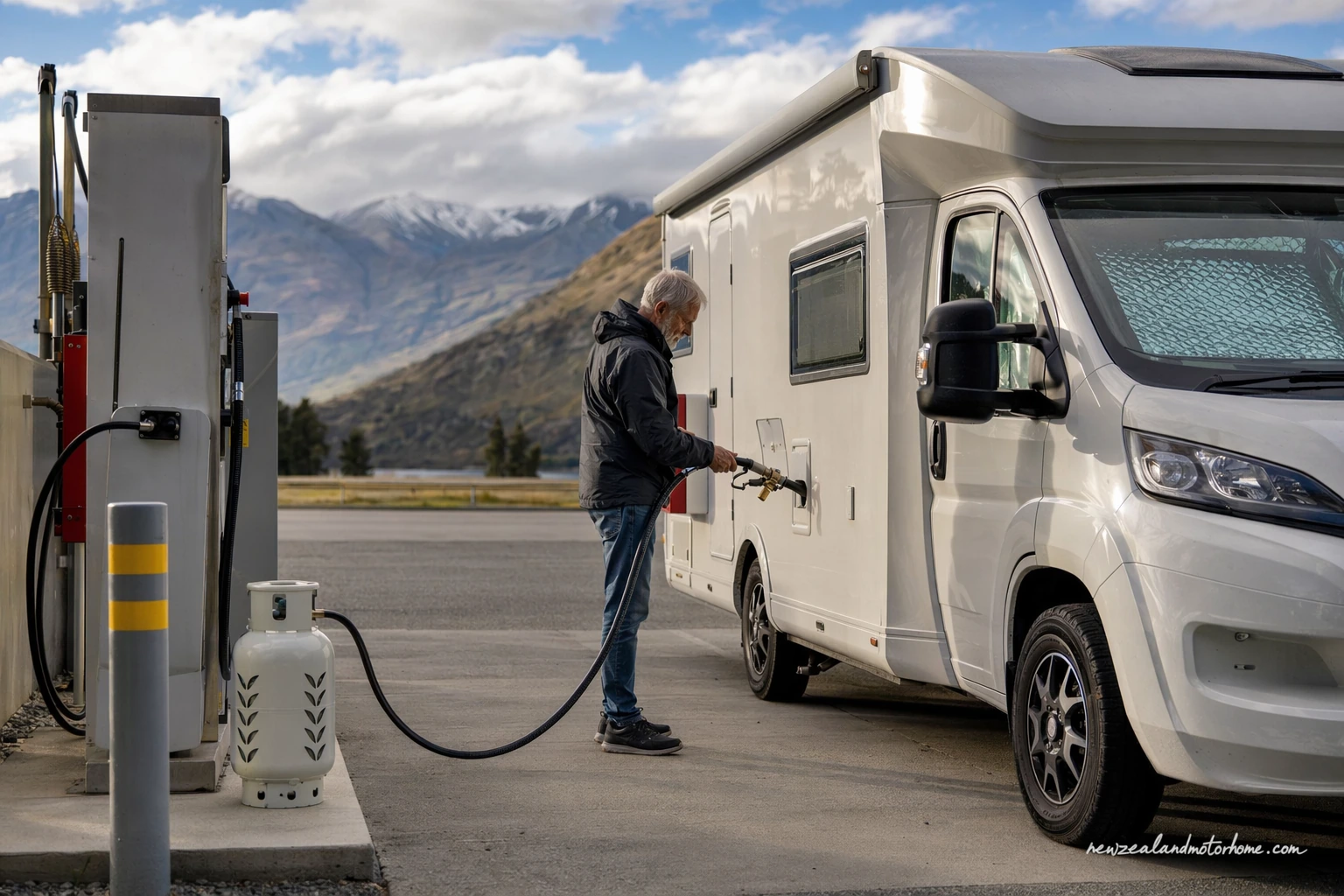
- Refill before remote roads
- Check bottle type at pickup
- Powered sites can save LPG
- Turn gas off before driving
- Pair LPG with dump and water stops
Running out of gas in a campervan is rarely dramatic, but it is inconvenient: no hob, no hot shower in many vans, and sometimes no fridge if you are away from a powered site. In New Zealand, LPG is easy enough to manage once you know where refills usually happen and how to fit them around your overnight stops.
This guide is written for self-drive campervan and motorhome travellers carrying their own LPG bottles or using a fitted gas system. You’ll find practical notes on refill points, bottle swaps, forecourt parking, safety checks, ferries, remote-road planning, and how to pair LPG stops with dump stations, fresh water and powered sites.
How LPG works in most hired campervans
Most New Zealand campervans and motorhomes use LPG for cooking, and many also use it for hot water, space heating or a three-way fridge when you are not plugged into 240V. The gas is usually stored in a removable cylinder in an outside locker, although some larger motorhomes have a fixed tank that needs a compatible filling point.
Before you leave the depot, open the locker and check what you actually have. It is worth knowing whether your van is set up for a bottle swap, a refill, or a fixed-tank fill, because not every LPG stop can do all three.
- Ask where the isolation valve is and how to turn it off before driving.
- Check whether the bottle is full, partly full, or supplied as part of an exchange system.
- Look at the cylinder test date; expired or damaged bottles should not be refilled.
- Confirm whether your fridge and hot water can run on electric when you book a powered site.
Where to find LPG refill stations on the road
LPG refill stations in New Zealand are most common in towns and larger service centres, especially near main highways, holiday areas and industrial edges of town. You may also find bottle-swap cages at service stations, hardware stores, some rural stores and a few holiday parks, but a swap cage is not the same as a refill pump.
For a long or tall motorhome, choose stops where you can enter, pause and exit without reversing across traffic. If you are not buying fuel, park clear of the petrol and diesel bowsers first, then walk in and ask where they want the van positioned for LPG.
- Refill before remote stretches such as parts of the West Coast, East Cape, the Catlins and inland high-country routes.
- Use town stops to combine LPG with groceries, fresh-water fills and a dump station visit.
- Do not assume every service station has LPG, even if it looks large from the road.
- If your van is over about 7 metres, avoid tight forecourts at peak commuting times.
Refill, swap or fixed tank: what to ask for
A refill means your own cylinder is filled by weight or volume by an authorised attendant. A swap means you exchange your empty approved bottle for a full one of the same type. Fixed tanks are different again and may need an LPG pump set up for vehicle or motorhome use, with the right connector and safe access to the fill point.
If you are in a hired campervan, follow the hire company’s instructions rather than improvising. Some operators prefer swaps because it keeps the bottle certification simple; others expect you to refill the supplied cylinder and return it with a usable amount of gas.
- Take the van keys with you and make sure appliances are off before any fill.
- Tell the attendant it is for a campervan cylinder or motorhome tank, not a BBQ bottle if the setup is different.
- Do not try to fill a portable cylinder from an autogas pump yourself.
- Keep the gas locker clear so the attendant can see the bottle, hose and securing strap.
Planning LPG around campsites, dump stations and water
Gas lasts much longer when you treat it as part of your whole campervan rhythm. On a powered site, you may be able to run the fridge, kettle, heater or hot water on electricity, which saves LPG for nights on DOC-style unpowered sites or legal freedom camping areas.
A good road-day loop is simple: dump grey and toilet waste, fill fresh water, top up groceries, then handle LPG before you head to your overnight stop. If you would like help building those logistics into a route rather than guessing town by town, you can use our plan-your-trip step and tell us your van size and travel season.
- Book a powered site if your bottle is low and the next refill option is uncertain.
- Do the dump station before the LPG stop if the dump point is on the easier side of town.
- Fill fresh water after dumping, not before, so you are not carrying extra weight through tight streets.
- Arrive at remote freedom camping spots with enough LPG for dinner, breakfast and a cold night.
Safety notes for driving, ferries and overnight stops
LPG is safe when the system is used properly, but it deserves a quick routine. Turn the bottle off before driving, keep the locker ventilated, and never sleep with an unflued portable gas cooker running inside the van. If you smell gas, turn everything off, ventilate the van and do not light a flame or operate switches until it has cleared and been checked.
Ferry crossings and some tunnels, depots or enclosed parking areas have their own requirements around gas being turned off. Before boarding an inter-island ferry, expect to shut off the LPG cylinder and follow crew instructions for campervans and motorhomes.
- Secure the cylinder upright and strapped in its locker before leaving the forecourt.
- Keep LPG locker vents free of towels, chairs and levelling blocks.
- Do not use the hob while driving or while parked at a fuel forecourt.
- At windy coastal camps, cook with the built-in hob inside the ventilated van rather than a loose outdoor cooker in a gust.
Common questions
How often will I need to refill LPG in a campervan?
Can I swap my campervan LPG bottle instead of refilling it?
Are LPG refill stations easy to find in rural New Zealand?
Can I use LPG at a freedom camping spot?
Do I need to turn LPG off on the Cook Strait ferry?
Have a planner shape this for your dates
Send a short outline — your dates, party size, and the kind of trip you want. A planner replies with a vehicle recommendation, a paced route, and the realistic budget.