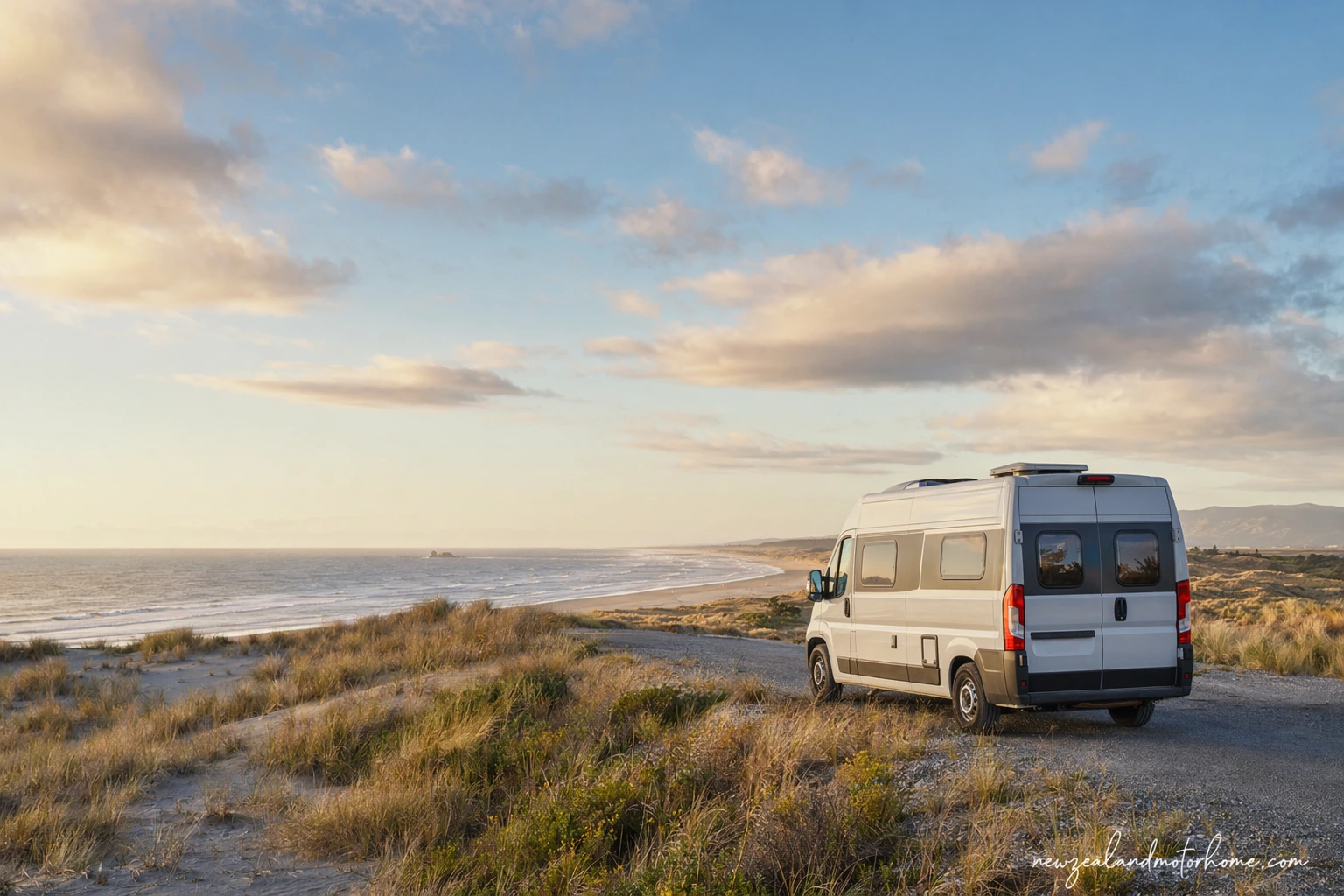
- Best as part of a Far North loop
- Do not drive hired vans on the beach
- Kaitaia is the main service stop
- Allow 1-3 nights
- Check self-containment rules locally
Ninety Mile Beach is one of those places that looks simple on a map and needs a bit of van-specific planning in real life. The sand runs along the western edge of the Far North, with big skies, dune country, surf, and long gaps between services once you leave Kaitaia and Awanui.
This ninety mile beach campervan guide is written for travellers sleeping in their own hired van, not just passing through in a car. You’ll find practical notes on sealed-road access, where to park the campervan, where to stay overnight, and how to fold the beach into a Cape Reinga or Northland loop without risking your motorhome on the sand.
Getting there by campervan without taking the sand road
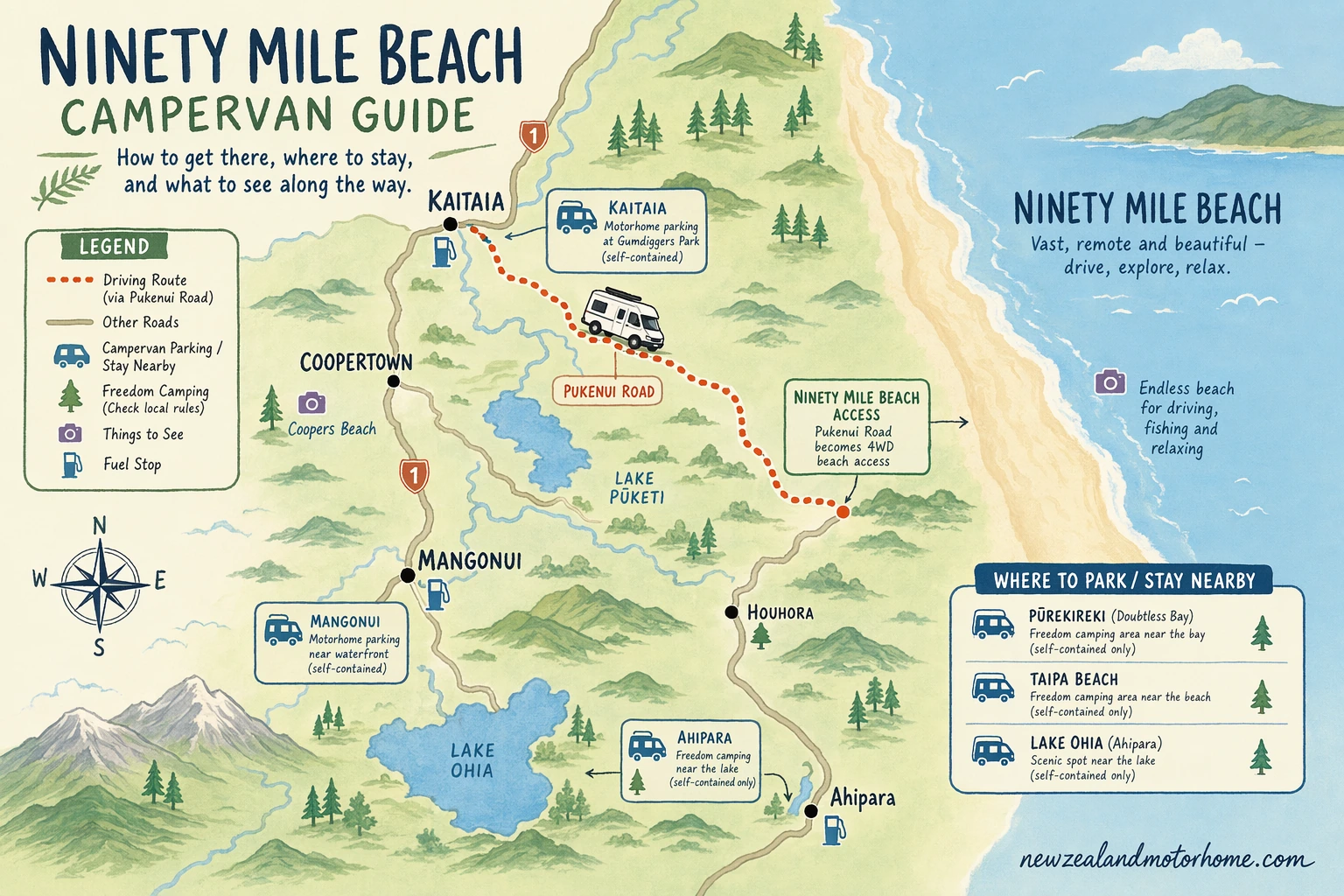
The main service town for a campervan Ninety Mile Beach stop is Kaitaia, with Awanui just to the north where the Cape Reinga road begins. From there, stay on sealed public roads and use signed beach access points for parking and walking, rather than treating the beach itself as your driving route.
Ninety Mile Beach is sometimes described as a road, but that does not make it suitable for a hired campervan or motorhome. Tides, soft sand, salt water, hidden washouts and recovery costs make it a poor choice for any heavy vehicle, and many hire agreements specifically exclude beach driving.
- Best approach: drive via Kaitaia and Awanui, then choose a sealed or firm access point for a look, walk or sunset stop.
- Ahipara end: good for the southern end of the beach, surf views and easier town access.
- Waipapakauri area: a handy mid-beach access point, but still park off the sand where signed and permitted.
- Te Paki dunes: visit by road and park in the designated area; do not drive a motorhome down the stream or onto the beach.
Parking the van at lookouts, dunes and beach access points
Parking around Ninety Mile Beach is mostly informal, coastal and weather-exposed. In a larger motorhome, arrive earlier in the day when there is room to turn around, and avoid narrow sandy verges that look firm until the rear wheels sink in.
At Ahipara, use formed public parking close to the foreshore and be considerate of residents, boat trailers and beach traffic. At Te Paki, the dunes car park is the sensible place to leave the van before walking to the sandboarding area or taking in the scale of the dune field.
- Keep all wheels on formed gravel, sealed surfaces or clearly marked parking areas.
- Check for local no-camping and no-overnight-parking signs before settling in.
- Fold mirrors on narrow coastal roads and allow space for stock trucks, locals and tour buses.
- Do not park below the high-tide line, even for a quick photo.
If the forecast is blowing hard from the west, expect salt spray and wind-borne sand. Close roof vents before leaving the van and rinse windscreens, mirrors and bikes when you next reach fresh water.
Where to stay overnight near Ninety Mile Beach
For camping near Ninety Mile Beach, you will usually choose between commercial holiday parks, council-permitted freedom camping areas, and Department of Conservation-style campsites elsewhere in the Far North. The exact rules can change, so check current signage and local bylaws on the day you arrive, especially if you are relying on certified self-containment.
Ahipara is the most convenient overnight base if you want the southern end of the beach at sunset and a short run back to Kaitaia for supplies. Further north, Houhora Harbour, Rarawa, Tapotupotu and other Far North stops can work better if you are combining Ninety Mile Beach with Cape Reinga and the east-coast bays.
- Powered sites: choose a holiday park if you need mains power, laundry, hot showers or a settled night after a long drive.
- Unpowered sites: useful for self-contained vans that still want a legal, designated place to sleep.
- Freedom camping: only use areas where it is permitted for your vehicle type, and display current self-containment certification if required.
- Wind note: west-coast sites can be exposed; park nose into the wind where practical and secure awnings before dark.
Water, dump stations, LPG and supplies
Kaitaia is the practical reset point before and after a motorhome Ninety Mile Beach detour. Treat it as your place to top up groceries, fuel, fresh water and gas, and to empty waste before heading further north where services thin out quickly.
Public dump stations and fresh-water points in the Far North should always be checked against current council listings, your camping app, or the signage at the site itself. Do not assume a beach access road or small settlement will have a legal dump point, potable water or rubbish facilities.
- Empty grey and black water in Kaitaia or another confirmed dump station before remote overnight stops.
- Carry drinking water for at least one extra day in case a tap is non-potable or unavailable.
- Refill or swap LPG before leaving the main town corridor if you cook and heat water with gas.
- Pack rubbish out; wind can pull lightweight waste from open bins and scatter it through dunes.
If you would rather have these service stops built into a wider Northland driving plan, you can talk to us before you lock in your route.
How Ninety Mile Beach fits a wider Far North route
Ninety Mile Beach works best as part of a two-coast Far North loop rather than a single out-and-back dash. Many campervan travellers head north from the Bay of Islands or Hokianga, pause around Kaitaia and Ahipara, then continue to Cape Reinga before returning down the east coast through white-sand bays and quieter harbours.
Allow more time than the map suggests. Northland roads are scenic but not fast: expect bends, one-lane bridges, local traffic, roadworks and the occasional gravel section to a campsite or beach car park. A tall or long motorhome is fine on the main sealed roads, but it needs patient driving and sensible pull-offs.
- One-night taste: Kaitaia or Ahipara overnight, sunset at the beach, then Cape Reinga the next day.
- Two to three nights: add Te Paki dunes, Cape Reinga, Tapotupotu or another northern campsite.
- Longer loop: combine Hokianga, Ninety Mile Beach, Cape Reinga, Doubtless Bay and the Bay of Islands.
- Driving rhythm: keep daily distances modest so you can arrive at campsites before dark.
Common questions
Can I drive a hired campervan on Ninety Mile Beach?
In almost every case, no. Even though the beach is sometimes spoken about as a road, it is not suitable for a hired campervan or motorhome, and hire agreements commonly exclude beach driving. Use sealed roads and park at access points instead.
Where is the best place to base a campervan for Ninety Mile Beach?
Ahipara is the easiest base for the southern end of the beach and sunset views, with Kaitaia nearby for supplies and services. If you are continuing to Cape Reinga, consider staying further north after your beach visit so you are not backtracking too much.
Is freedom camping allowed near Ninety Mile Beach?
Only in places where local rules allow it, and usually only if your van meets the required self-containment standard. Check current Far North District signage and camping apps on arrival, as restrictions can change by location and season.
Are there dump stations and fresh-water fills nearby?
Kaitaia is the main service stop to plan around, with the best chance of dump station access, potable water, fuel and LPG. Confirm the exact dump point before you arrive and do not rely on beach access areas for waste or water facilities.
How many days should I allow for Ninety Mile Beach in a motorhome?
One night gives you a simple taste if you are travelling through Kaitaia or Ahipara. Two or three nights is better if you want to include Te Paki dunes, Cape Reinga and a legal overnight stop further north without rushing the roads.
Have a planner shape this for your dates
Send a short outline — your dates, party size, and the kind of trip you want. A planner replies with a vehicle recommendation, a paced route, and the realistic budget.