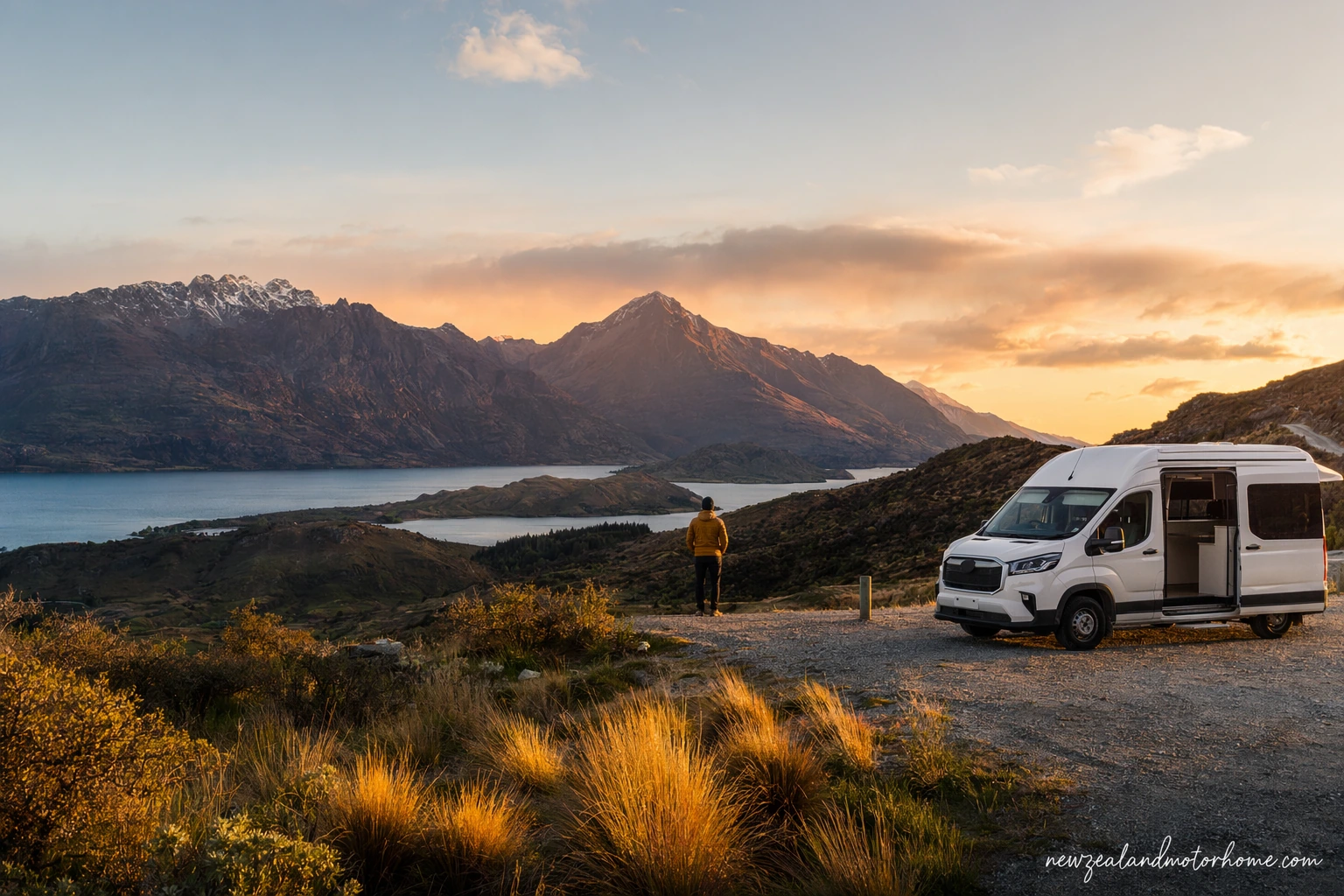
Plan a new zealand great walks campervan trip that fits your pace
- Best season: late spring to autumn
- Allow 10-21 days
- Self-contained van recommended
- Powered recovery nights advised
- Track bookings required
A new zealand great walks campervan trip is not just about linking famous tracks on a map. It is about where the van sleeps while you are in a hut, how you get back to it after a one-way walk, where you dry wet gear, and how far you really want to drive the morning after three days with a pack on.
This package is built for self-drive travellers hiring a campervan or motorhome and using it as the base between Great Walk sections. We shape the route, van choice, overnight stops, track-transfer days, campsite strategy, dump stations, LPG and water stops, and the quieter recovery days that make the whole holiday feel possible rather than rushed.
The trip shape: choose the walks before the roads
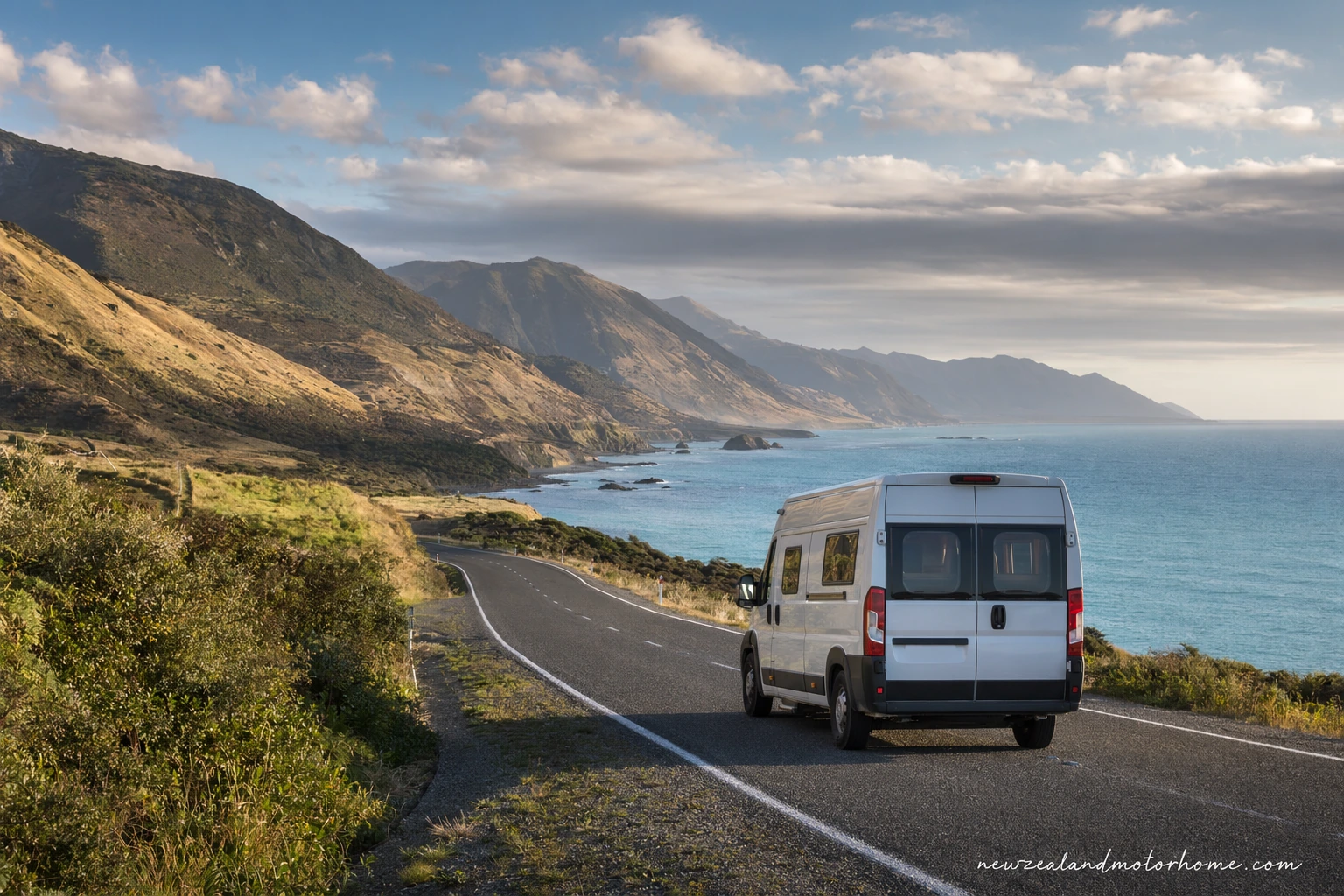
The best Great Walks campervan holiday starts with the track bookings, not the van route. Hut and campsite dates are fixed once confirmed, so the driving plan needs to bend around them rather than the other way around. We usually build in buffer nights before important track starts, especially in Fiordland and Tongariro where weather can change the whole feel of a day.
You do not need to walk every Great Walk in full. Many campervan travellers mix one multi-day track with shorter Great Walk sections, a water taxi day, or a scenic overnight in a DOC hut. That keeps the trip more flexible and gives you time to enjoy the van instead of constantly packing and repacking.
- Good 10-14 day shape: Abel Tasman plus one Fiordland base such as Te Anau or Queenstown.
- Good 16-21 day shape: Abel Tasman, West Coast driving, and Routeburn, Kepler or Milford access from the south.
- North Island add-on: Tongariro Northern Circuit or a day crossing built around a van-friendly shuttle base.
- Recovery nights: powered site, hot shower, laundry, battery top-up and a proper gear reset.
A South Island route that works in a campervan
A practical South Island version often starts in Christchurch, Nelson or Picton, then settles into the Abel Tasman coast before working south via the West Coast and into Queenstown or Te Anau. This gives the van a natural rhythm: coastal walking, big but manageable drive days, then alpine and Fiordland tracks where logistics need more care.
For Abel Tasman, the van usually sleeps at a holiday park or campground near Mārahau, Kaiteriteri or Motueka while you use water taxis and track shuttles. For Routeburn, many travellers base themselves around Queenstown, Glenorchy or Te Anau depending on which end of the track their transport uses. For Kepler and Milford Track connections, Te Anau is often the sensible van base because it has supermarkets, fuel, dump stations, laundries, fresh-water points and powered sites.
- Milford Road note: there is no fuel between Te Anau and Milford Sound, and overnight freedom camping options inside the national park are tightly controlled.
- West Coast note: allow slower drive times than the map suggests, especially in wet weather, with single-lane bridges and narrow sections.
- Queenstown note: book legal overnight sites early in summer; do not assume you can just pull up by the lake.
- Van parking: leave the motorhome at an agreed campsite, holiday park, or track-transport parking point rather than at a random road end.
Tongariro and North Island Great Walk planning
If your new zealand great walks campervan trip includes Tongariro, the van logistics matter as much as the boots. The Tongariro Alpine Crossing and Tongariro Northern Circuit involve one-way track sections, changing weather, and car parks that are not designed for casual all-day campervan parking in peak season.
We generally plan Tongariro with a legal overnight base in National Park Village, Whakapapa, Tūrangi or a nearby campground, then use an arranged shuttle to the track start. That means the van is parked somewhere appropriate, you are not trying to squeeze a high-roof vehicle into a busy roadside area at dawn, and you have a warm place to return to after the walk.
- Best van setup: arrive the night before, fill fresh water, empty the toilet cassette, and prepare day packs inside the van.
- Weather buffer: keep at least one flexible night if Tongariro is a must-do, as wind and visibility can close the window.
- Winter caution: snow and ice change the trip completely; do not treat it like a normal summer hike.
Campsites, dump stations and the unglamorous bits
Great Walk days are memorable, but the trip works because the van chores are placed in the right spots. We plan where you will top up fresh water before heading into a quieter DOC campground, where you can empty grey water and the toilet cassette after a few nights off-grid, and where a powered site makes sense for charging, heating and drying gear.
Freedom camping rules vary by district and are stricter around many popular trailheads, lakes and national park gateways. Your vehicle must meet self-containment certification requirements where freedom camping is allowed, but certification alone does not mean you can stay anywhere. A good package uses legal overnight stops rather than leaving you to interpret signs late in the day.
- Powered sites: useful after wet track days, before early shuttles, and when you need laundry and device charging.
- Unpowered sites: fine for settled weather and shorter stays if the van battery, water and toilet capacity suit your group.
- DOC campsites: often beautiful but simpler; expect fewer facilities and check vehicle access before committing.
- Dump stations: planned around towns such as Motueka, Westport, Hokitika, Queenstown, Te Anau and Tūrangi where practical.
The van we match to a walking-heavy holiday
A Great Walks itinerary asks more of a campervan than a normal sightseeing loop. You need room for packs, wet boots, food storage, layers, and the slightly chaotic repack that happens between hut nights and van nights. For couples, a compact self-contained camper may be enough; for two friends or a family, a larger motorhome with a proper living area can make recovery days much easier.
Vehicle length and height also matter. Some scenic roads, campsite entrances and older town parking areas are easier in a shorter van, while high-sided motorhomes need extra care in wind, on exposed passes and on narrow sections of road. We do not choose the biggest vehicle by default; we match comfort against the places you actually need to drive and park.
- Look for: certified self-containment, good internal storage, reliable heating, fly screens, and enough battery capacity for unpowered nights.
- Useful extras: a drying line, boot tray, outdoor mat, head torch charging point and a table you can use while gear is spread out.
- Size note: if you are nervous about tight roads or town parking, say so early so the route and van category fit together.
What this package can include and how we tailor it
This is a self-drive package, so you keep the freedom of your own hired campervan while avoiding the hard parts of piecing everything together. The planning usually covers route shape, sensible daily distances, campervan style, overnight stop strategy, track access, shuttle timing, ferry timing if needed, and the practical order of food shops, fuel, LPG, water and dump-station stops.
We can also tailor the trip around how much walking you want. Some travellers want one iconic multi-day Great Walk and several short van-based hikes. Others want a more ambitious route with two or three track commitments and very deliberate rest days between them. If you already have DOC hut dates, we build around them; if you are still choosing, we help you avoid combinations that look tidy on a map but feel punishing on the road.
When you are ready to shape your own version, send us your walking wish list through talk to us and we will turn it into a van-friendly plan rather than a string of disconnected bookings.
Common questions
Can I leave my campervan at a Great Walk trailhead while I am in a hut?
Sometimes, but it depends on the track, the road end, the parking rules and your transport plan. For one-way walks, it is often better to leave the van at a holiday park, legal campsite or agreed shuttle parking point and use track transport.
How many days should I allow for a Great Walks campervan holiday?
Allow at least 10-14 days for one major Great Walk area plus relaxed driving. For two or more Great Walks, 16-21 days gives you a much better pace, with laundry, resupply and weather buffer nights included.
Do I need a self-contained campervan for this trip?
Yes, it is strongly recommended, and essential if you want to use freedom camping areas where permitted. Self-containment certification does not override local bylaws, so the route still needs legal overnight stops.
Can I do the Milford Track with a campervan?
You can use the campervan as your base before and after, usually around Te Anau, but the Milford Track itself requires booked huts and boat or shuttle connections. The van will be parked while you are on the track, so we plan secure, legal logistics around those dates.
What happens if weather affects my walking dates?
Great Walk hut bookings are date-specific, so flexibility is not unlimited. We build in sensible buffer nights where possible and avoid placing long drives immediately before or after weather-sensitive track days.
Are powered campsites worth booking between walks?
Usually, yes. A powered site after a multi-day walk gives you heat, charging, hot showers, laundry access and space to dry gear, which makes the next leg of the campervan trip much more comfortable.
Have a planner shape this for your dates
Send a short outline — your dates, party size, and the kind of trip you want. A planner replies with a vehicle recommendation, a paced route, and the realistic budget.