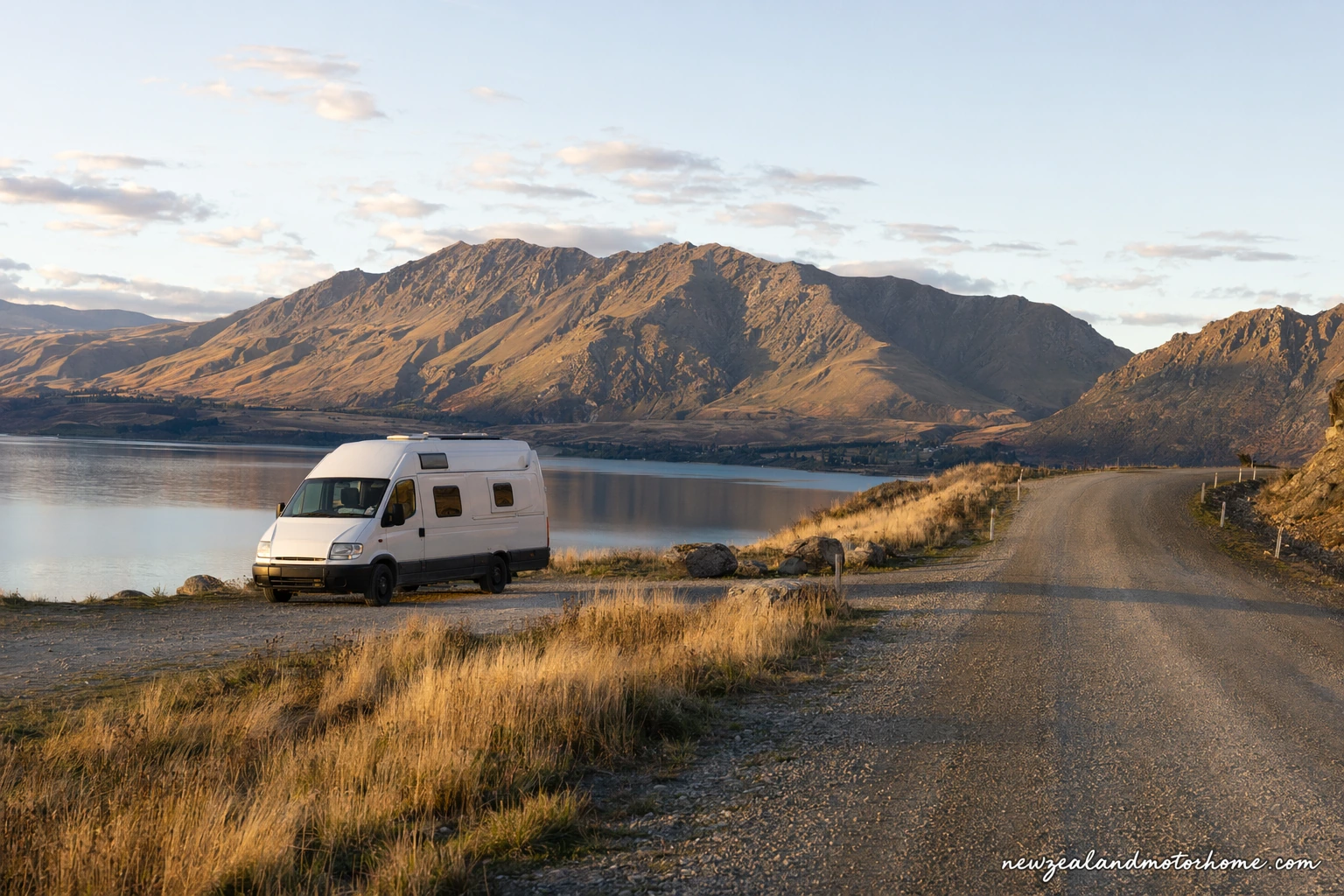
- Best season: Oct–Apr
- Allow 1–3 nights
- Powered sites useful in cold weather
- Watch wind on SH8 and SH80
- Freedom camping is restricted
Twizel is one of those South Island places that works especially well by van: broad Mackenzie Basin roads, big-sky views, lakes close enough for a lazy morning drive, and Aoraki/Mount Cook within day-trip range. It is not a resort town in the flashy sense, which is part of the appeal when you are travelling with your bed, kettle and wet-weather gear on board.
This Twizel campervan guide is written for self-drive travellers parking and sleeping in a hired campervan or motorhome. You will find practical notes on getting in, where to park the van, camping near Twizel, dump and water planning, and how to fold Twizel into a wider route between Christchurch, Tekapo, Aoraki/Mount Cook, Omarama and Queenstown.
Getting to Twizel by campervan or motorhome
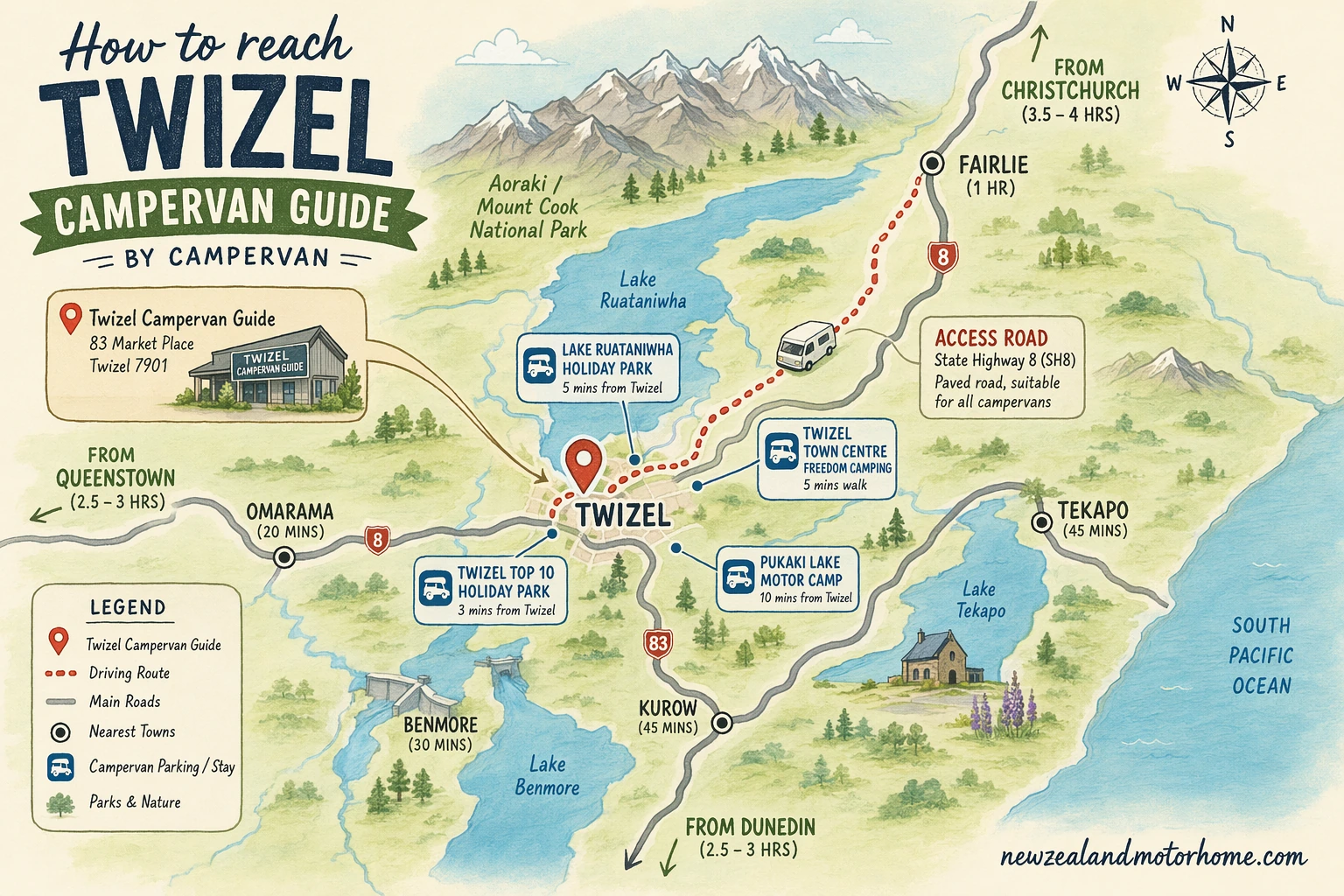
Twizel sits just off State Highway 8 in the Mackenzie Basin, roughly between Lake Tekapo and Omarama, with the turn-off to Aoraki/Mount Cook Road close by at the southern end of Lake Pukaki. In a campervan Twizel is an easy drive in settled weather, but it is still alpine country: wind, winter ice and fast-changing visibility can make a simple day feel much longer.
If you are driving a taller motorhome, take the exposed sections seriously. The road past Lake Pukaki is beautiful but open, and a strong nor’wester can shove a high-sided van around. Leave room behind cyclists, watch for rental vehicles slowing suddenly at viewpoints, and pull fully off the carriageway before you stop for photos.
- From Lake Tekapo: follow SH8 south-west through open basin country; allow extra time for photo stops and wind.
- From Omarama: SH8 climbs gently through wide, dry country; fuel and supplies are worth checking before you leave either town.
- From Aoraki/Mount Cook: return via SH80 along Lake Pukaki; do not rush this road in rain, snow or low cloud.
- Winter note: carry chains if your hire agreement and forecast call for them, and check road conditions before committing to alpine side trips.
Parking the van around Twizel
Twizel’s town centre is compact and generally easier for campervan parking than many busier South Island stops. The streets are wide by NZ small-town standards, but still choose a space that lets you swing out without clipping kerbs, bike racks or verandah posts. If your motorhome has a long rear overhang, avoid nose-in parks where the back of the vehicle would sit across a footpath.
For groceries, bakery stops and coffee, park once and walk the small centre rather than shifting the van from door to door. At Lake Ruataniwha and Lake Pukaki, use formed car parks and gravel pull-offs only; soft shoulders can bog up after rain, and lakeshore vegetation is easily damaged by heavy vehicles.
- Town errands: park on wider streets or marked public parking areas, then walk to shops and services.
- Lake stops: arrive early or late in summer if you want an easier turn-around space.
- Photo pull-offs: make sure every wheel is clear of the traffic lane before opening doors.
- Long vans: reverse with a spotter if visibility is poor; low boulders and timber edging are easy to miss.
Overnight stays and camping near Twizel
For a straightforward campervan Twizel stop, a powered site in or near town is the easiest option. It lets you charge house batteries, top up fresh water, use showers and deal with grey water without driving around looking for facilities. This is especially useful if you are heading next to Aoraki/Mount Cook, where weather can keep you inside the van for longer than planned.
There is also camping near Twizel around Lake Ruataniwha and in the wider Mackenzie/Waitaki area, but rules vary by land manager and season. Do not assume that a lakeside gravel area allows overnight stays just because other vans are parked there. Mackenzie District freedom camping is controlled, and you should only overnight where signs, council information or a recognised camping app confirm it is permitted for your vehicle type.
- Powered sites: best for cold nights, battery recovery and longer motorhome Twizel stays.
- Unpowered sites: workable in summer if your solar, water and toilet capacity are in good shape.
- Freedom camping: use only legal areas and follow your certified self-contained conditions.
- Lake edges: avoid parking on grass, dunes or informal tracks, even for one night.
Dump stations, fresh water, LPG and van chores
Twizel is a good place to reset the practical side of van life before you drive into more scenic but less serviced country. Plan to empty grey and black water, fill fresh water and sort rubbish here rather than leaving it until you are tucked into a windy lakeside stop or heading up to Aoraki/Mount Cook.
Dump station and potable water access can change, so check the latest council information, your campground details or your hire company’s recommended app before arrival. If you are staying at a holiday park, ask on check-in which taps are drinking water and where grey water must go. LPG bottle swaps or fills should also be planned ahead, especially outside peak summer when smaller-town hours can be limited.
- Toilet cassette: empty only at a signed dump station, never in public toilets or stormwater drains.
- Fresh water: use potable taps only; do not fill from lake edges or irrigation points.
- Rubbish: keep a sealed bag in the van and use proper public or campground bins.
- LPG: check bottle levels before a cold Mackenzie night, when heating and cooking use more than expected.
What to do from a Twizel campervan base
Twizel’s strength is that you can settle the van for a night or two and fan out on short, scenic drives. Lake Pukaki is the obvious first stop, with turquoise water and Aoraki/Mount Cook views when the cloud lifts. Lake Ruataniwha is closer and gentler, good for a picnic, a leg-stretch or a quiet evening by the water after the day visitors move on.
If the forecast is clear, use Twizel as a base for Aoraki/Mount Cook National Park rather than trying to squeeze it in while tired. The road up the western side of Lake Pukaki is one of the great drives in a campervan, but parking at popular walks can fill quickly in peak season, and larger motorhomes need room to turn without blocking shuttle, service or emergency access.
- Lake Pukaki: go early for calmer parking and better light across the water.
- Aoraki/Mount Cook: make it a day trip, pack layers, and check wind before opening high van doors.
- Lake Ruataniwha: handy for a slower afternoon close to town.
- Alps 2 Ocean area: watch for cyclists on approach roads and give them generous space.
- Night sky: keep campground lights low and step away from the van for the best stargazing.
How Twizel fits into a wider South Island route
Twizel works well as a pause between bigger-name stops. Coming from Christchurch, many van travellers overnight around Lake Tekapo first, then use Twizel for supplies, lakes and Aoraki/Mount Cook access. Heading south or west, Twizel lines up neatly with Omarama, the Lindis Pass and Queenstown, or with a slower Waitaki Valley route towards Oamaru.
For most campervan itineraries, one night in Twizel is enough for a reset; two or three nights makes sense if you want a weather window for Aoraki/Mount Cook, a quieter lake day, or a break from moving every morning. If you want help matching drive times, legal overnight stops and van facilities into one route, you can use our plan-your-trip step before locking in your hire dates.
- Quick pass-through: stop for fuel, groceries, dump station planning and Lake Pukaki views.
- Best balance: stay two nights and day-trip to Aoraki/Mount Cook without packing down twice.
- Southbound route: Twizel to Omarama and over the Lindis Pass is scenic but exposed.
- Eastbound option: follow the Waitaki Valley for a quieter, less alpine drive towards the coast.
Keep planning
Common questions
Can I freedom camp in Twizel in a campervan?
Only where it is legally permitted and only if your vehicle meets the required self-containment standard for that site. Mackenzie District rules are enforced, and lakefront areas are often restricted, so check current council signs or a reliable camping app before you settle in.
Is Twizel a good base for Aoraki/Mount Cook in a motorhome?
Yes, Twizel is a practical base because you can stock up, plug in if needed, and drive to Aoraki/Mount Cook as a day trip. Start early in peak season so you have a better chance of finding suitable parking for a larger vehicle at popular walks.
Are there powered campervan sites near Twizel?
Yes, there are holiday park-style options in and around Twizel and Lake Ruataniwha with powered sites. Book ahead in summer, school holidays and around major local events, as powered sites are the first to feel tight.
Where should I park for Lake Pukaki views with a campervan?
Use formed viewpoints and gravel pull-offs along the lake rather than informal shoulders or grass. Take extra care in wind, keep the van fully clear of the traffic lane, and do not assume a daytime viewpoint allows overnight camping.
Do I need to fill water and empty tanks before leaving Twizel?
It is a good idea. Services become more spread out once you head towards Aoraki/Mount Cook, the Lindis Pass or quieter Waitaki Valley roads, so Twizel is a sensible place to reset fresh water, grey water, toilet cassette and rubbish.
What is the best season for a campervan Twizel stop?
Late spring to early autumn gives the easiest driving and longest evenings, though summer can be busy around the lakes. Winter can be beautiful, but expect frosts, possible ice, colder van nights and the need to check road conditions carefully.
Have a planner shape this for your dates
Send a short outline — your dates, party size, and the kind of trip you want. A planner replies with a vehicle recommendation, a paced route, and the realistic budget.