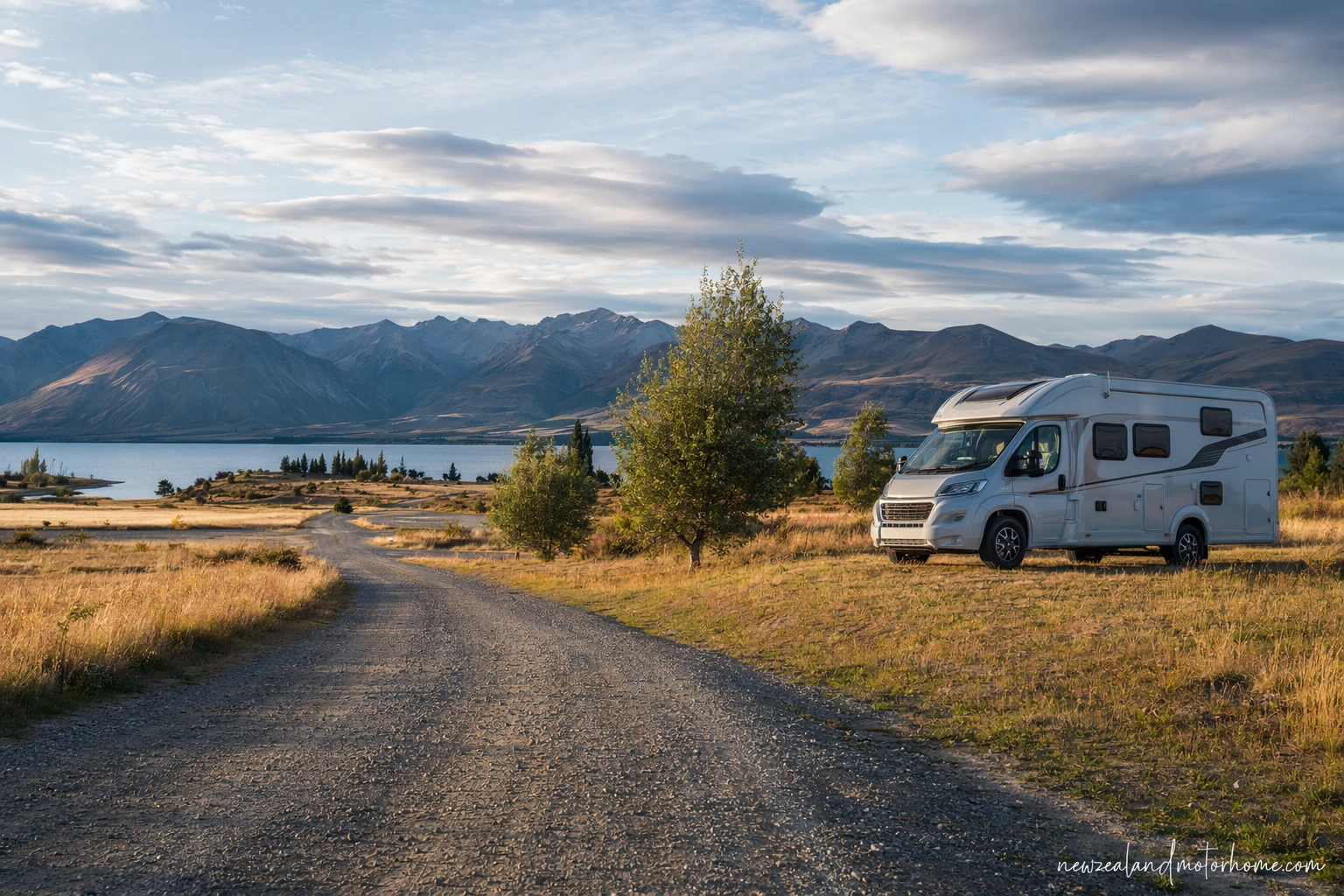
- Best for 1-2 nights
- Powered sites useful in winter
- Service stop before Aoraki/Mount Cook
- Check freedom camping signage
- Open roads can be windy
Twizel is a very practical campervan stop: flat roads, big Mackenzie Basin skies, quick access to Lake Pukaki and a straightforward town centre for fuel, groceries and a leg stretch. For self-drive travellers, holiday parks Twizel are useful not just for a bed, but for plugging in, filling fresh water, emptying tanks and getting the van ready for Aoraki/Mount Cook or the Lindis Pass.
This guide looks at Twizel from the driver’s seat: where to park the van, what powered and unpowered sites are like, how the surrounding roads feel in a larger motorhome, and which nearby places are worth leaving time for. If you are comparing camping Twizel options or searching for a Twizel Top 10 Holiday Park-style stay, use this as the practical surroundings check before you book.
Why Twizel works well as a motorhome base
Twizel sits on State Highway 8 between Lake Tekapo and Omarama, with the turn-off to Aoraki/Mount Cook just north at Lake Pukaki. That makes it an easy overnight stop for a hired campervan: you can arrive before dark, settle into a powered site, and still be close to the big scenery the next morning.
The town itself is spread out and low-rise, so driving a long-wheelbase van does not feel as tight as some alpine villages. Holiday parks around Twizel generally suit self-drive travellers who want a proper reset rather than a quick roadside stop.
- Good for: powered sites before a cold Mackenzie night, laundry, showers, fresh-water top-ups and dumping waste tanks.
- Road feel: mostly sealed, open highways, but exposed to strong nor’west winds and winter ice.
- Van parking: town centre parking is usually easier than in Tekapo or Aoraki/Mount Cook, but use longer edge spaces where available.
- Trip rhythm: one night is enough for a service stop; two nights gives time for Lake Pukaki, canals and a slower morning.
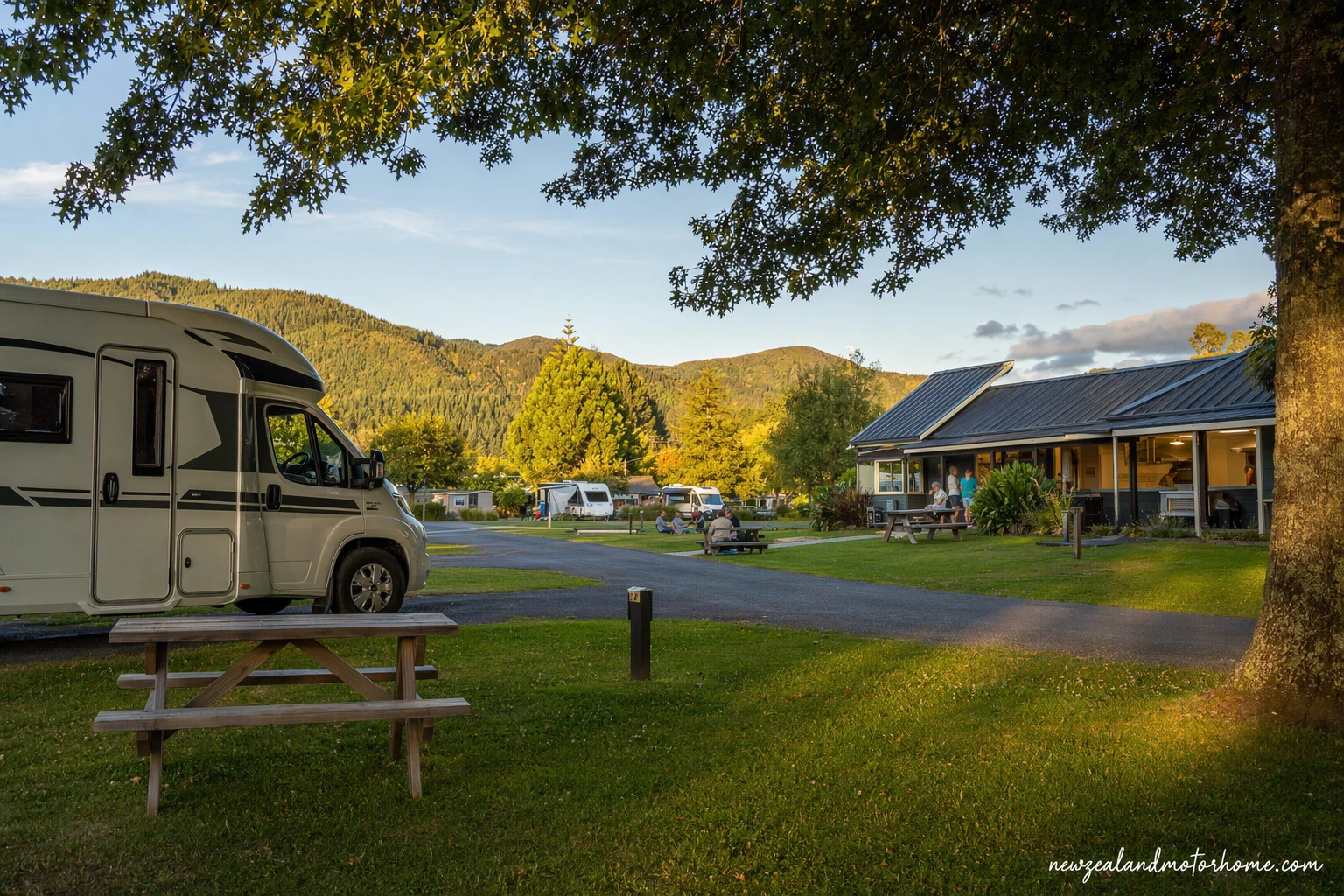
Choosing a holiday park site in Twizel
When you compare holiday parks Twizel, start with what your van needs overnight. In summer, an unpowered grass or gravel site may be enough if your auxiliary battery is healthy. In winter or after several freedom camping nights, a powered site is worth it for heating, charging devices and giving the fridge a steady run.
Ask about site surface and length when you book, especially if you are in a larger motorhome or towing bikes. Some parks have open, easy-turning layouts; others have trees, kerbs or tighter internal lanes where arriving in daylight makes life much simpler.
- Powered sites: best for cold nights, longer stays, battery recovery and using approved appliances inside the van.
- Unpowered sites: fine for self-contained vans in settled weather, but check shade, wind exposure and distance to facilities.
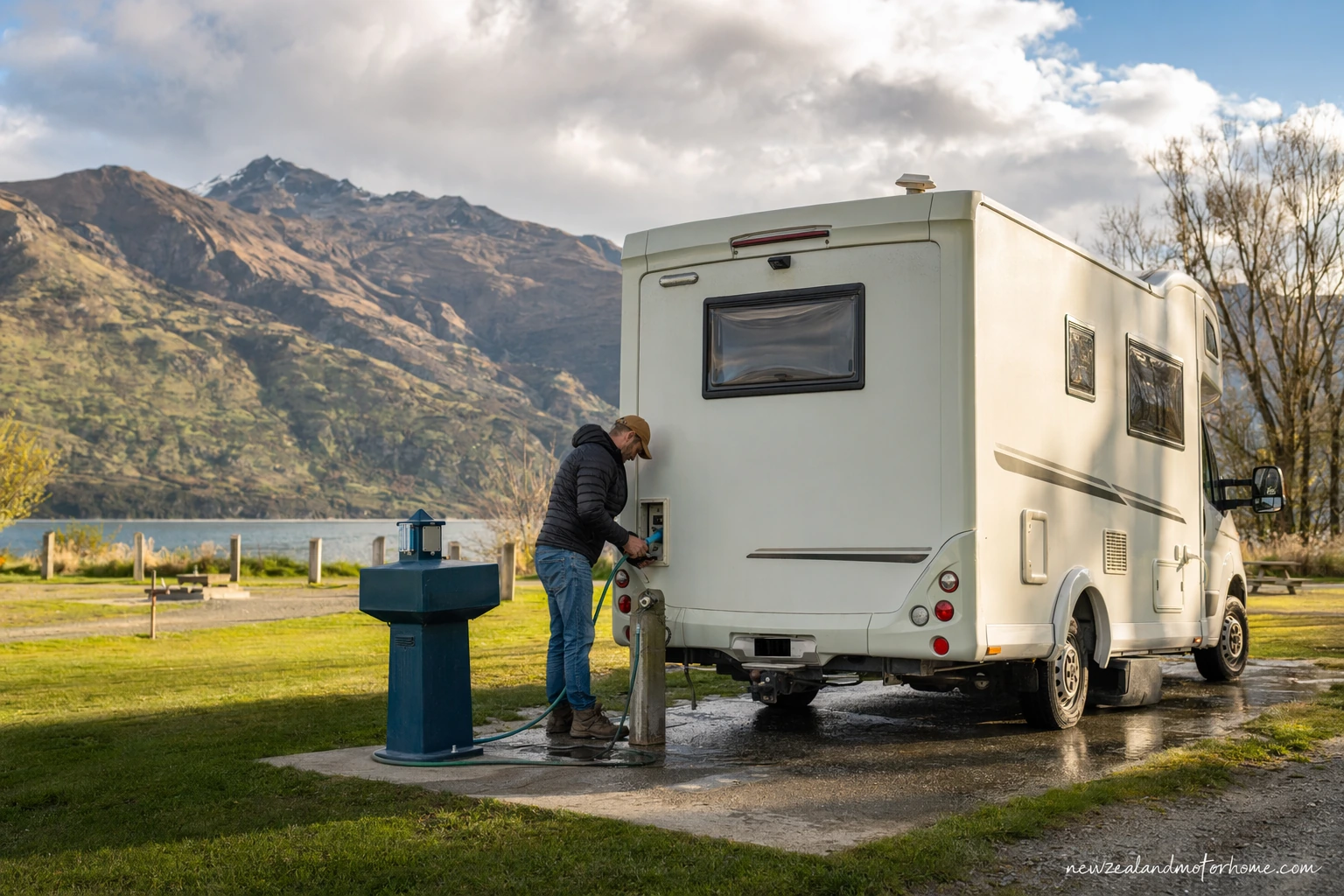
- Dump station: many holiday parks provide guest access, but confirm before relying on it.
- Fresh water: fill only from taps marked as potable; do not assume every outdoor tap is for drinking water.
- Late arrival: avoid rolling in after dark if you have not been allocated a site, as internal park lighting and turning space vary.
Getting there by campervan: road notes and stops
From Lake Tekapo, the drive to Twizel follows State Highway 8 through open high-country country, with long views and few complications. From Omarama, the road is also simple, but winter frost can sit in shaded sections and wind gusts can be sharp across the basin.
If you are coming from Aoraki/Mount Cook, allow more time than the map suggests. State Highway 80 beside Lake Pukaki is one of the best scenic drives in the South Island, but it is also a road where campervan drivers need to use proper pull-offs rather than slowing suddenly for photos.
- Lake Pukaki viewpoints: use formed parking bays; do not leave the van half on the seal or block turning areas.
- Canal roads: scenic but often narrower, with anglers, cyclists and loose edges; drive slowly and think about where you can turn around.
- Winter driving: check road conditions before leaving, carry warm layers in the cab, and keep fuel topped up.
- Large vans: avoid spontaneous gravel side tracks unless you can see a clear exit and firm turning space.
Where to park a campervan around Twizel during the day
If you are wondering where to park campervan Twizel for errands, the town centre is the easiest place to start. Park considerately on the edges of larger public parking areas where the rear overhang will not sit across a footpath or traffic lane, and avoid taking multiple short car spaces at busy times.
For lake stops, arrive early or later in the day if you are in a bigger vehicle. Boat ramps and picnic areas around Lake Ruataniwha can get busy with trailers, rowing crews and families, so choose a formed bay and keep turning circles clear.
- Groceries and fuel: do these in Twizel before heading to Aoraki/Mount Cook, where services are more limited.
- LPG: check cylinder levels in town rather than assuming you can swap or refill later in the valley.
- Lunch stops: use marked picnic or lake parking, not roadside verges on fast open roads.
- Overnight parking: do not treat day-use lake parks as camping spots unless signage clearly allows it for certified self-contained vehicles.
Things to do near Twizel without moving camp every night
One of the best things about staying in a Twizel holiday park is being able to leave the awning packed away and take short drives instead. The landscape changes quickly: turquoise Lake Pukaki, dry tussock flats, canal edges, and the first big views towards Aoraki/Mount Cook.
For things to do near Twizel, choose a mix that suits campervan travel rather than overloading the day. It is easy to lose time at viewpoints, and driving a van after dark on open high-country roads is less relaxing than being back on site with dinner underway.
- Lake Pukaki: classic mountain views, but use designated parking and watch for wind when opening van doors.
- Lake Ruataniwha: good for a gentle walk, picnic or calm morning coffee by the water.
- Aoraki/Mount Cook day trip: leave early, take layers, and plan parking before committing to a walk.
- Alps 2 Ocean sections: useful if you carry bikes, with canal and lake scenery close to town.
- Stargazing: Twizel sits in dark-sky country; keep campsite lights low and step away from the van for the best view.
Freedom camping, self-containment and trip planning
Twizel is in a district where freedom camping rules are controlled and can change, especially around lakes, reserves and busy visitor areas. If you are not in a holiday park, only stay overnight where signs and current council rules allow it, and make sure your vehicle has the correct self-containment certification for the site.
Holiday parks remove a lot of guesswork: you get a legal overnight stop, toilets and showers, rubbish options, and usually access to water and waste facilities. That is particularly useful before or after Aoraki/Mount Cook, where weather, parking and limited services can make van logistics feel bigger.
- Check signage: lakefront car parks may be day-use only even if they look quiet.
- Use dump stations properly: empty grey and black water only at approved points, never into drains or on the ground.
- Carry rubbish out: bins are not guaranteed at scenic pull-offs, and birds can make a mess quickly.
- Plan before reception closes: know your site, gate access, water point and dump location before you head out for sunset.
If you would like Twizel fitted into a wider South Island campervan route, we can help you shape the order of stops through our plan-your-trip step, including where to build in powered nights and service stops.
Keep planning
Common questions
Do I need to book holiday parks in Twizel ahead?
In summer, school holidays and around major events, booking ahead is sensible, especially if you need a powered campervan site. In winter, there may be more flexibility, but powered sites are still useful because Mackenzie nights can be very cold.
Can I freedom camp beside Lake Pukaki or Lake Ruataniwha?
Only stay overnight where current signage and council rules clearly allow it, and only if your campervan meets the required self-containment standard. Many scenic lake parks are day-use or restricted, so do not assume a beautiful pull-off is a legal overnight stop.
Where can I empty my campervan toilet in Twizel?
Use an approved dump station, either at your holiday park if provided for guests or at a signed public facility. Confirm the location when you arrive, and never empty cassette toilets or grey water into public toilets, stormwater drains or roadside areas.
Is Twizel a good base for visiting Aoraki/Mount Cook by van?
Yes. Twizel is a practical base because you can leave with full water, empty tanks and fuel in the van, then drive the scenic route beside Lake Pukaki. Start early if you want easier parking at popular walks and viewpoints.
Are the roads around Twizel suitable for larger motorhomes?
The main highways are generally suitable for larger motorhomes, but wind, winter ice and narrow canal roads require care. Use formed pull-offs, avoid soft verges, and do not enter gravel side roads unless you can see a safe place to turn around.
Should I choose a powered or unpowered site in Twizel?
Choose powered if you are staying in cooler months, running low on house battery, or using Twizel as a reset night between freedom camping stops. Unpowered can work well in settled summer weather if your van is properly self-contained and charged.
Have a planner shape this for your dates
Send a short outline — your dates, party size, and the kind of trip you want. A planner replies with a vehicle recommendation, a paced route, and the realistic budget.