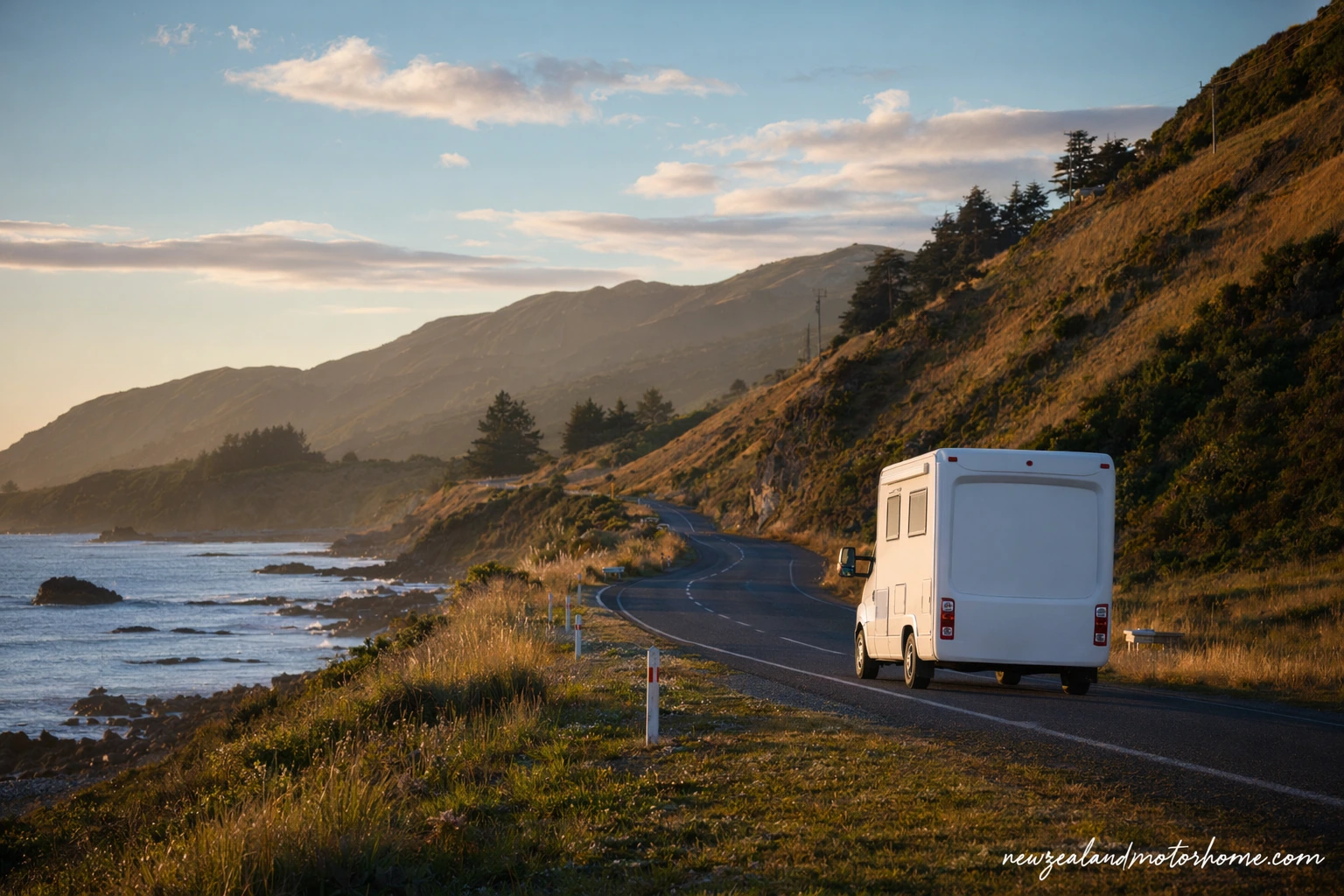
- Best with 2–4 days
- Remutaka Hill is slow in a high-sided van
- Powered sites in towns and some coast campgrounds
- Fill water and LPG before coastal detours
- Certified self-contained needed for freedom camping
The Wairarapa sits just over the Remutaka Range from Wellington, but it feels like a proper change of pace once you roll the van down into Featherston: wide plains, tidy village main streets, vineyard country, and a wild eastern coast that still asks you to slow down and drive properly.
This wairarapa campervan guide is written for travellers sleeping in their hired campervan or motorhome, not just passing through for the day. You’ll find practical notes on getting there, where to park a longer vehicle, overnight options, coastal road cautions, dump stations, water, LPG, and how to link Wairarapa into a wider lower North Island route.
Getting to Wairarapa by campervan
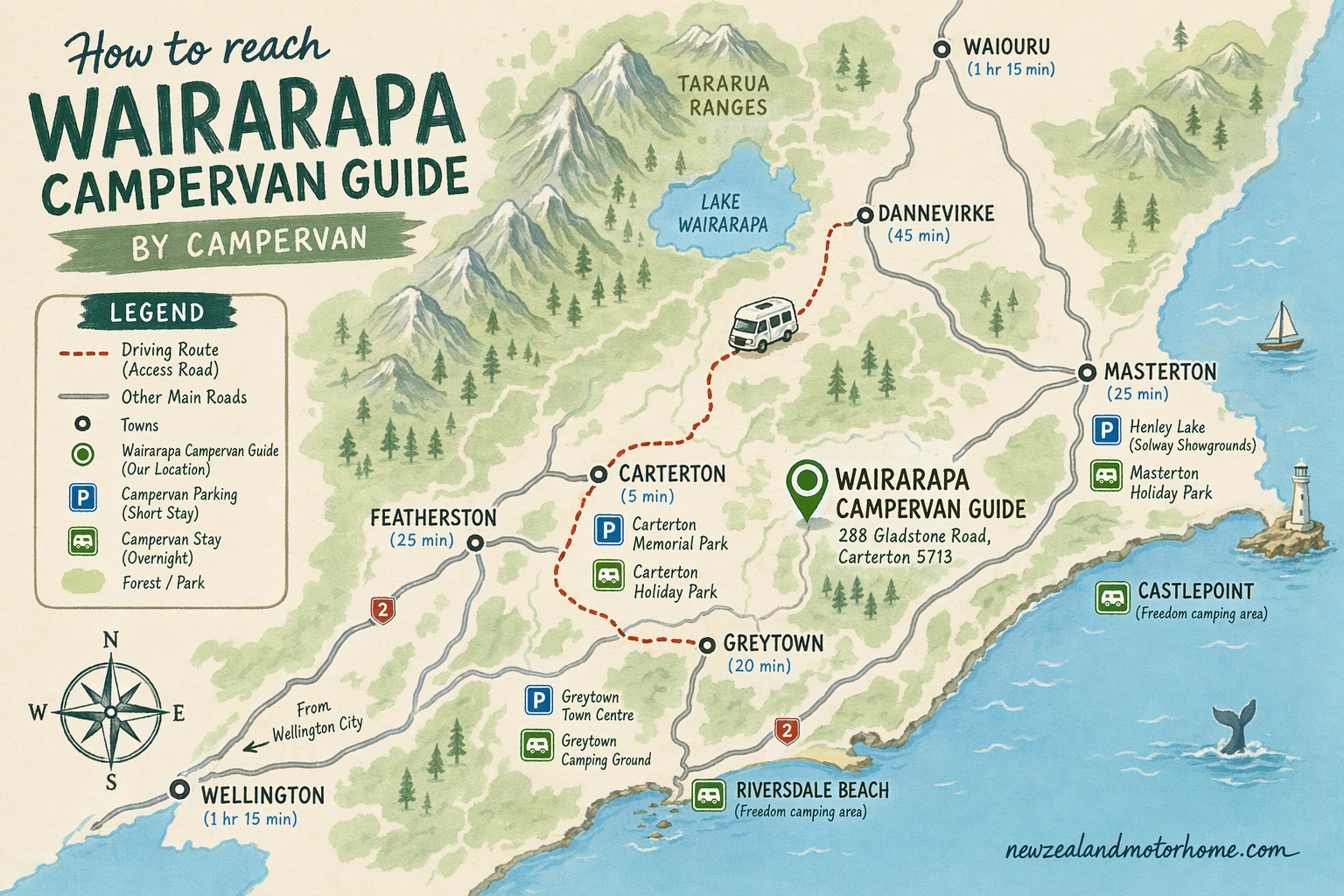
Most campervan Wairarapa trips start from Wellington, heading north on State Highway 2 and over the Remutaka Hill Road. It is sealed and used daily by locals, but it is still a winding hill crossing with tight bends, limited passing room, and weather that can change quickly. In a high-sided motorhome, give yourself time, use lower gears on the descent, and pull over only where there is a proper bay.
Coming from the north, Masterton is the usual gateway, with SH2 running down through Carterton, Greytown, Featherston and on towards Wellington. The valley towns are easy to navigate in a van, but the main streets can be busy on weekends, especially around markets, cafés and wine-region traffic.
- Wellington to Featherston: short in kilometres, slower in a van because of the Remutaka climb.
- Masterton to Martinborough: straightforward rural driving, with narrow shoulders in places.
- Coastal side trips: allow extra time; the roads to Castlepoint, Lake Ferry and Cape Palliser are slower than they look on a map.
Parking the van in towns, vineyards and on the coast
Featherston, Greytown, Carterton, Martinborough and Masterton all have town-centre parking, but long bays are not always obvious. If you are in a 6-berth motorhome or anything with a rear overhang, aim for edge-of-centre streets, supermarket-style car parks where permitted, or signed public parking areas rather than trying to squeeze into angled spaces on the main strip.
Martinborough is compact and pleasant on foot, so it often works best to park the van once and walk between the square, cafés and nearby cellar doors. If visiting vineyards, check whether there is room for a campervan before turning into smaller driveways; some rural entrances are narrow, with limited turning space once you are committed.
- Greytown: park slightly off the main shopping strip and walk back in.
- Martinborough: good for parking once, then exploring on foot or by bike if you are carrying one.
- Castlepoint and Cape Palliser: arrive earlier in the day; beach and lighthouse parking can fill, and turning a long van is easier before the rush.
Where to stay overnight in a motorhome in Wairarapa
For a comfortable first night after the Remutaka drive, look for established holiday parks or campgrounds around the main towns and coast. Powered sites are useful if you have been running the fridge hard, using heating in shoulder season, or travelling with laptops and camera batteries. Unpowered sites suit self-contained vans in warmer weather, but always check access for your vehicle length before booking or driving in.
Freedom camping rules in Wairarapa are council-managed and can change, so do not rely on an old map or a random roadside pull-off. Use only signed or officially listed areas, and only if your van meets the current self-containment certification requirements. Coastal reserves are especially sensitive: if there is no sign allowing overnight stays, treat it as day parking only.
- Powered sites: best around town-based holiday parks and some coastal campgrounds.
- Unpowered camping: common at simpler campgrounds, but facilities vary widely.
- Freedom camping: use official council information and obey maximum-stay limits.
- Late arrivals: book ahead where possible; rural reception areas may close earlier than big-city parks.
Dump stations, fresh water and LPG planning
Wairarapa is not remote in the South Island sense, but the service points are clustered in the valley towns. Plan your grey-water dump, toilet cassette emptying and fresh-water fill around places such as Masterton, Carterton, Greytown, Featherston or Martinborough rather than expecting facilities once you have headed out to the coast.
Public dump stations and potable water points can move, close for maintenance, or have access restrictions, so confirm current locations before you drive across town with full tanks. If you are hiring a motorhome Wairarapa-bound from Wellington, it is worth leaving the city with fresh water topped up and your toilet cassette empty, especially if your first night is a simple coastal stop.
- Before the coast: fill fresh water and empty grey water in the main valley towns.
- LPG: sort bottle swaps or refills in larger service towns; do not leave it until Cape Palliser or Castlepoint.
- Rubbish: use proper bins or take it back to town; coastal wind spreads loose waste quickly.
- Self-containment: keep your certification visible and your waste systems usable, not just technically installed.
Best campervan detours: wine villages, Castlepoint and Cape Palliser
A good Wairarapa campervan loop balances easy valley driving with one or two coastal detours. Martinborough is the obvious wine-country stop, with flat roads, a small village centre and plenty of reasons to leave the van parked. Greytown suits a slower lunch stop, while Masterton is the practical place for supermarket restocking and van services.
Castlepoint is one of the best coastal drives in the region, with a lighthouse, reef, beach walking and big sky. The road is sealed but rural, with stock movements, narrow sections and little reason to rush. Cape Palliser is wilder again: expect exposed coastal driving, fishing settlements, seal colonies at the right time of year, and a steep lighthouse stair climb that is better tackled after you have parked the van safely.
If you are trying to fit camping near Wairarapa into a longer route from Wellington to Hawke’s Bay, or linking it with the Kāpiti Coast and Tongariro, use our plan-your-trip step to sense-check distances, overnight stops and van-friendly timing before you lock it in.
Keep planning
Common questions
Is the Remutaka Hill Road suitable for campervans?
Yes, but drive it like a hill road, not a motorway. It is sealed and commonly used, yet the bends, grades and wind can be tiring in a high-sided campervan, so allow time and use proper pull-offs if traffic builds behind you.
Can I freedom camp in Wairarapa?
Only in places where it is officially allowed, and usually only if your van is certified self-contained. Check the current council rules before you settle in, because coastal reserves and lakefront areas may be day-use only or have strict time limits.
Where should I base myself for a first campervan Wairarapa visit?
Martinborough works well if you want wine-country walking and a relaxed village feel. Masterton is more practical for supplies and services, while Castlepoint or the south coast suit travellers who want a quieter coastal night with fewer town facilities.
Are Wairarapa coastal roads okay for larger motorhomes?
Generally yes for confident drivers, but they are slower, narrower and more exposed than the valley roads. Check weather, avoid arriving after dark, and be realistic about turning space at beaches, lighthouse car parks and small settlements.
Do I need to book powered sites ahead?
In summer, school holidays and long weekends, booking ahead is sensible, especially around Martinborough and the coast. Outside peak times you may have more flexibility, but a quick check before you drive out saves an awkward late-day search.
Have a planner shape this for your dates
Send a short outline — your dates, party size, and the kind of trip you want. A planner replies with a vehicle recommendation, a paced route, and the realistic budget.