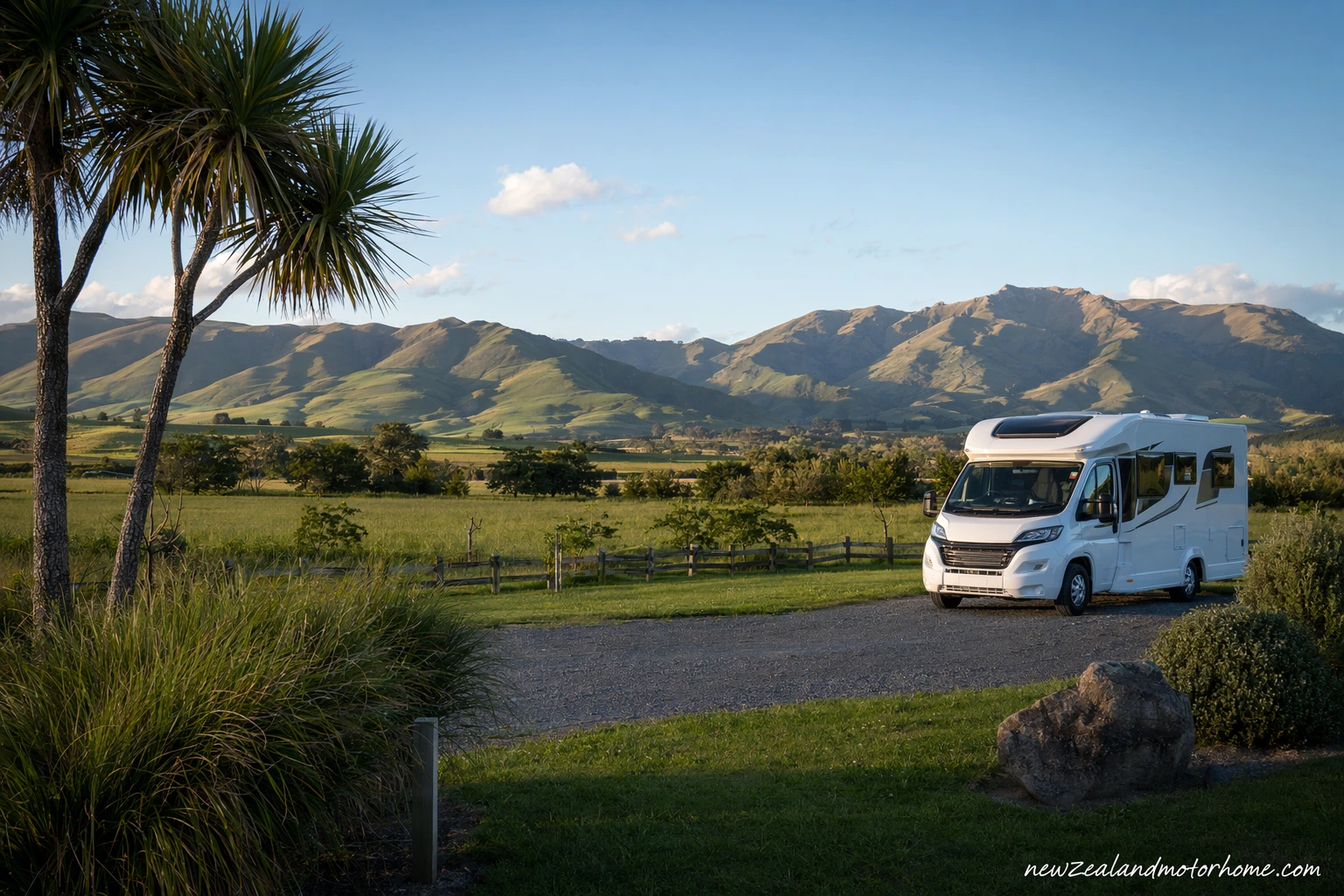
- Best season: spring to autumn
- Allow 2–4 nights
- Powered and unpowered sites
- Check coastal wind forecasts
- Self-containment needed for freedom camping
Wairarapa is one of those regions that suits a campervan: small towns with roomy streets, vineyard country close to the road, and a wild coast where you can park the van and listen to the surf before bed. The best base depends on whether you want café mornings in Greytown, wine-tasting around Martinborough, easy services in Masterton, or a salt-air stop near Castlepoint or Lake Ferry.
This guide looks at holiday parks Wairarapa-wide from a self-drive point of view: how the roads feel in a motorhome, where to park during the day, what to expect from powered and unpowered sites, and how to keep on top of water, waste and LPG while you move between town and coast.
Getting into Wairarapa by van
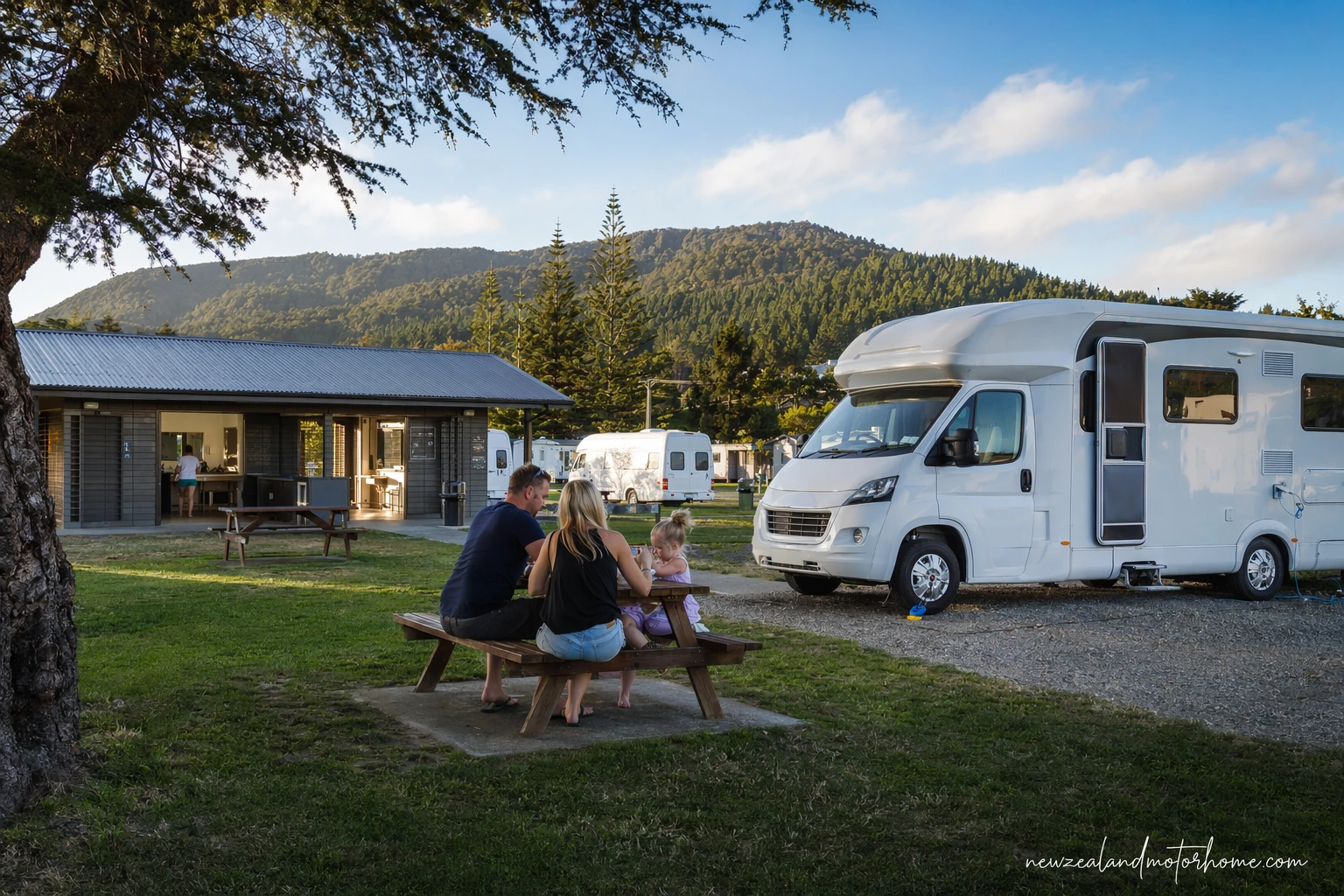
Most campervan travellers arrive from Wellington over the Remutaka Hill on State Highway 2. It is fully sealed and commonly driven by rental motorhomes, but it is steep, winding and exposed in places, so take it slowly, use lower gears on the descent, and pull over only where there is a proper bay. In a longer van, let faster traffic pass when it is safe rather than feeling pushed through the bends.
From the north, the run down SH2 through Eketāhuna and Masterton is easier going, with more open farmland and longer straights. Once you are in the valley, towns are close together, so it is sensible to choose an overnight base and day-trip without packing up the van every morning.
- Best first stop from Wellington: Featherston or Greytown if you want a short first day after the hill road.
- Best services hub: Masterton for fuel, supermarkets, larger parking areas and practical van errands.
- Best wine base: Martinborough, where you can park the campervan and explore the village on foot or by bike.
If you are not sure whether to base inland or by the coast, sketch your route first or talk to us before you lock in nights. Wairarapa looks compact on a map, but coastal detours add time in a motorhome.
Choosing between town, vineyard and coastal holiday parks
Holiday parks in Wairarapa tend to fall into three useful styles for campervan travellers. Town parks are the easiest for laundry, groceries, dump stations and wet-weather days. Vineyard-country stays are better if your plan is to leave the van parked and wander to dinner. Coastal parks put you closer to surf, walking tracks and big sunrise views, but you may have fewer shops nearby.
When people search for a wairarapa top 10 holiday park, they are usually looking for the serviced end of camping Wairarapa: powered sites, shared kitchens, hot showers, laundry and a managed check-in rather than a basic roadside camp. That can be worth it if you need to recharge house batteries, refill fresh water, use Wi-Fi, or reset after a few nights off-grid.
- Powered sites: useful in winter, after cloudy solar days, or if you are running a heater, fridge and devices.
- Unpowered sites: good for certified self-contained vans in mild weather, especially if you have solar and are only staying one night.
- Hardstand versus grass: ask for hardstand after heavy rain; some grassy areas can get soft under heavier motorhomes.
- Van length: mention your vehicle length when booking, especially on the coast where sites may be tighter or shaped around dunes and shelter belts.
Where to park a campervan in Wairarapa towns
If you are wondering where to park campervan Wairarapa town stops, the simple rule is to aim for signed public car parks, visitor parking near parks and reserves, or the outer edge of main-street parking where you are not overhanging the footpath. Greytown and Martinborough are walkable, so it is usually better to park once and stroll rather than squeeze a larger van through every side street.
Masterton is the most practical town for longer vehicles because it has more service stops and wider commercial areas. In smaller villages, avoid blocking shopfront parks at busy times; use quieter side streets only where parking is legal and your mirrors are not sitting in the traffic lane.
- Greytown: park, then walk the heritage main street and cafés without moving the van repeatedly.
- Martinborough: choose a legal day park before visiting cellar doors; do not drive after tastings.
- Featherston: a handy pause after the Remutaka Hill, with easy access to food and a leg-stretch.
- Masterton: best for stocking up before heading to Castlepoint, Riversdale or Cape Palliser.
Dump stations, fresh water and LPG
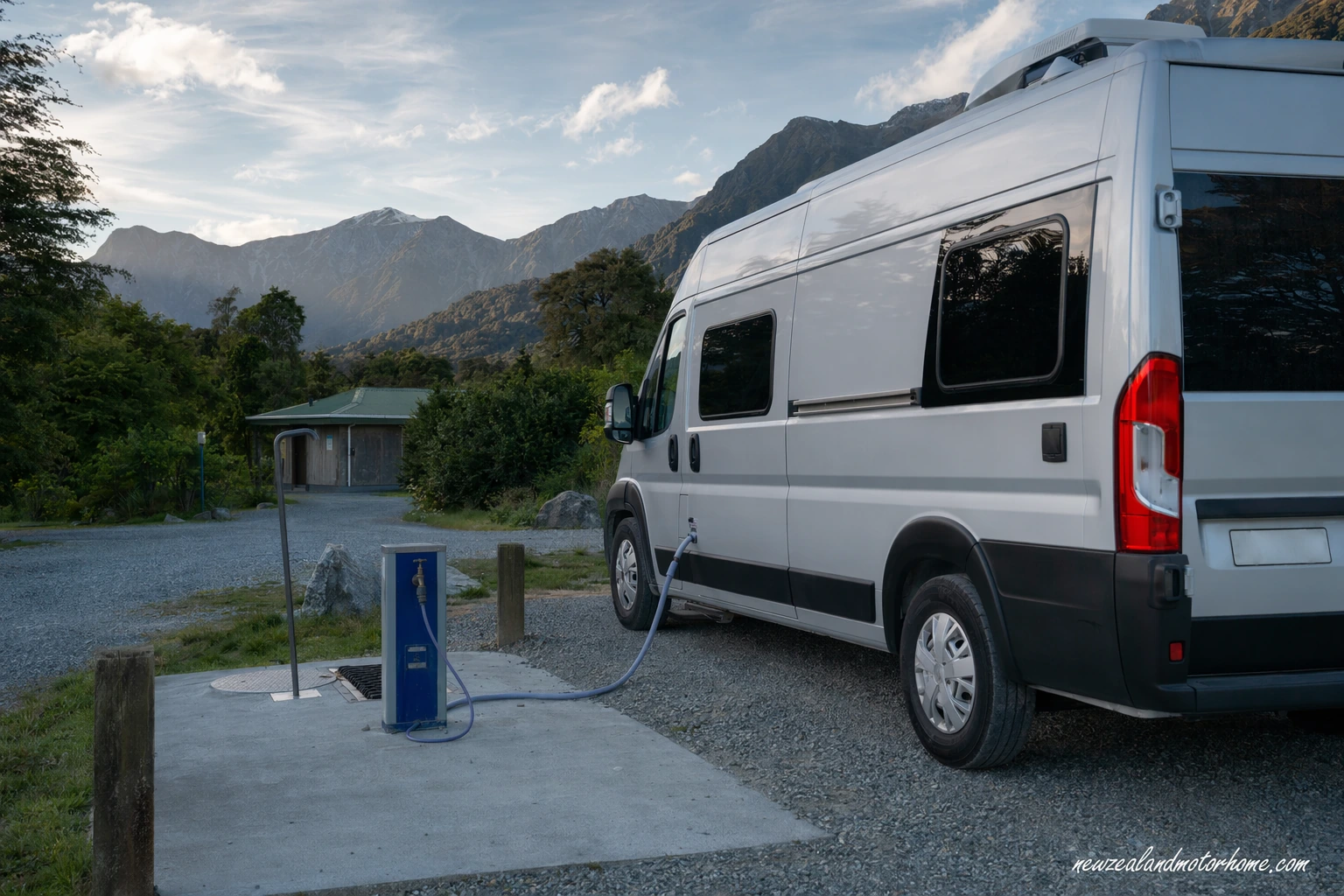
A good Wairarapa campervan loop works best when you plan your van jobs before heading out to the coast. Many holiday parks provide fresh-water taps and may have dump points for guests, but do not assume every smaller campground has full facilities. Check the listing when you book, especially if your grey-water tank is small.
Public dump stations are generally found in or near the larger towns and some coastal settlements, with locations changing from time to time. Use current council information or your campervan app before relying on one, and arrive with enough daylight to manoeuvre without rushing. Always use potable-water taps only for filling your fresh tank, and keep a separate hose or fitting if your hire van provides one.
- Before the coast: empty toilet and grey water, top up fresh water, and check fuel range.
- LPG: sort bottle swaps or refills in the main towns rather than leaving it until a remote beach night.
- Rubbish: carry it back to a proper bin or transfer station; coastal bins fill quickly in summer.
- Toilet cassette: never empty into public toilets, drains or the bush; use a signed dump station only.
Things to do near Wairarapa holiday park bases
The best things to do near Wairarapa are spread between the valley and the coast, so match your holiday park to the kind of day you want. From Greytown or Martinborough you can do easy village wandering, food stops, short cycle rides and relaxed vineyard visits without a long drive. From Masterton, you are better placed for Queen Elizabeth Park, local museums, and the road out to Castlepoint.
Coastal drives are rewarding in a campervan, but they are not the place to hurry. Castlepoint has big-sky beach scenery and a lighthouse walk, while Cape Palliser has seal colonies, rugged cliffs and a lighthouse stair climb. Roads can be narrow, windy, exposed to gusts and sometimes gravel near the edges of the region, so check conditions and avoid arriving after dark in a large motorhome.
- Castlepoint: park only in signed areas and be mindful of sand, wind and pedestrians near the beach.
- Lake Ferry: a classic wild-coast stop; secure loose gear because southerlies can arrive fast.
- Cape Palliser: allow time for the drive, keep left on blind corners, and watch for stock or seals near the road.
- Martinborough vineyards: leave the van parked overnight and walk, cycle or use local transport options if tasting.
Freedom camping and seasonal notes
Freedom camping rules vary across Wairarapa, and signs on the ground matter. If you are in a certified self-contained campervan, you may have more options, but that certificate does not mean you can stay anywhere. Check district bylaws, local signage and any temporary restrictions before settling in for the night.
Summer weekends and holiday periods can fill coastal camping areas quickly, especially when the weather is calm. Winter is quieter and atmospheric, but powered sites become more useful because evenings are cold and daylight for solar charging is shorter. In any season, wind is the region’s big practical factor: choose your site so the van door is sheltered, put awnings away before leaving, and avoid parking under large branches in a gale.
- Book ahead: for long weekends, school holidays and settled summer weather.
- Arrive before dark: coastal sites and campground layouts are easier to read in daylight.
- Check self-containment: your hire van should display current certification if you plan to use freedom camping areas.
- Leave no trace: contain grey water, secure rubbish and respect quiet hours around other vans.
Keep planning
Common questions
Are Wairarapa holiday parks suitable for larger motorhomes?
Yes, many are, but always state your vehicle length when booking. Coastal parks and older campgrounds can have tighter access, trees or softer grass sites, so ask for a suitable bay or hardstand if you are in a longer motorhome.
Do I need a powered site in Wairarapa?
Not every night, especially if your campervan has solar and you are travelling in summer. A powered site is handy after cloudy weather, in winter, or before a coast run where you want batteries, devices and heating fully sorted.
Can I freedom camp in Wairarapa with a self-contained van?
Only where local rules allow it. A certified self-contained campervan helps, but you still need to follow district bylaws, signs and any seasonal restrictions, and you must use proper dump stations for toilet and grey water.
Where should I base myself for wineries in a campervan?
Martinborough is the easiest base because you can park the van for the night and explore the village and nearby cellar doors without driving after tastings. Choose a managed holiday park or legal overnight stop within walking or cycling distance where possible.
Is the Remutaka Hill difficult in a campervan?
It is manageable in a hired campervan, but it is steep and winding. Drive slowly, use lower gears on descents, keep left, and pull into proper slow-vehicle bays when safe if traffic builds behind you.
Have a planner shape this for your dates
Send a short outline — your dates, party size, and the kind of trip you want. A planner replies with a vehicle recommendation, a paced route, and the realistic budget.