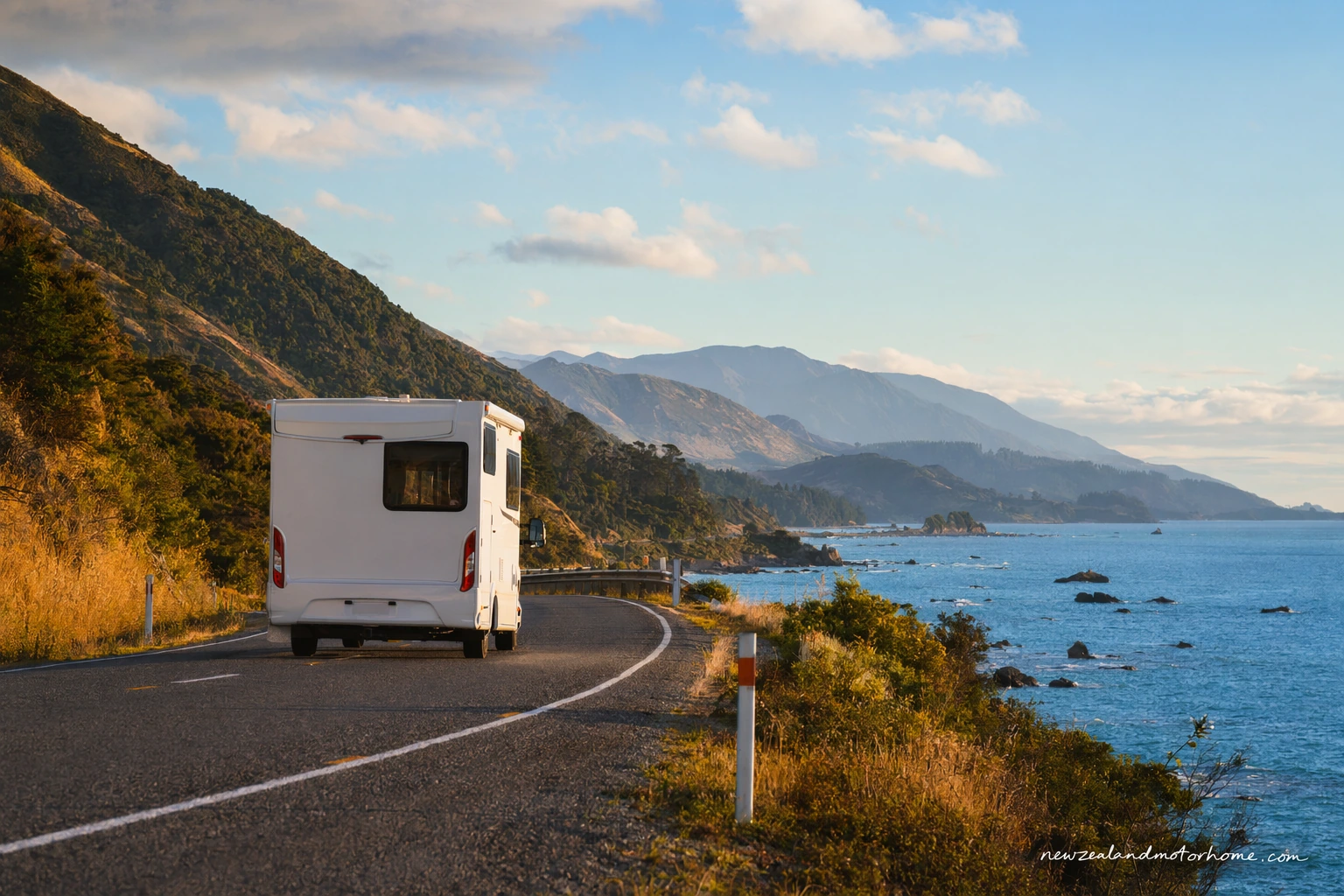
Christchurch to Nelson campervan route for self-drive travellers
- Best over 2–3 days
- Sealed route via Lewis Pass
- Powered sites in Hanmer and Nelson
- Check winter road conditions
- Self-contained camping only where signed
The Christchurch to Nelson campervan route is one of the South Island’s most useful cross-island drives: out of the Canterbury Plains, over the Lewis Pass, through river valleys and beech forest, then down into the sunny top of the South. It is a very doable point-to-point trip, but it is much better when you treat it as a motorhome journey rather than a straight dash.
This guide is written for travellers driving and sleeping in their hired van. You’ll find sensible leg lengths, where to think about powered and unpowered sites, how to approach freedom camping, and the practical bits that matter on the christchurch to nelson drive: dump stations, fresh water, LPG, mountain-road weather and parking a larger vehicle in small towns.
Best route overview: via Waipara, Hanmer Springs and Lewis Pass
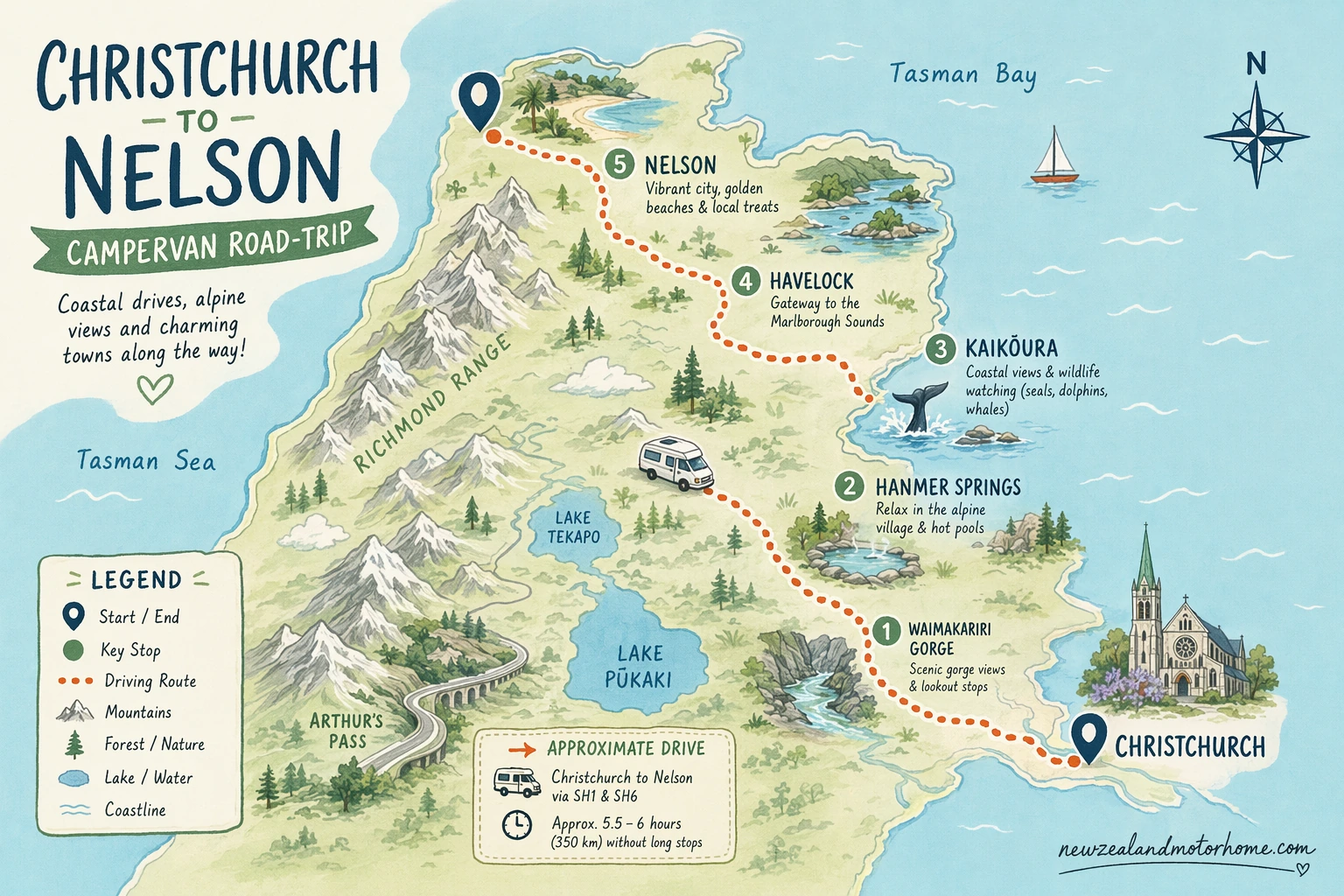
For most campervans and motorhomes, the best Christchurch to Nelson motorhome road trip follows SH1 north to Waipara, SH7 through Culverden and the Lewis Pass, then SH65 and SH6 through Murchison to Nelson. It is sealed all the way and is the main inland connection, with enough towns along the way to break the trip properly.
Allow around 5.5 to 7 hours of driving time without long stops, depending on traffic, weather and how comfortable you are with winding sections. In a van, it is far nicer over two or three days, especially if you want to soak at Hanmer Springs, walk a short forest track near Lewis Pass, or stop for the Buller Gorge.
- Most common campervan route: Christchurch → Waipara → Culverden → Hanmer Springs turn-off → Lewis Pass → Maruia → Murchison → Nelson.
- Road type: sealed state highways with rural stretches, hills, river valleys and some winding pass sections.
- Best pace: two nights on the road if you want a relaxed drive and daylight arrivals at campsites.
- Avoid as shortcuts: remote gravel routes such as Molesworth or Rainbow Road unless your hire agreement specifically allows them and conditions are suitable.
How many days to allow in a campervan
You can drive Christchurch to Nelson in one long day, but that usually means treating your van like a car and arriving tired. For a self-drive campervan trip, two days is the minimum comfortable pace, while three days gives you time to use the van well: stock the fridge, empty the toilet cassette, plug into power, and arrive before dark.
A simple two-day plan is Christchurch to Hanmer Springs or the Lewis Pass area on day one, then through Murchison to Nelson on day two. A three-day plan adds a night around Murchison, Maruia or St Arnaud, which is useful if you enjoy short walks, river stops, or slower morning pack-ups.
- One day: possible, but start early, share the driving if insured, and plan only quick stops.
- Two days: best for most hired vans, with one overnight around Hanmer Springs or Murchison.
- Three days: ideal if you want the route to feel like part of the holiday, not just a transfer.
- Winter note: keep extra time in hand for frost, low cloud, snow warnings and slower pass driving.
Leg 1: Christchurch to Hanmer Springs or Culverden
Leave Christchurch with your van sorted before you hit the open road. Fill fresh water, check LPG if you are relying on the hob or heater, and use a dump station before departure if your cassette or grey tank is already partly full. Supermarkets on the northern side of the city are handy for stocking up before the rural stretches begin.
The drive north crosses the Canterbury Plains, then rolls through Waipara wine country and the Weka Pass area towards Culverden. Roads are generally straightforward for motorhomes, though wind can push at high-sided vans across exposed sections. Use slower-vehicle bays where available and do not feel pressured by faster traffic behind you.
Hanmer Springs is the natural first overnight if you want a comfortable start. It has holiday park-style camping with powered sites, unpowered options and guest facilities; freedom camping rules around the village are controlled, so only use clearly permitted places if your vehicle is currently certified self-contained.
- Good van stop: Hanmer Springs for powered sites, showers and an easy reset after Christchurch.
- Practical jobs: top up groceries before leaving Christchurch; check water, LPG and toilet capacity.
- Parking tip: in Hanmer, choose larger public parking areas and avoid squeezing a long van into tight angle parks near busy footpaths.
Leg 2: Hanmer Springs to Murchison via Lewis Pass
This is the most alpine-feeling part of the route. From the Hanmer turn-off, SH7 climbs and winds through forested country towards Lewis Pass, then drops through river valleys towards Maruia and Murchison. It is sealed and commonly driven by campervans, but it deserves respect: take corners gently, watch for wet leaves and grit, and use low gear on descents rather than riding the brakes.
In winter and shoulder seasons, check the road status and weather before you leave your overnight stop. Snow, ice and black ice can affect the pass, and a heavy motorhome takes longer to stop than a small car. If conditions look marginal, waiting a few hours for daylight and road crews is often the safest decision.
Murchison makes a practical overnight because it sits at the meeting point of several river routes and gives you a manageable final run to Nelson. Look for campgrounds with powered or unpowered sites, and confirm dump station access before you rely on it; some facilities are for guests only while public dump points can change location or access rules.
- Driving note: keep left, let queues pass when safe, and expect slower speeds through the pass.
- Van comfort: a powered night after a cold pass drive helps recharge batteries and dry damp gear.
- Supplies: do not assume late-night fuel, LPG or groceries in small settlements; plan ahead.
Leg 3: Murchison to Nelson and arriving in the city
The final leg follows SH6 through the Buller and Motueka-side approaches before dropping towards Nelson. It is scenic rather than difficult, with winding sections, river viewpoints and small-town stops where a long campervan needs a little patience. Pull completely off the carriageway for photo stops; soft shoulders and narrow lay-bys are not worth the risk in a loaded motorhome.
Arriving in Nelson, decide early whether you want a beachside base around Tāhunanui, a city-edge holiday park, or a quieter unpowered site out of town. Nelson has stricter urban parking and freedom camping controls than many travellers expect, so read signs carefully and use only approved overnight areas if you are relying on self-contained camping.
Before settling in for multiple nights, it is worth doing the service loop: dump the cassette and grey water at a signed dump station, refill fresh water, and check whether you need LPG before heading towards Abel Tasman, Golden Bay or Marlborough. If you want help turning this into a wider South Island loop, you can use the talk-to-us trip planning step and share your van size, travel dates and campsite style.
- Nelson base options: powered holiday park sites, unpowered campground sites, or approved self-contained overnight areas where signed.
- Urban parking: look for longer bays or edge-of-centre parking rather than tight central streets.
- Before moving on: dump, refill fresh water, restock food and confirm your next overnight spot.
Freedom camping, dump stations and van services on this route
Freedom camping between Christchurch and Nelson is not a single rule; it changes by council area, land manager and individual sign. A certified self-contained vehicle is usually the starting point, and current NZ rules place more emphasis on fixed toilet facilities. Even then, some places still prohibit overnight camping, so always follow the sign in front of you rather than an old app screenshot.
For a low-stress trip, use holiday parks when you need showers, laundry, power and guaranteed waste disposal, then mix in approved low-cost or freedom camping only where it is clearly allowed. This route has enough service towns that you should not need to carry a full cassette or grey tank for long, but you do need to plan around opening hours, guest-only facilities and seasonal pressure.
- Dump station planning: check current signed facilities in Christchurch, Hanmer Springs, Murchison and Nelson before you rely on them.
- Fresh water: refill at campgrounds or marked potable taps only; not every public tap is drinking water.
- LPG: sort bottle swaps or refills in larger towns rather than waiting until the pass or late evening.
- Self-containment: keep your certification visible and use your onboard toilet and grey-water system properly.
- Leave-no-trace habit: never drain grey water on the ground, even in remote-looking pull-offs.
Keep planning
Common questions
Can I drive Christchurch to Nelson in one day in a campervan?
Is the Lewis Pass suitable for motorhomes?
Where should I stay overnight between Christchurch and Nelson?
Can I freedom camp on the Christchurch to Nelson drive?
Do I need to book powered sites in advance?
Are there dump stations along the route?
Have a planner shape this for your dates
Send a short outline — your dates, party size, and the kind of trip you want. A planner replies with a vehicle recommendation, a paced route, and the realistic budget.