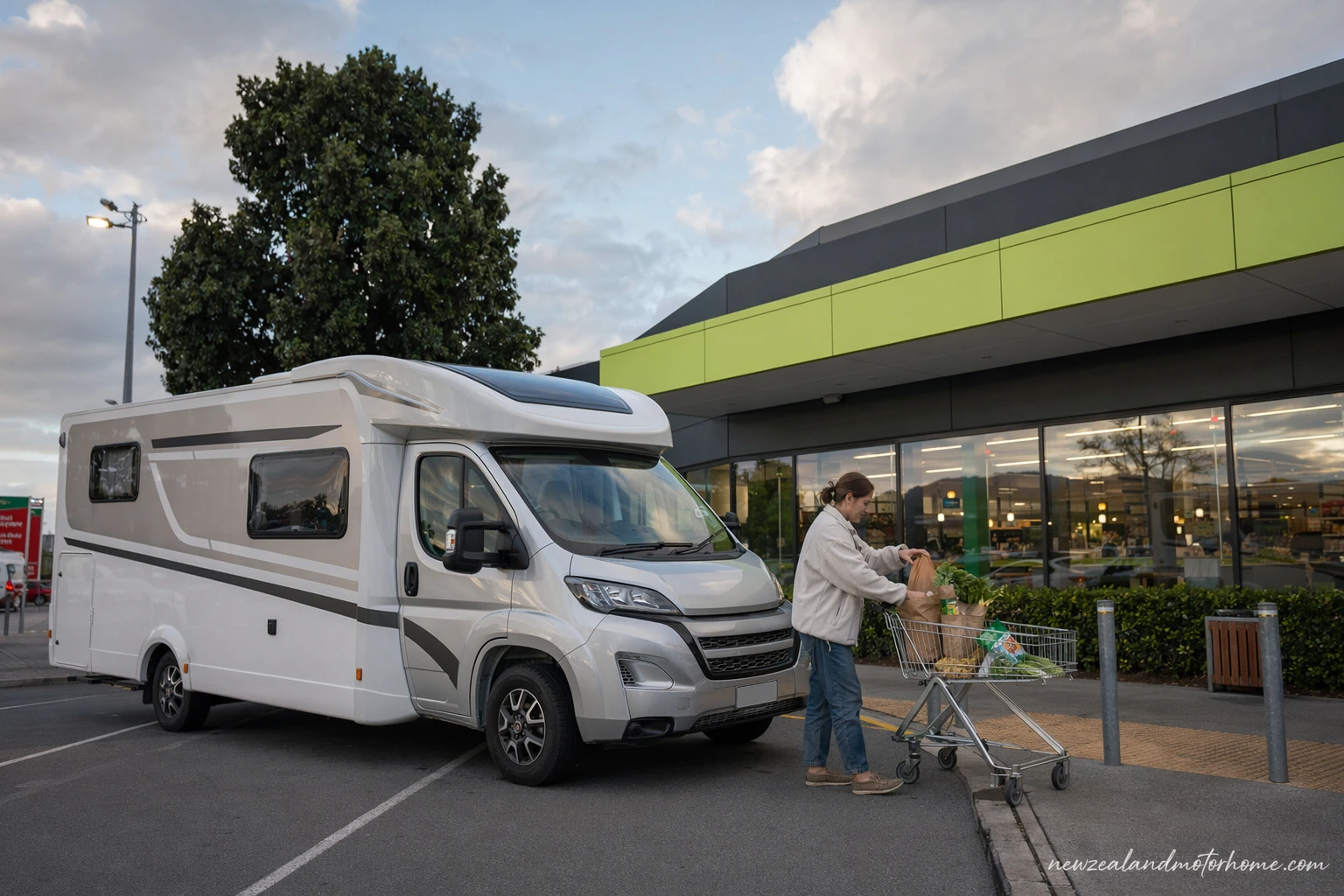
- Best done on pickup day
- Open-air parking preferred
- Check van height before shopping
- LPG, water and dump reset
- Useful before alpine routes
Christchurch is one of the easiest places in the South Island to get a hired campervan properly road-ready. If you have just collected your van near the airport, or you are pausing in the city before heading for the West Coast, Mackenzie Country or Banks Peninsula, this is the place to sort food, LPG, fresh water, laundry and waste without rushing.
This guide is written for self-drive campervan and motorhome travellers: where to park a taller van while you shop, how to think about LPG and dump stations, what to buy before longer rural stretches, and how to avoid starting your trip with half a water tank and a full grey-water cassette.
Best areas to shop when you have a van
The most useful supermarket stops for campervans are usually outside the tightest part of the CBD. Look around the airport side of town, Riccarton, Papanui, Hornby, Sydenham and Ferrymead for larger supermarkets with open-air parking and easier turning space. If you are searching for supermarkets Christchurch campervan travellers can actually use, prioritise the ones beside wide arterial roads rather than small central-city convenience stores.
Do not assume a motorhome will fit under a covered mall car park. Many hired vans are close to or over common height limits once roof vents, solar panels or air-con units are included. Use open-air bays, park at the far edge of the car park, and avoid blocking pedestrian paths with the rear overhang.
- Check your vehicle height before leaving the depot and write it on a note near the dash.
- Send one person in with a list while the driver stays with the van if the car park is busy.
- Avoid peak after-work supermarket runs if you are still getting used to the van’s length.
- Keep heavy groceries low and forward in cupboards so they do not shift on hill roads.
If your first night is at a holiday park, shop before you check in, then plug into a powered site and load the fridge while it is stable. Three-way fridges and compressor fridges behave differently, so follow your hire company’s instructions before packing it tight.
LPG, fuel and the first mechanical check
Before leaving Christchurch, check whether your camper uses swap bottles, refillable LPG bottles, or a fixed LPG tank. An lpg refill Christchurch stop is easiest to organise while you are still in the city, because smaller rural settlements may have limited opening hours or bottle options. If you are unsure, ask your hire depot what fitting your van uses and whether you should refill or exchange.
Petrol stations Christchurch-wide are also useful for more than fuel. Use a larger forecourt where you can swing in without reversing across traffic, then check diesel or petrol type, AdBlue if fitted, tyre pressure, windscreen wash and the location of the fuel cap before the trip gets rural.
- Confirm whether your hot water, hob and heater run on LPG, diesel or electricity.
- Carry enough LPG for cold nights if you are heading inland or into the mountains.
- Use the correct fuel grade; a misfuelled camper can end a trip before it starts.
- Top up before Arthur’s Pass, Lewis Pass or long stretches toward the Mackenzie Basin.
Do not park across the LPG cage or dump-point access while repacking the van. Move to a normal bay once you have paid, then secure bottles, close locker vents as instructed, and make sure the fridge door is latched before driving.
Fresh water, grey water and dump stations
A proper reset means fresh water in, waste water out. A dump station Christchurch stop is worth doing even if the cassette is only half full, especially before crossing the Alps or driving to smaller coastal settlements. Holiday parks, some service centres and public dump stations can be available around the wider city, but access and potable-water taps vary, so check current listings before you drive across town.
Only use signed dump stations for toilet cassette and grey-water disposal. Do not empty grey water into drains, gutters or campsites, and only fill from taps marked as drinking water. If your campervan is certified self-contained, keep the certificate visible and treat the tanks as part of the vehicle’s daily routine, not an emergency job.
- Empty the toilet cassette before it is full; it is easier and cleaner.
- Use toilet chemical that suits your hire company’s system.
- Keep a separate hose or marked container for non-drinking-water tasks.
- Refill drinking water slowly so the tank can vent without splashing back.
If you are arriving late, book a powered site and handle the dump and water fill in daylight the next morning. It is much easier to spot the correct taps, drains and hose connections when you are not tired from an international flight or a long drive.
Laundry, rubbish and the small jobs that save time later
A laundromat Christchurch stop can be a good reset before you head into cooler or wetter country. Look for one with street-level access or nearby open parking, because parallel parking a long motorhome on a narrow suburban street is not fun when laundry baskets are involved. Avoid leaving valuables visible in the cab while you wait.
Christchurch is also the place to deal with the unglamorous supplies: rubbish bags, paper towels, toilet paper approved for camper toilets, basic cleaning spray, dish cloths, matches or a lighter if your cooker needs one, and a small tub for muddy shoes. These little things are harder to find once you are parked up by a lake at dusk.
- Separate recycling from general rubbish before it builds up in the van.
- Keep wet towels away from bedding; condensation is already enough to manage.
- Buy a compact clothesline or pegs if your hire van does not include them.
- Store laundry powder in a sealed container so it does not spill in a cupboard.
If you are planning several freedom-camping nights, pack for tidy living: extra rubbish bags, a doormat, and a plan for where waste will go. Freedom camping rules around Christchurch and Canterbury are location-specific, and certification does not mean you can overnight in any car park you like.
What to stock for the road out of Christchurch
Your shopping list should match the direction you are driving. The run to Akaroa has steep, winding sections; the West Coast routes can include alpine weather; and the inland highways toward Tekapo and Aoraki/Mount Cook have longer gaps between big supermarkets. Stock the van so you can cook a simple meal even if the weather turns or a scenic stop takes longer than expected.
For most first legs, carry one to two days of easy food, drinking water, snacks, breakfast supplies and something warm for a late arrival. If you are using unpowered sites, think about meals that do not need long oven time or heavy battery use. If you are booked into powered sites, you can lean more on the microwave, kettle and heater, but still secure everything before driving.
- For Banks Peninsula: keep cupboards well latched before the hill roads.
- For Arthur’s Pass: top up fuel, LPG and warm layers before leaving the plains.
- For Lake Tekapo or Aoraki/Mount Cook: buy main groceries in Christchurch or Ashburton.
- For Kaikōura: carry water and food in case you linger at coastal pull-offs.
If you want help matching your first supplies stop to your route and van size, you can talk to us before you lock in the first night. A little planning here makes the first driving day calmer, especially if this is your first time handling a larger motorhome on New Zealand roads.
Keep planning
Holiday parks christchurch
Read onChristchurch to wellington campervan
Read onChristchurch to tauranga campervan
Read onChristchurch to rotorua campervan
Read onChristchurch to queenstown campervan
Read onChristchurch to picton campervan
Read onCommon questions
Can I park a campervan at Christchurch supermarkets?
Where should I refill LPG in Christchurch before leaving town?
Do I need to use a dump station before my first night?
Is freedom camping allowed in Christchurch?
Should I book a powered site for the first night after picking up the van?
Have a planner shape this for your dates
Send a short outline — your dates, party size, and the kind of trip you want. A planner replies with a vehicle recommendation, a paced route, and the realistic budget.