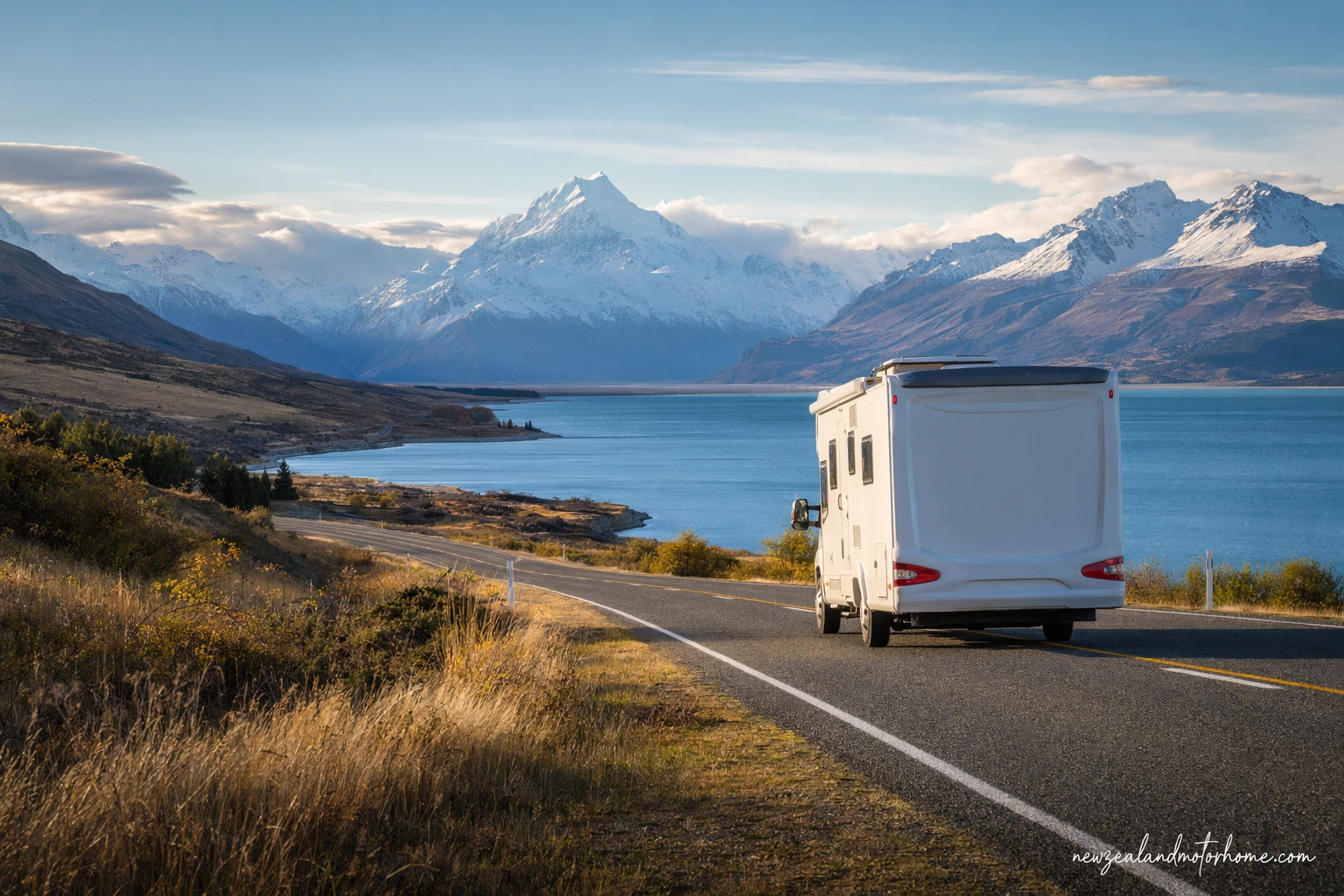
Christchurch to Queenstown campervan route for a relaxed South Island drive
- Best with 3–5 days
- Sealed state highways
- Lindis Pass weather watch
- Book Tekapo and Queenstown sites
- Certified self-contained for freedom camping
The Christchurch to Queenstown campervan trip is one of the South Island’s great inland drives: flat Canterbury paddocks, the turquoise lakes of the Mackenzie Country, the dry tussock of the Lindis Pass, then the tight, beautiful run into the Whakatipu Basin. It is a route that suits a self-drive van well, as long as you give yourself time and do not treat it as a single dash.
This guide breaks the christchurch to queenstown drive into practical motorhome legs, with overnight ideas, road notes, places to think about fresh water, LPG and dump stations, and the little van-specific decisions that make the trip easier. It is written for travellers sleeping in their hired campervan or motorhome, not just passing through with day bags in the boot.
How many days to allow in a campervan
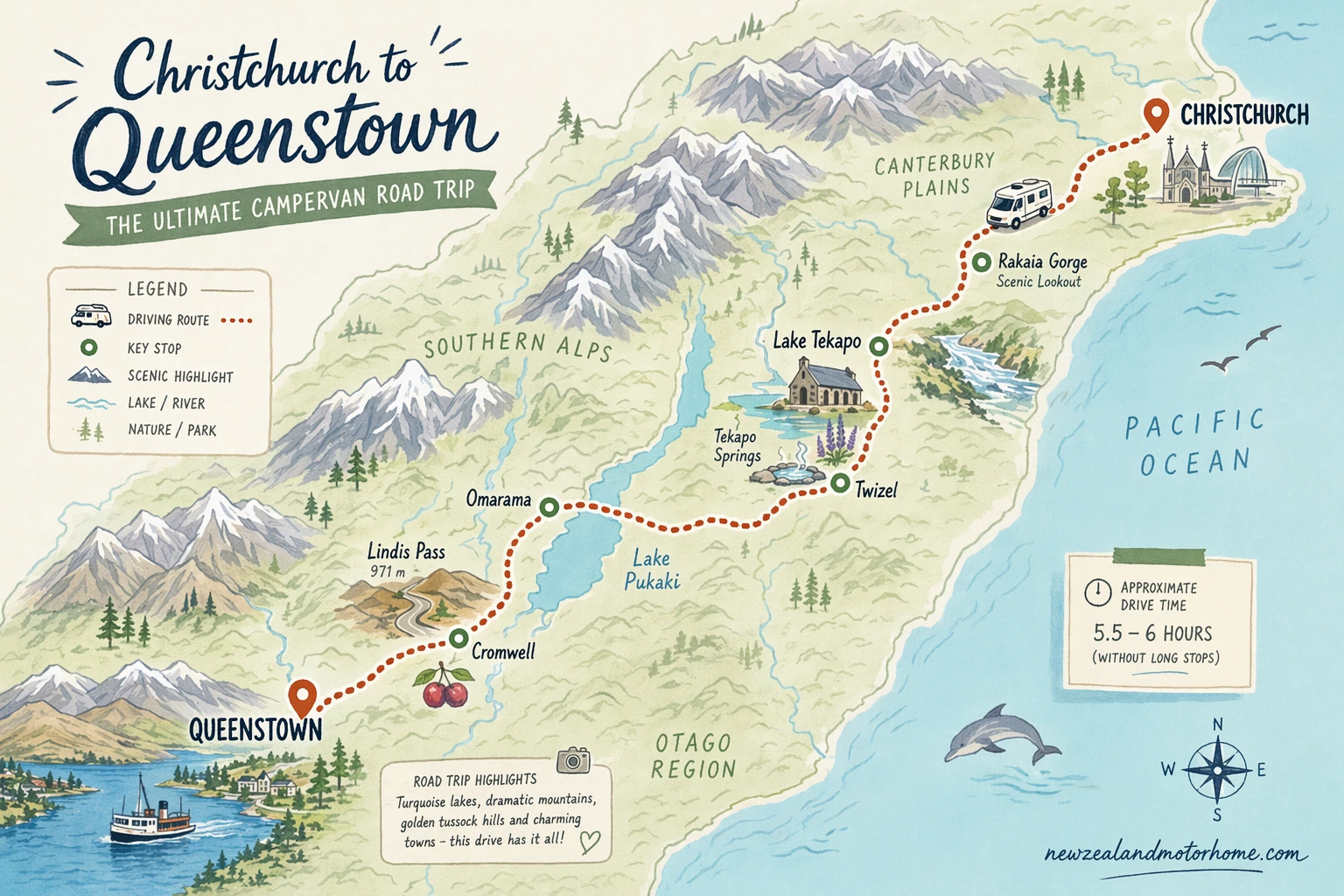
You can drive from Christchurch to Queenstown in a long day, but it is not a good use of a campervan. The distance is roughly 480–500 kilometres depending on your exact route, and much of the reward comes from stopping beside lakes, walking short tracks, and arriving at camp before you are tired enough to make poor parking decisions.
For most motorhome travellers, three days is comfortable and four to five days is better if you want Tekapo, Aoraki/Mount Cook, Wānaka or Cromwell in the mix. Winter driving, school holidays and larger 6-berth motorhomes all push the timing slower.
- Fast but reasonable: 2 days, with one overnight around Tekapo, Twizel or Ōmarama.
- Best balance: 3 days, usually Christchurch to Tekapo, Tekapo to Wānaka or Cromwell, then Queenstown.
- Slow scenic version: 4–5 days with an Aoraki/Mount Cook side trip and an extra night near Wānaka, Cromwell or Arrowtown.
- Van rhythm: aim to arrive at overnight stops by mid-afternoon, especially if you need a powered site, laundry, showers or a dump station.
If you are still choosing dates, van size or overnight style, you can use our talk to us planning step before locking the route in.
Leg 1: Christchurch to Geraldine or Lake Tekapo
Leaving Christchurch, most campervans head south on SH1 through the Canterbury Plains before turning inland via Geraldine and Fairlie. The roads are generally straightforward for hired motorhomes, with wide sections and plenty of rural service stops, but the first day is where you should get organised rather than rush to the mountains.
Christchurch is the easiest place on the whole route to sort supermarket supplies, LPG, fresh water, bedding tweaks and any questions about your self-containment certificate. Once you are inland, services are still available but more spaced out, and late arrivals can mean fewer easy parking options for a larger van.
- Good first-night options: Geraldine for an easier day, or Lake Tekapo if you start early and are confident with the van.
- Powered sites: look for holiday parks in Geraldine, Fairlie or Tekapo if you want mains power, hot showers and a simple dump-station reset.
- Unpowered camping: some campgrounds offer cheaper unpowered sites; check whether your van battery and fridge set-up suits a night off-grid.
- Freedom camping: only use permitted areas, and only if your campervan is certified self-contained under the current NZ rules. Local bylaws change, so check signage on arrival.
Tekapo village can feel busy in peak season and roadside parking around the lake is limited for long vehicles. Use marked parking bays, avoid blocking lakeside pull-outs, and be patient around photo stops where smaller cars tend to move unpredictably.
Leg 2: Tekapo, Aoraki/Mount Cook and Twizel
From Tekapo, SH8 runs past Lake Pukaki, where the water can look unreal on a clear day. This is one of the most memorable parts of a Christchurch to Queenstown motorhome road trip, but it is also exposed country: wind can push a high-sided van around, especially on the open lake edges.
The side trip up SH80 to Aoraki/Mount Cook Village is well worth considering if the weather is settled. The road is sealed and used by campervans, but there are long open stretches, sudden weather shifts and limited services once you leave the Pukaki junction. Fill your water and fuel earlier if you are running low, and do not expect to wild-camp wherever there is a view.
- Parking the van: use designated car parks at lookouts and walks; arrive early for popular trailheads, as long bays fill quickly.
- Overnight stops: Tekapo, Twizel and the wider Mackenzie area have campground options; DOC-style sites may be more basic and often suit self-contained vans better.
- Dump stations and water: plan around Tekapo or Twizel rather than leaving it until you are already in the national park area.
- Weather note: if nor’west winds are strong, slow down, keep both hands on the wheel, and give extra room when meeting trucks or towing vehicles.
Twizel is a practical campervan stop because it breaks the route before the Lindis Pass and gives you another chance to reset the van. It is also less of a squeeze than trying to do everything in Queenstown at the end of a long driving day.
Leg 3: Twizel or Ōmarama to Cromwell, Wānaka or Arrowtown
South of Twizel, the route moves through Ōmarama and over the Lindis Pass. This is sealed state highway driving, but it is still mountain-country driving: expect climbs, descents, broad corners and changing conditions. In winter, check road updates before you commit, carry chains if your hire agreement requires them, and do not assume a big motorhome will behave like a car on shaded corners.
After the Lindis, you can continue towards Cromwell and Queenstown, or detour to Wānaka. Wānaka adds kilometres but gives a gentler overnight before Queenstown’s tighter parking and busier holiday-park scene. Cromwell is practical for supplies, fuel, fresh water and dump-station planning, while Arrowtown can be lovely but has limited space for large vans in its historic centre.
- Lindis Pass driving: use lower gears on descents, avoid hard braking, and pull over only where there is a proper bay.
- Vehicle size: standard 2- to 6-berth motorhomes regularly use this route, but longer vans need more care in small-town parking and scenic pull-outs.
- Wānaka option: good for a slower trip, lakeside walks and a night away from Queenstown pressure.
- Cromwell option: useful for groceries, LPG, dump stations and an easier final leg through the Kawarau Gorge.
If you are freedom camping through this section, be especially careful with local signage. Central Otago and Queenstown Lakes rules are actively managed, and a self-contained sticker does not automatically mean you can overnight in any lay-by or lakefront car park.
Arriving in Queenstown with a motorhome
The final approach to Queenstown usually comes through the Kawarau Gorge and Frankton. The road is scenic but narrower and busier than the open Mackenzie sections, with cyclists, tour traffic, airport traffic and drivers slowing for views. Take your time, leave space, and avoid arriving in the dark if this is your first day in a larger van.
Queenstown itself is not an easy town for casual motorhome parking. Streets are tight, central parks fill quickly, and some parking areas have height, length or time restrictions. The simplest plan is to book a holiday park or approved campground, park the van once, then walk, bus or shuttle into town rather than circling the CBD.
- Best arrival pattern: refuel or shop around Frankton if needed, then go straight to your overnight site.
- Powered sites: strongly recommended if you are staying several nights and using heating, device charging or cooking heavily.
- Dump and water: use your campground facilities where provided, or plan an approved public dump station before leaving the district.
- Freedom camping: Queenstown Lakes has strict rules; check current council information and obey every on-site sign.
If Queenstown is the end of your hire, allow time to empty grey and black water, refill fuel as required by your rental terms, tidy the living area and get from the drop-off point without rushing. End-of-trip jobs always take longer than they look when the van is full of bags, food leftovers and damp towels.
Practical campervan checks before you leave Christchurch
A smooth christchurch to queenstown campervan trip often comes down to what you do in the first hour. Before leaving the city, check that you understand the fresh-water fill, grey-water drain, toilet cassette, LPG bottle, heating controls and mains-power lead. It is much easier to ask questions in Christchurch than in a windy lake car park at dusk.
Also check your route against the season. Summer brings heat, full campgrounds and busy lakefront stops; autumn is often settled but cooler at night; winter can mean ice, chains and shorter daylight; spring can be windy and changeable. None of that makes the route unsuitable for a motorhome, but it changes how much distance you should plan each day.
- Self-containment: confirm the certificate is current and displayed correctly if you intend to use any permitted freedom camping areas.
- Power: book powered sites every few nights if you are relying on heating, laptops, camera charging or medical devices.
- Water and waste: never dump grey water or toilet waste anywhere except an approved dump station.
- Road comfort: secure drawers, fridge contents and loose gear before the Lindis Pass and Kawarau Gorge sections.
- Bookings: reserve Queenstown and Tekapo overnights early in peak summer, Easter, ski season and long weekends.
The route is popular because it works: plenty of sealed-road scenery, a strong chain of campervan services, and natural overnight breaks. Give the van a bit of breathing room in your itinerary and the drive becomes part of the holiday, not just the transfer between two famous places.
Keep planning
Visiting skyline queenstown gondola by campervan
Read onHoliday parks queenstown skyline
Read onHoliday parks queenstown lakes
Read onHoliday parks queenstown
Read onHoliday parks christchurch
Read onFarmers markets queenstown lakes
Read onCommon questions
Can I drive a campervan from Christchurch to Queenstown in one day?
Yes, it is physically possible, but it makes for a long and tiring day in a motorhome. Most self-drive travellers are better allowing at least two days, and three days gives you time for Tekapo, Lake Pukaki and a safer, calmer arrival into Queenstown.
Is the Lindis Pass suitable for a motorhome?
Yes, the Lindis Pass is a sealed state highway and is commonly driven by campervans and motorhomes. Take it steadily, use lower gears on descents, watch for wind and winter ice, and only stop in proper pull-outs where your full vehicle length is clear of the lane.
Where should I overnight between Christchurch and Queenstown?
Good campervan overnights include Geraldine or Fairlie for an easy first day, Tekapo or Twizel for lake and Mackenzie scenery, and Wānaka or Cromwell before the final Queenstown leg. Choose holiday parks for powered sites and facilities, or permitted basic sites only if your van and battery set-up suit them.
Can I freedom camp on the Christchurch to Queenstown drive?
Only in places where freedom camping is permitted, and usually only with a certified self-contained campervan. Rules vary by district and can change, so check council information and on-site signs rather than relying on an old app pin or a roadside cluster of vans.
Do I need to book campsites in advance?
For Queenstown, Tekapo and Wānaka, booking ahead is wise in summer, school holidays, long weekends and ski season. If you need a powered site or are driving a larger motorhome, advance booking gives you more choice and reduces the chance of arriving late with nowhere suitable to park.
Where can I empty waste and refill water on this route?
Plan around larger service stops such as Christchurch, Geraldine or Fairlie, Tekapo, Twizel, Cromwell, Wānaka and Queenstown/Frankton. Use only approved dump stations for grey water and toilet cassettes, and top up fresh water whenever you have an easy legal opportunity rather than waiting until the tank is low.
Have a planner shape this for your dates
Send a short outline — your dates, party size, and the kind of trip you want. A planner replies with a vehicle recommendation, a paced route, and the realistic budget.