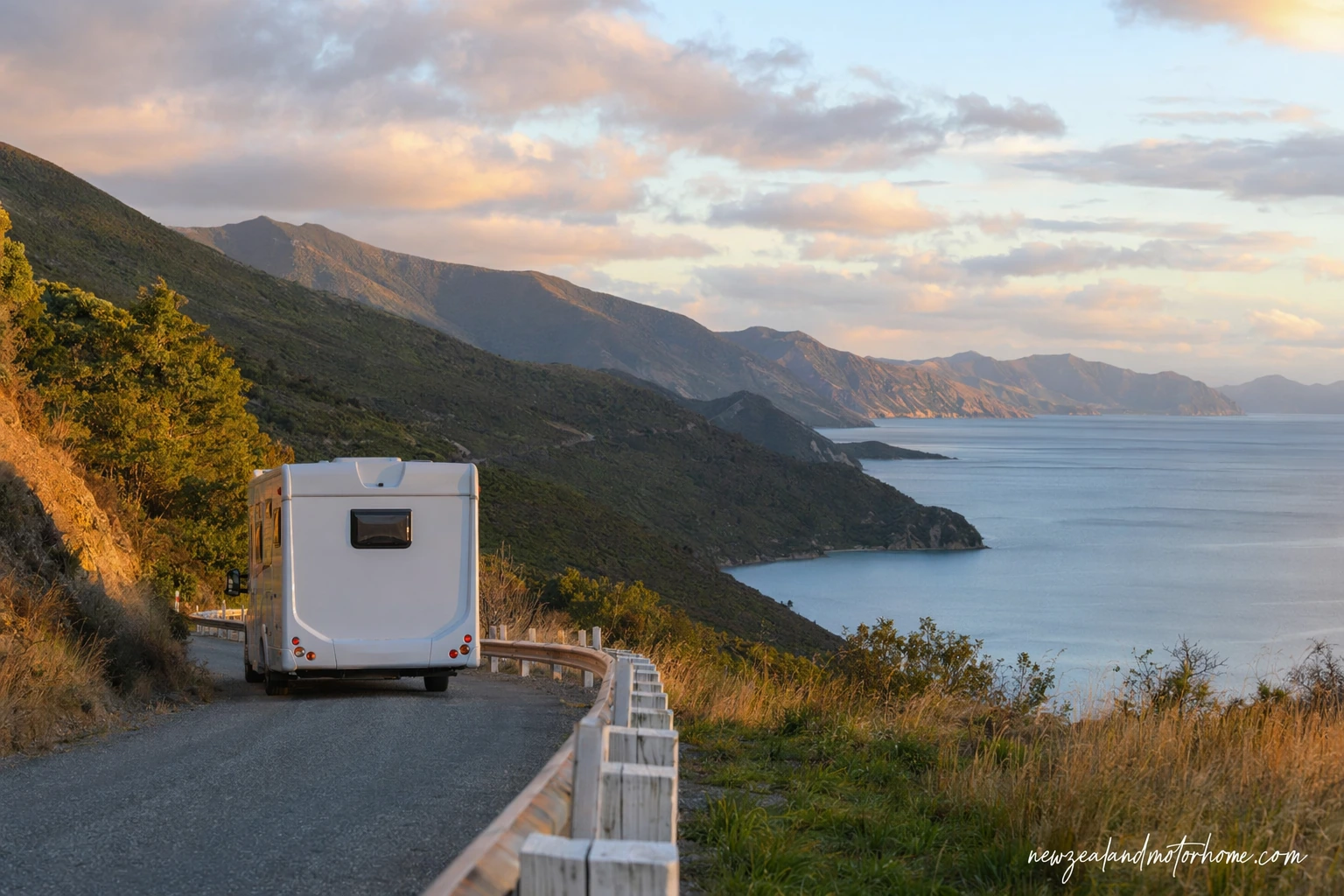
Christchurch to Picton campervan route: coast, Kaikōura and ferry timing
- Allow 2 days for comfort
- Approx. 340 km via SH1
- Best overnight: Kaikōura
- Dump in main towns
- Check ferry LPG rules
The Christchurch to Picton campervan route is one of the South Island’s most useful drives: a practical ferry link, but also a proper coastal road trip if you give it time. You’ll roll north from the Canterbury Plains, cross the Hundalee Hills, meet the Pacific near Kaikōura, then follow vineyard country through Marlborough before the final climb into Picton.
This guide is written for travellers driving and sleeping in their hired van. It covers the Christchurch to Picton drive in sensible legs, where to overnight with powered or unpowered options, how to manage dump stations and fresh water, and the road notes that matter when your home for the night is also your vehicle.
Route snapshot: how many days for the drive
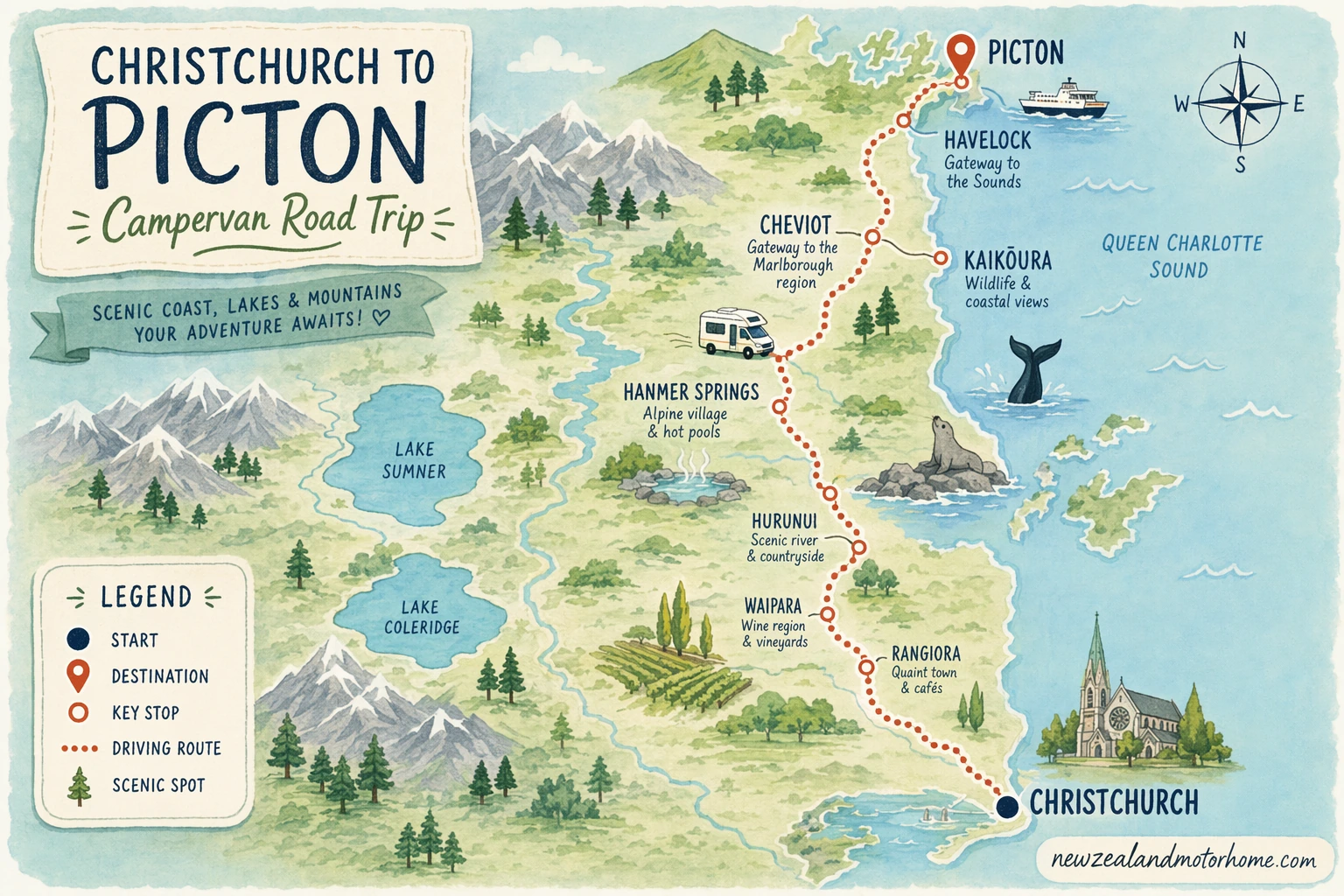
The direct Christchurch to Picton campervan drive is roughly 340 kilometres via State Highway 1. In a car it can be done in about five to six hours without lingering, but in a motorhome you’ll want more margin for slower hill sections, coastal photo stops, fuel, groceries and ferry check-in.
For most travellers, one overnight breaks the trip nicely; two or three nights turns it into a relaxed christchurch to picton motorhome road trip with time for Kaikōura wildlife, beach walks and a Marlborough stop before boarding the ferry.
- Fast but sensible: 1 long driving day only if you are already rested and have a late ferry or a Picton night booked.
- Recommended: 2 days, overnighting around Kaikōura or Cheviot/Gore Bay.
- Unhurried: 3 to 4 days with Kaikōura plus Blenheim or Picton before the ferry.
- Plan help: if your ferry, van pick-up or campground timing is tight, use the talk-to-us step and we can help line up the route sensibly.
Leg 1: Christchurch to Kaikōura in a campervan
Leave Christchurch with a full fresh-water tank, groceries sorted and the LPG bottle checked, especially if you are heading straight for the coast. The northern motorway is straightforward, then SH1 settles into rural towns, river flats and the Hundalee Hills before dropping towards the sea near Kaikōura.
Amberley and Cheviot are useful pause points for coffee, supplies and driver changes. In a longer motorhome, choose obvious roadside parking or marked bays rather than squeezing into small main-street spaces; it is easier to walk an extra minute than to reverse out under pressure with traffic behind you.
Kaikōura is the natural first overnight on this route. Use holiday parks if you want powered sites, showers and laundry, or check current council rules if you are relying on self-contained freedom camping, as local restrictions can change and are actively signed.
- Road note: the Hundalee Hills are sealed but winding; keep your speed down and use slow-vehicle bays.
- Van stop: park on the edge of town or at larger beachfront/peninsula parking areas where length is less of a nuisance.
- Overnight style: powered sites suit a first night after pick-up; unpowered sites are fine if your house battery is charged.
Leg 2: Kaikōura to Blenheim along the coast
North of Kaikōura, SH1 runs close to the Pacific with railway lines, sea walls, tight bends and occasional roadwork zones. It is beautiful driving, but not a place to hurry a high-roof van. Watch for crosswinds, trucks, cyclists and drivers slowing suddenly for seal-viewing pull-offs.
Plan your stops before you need them. Some coastal pull-outs are narrow or uneven, so a 7-metre motorhome may be better off using larger signed rest areas rather than edging onto soft gravel. Clarence and Ward give you a break from the twisting coast before the road opens into Marlborough.
Blenheim is a useful reset before Picton: supermarkets, fuel, LPG swaps or fills at service-station facilities, and holiday parks with powered sites are easier to manage here than on a rushed ferry morning. If visiting wineries, confirm van parking before turning into narrow driveways, and never treat a cellar-door car park as an overnight stop unless it is clearly permitted.
- Dump and water: look for signed public or holiday-park dump stations in Kaikōura and Blenheim; do not leave it until the ferry queue.
- Driving feel: coastal SH1 is sealed and suitable for campervans, but it is slower than the map suggests.
- Good break: Blenheim works well for laundry, groceries and a quieter night before Picton.
Final run: Blenheim to Picton and ferry timing
The last section from Blenheim to Picton is short, but it still needs attention in a motorhome. Weld Pass has curves and gradients, and the approach into Picton can feel busy when ferry traffic, logging trucks and holidaymakers all arrive at once.
Aim to reach Picton earlier than you think you need to. It gives you time to top up fuel, secure cupboards, switch off gas as required by your ferry operator, and sort the van without blocking check-in lanes. Ferry terminal areas are for travel processing, not a casual campground, so book a proper overnight site if you are crossing the next morning.
In Picton township, use larger public parking areas or your campground’s visitor guidance rather than trying to nose a long campervan into tight waterfront spaces. The harbour is compact and walkable once the van is safely parked.
- Before check-in: empty rubbish, close roof vents, latch drawers and turn LPG off if required.
- If overnighting: choose a holiday park or a legal self-contained site, not the ferry queue.
- If arriving late: pre-book a site where after-hours arrival is clearly allowed.
Camping, dump stations and water on this route
This route has enough campervan infrastructure, but it is spaced out. Christchurch, Kaikōura, Blenheim and Picton are your main service points for dump stations, potable water, rubbish disposal, fuel and LPG. Smaller settlements are good for a break, but may not have room or facilities for large motorhomes.
Powered sites are most useful at the beginning or end of the trip, especially if you have used heating, the fridge, device charging or the water pump heavily. Unpowered holiday-park sites can be a good compromise for self-contained vans, while freedom camping should only be considered where your vehicle meets current self-containment certification requirements and local bylaws allow it.
Do not assume a scenic beachfront pull-off is legal overnight camping. In Kaikōura and Marlborough, rules can vary by reserve, season and vehicle certification, so read the signs on site and check current council information before you settle in.
- Best service hubs: Christchurch, Kaikōura, Blenheim and Picton.
- Freedom camping: only where permitted and only if your van’s certification matches the rules.
- Waste: use proper dump stations for grey and black water; coastal drains are not disposal points.
- Fresh water: top up when you see a signed potable-water point rather than running the tank low.
Road notes for bigger vans and changeable weather
SH1 is the standard route and is suitable for campervans and motorhomes, but it is not a flat motorway run. Expect changing speed limits, narrow shoulders, hill sections, coastal bends, railway crossings, roadworks after weather events and occasional strong winds funnelled along the coast.
If you are driving a larger motorhome, keep extra space for braking and let faster traffic pass when a safe bay appears. Avoid pulling partly off the seal on soft shoulders, particularly after rain, and be cautious with high-roof vans in gusty conditions around open coastal stretches.
If SH1 is affected by slips, crashes or weather closures, the inland alternative through the Lewis Pass and Nelson Lakes area can be used, but it is much longer and changes the whole shape of the trip. Check road conditions before leaving Christchurch or Kaikōura, especially when you have a fixed ferry booking.
- Vehicle size: high-roof and longer vans are fine on SH1, but slower on hills and coastal curves.
- Height: watch service-station canopies, tree branches in informal parking areas and tight campground access lanes.
- Weather: wind and heavy rain can make the coastal drive tiring; allow time rather than chasing the ferry.
Keep planning
Common questions
Can I drive Christchurch to Picton in one day in a campervan?
Yes, but it is a long and fairly concentrated day once you add fuel, food stops and ferry timing. If you are new to driving a motorhome in New Zealand, an overnight around Kaikōura makes the trip much calmer.
Where should I overnight between Christchurch and Picton?
Kaikōura is the most convenient and scenic halfway stop, with powered and unpowered campground options. Cheviot/Gore Bay can work for a quieter first night, while Blenheim is useful if you want services and an easy run to Picton the next morning.
Is freedom camping allowed on the Christchurch to Picton route?
Only in places where local bylaws permit it, and only if your campervan meets the current self-containment certification rules. Always check signs at the actual site, as coastal and town reserves often have specific restrictions.
Are there dump stations before the Picton ferry?
Yes, the main service towns on this route include dump-station options, particularly Christchurch, Kaikōura, Blenheim and Picton. It is still better to empty tanks before you are close to ferry check-in, when traffic and time pressure make everything harder.
Is the coastal road suitable for a large motorhome?
SH1 is sealed and commonly used by motorhomes, including larger hire vehicles. Take the coastal bends slowly, use slow-vehicle bays, avoid soft shoulders and allow extra time if the wind or roadworks are heavy.
Should I stay in Picton the night before the ferry?
If your sailing is early, staying in Picton is the easiest option. Book a legal campsite or holiday park rather than relying on ferry-terminal parking, and give yourself time to secure the van and follow ferry rules for LPG.
Have a planner shape this for your dates
Send a short outline — your dates, party size, and the kind of trip you want. A planner replies with a vehicle recommendation, a paced route, and the realistic budget.