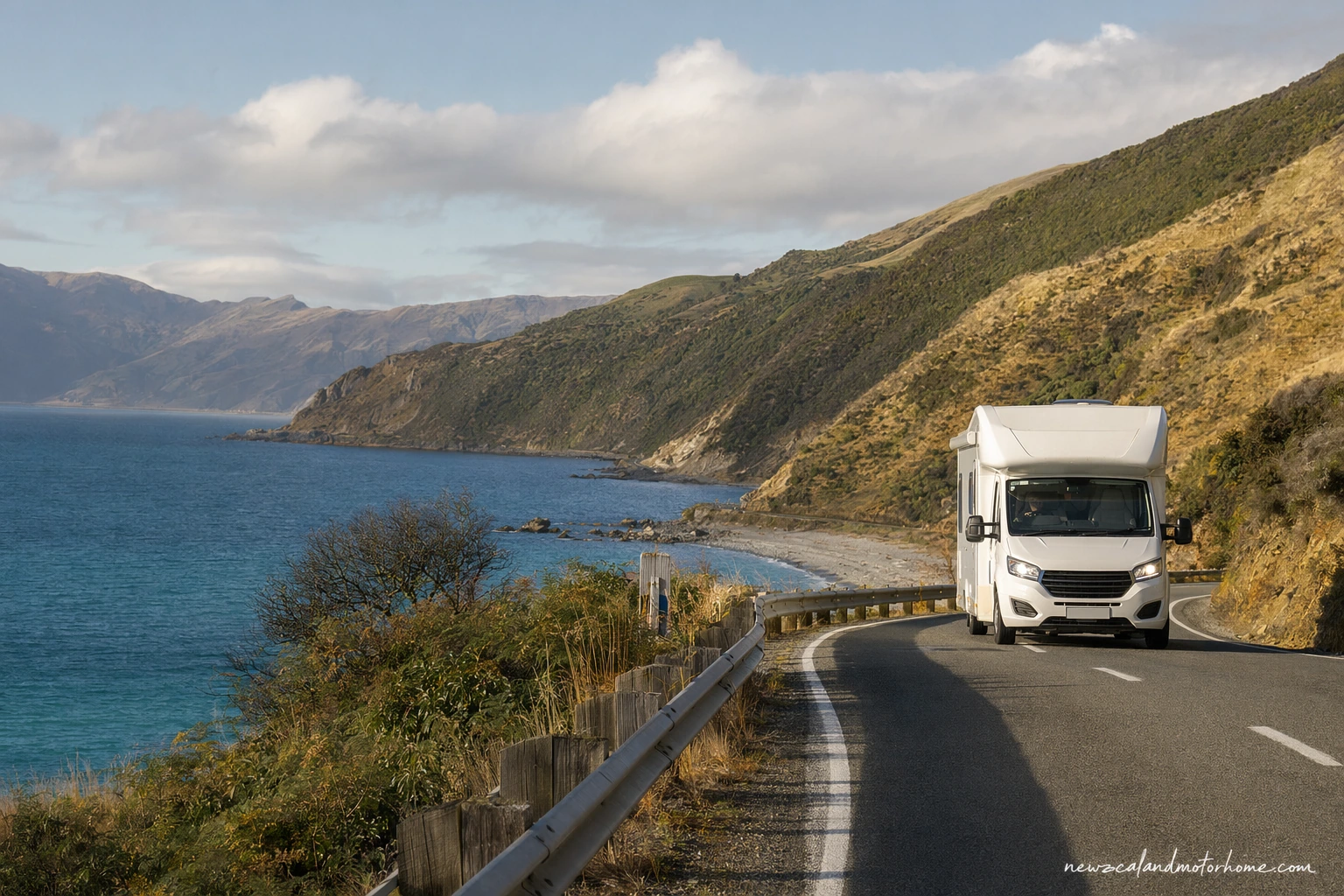
- Best pace: 3 to 5 days
- Main route: SH1 plus Cook Strait ferry
- Book ferry by van length and height
- Powered sites useful in Kaikōura and Picton
- Freedom camping only where signed and legal
The Christchurch to Wellington campervan route is one of New Zealand’s classic point-to-point drives: plains and braided rivers out of Canterbury, the seal-lined coast at Kaikōura, Marlborough wine country, then the Cook Strait ferry into the capital. It is not a route to rush if you are sleeping in the van, because the ferry, weather, and SH1 coastal sections all reward a little breathing room.
This guide is written for self-drive campervan and motorhome travellers. You will find practical leg-by-leg notes on where to overnight, where to look for dump stations and fresh water, how to handle the ferry with a larger vehicle, and which stretches of the Christchurch to Wellington drive need extra patience behind the wheel.
How many days to allow in a campervan
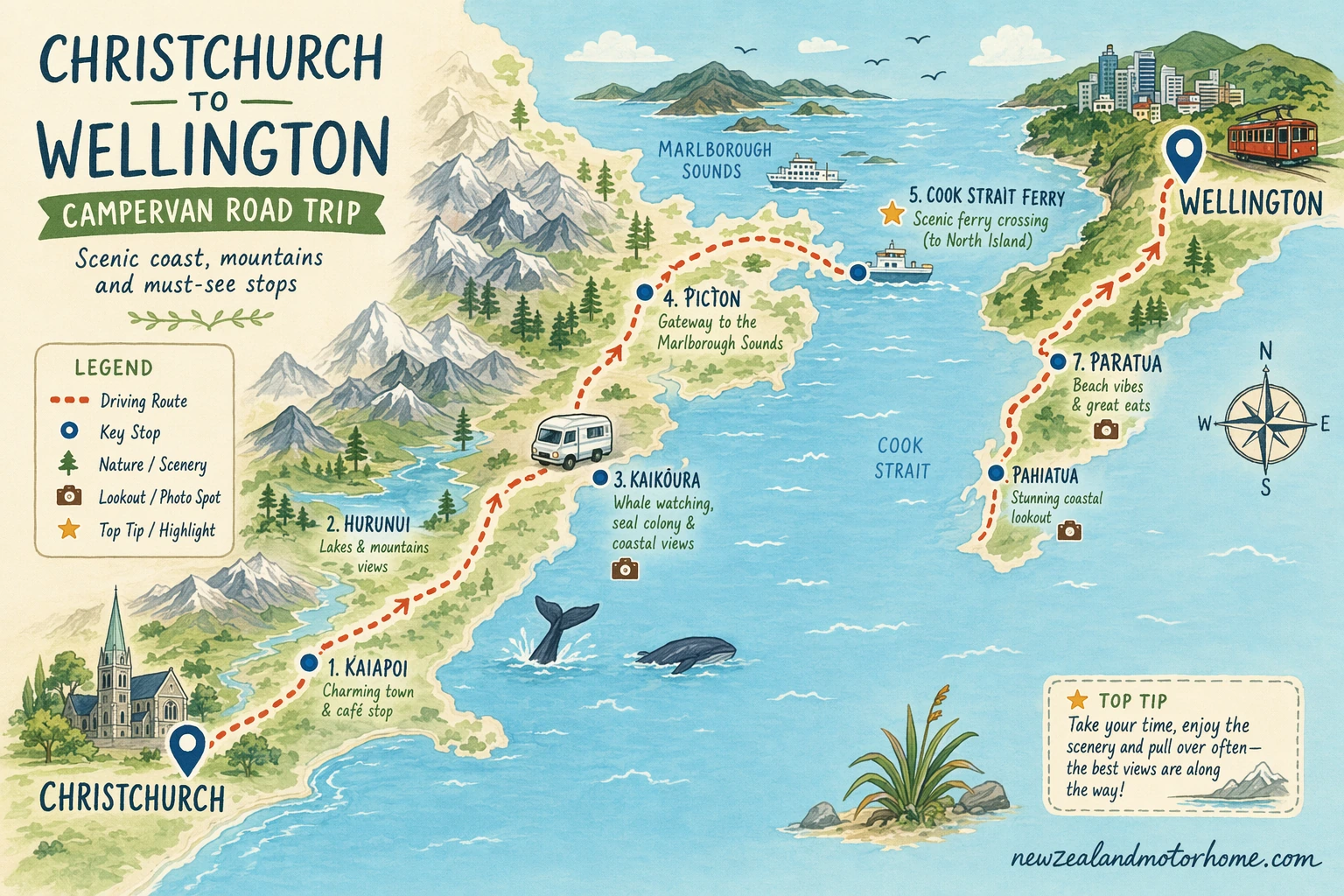
You can drive Christchurch to Picton in a long day and cross to Wellington the next, but that is a transport run rather than a motorhome road trip. For most van travellers, three days is the comfortable minimum: one night around Kaikōura, one night around Blenheim or Picton, then the ferry and Wellington arrival. Four or five days gives you time for walks, wildlife stops, laundry, and a less stressful ferry connection.
The key is to book the Cook Strait ferry with your vehicle length and height correct, then build your driving days around that sailing. Motorhomes board with other vehicles, and you will need to leave the van during the crossing, so pack a day bag with valuables, warm layers and any medication before you park on the vehicle deck.
- Fastest comfortable pace: 2 nights before or including the ferry.
- Better pace: 3 to 4 nights, especially in winter or school holidays.
- Best for first-time van drivers: avoid arriving in Wellington after dark, as city streets and campground access are easier in daylight.
Leg 1: Christchurch to Kaikōura
Leaving Christchurch, SH1 is straightforward for a campervan, with fuel, LPG swaps and supermarket stops easier to sort before you leave the city. Use this first morning to top up fresh water, empty grey and black water at a public dump station, and check your LPG level if you will be freedom camping later in the trip.
The road north passes through North Canterbury before reaching the Hundalee hills and the coastal approach to Kaikōura. The hills are manageable in a well-loaded motorhome, but keep left, use slow vehicle bays when traffic builds behind you, and expect some tighter curves before the sea opens up beside the highway.
Kaikōura is a good first overnight because you can park the van, walk the waterfront, and not feel you are just ticking off kilometres. Choose a powered site if you need to run a heater, recharge devices or reset the house battery after a supermarket fridge load. Certified self-contained vans may have limited council-designated freedom camping options in the wider district, but check current signage carefully as rules can change by season and location.
Leg 2: Kaikōura to Blenheim or Picton
This is the most scenic part of the Christchurch to Wellington motorhome road trip, with SH1 running close to the Pacific for long stretches north of Kaikōura. Pull-outs can be busy and not every lay-by suits a long vehicle, so signal early, avoid soft shoulders, and only stop where your full van can sit clear of the traffic lane.
After the coast, the route climbs and rolls through Marlborough. Blenheim works well if you want supermarkets, fuel, dump stations and a quieter evening before the ferry day. Picton is better if your sailing is early, because you are already in town and do not need to worry about road delays from Blenheim in the morning.
- Overnight in Blenheim: useful for powered sites, laundry, fresh water and restocking.
- Overnight in Picton: best for early ferry check-in and a relaxed morning.
- Dump and water plan: look for public dump stations in larger towns rather than assuming small coastal stops will have facilities.
- Road note: allow extra time for road works or weather on the coastal SH1 section.
Crossing Cook Strait with a campervan
The ferry is the hinge point of this route. When booking, enter the exact campervan or motorhome length, including bike racks or rear storage boxes, and check height if you are in a high-top van or larger motorhome. Turning up with the wrong dimensions can cause delays or extra charges, and it is much easier to fix before travel day.
Before boarding, secure cupboards, close roof vents, turn off LPG at the bottle if instructed, and make sure the fridge is latched. You will be directed onto the vehicle deck by staff, often with tight spacing, so take it slowly and follow hand signals rather than guessing. Once parked, lock the van and head upstairs; passengers are not allowed to remain in vehicles during the crossing.
Weather can affect Cook Strait sailings, particularly in strong northerlies or southerlies. If you have a fixed campground booking in Wellington, leave a little slack in your day. If you want help lining up the ferry with sensible overnight stops either side, our plan-your-trip step can help you avoid the classic late-arrival scramble.
Arriving in Wellington and where to stay with the van
Wellington is not the place to improvise with a large motorhome at rush hour. Roads around the ferry terminal, waterfront and central city can be narrow, busy and exposed to wind, so decide your first stop before you roll off the ferry. If you need food or supplies, consider whether an outer suburb supermarket with easier parking is less stressful than driving straight into the CBD.
For overnighting, most campervan travellers choose a formal holiday park or motorhome-friendly site in the wider Wellington or Hutt Valley area, especially if they need a powered site, showers, laundry or a dump station. Freedom camping around Wellington is tightly managed and usually limited to clearly signed areas for certified self-contained vehicles; do not assume a seaside car park is legal for the night.
- Powered sites: useful after the ferry if you have been off-grid along the coast.
- Unpowered sites: fine for self-contained vans with healthy batteries, but book ahead in peak periods.
- Dump stations: plan to empty before exploring the city, as central parking with a full cassette is never fun.
- Parking tip: check height restrictions before entering covered car parks; many are unsuitable for campervans.
Driving and packing notes for this route
The Christchurch to Wellington drive is mostly on SH1, but that does not mean it is motorway-simple. You will meet coastal wind, hill sections, road works, trucks, tight town approaches and the ferry schedule. A steady pace suits a campervan better than trying to drive it like a car.
Keep a small buffer in your water and battery planning, particularly if you are using unpowered or freedom camping stops. In winter, powered sites make evenings warmer and easier; in summer, the main issue is booking ahead around Kaikōura, Picton and Wellington. Always follow local self-containment rules, display your certification where required, and leave freedom camping areas cleaner than you found them.
- Carry a ferry day bag so you are not unpacking on the vehicle deck.
- Use engine braking on descents rather than riding the brakes in a heavy van.
- Top up fuel before remote or scenic stretches rather than waiting for the warning light.
- Check wind forecasts before exposed coastal driving and before the Cook Strait crossing.
Keep planning
Visiting zealandia wellington by campervan
Read onVisiting weta workshop wellington by campervan
Read onVisiting te papa wellington by campervan
Read onHoliday parks wellington
Read onHoliday parks christchurch
Read onFarmers markets wellington
Read onCommon questions
Can you drive Christchurch to Wellington in one day in a campervan?
It is technically possible only if ferry timing lines up perfectly, but it is not a good campervan plan. The drive to Picton is long, the ferry adds check-in and crossing time, and arriving in Wellington tired with a large vehicle is stressful.
Where should we stay the night before the ferry?
Picton is the easiest choice for an early sailing because you are already near check-in. Blenheim is a good alternative for later sailings if you want more space, supermarkets, fuel, dump stations and a quieter evening.
Do we need a powered site on this route?
Not every night, but powered sites are handy in Kaikōura, Picton or Wellington if you need heating, laundry, reliable charging or a battery reset. If you are freedom camping, make sure your van is certified self-contained and that you follow the local signs.
Is SH1 suitable for large motorhomes?
Yes, SH1 is the main route and is used by trucks and motorhomes, but some sections are winding, exposed or busy. Take your time, use slow vehicle bays, avoid soft shoulders, and allow extra time for road works along the coast.
What should we do with LPG on the ferry?
Follow the ferry operator’s instructions, which commonly include turning LPG off at the bottle before boarding. Secure cupboards, latch the fridge, close vents, lock the van once parked, and take what you need because you cannot stay with the vehicle during the crossing.
Have a planner shape this for your dates
Send a short outline — your dates, party size, and the kind of trip you want. A planner replies with a vehicle recommendation, a paced route, and the realistic budget.